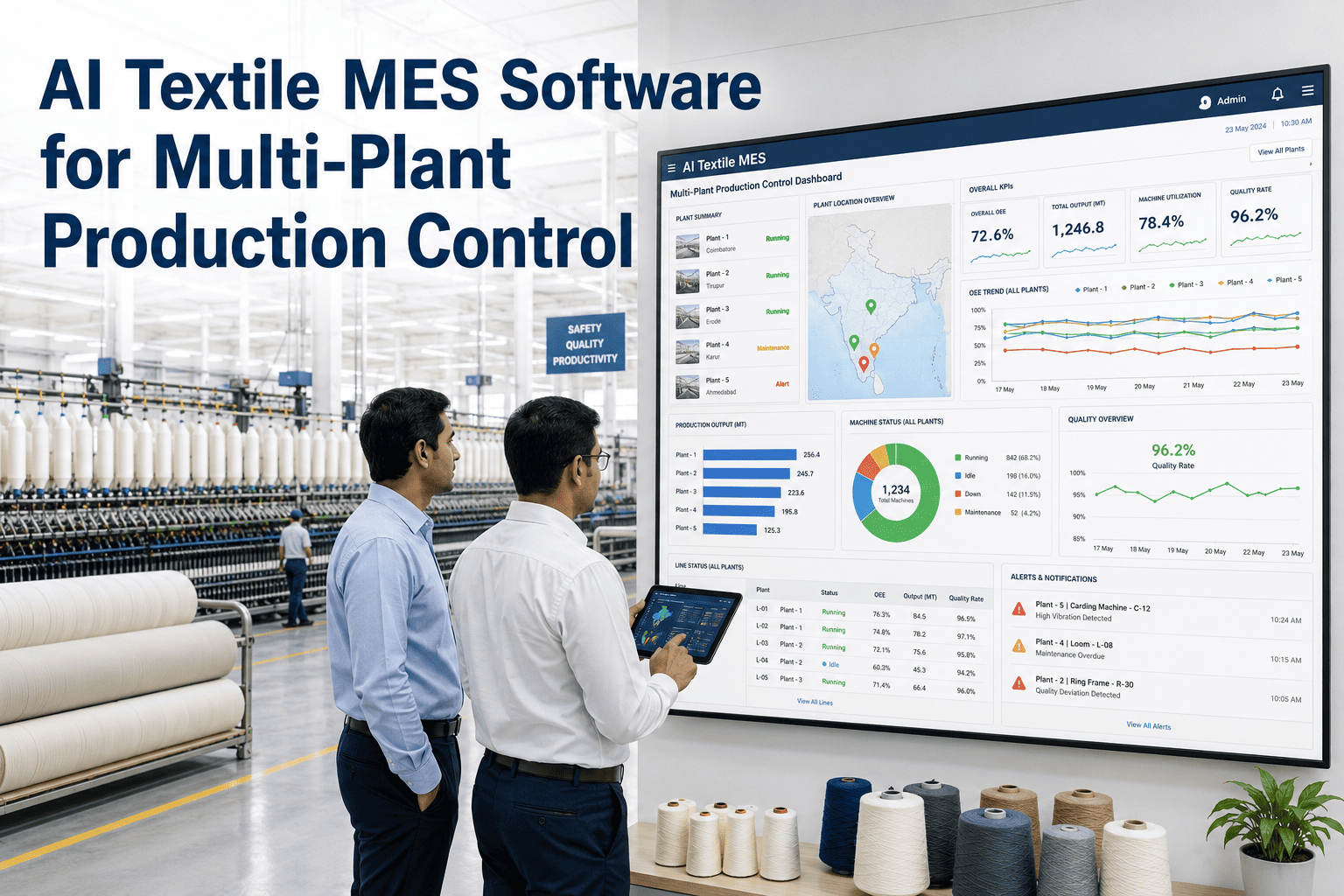
Running one textile plant on spreadsheets and WhatsApp updates is hard enough. Running three or five plants that way is close to impossible, yet that is exactly how most multi-site textile groups still operate in 2026. Every mill reports numbers a little differently, shift data arrives hours late, and by the time a group head sees a problem on the floor in Coimbatore or Surat, the shift has already ended and the loss is already booked. AI textile MES software fixes this by pulling live machine, quality, and output data from every plant into one execution layer, so decisions get made on what is happening right now instead of what someone remembers from yesterday's call. Mill leaders who want to see this working on their own plant data can book a demo.
MULTI-PLANT MES · TEXTILE MANUFACTURING · 2026
One Execution Layer for Every Plant You Run
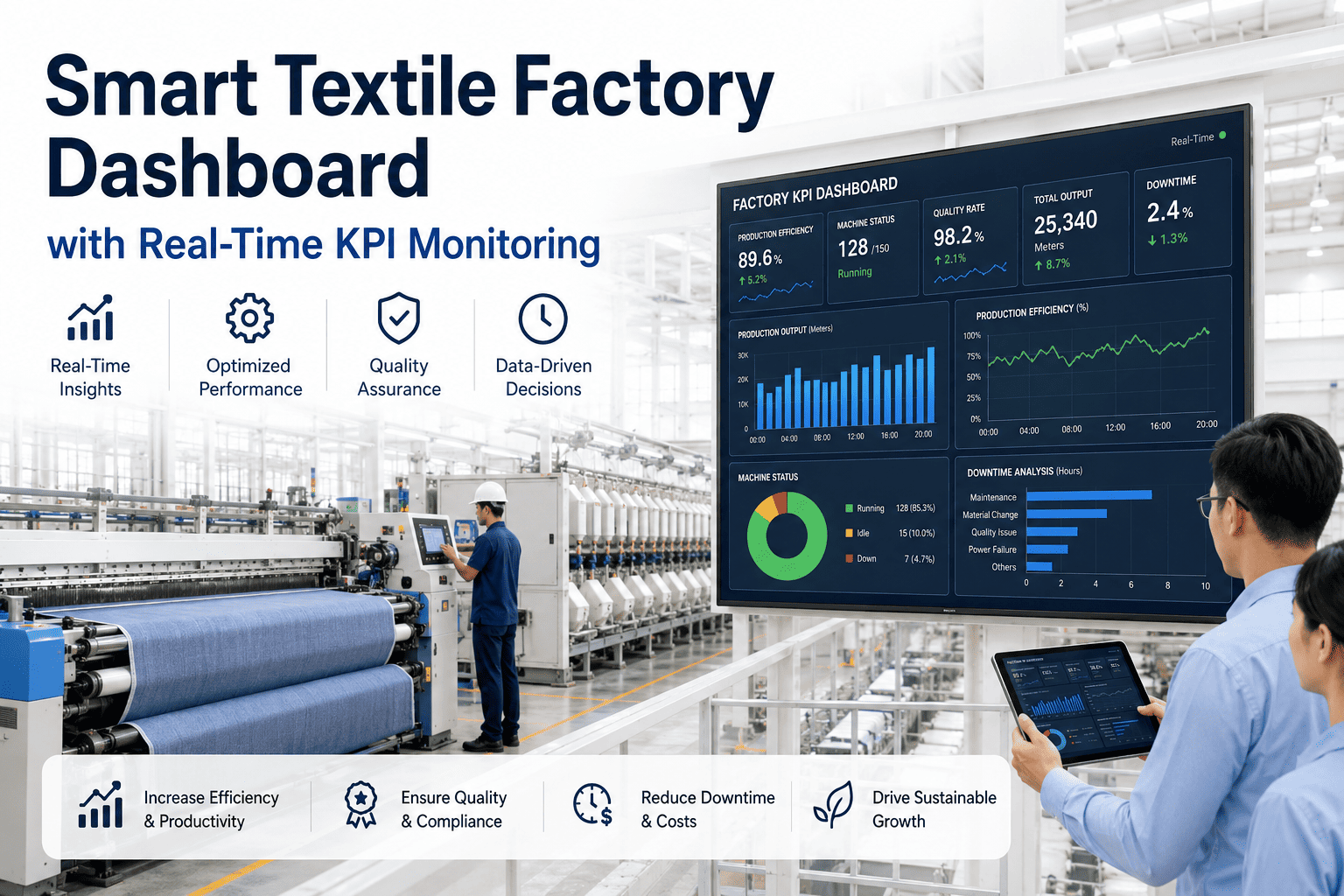
See live OEE, shift output, quality holds, and downtime signals from every mill on a single screen, and stop finding out about production problems a day too late.
Why Multi-Plant Textile Groups Fall Behind on Visibility
Most textile groups grew plant by plant, and each new mill brought its own reporting habits, its own Excel formats, and sometimes its own local software. That patchwork works fine when a group runs one or two sites, but it breaks down fast once a third or fourth plant joins the network. Group heads end up reconciling numbers from five different formats before they can even ask a useful question, and by the time the reconciliation is done, the window to act on the data has usually closed. A recent survey of Indian textile exporters found that a large share pointed to their inability to share real-time production data as a direct barrier to winning new international buyers, which shows this is no longer just an internal efficiency problem, it is a commercial one.
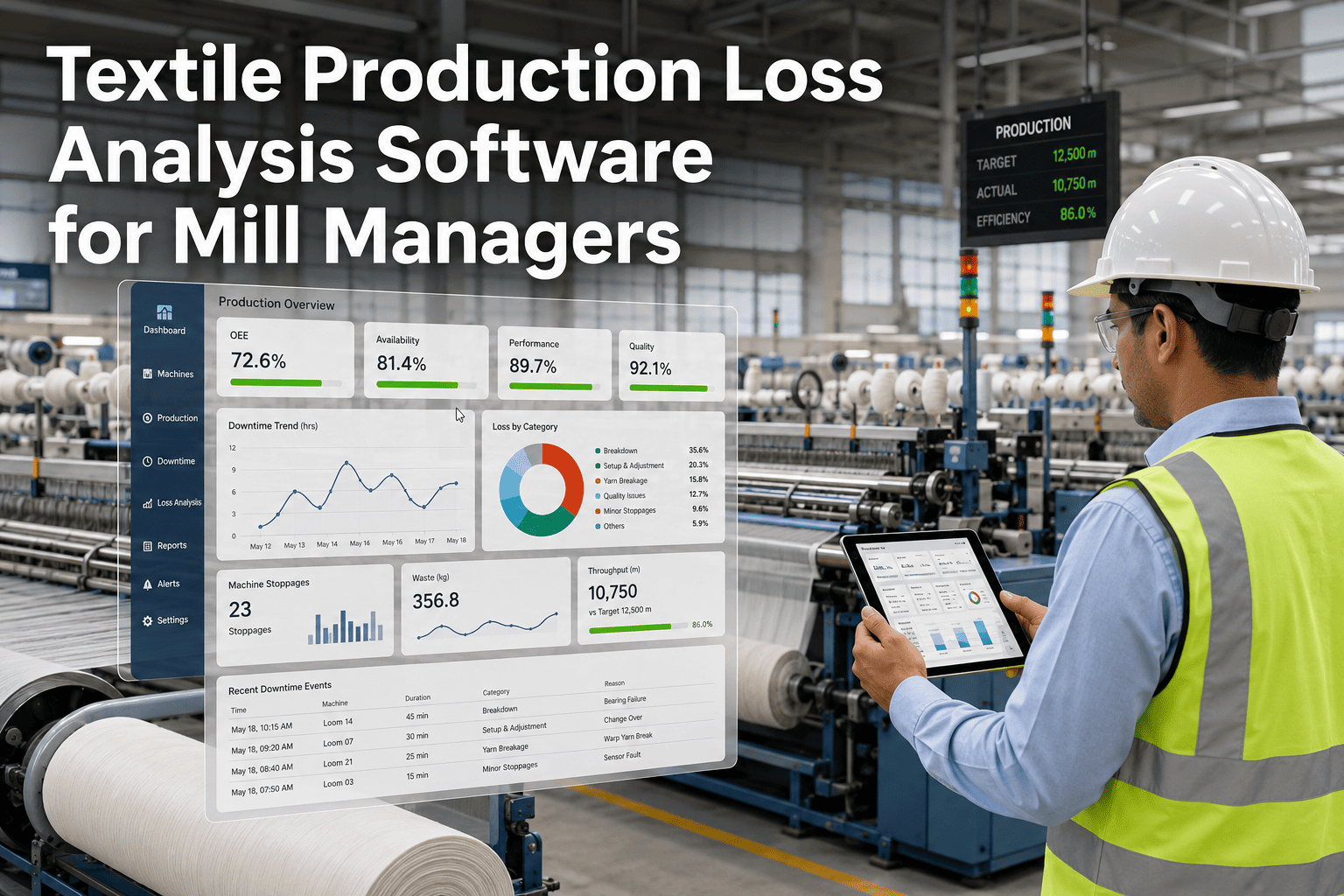
AI-driven MES platforms solve this by standardizing data collection at the machine and shift level across every plant, then layering AI models on top to flag anomalies, predict shortfalls, and rank issues by business impact. The result is a group head who can open one dashboard and immediately see which plant, which line, and which shift needs attention, without a single phone call.
100%
Of plants visible on one unified dashboard with comparable KPIs across sites
6+
Production sites managed on a single cloud MES instance without separate IT builds per plant
Live
Shift-level output, downtime, and quality data refreshed continuously instead of end-of-day recaps
11 Min
Time one mill needed to produce a complete export production trail once live MES data was in place
Single-Plant Reporting vs Unified Multi-Plant Execution
The gap between these two approaches usually shows up first in how long it takes to answer a simple question, such as which plant is behind on a shared order this week.
MULTI-PLANT VISIBILITY
Stop Reconciling Reports. Start Seeing Live Data.
Get a walkthrough of how your specific plants would look on one unified execution dashboard.
How a Multi-Plant AI MES Actually Works
Deploying this across several mills does not mean ripping out existing machines or systems. It means adding a data and intelligence layer on top of what already exists.
1
Connect Every Machine and Line
Modern gateways pull data from both new and older machines across every plant, without reprogramming existing controllers or pausing production during install.
2
Standardize the Data Model
Output, downtime, and quality events get mapped to one shared structure so a spinning shift in one plant reads exactly like a spinning shift in another.
3
Apply AI Analysis
Models compare live performance against each plant's own history to catch drift early, instead of relying on one static benchmark applied everywhere equally.
4
Deliver One Group View
Group leadership, plant heads, and shift supervisors each get a dashboard scoped to what they need, all pulling from the same live source of truth.
What Group Leaders Are Seeing on the Floor
A buyer asked us for a full production trail on an eight-thousand-metre export order, machine records, quality sign-offs, dye lot parameters, everything, with forty-eight hours notice. We pulled the complete report while still on the call, and the buyer increased their next order by thirty percent once they saw how fast and complete our data was.
Export Operations Manager, Composite Mill Group
Frequently Asked Questions
How long does it take to bring a new plant onto the same MES instance?
Adding a new plant to an existing cloud MES network is far faster than a first deployment, because the data model, dashboards, and role structures already exist. Most groups connect a new site's critical lines within two to three weeks, starting with the machines that drive the most output or the most downtime risk. There is no separate IT project or server buildout required per site, since every plant runs on the same platform. Teams can walk through a real onboarding timeline by visiting
support before committing to a rollout date.
Can the system handle plants with very different machine ages and vendors?
Yes, this is one of the most common realities in textile groups, where a plant built in the 1990s runs alongside a plant commissioned five years ago. Modern gateways read data through standard protocols for newer machines and through direct digital input signals for legacy equipment that has no built-in connectivity. This means a group does not need to standardize its machine fleet before standardizing its data, which removes one of the biggest blockers to multi-plant visibility.
Will each plant still have its own local view, or is everything forced into one group dashboard?
Both views exist at the same time. Plant managers get a detailed local dashboard scoped to their own lines, shifts, and machines, while group leadership sees a rolled-up comparison across every site. Nothing is hidden from either level, and drilling from the group view straight into a specific plant's shift detail takes one click rather than a separate report request. This keeps local accountability intact while giving leadership the comparison view they actually need.
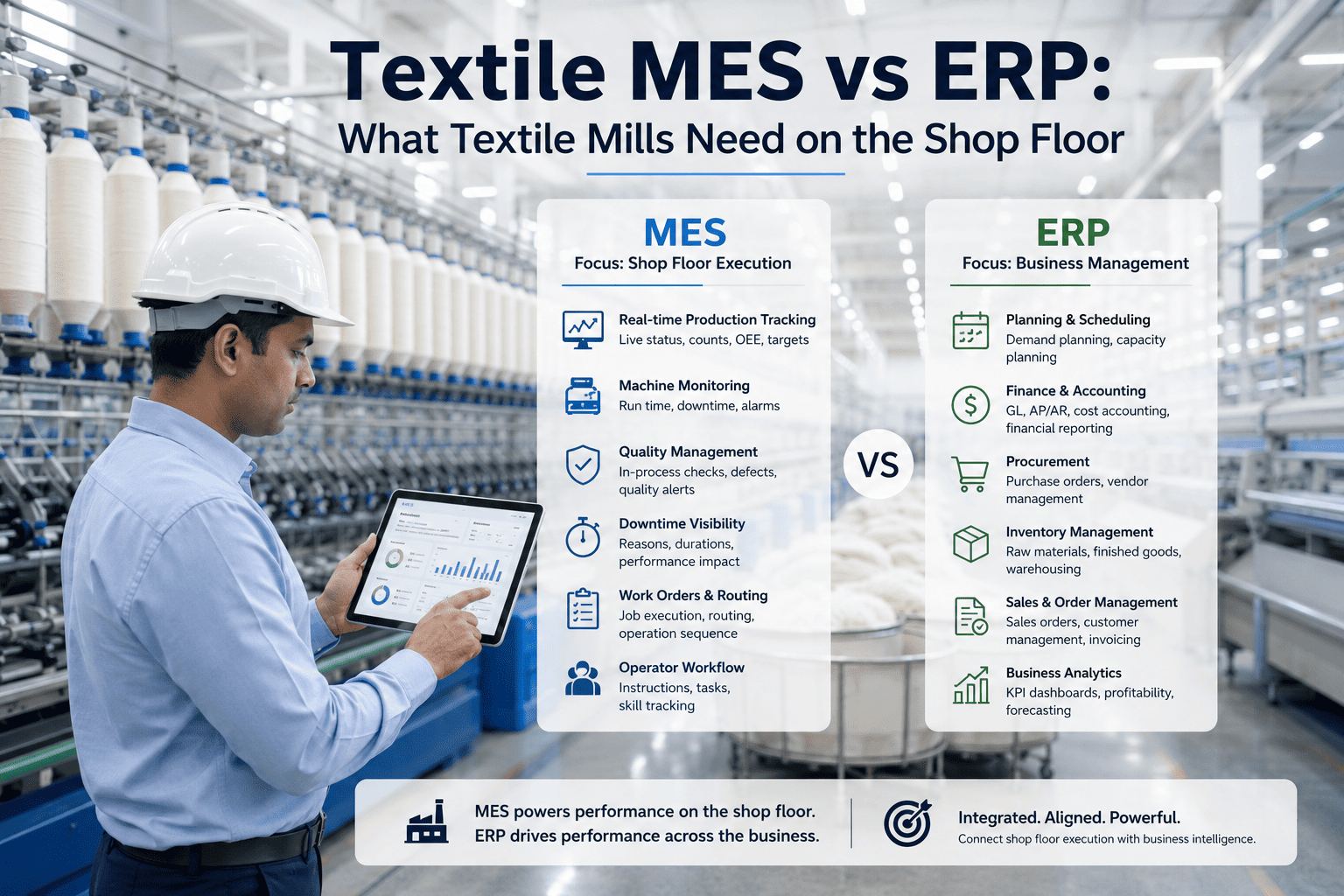
How does this integrate with our existing textile ERP?
The MES layer sits between the shop floor and the ERP, feeding confirmed production, quality, and inventory movement data upward while pulling order and material information down to the floor. This keeps both systems doing what they do best instead of forcing planners to manually reconcile spreadsheets between the two. Groups running SAP, Oracle, or other apparel-focused ERP systems typically see this connection live within the first phase of rollout.
What kind of ROI should a multi-plant group expect, and how fast?
Most groups see the fastest returns in reduced reconciliation labor and faster buyer response times, since export documentation that used to take days can be pulled in minutes once live traceability data exists. Beyond that, standardized OEE visibility typically surfaces two or three underperforming lines within the first month that were previously masked by inconsistent reporting. Group leaders can
book a demo to get a rollout and payback estimate built around their own plant count and product mix.
AI TEXTILE MES · MULTI-PLANT CONTROL
Bring Every Plant Onto One Screen
Join textile groups already running multi-plant execution on a single AI-driven MES platform.