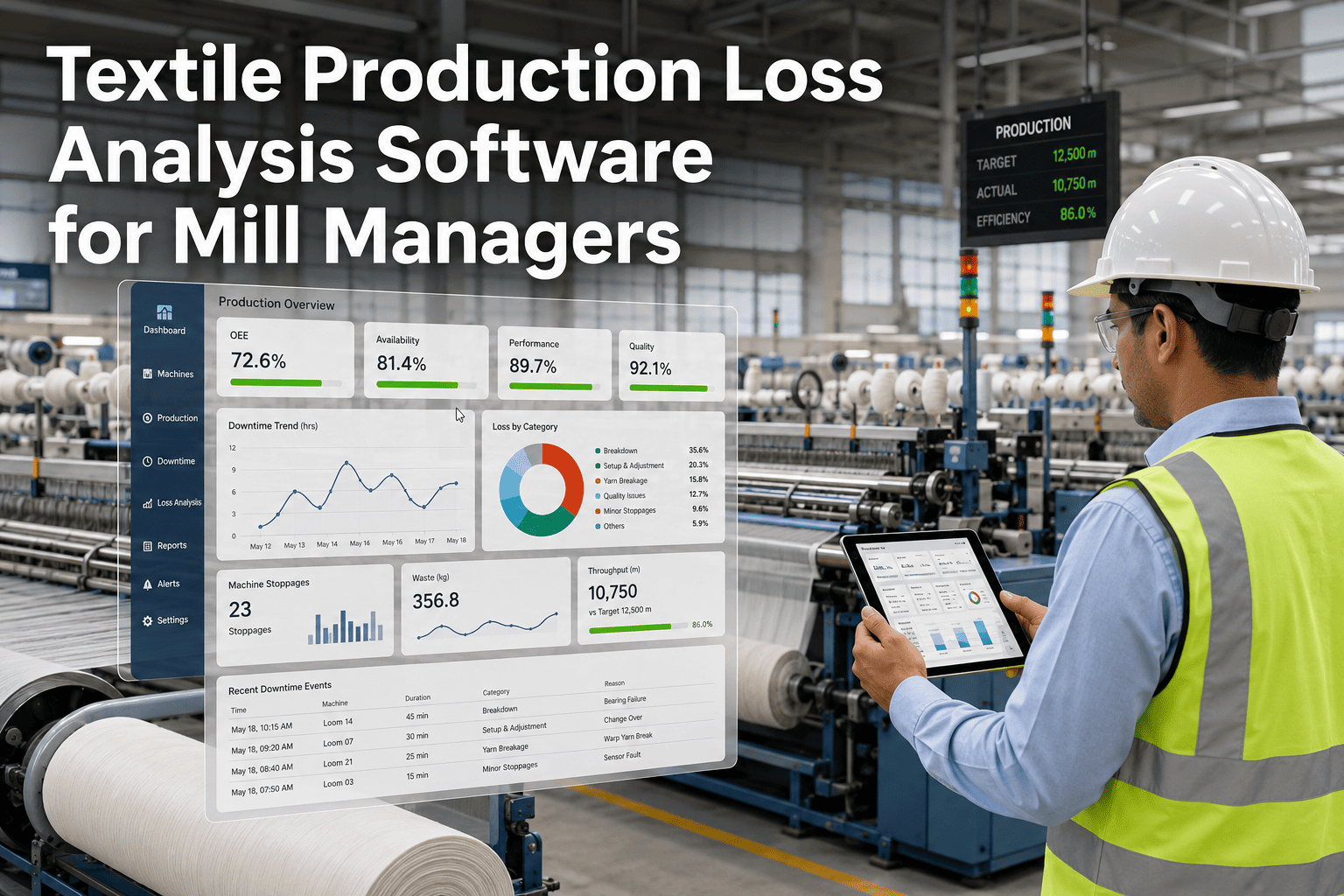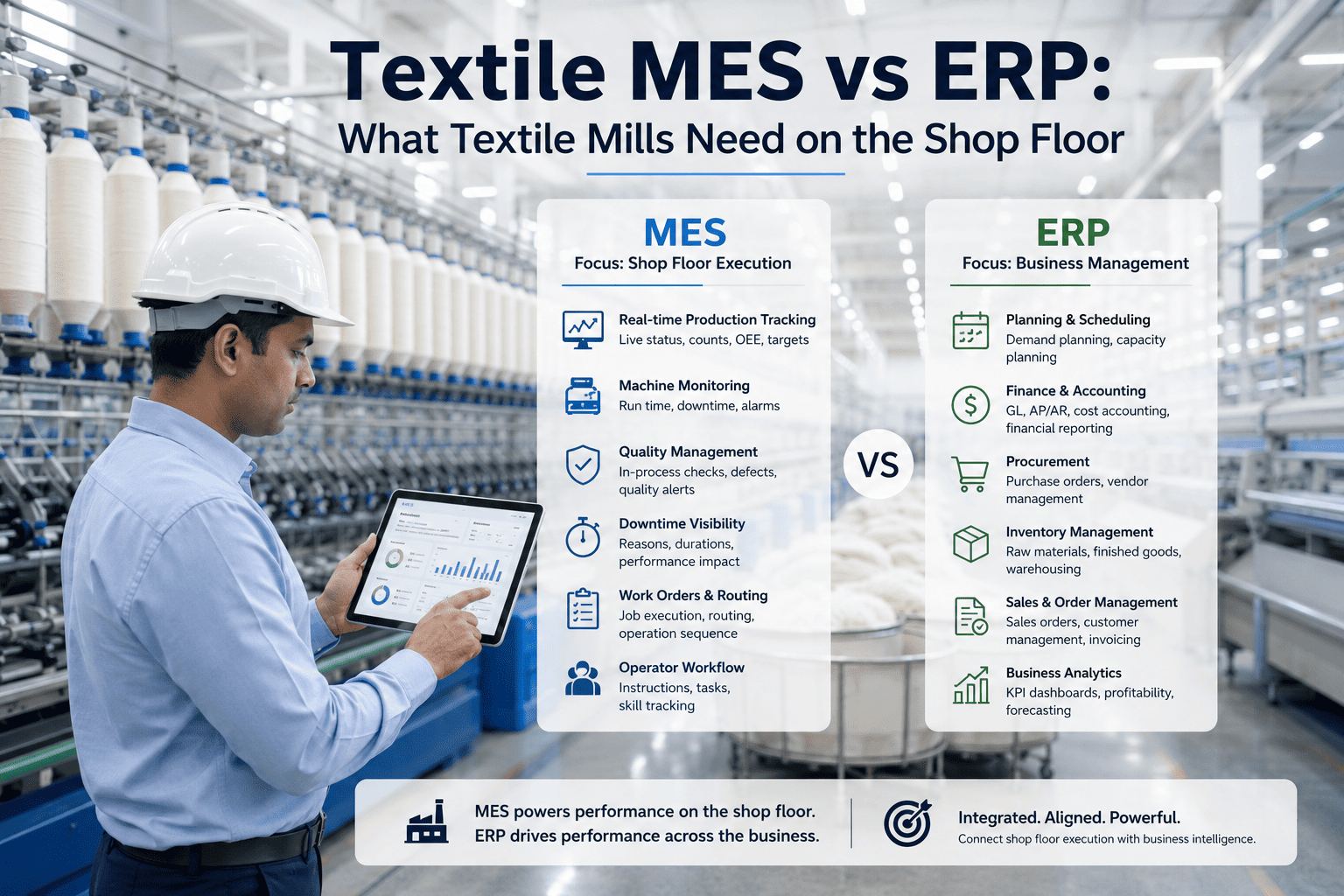
Selecting the right textile manufacturing software is a critical decision that directly impacts operational efficiency, product quality, and long-term competitiveness. For plant managers and CTOs navigating Industry 4.0, the challenge lies not just in digitizing legacy processes but in choosing a platform that integrates seamlessly with existing machinery, scales across multiple sites, and delivers actionable intelligence in real time. This comprehensive buying guide dissects every essential module—from MES and CMMS to OEE and AI-powered visual inspection—providing technical benchmarks, deployment considerations, and security requirements. Whether you are evaluating a cloud-based SaaS solution or an on-premise deployment, this guide equips you with the criteria to make a data-driven decision. Book a Demo to explore how iFactory's Industrial AI Platform can transform your textile operations.
Ready to Modernize Your Textile Factory?
Get a personalized walkthrough of iFactory's AI-driven platform tailored for textile manufacturing.
Manufacturing Execution System (MES)
MES is the backbone of real-time production control. For textile plants, this means tracking every batch from fiber opening to finished fabric. Look for systems that support batch genealogy, real-time machine status, and digital work instructions. Integration with ERP for material consumption and order management is non-negotiable. iFactory's MES module provides granular visibility into each loom, dyeing vat, and finishing range, enabling instant corrective actions.
Computerized Maintenance Management System (CMMS)
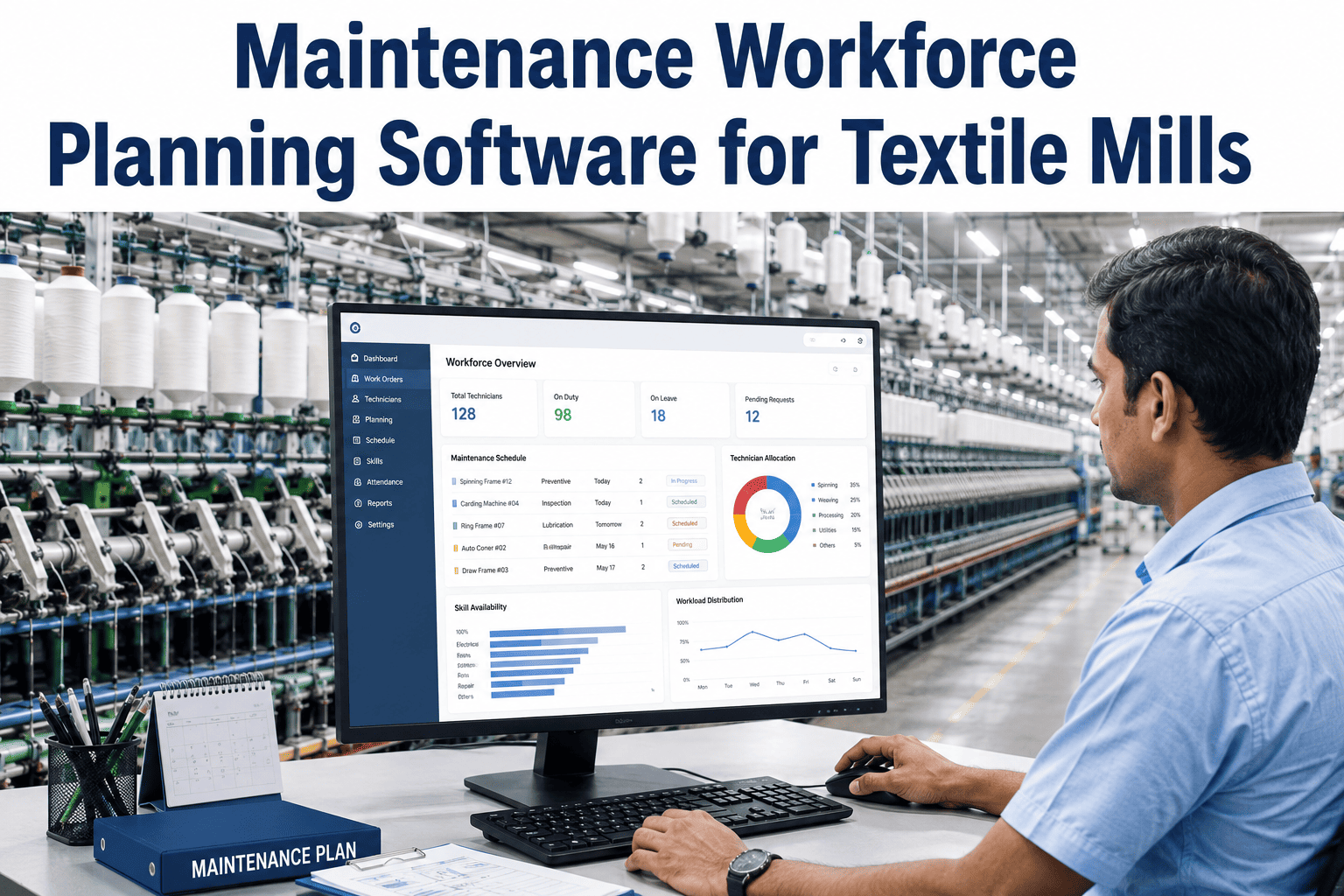
Unplanned downtime in textile mills can cost thousands per hour. A robust CMMS automates preventive maintenance schedules, tracks spare parts inventory, and logs repair history. Prioritize systems with mobile accessibility for technicians on the shop floor. iFactory's CMMS uses predictive analytics to forecast bearing failures and belt wear, reducing downtime by up to 35%.
Overall Equipment Effectiveness (OEE)
OEE is the gold standard for measuring machine productivity. Textile-specific OEE must account for speed loss due to yarn breaks, quality defects from fabric faults, and availability loss during changeovers. Choose software that calculates OEE automatically from PLC data and presents it in customizable dashboards. iFactory's OEE module breaks down performance by shift, style, and machine group.
AI-Powered Visual Inspection
Defect detection in textiles—stains, holes, misweaves, and color variations—traditionally relies on manual inspection. AI vision systems using deep learning can identify defects at 60 meters per minute with over 95% accuracy. Evaluate whether the software supports camera integration, model retraining, and real-time alerts. iFactory's AI vision module adapts to your fabric types and defect libraries.
Platform Comparison Matrix
| Feature | iFactory Platform | Legacy MES | Generic CMMS |
|---|---|---|---|
| Textile-specific MES | Yes | Partial | No |
| AI Vision Integration | Built-in | Third-party | N/A |
| OEE with textile KPIs | Yes | Generic | No |
| Predictive Maintenance | AI-driven | Rule-based | Basic |
| ERP Integration | SAP, Oracle, MS Dynamics | Limited | Minimal |
| Deployment Options | Cloud, On-premise, Hybrid | On-premise only | Cloud only |
| Security Certifications | ISO 27001, SOC 2 | Varies | Basic |
ERP and Legacy System Integration
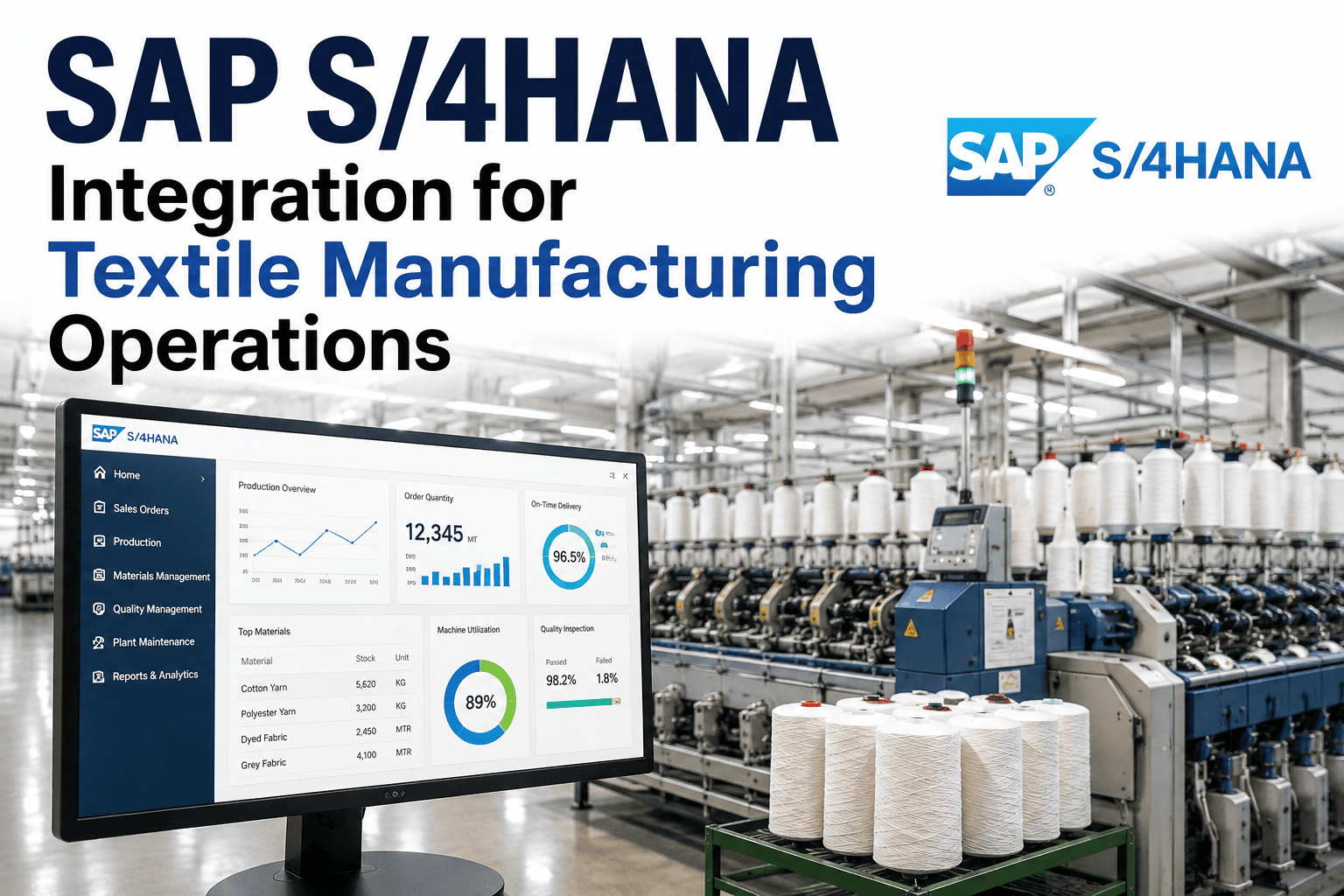
Seamless integration with ERP systems like SAP, Oracle, and Microsoft Dynamics is critical for synchronizing production orders with inventory and financials. Evaluate the software's API capabilities, support for standard protocols (REST, OPC UA, MQTT), and pre-built connectors. iFactory's integration layer supports bidirectional data flow, ensuring that production data updates ERP in real time and vice versa. This eliminates manual data entry and reduces errors.
Still Comparing? Let iFactory Simplify Your Decision
Schedule a demo to see how our platform stacks up against your requirements.
Implementation Roadmap
Phase 1: Discovery & Assessment (2 weeks)
iFactory's team conducts on-site audits of your current machinery, network infrastructure, and data workflows. Deliverables include a gap analysis and a detailed implementation plan.
Phase 2: Pilot Deployment (4-6 weeks)
Selected production lines are instrumented with IoT sensors and connected to the platform. MES, CMMS, and OEE modules go live. User training for supervisors and operators.
Phase 3: Full Rollout (8-12 weeks)
Scaling to all production lines, integrating ERP, and activating AI vision modules. Continuous optimization and handover to your internal team.
Total Cost of Ownership (TCO) Considerations
Beyond license fees, factor in hardware (sensors, gateways), integration services, training, and annual maintenance. Cloud solutions reduce upfront capital but incur recurring subscription costs. iFactory offers transparent pricing with no hidden fees, including a 30-day free trial for pilot evaluation. Request a TCO calculator during your demo.
Vendor Evaluation Checklist
- Does the vendor have proven textile industry references?
- Can the platform handle your specific fabric types (woven, knitted, nonwoven)?
- What is the average implementation time?
- Are there any limits on data storage or API calls?
- What is the support SLA (response time, escalation process)?
- Does the vendor offer a sandbox environment for testing?
Frequently Asked Questions
What is the typical ROI timeline for textile manufacturing software?
Most plants see a positive ROI within 12 to 18 months. Savings come from reduced downtime (CMMS), higher throughput (OEE), and lower defect rates (AI vision). iFactory clients report an average 20% increase in OEE within the first year. Book a Demo to see a case study.
Can iFactory integrate with my existing ERP system?
Yes, iFactory provides pre-built connectors for SAP, Oracle, Microsoft Dynamics, and Infor. Our integration team also supports custom API development for legacy systems. Data synchronization is bidirectional and occurs in near real time. Contact Support for a compatibility check.
Is the AI vision module customizable for different fabric defects?
Absolutely. The AI model can be trained on your defect library using transfer learning. iFactory's platform supports continuous model improvement with new data. Typical defect detection includes holes, stains, misweaves, and color variations. Book a Demo to see it in action.
What security certifications does iFactory hold?
iFactory is ISO 27001 certified and SOC 2 Type II compliant. We also adhere to GDPR, CCPA, and local data protection laws. All data is encrypted at rest (AES-256) and in transit (TLS 1.3). Contact Support for our security whitepaper.
How long does it take to implement iFactory in a textile plant?
A typical pilot deployment takes 4-6 weeks, with full rollout across all production lines completed in 8-12 weeks. Timelines vary based on plant size, existing infrastructure, and integration complexity. Book a Demo to discuss your specific timeline.
Transform Your Textile Operations Today
Join leading textile manufacturers leveraging AI for predictive maintenance, quality control, and operational excellence.