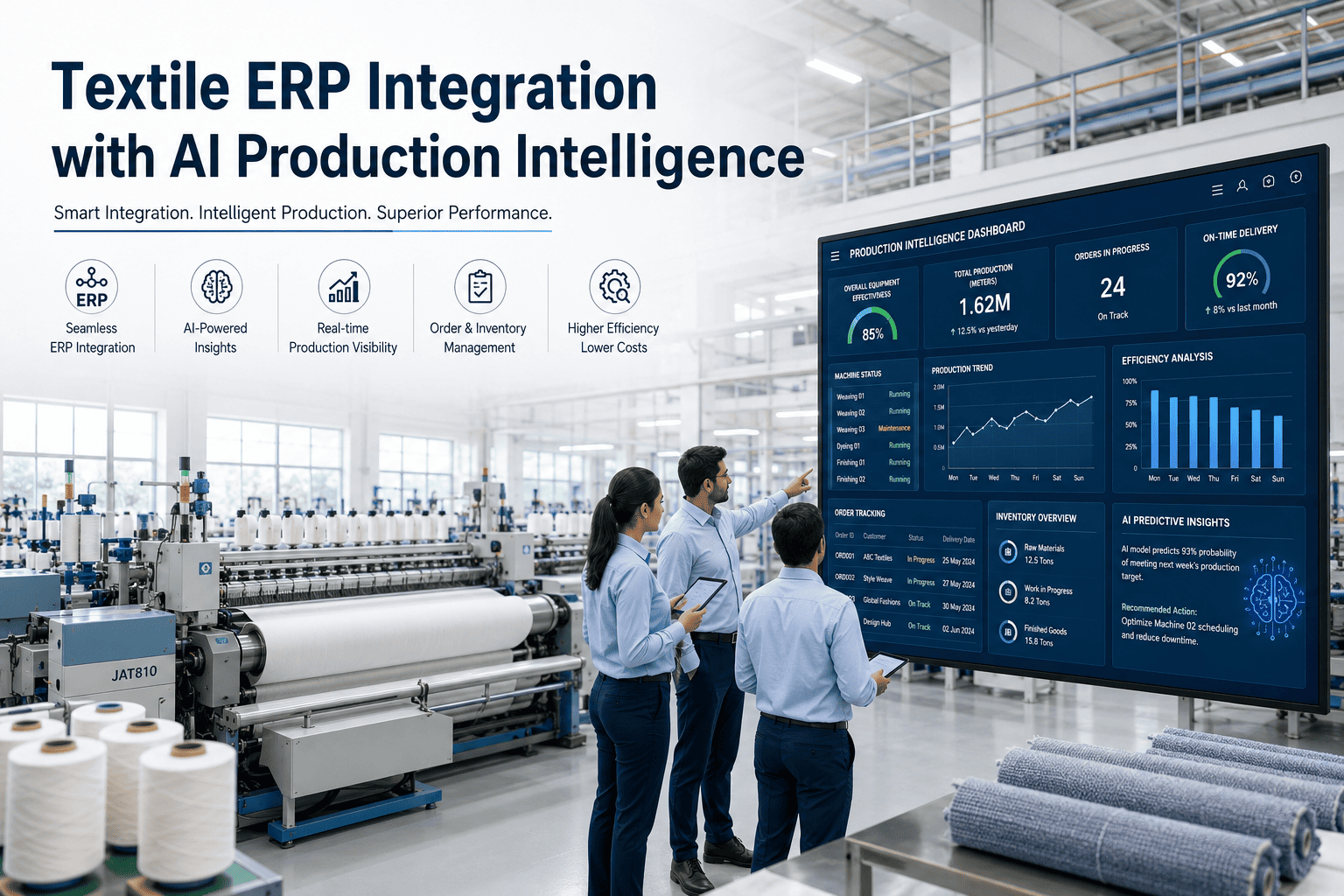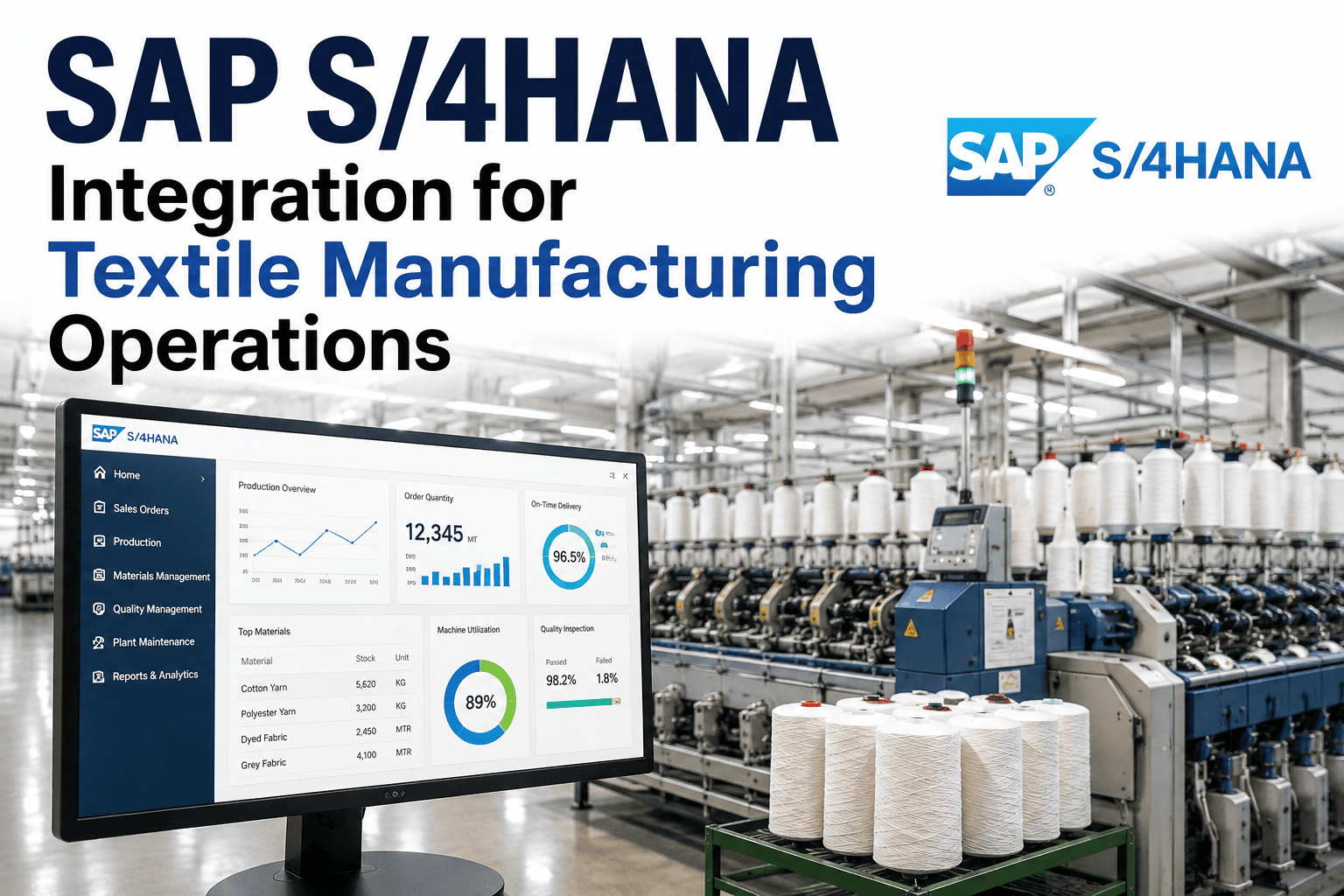
Textile manufacturing operations generate massive volumes of data across spinning, weaving, dyeing, and finishing processes. However, this data often remains siloed within individual machines, quality control systems, and maintenance logs, preventing manufacturers from gaining a unified view of production performance. SAP S/4HANA serves as the digital backbone for enterprise resource planning, but without deep integration with shop floor systems, decision-makers lack real-time visibility into machine efficiency, material consumption, and quality deviations. This integration gap leads to delayed responses to downtime events, increased waste, and missed opportunities for predictive maintenance. By bridging SAP S/4HANA with textile production equipment, maintenance workflows, quality checks, inventory movements, and machine data streams, manufacturers can unlock true AI-driven production intelligence. This article explores how a seamless integration architecture transforms textile operations, reduces unplanned downtime by up to 30%, and improves overall equipment effectiveness (OEE) by providing a single source of truth for operational decision-making. Book a consultation to d iscover how iFactory's SAP integration solutions empower textile mills with real-time data synchronization.
Real-Time Production Intelligence Starts Here
Unify your SAP S/4HANA with textile shop floor data to reduce downtime and boost OEE across all production lines.
Seamless Machine Data Integration
Integrating SAP S/4HANA with textile machinery such as looms, dyeing machines, and finishing calendars enables automatic capture of production counts, speed, and efficiency metrics. This eliminates manual data entry errors and provides real-time visibility into machine performance. Manufacturers can monitor OEE at a granular level, identifying underperforming assets immediately. The integration uses standard SAP interfaces like OData and RFC to pull machine data from PLCs and SCADA systems, transforming raw signals into actionable KPIs. With this data flowing into SAP, production planners can adjust schedules dynamically based on actual machine availability, reducing idle time and improving throughput. The result is a synchronized production environment where every machine's status is reflected in the ERP system within seconds.
Real-Time Quality Control Synchronization
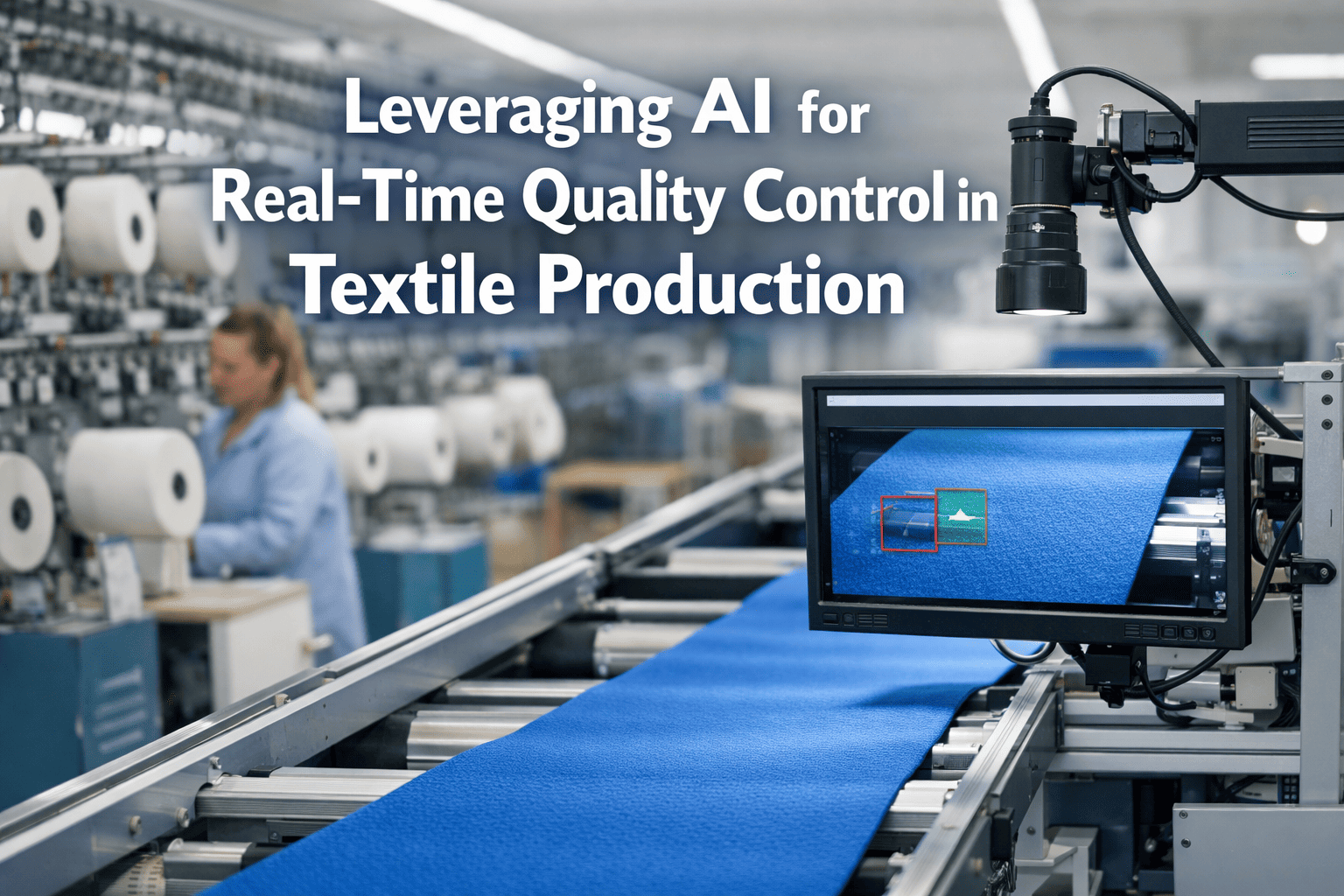
Quality defects in textile production, such as yarn breaks, color variations, or fabric flaws, must be captured and addressed instantly. Integrating SAP S/4HANA with quality inspection systems allows defect data to flow directly into the ERP, triggering non-conformance reports and corrective actions. This real-time synchronization reduces the time to identify root causes from days to minutes. Quality inspectors using handheld devices or inline sensors can record measurements that automatically update SAP quality lots and inspection plans. The system can then calculate statistical process control (SPC) metrics and alert supervisors when parameters drift out of specification. This integration ensures that quality data is not an afterthought but a live input to production planning and inventory decisions.
Inventory and Material Flow Visibility
Textile manufacturing involves complex material flows from raw fiber to finished fabric, with many intermediate stages like sliver, roving, and grey fabric. Integrating SAP S/4HANA with inventory management systems at each stage provides real-time visibility into stock levels, work-in-progress (WIP), and finished goods. This integration uses barcode scanning and RFID tagging to update SAP inventory records automatically as materials move between processes. Production planners can view accurate WIP quantities and make informed decisions about order releases and material allocations. The system also supports advanced replenishment signals, automatically generating purchase requisitions when raw material stocks fall below reorder points. This eliminates stockouts and overstock situations, reducing carrying costs and improving cash flow.
| Material Stage | SAP Integration Point | Update Frequency |
|---|---|---|
| Raw Fiber | Purchase Order Receipt | Real-time |
| Yarn | Production Order Issue | Every 10 min |
| Grey Fabric | Quality Inspection Lot | Per batch |
| Finished Fabric | Goods Receipt | Real-time |
Predictive Maintenance with SAP Integration
Unplanned machine breakdowns are a major source of lost production in textile mills. Integrating SAP S/4HANA with condition monitoring sensors and maintenance management systems enables predictive maintenance strategies. Vibration, temperature, and current data from machines are sent to SAP for analysis using built-in AI and machine learning models. When anomalies are detected, the system automatically creates a maintenance notification in SAP, assigns a priority, and suggests spare parts based on inventory data. This integration reduces mean time to repair (MTTR) by ensuring that maintenance teams have the right information and parts before arriving at the machine. Over time, the system learns failure patterns and refines prediction accuracy, further reducing unplanned downtime.
Transform Your Textile Operations Today
Integrate SAP S/4HANA with your shop floor to achieve real-time visibility and predictive maintenance. Book a demo to see how iFactory can connect your systems.
Key Benefits of SAP Integration for Textile Mills
Real-Time Production Monitoring
Gain instant visibility into machine performance, production counts, and efficiency metrics across all textile processes. This enables proactive decision-making and rapid response to deviations.
Reduced Data Redundancy
Eliminate manual data entry and duplicate records by synchronizing shop floor data directly with SAP. This ensures a single source of truth for all production and quality information.
Enhanced Quality Assurance
Automate defect capture and traceability, linking quality data to specific production orders and batches. This supports continuous improvement and compliance with customer specifications.
Optimized Inventory Management
Maintain accurate stock levels of raw materials, WIP, and finished goods with real-time updates from shop floor transactions. Reduce carrying costs and prevent stockouts.
Predictive Maintenance Capabilities
Leverage machine data and AI to predict failures before they occur, reducing unplanned downtime and extending equipment life. Maintenance teams become more efficient and effective.
Scalable Architecture
Integration solutions grow with your business, supporting additional machines, plants, and data sources without major reconfiguration. Future-proof your digital transformation.
Implementation Checklist for SAP S/4HANA Integration
Frequently Asked Questions
How does SAP S/4HANA integration with textile machines improve production efficiency?
Integrating SAP S/4HANA with textile machines enables automatic capture of real-time production data such as machine speed, runtime, and stop reasons. This data flows directly into the ERP system, eliminating manual data entry and providing production planners with accurate, up-to-the-minute information on machine performance. With this visibility, planners can make informed decisions about production scheduling, resource allocation, and maintenance interventions. For example, if a loom is running below target speed, the system can alert the supervisor to investigate and adjust parameters. Additionally, the integration supports OEE calculations and trend analysis, helping manufacturers identify chronic issues and implement continuous improvement initiatives. The result is a more responsive and efficient production environment that reduces waste and maximizes throughput. Learn more about iFactory's integration solutions for textile mills.
What are the main challenges in integrating SAP with legacy textile equipment?
Many textile mills operate legacy machinery that lacks modern communication interfaces like OPC-UA or MQTT. These machines often use proprietary protocols or simple analog signals, making data extraction difficult. To overcome this, an integration layer such as an edge gateway or PLC is required to translate machine outputs into standard formats that SAP can consume. Another challenge is data quality; sensors may drift or fail, leading to inaccurate readings. Regular calibration and validation processes must be established. Additionally, network infrastructure in older mills may not support high-frequency data transmission, requiring upgrades to ensure reliable connectivity. Despite these challenges, a phased approach starting with critical machines and using robust middleware can successfully bridge the gap. Explore how iFactory addresses legacy integration challenges.
Can SAP S/4HANA integration support real-time quality monitoring in textile production?
Yes, SAP S/4HANA can be integrated with inline quality sensors and inspection systems to capture defect data in real time. For example, vision systems inspecting fabric for defects can send data directly to SAP, creating quality notifications and updating inspection lots instantly. This allows quality teams to react immediately to issues, preventing defective material from moving to downstream processes. The integration also supports statistical process control (SPC), where measurements are compared against control limits, and alerts are generated when thresholds are breached. Over time, this data feeds into root cause analysis and helps refine production parameters to reduce defect rates. Real-time quality monitoring reduces scrap, rework, and customer complaints, directly impacting profitability. See iFactory's quality integration case studies.
What is the typical timeline for implementing SAP S/4HANA integration in a textile mill?
The timeline depends on the complexity of the existing systems, the number of machines, and the scope of integration. For a pilot project covering a single production line with 10-20 machines, implementation can take 4 to 6 weeks, including system assessment, data mapping, development, testing, and training. A full-scale rollout across an entire mill with multiple processes (spinning, weaving, dyeing) may take 3 to 6 months. Factors that influence the timeline include the availability of documentation for legacy systems, the need for hardware upgrades (e.g., new sensors or gateways), and the level of customization required. Using pre-built integration templates and middleware can significantly accelerate the process. It is advisable to start with a focused pilot to demonstrate value and then expand. Contact iFactory for a personalized implementation timeline.
How does the integration handle data security and compliance with industry standards?
Data security is a critical aspect of any ERP integration. The integration architecture uses encrypted communication channels (HTTPS, TLS) for data in transit and applies authentication mechanisms such as OAuth or API keys. Access controls are enforced at the SAP level, ensuring that only authorized systems and users can read or write data. For compliance with industry standards like ISO 27001 or GDPR, the integration solution can be configured to log all data transactions and support audit trails. Additionally, data anonymization techniques can be applied if sensitive information is involved. Regular security assessments and penetration testing are recommended to identify vulnerabilities. iFactory's integration solutions are designed with security best practices and can be customized to meet specific regulatory requirements. Learn about iFactory's security features.
Ready to Connect SAP S/4HANA with Your Textile Operations?
Achieve real-time production intelligence, reduce downtime, and improve quality with seamless integration. Book a demo today to see iFactory in action.