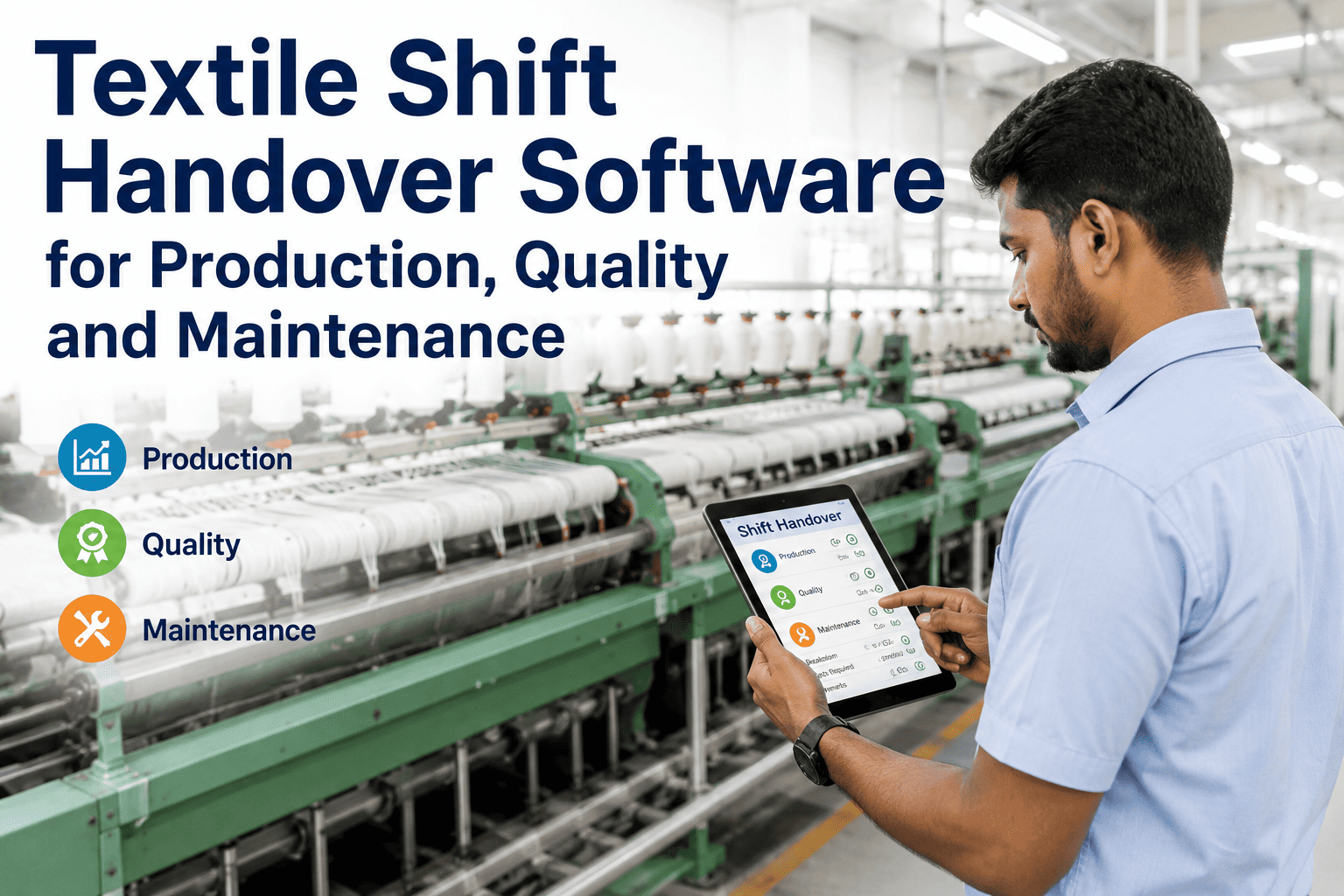
A shift handover is where information is either passed on or lost. When the outgoing team leaves in a hurry, the incoming team inherits a half-fixed loom, an unexplained quality drift or an open safety concern, and has to rediscover it. A short, structured checklist makes sure production, quality, maintenance, safety and people topics are covered every time. This checklist is built for textile floors, and teams can ask iFactory AI how handover records are captured and shared across shifts.
The Textile Shift Handover Checklist: Production, Quality and Maintenance
Six topics, one routine. iFactory AI keeps every handover on one record, so nothing important is lost between the outgoing and incoming shift.
The Handover Flow and Where Each Checklist Fits
A good handover has a rhythm. Each checklist below supports one part of it.
Tick First: What a Handover Record Must Contain
Agree the minimum content once, so every shift uses the same format.
| Topic | Minimum Content | Why It Matters |
|---|---|---|
| Production | Output against plan, current styles and open orders | Sets the incoming shift's priorities |
| Quality | Open defects, holds and parameters to watch | Prevents quality drift from repeating |
| Maintenance | Machines down, work in progress and parts needed | Avoids duplicated or missed repairs |
| Safety | Incidents, hazards and isolations in place | Protects the incoming team |
| Materials and people | Shortages, staffing gaps and training needs | Avoids early-shift surprises |
Checklist 0: Prepare Before the Shift Ends
Preparation takes five minutes and makes the handover itself much shorter.
Checklist 1: Production
The incoming shift needs to know where the plan stands and what comes next.
Checklist 2: Quality
Quality problems often start on one shift and surface on the next. Pass them on clearly.
Make Every Handover Complete, in Under Ten Minutes
Book a 30-minute session and iFactory AI will review your current handover routine to show how a structured record can protect production, quality and safety.
Checklist 3: Maintenance
Open repairs and half-finished work are the most dangerous things to forget.
Checklist 4: Safety
Safety information must never depend on memory. Make it explicit.
Checklist 5: Materials and Planning
Material surprises at shift start waste the first hour. Pass on what is coming and what is short.
Checklist 6: People and the Floor Walk
The final step is a conversation, not a document. Walk the floor together.
Mistakes to Avoid: The Do-Not-Tick List
If any of these describe your handovers, fix them first.
What iFactory AI Ticks Off For You
iFactory AI is smart manufacturing and industrial software for textile operations. These items can run automatically once shift records are connected.
Score Your Handover
Count the boxes you can honestly tick across Checklists 0 to 6, then read your result.
Under 15 ticked
Handovers are informal. Start with preparation and a fixed format.
15 to 30 ticked
The basics work. Focus on maintenance, safety and confirmation.
30 to 40 ticked
A solid routine. Automate summaries and carry-forward.
Above 40 ticked
Excellent. Share the routine and track repeat issues.
Review of Textile Shift Handover
A practical review of what makes handovers reliable, written as editorial guidance rather than a named expert quote.
Use one format
A fixed format makes gaps visible, because a missing section stands out.
Never skip safety
Safety information must be explicit in every handover.
Confirm understanding
A handover is finished when the incoming lead confirms it.
Frequently Asked Questions
What should a textile shift handover include?
Production status, open quality items, machines down or under repair, safety issues, material status and people needs. See a complete handover record in a live demo with realistic data. A fixed format makes it quick.
How long should a handover take?
Ten to fifteen minutes is typical for a department, longer only when something unusual happened. Preparation before the shift ends keeps it short. Rushed handovers cost far more time later.
Why do handovers fail?
Usually because information is passed by memory, formats differ between shifts and nobody confirms understanding. Ask support how confirmations are captured in handover records in the system. Structure and confirmation fix most failures.
Should supervisors write or talk?
Both. Written notes preserve detail and a short conversation checks understanding. The best handovers combine a record with a floor walk.
How quickly can we improve our handovers?
Many teams see better handovers within weeks of using a fixed format. Book time to scope a handover pilot on one department. Fewer morning surprises is the clearest sign.
Never Lose Important Information Between Shifts Again
iFactory AI keeps every handover on one record, with open items carried forward until closed. Book a walkthrough to see it on your own shifts.