Blockchain in Textile Supply Chains: Ensuring Transparency and Ethical Sourcing

By Johnson on March 9, 2026

blockchain-textile-supply-chains-transparency-ethical-sourcing

A garment lands on a shelf in Berlin. The label says "100% organic cotton, ethically sourced." But how does the brand — or the buyer — actually know that? Today, most of them don't. Blockchain technology is changing that by creating an unbreakable chain of verified records from cotton field to finished fabric. Book a free demo to see how iFactory helps textile manufacturers build the traceability that buyers and regulators now demand.


Blockchain · Supply Chain · Ethical Sourcing · Textile Manufacturing

Every Thread Has a Story.
Blockchain Makes It Verifiable.

The blockchain supply chain market is growing at 44.5% annually — and textile buyers are driving it. Manufacturers who can prove origin, process, and ethics are winning contracts. Those who can't are being replaced.

$601M Blockchain in textile market 2025

18.8% Annual CAGR through 2032

73% Consumers willing to pay more for transparent brands

<1% Of textile supply chains fully traceable today

Why Textile Supply Chains Are a Transparency Crisis

The average garment passes through 7 countries before it reaches the consumer. At each handoff, data gets lost, altered, or simply never recorded. The result is a supply chain that nobody — not even the brand — can fully see.

$450B
Lost annually to supply chain fraud and counterfeit textiles worldwide
7+
Countries the average garment passes through before reaching a consumer
60%
Of sustainability claims in fashion found to be unsubstantiated or misleading
72%
Of major buyers now require digital production traceability from their textile suppliers

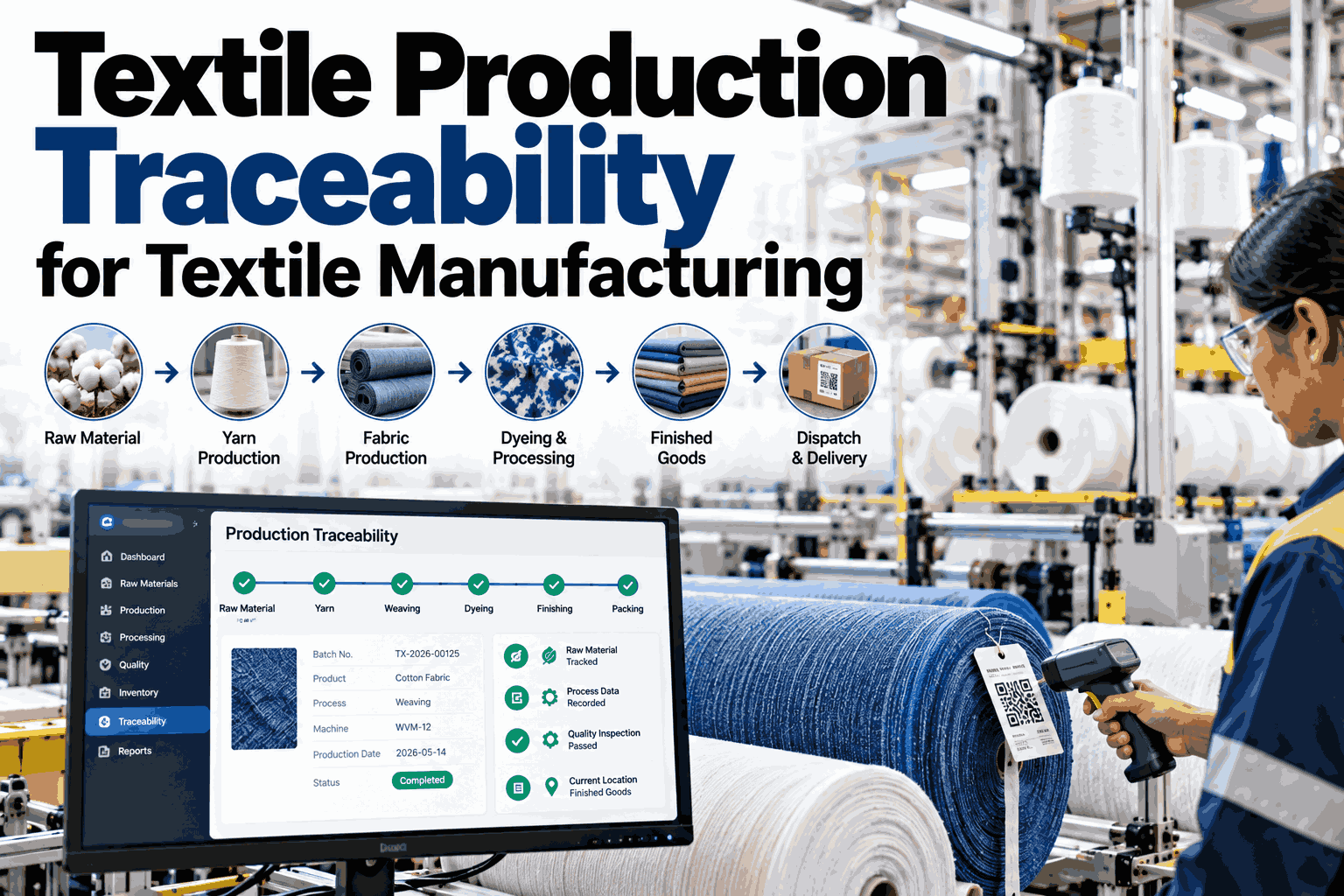
The Textile Supply Chain: Where Blockchain Adds Value

Blockchain does not replace your supply chain — it verifies it. Each stage of your production becomes a tamper-proof, timestamped record that any authorized party can read and trust.

From Raw Material to Finished Fabric — Verified at Every Step
Raw Material
Fiber origin, farm certification, organic/recycled status logged on-chain
Verified

Spinning & Yarn
Yarn count, twist, supplier ID and batch number recorded immutably
Verified

Weaving & Knitting
Machine ID, operator, fabric specs, and quality pass/fail captured per work order
Verified

Dyeing & Finishing
Chemical inputs, water usage, GOTS/OEKO-TEX compliance documented per batch
Verified

Export & Buyer
Full audit trail delivered to brand — ready for Digital Product Passport compliance
Delivered
Every record is timestamped, immutable, and available to authorized buyers, auditors, and regulators on demand

What Blockchain Actually Fixes in Textile Sourcing

Blockchain isn't magic — it's a trust infrastructure. Here's what it specifically solves for textile manufacturers and their buyers.

Before Blockchain

Sustainability certifications exist only as PDF documents that can be forged, backdated, or applied to wrong batches

With Blockchain

Each certification event is written to an immutable ledger — tied to a specific lot, date, and verified third party

Before Blockchain

When a buyer questions the origin of a fabric, it can take weeks of emails, spreadsheets, and phone calls to reconstruct the trail

With Blockchain

Full provenance is available instantly — from fiber origin to finished roll — in a single shareable digital record

Before Blockchain

Brands cannot verify labour conditions at sub-tier suppliers — leaving them exposed to compliance violations they didn't know existed

With Blockchain

Supplier credentials, audit results, and compliance status are on-chain — accessible and verifiable by the brand in real time

Regulatory Alert: The EU's Corporate Sustainability Due Diligence Directive (CSDDD) and Ecodesign for Sustainable Products Regulation (ESPR) are creating legally binding supply chain transparency requirements. Digital Product Passports — phasing in from 2026 — will require manufacturers supplying European brands to document material origin, production conditions, and chemical inputs. Blockchain is the primary technology enabling this compliance at scale.

The Market Has Already Made Its Decision

Blockchain-driven supply chain transparency is not a future option — it is current buyer expectation. These numbers show where the market is heading and how fast.

Blockchain in Textile Market Growth (USD Million)
2024

$512M
2025

$601M
2027

$849M
2029

$1.2B
2032

$2.04B
Growing at 18.8% CAGR — textile-specific blockchain adoption
24.5%
of all blockchain supply chain use is product traceability — the fastest growing application
50.1%
CAGR for SME blockchain adoption — mills of all sizes are adopting
$21.3B
Blockchain supply chain market projected by 2029 — across all industries
iFactory for Supply Chain Traceability

Give your buyers the verified production trail they're asking for

iFactory's work order system creates the timestamped, per-order production records that feed directly into blockchain traceability and Digital Product Passport documentation — no extra steps needed.

Three Pillars of Blockchain-Enabled Ethical Sourcing

Ethical sourcing claims need to be backed by proof. Blockchain provides the three foundations that transform a claim into a verified record that buyers, auditors, and regulators can trust.

01

Immutability

Once a production event is recorded on-chain — a material input, a quality check, a shipment — it cannot be altered or deleted. This makes fraud structurally impossible and claims structurally verifiable.

Use case: Proving organic cotton was used in a specific batch, not swapped out during production
02

Transparency

Authorized parties — buyers, auditors, certification bodies — see exactly what happened in production. No more "trust us" sourcing claims. The evidence is independently visible and verifiable by any permitted stakeholder.

Use case: Buyer compliance teams verifying working conditions and material origin before placing orders
03

Interoperability

Blockchain records from one mill connect to records from other supply chain participants — spinners, dye houses, logistics providers. The result is a single unbroken thread of data across the entire value chain.

Use case: Brands building Digital Product Passports from supplier data without manual reconciliation

How iFactory Supports Your Blockchain Readiness

You don't need to implement blockchain overnight. You need to start generating the verifiable production data that makes blockchain traceability possible. iFactory is the production data foundation.

01

Digital Work Orders With Material Tracking

Every production run is logged with material input, lot number, supplier, and quantity — creating the per-batch records that blockchain traceability requires at its foundation.

02

Quality Checkpoints Per Production Stage

In-process quality gates log pass/fail results at each production stage — giving auditors the evidence that quality standards were applied at the point of production, not retrospectively claimed.

03

Full Production Audit Trail

Every work order is timestamped with operator, machine, material source, and quality outcome — forming a complete chain of custody record from raw material receipt to finished goods dispatch.

04

Buyer-Ready Compliance Reports

Automated reports on material utilisation, quality pass rates, and production conditions — structured for GRS, GOTS, and Digital Product Passport requirements. Ready at any time, for any audit.

"
Blockchain's role in supply chain transparency will expand. More brands are likely to adopt this technology, as consumers continue to demand ethical sourcing and traceable products — and regulatory frameworks make documentation a legal requirement.
— Textile World, Supply Chain Trends Report 2025

Frequently Asked Questions

What textile manufacturers actually ask when they start exploring blockchain for their supply chains — answered without the jargon.

Both parties play a role, but the mill's contribution is foundational. Brands and platforms implement the blockchain layer — but they can only put verified data on-chain if the mill is generating it. A mill that cannot provide timestamped, per-lot production records with material inputs and quality outcomes cannot participate in any blockchain traceability system, regardless of what the brand has built. The mill's job is to generate clean, structured production data. iFactory makes that operationally simple.
No. Blockchain traceability is relevant for any textile product sold to a brand that faces regulatory or consumer scrutiny over supply chain practices — which now covers virtually the entire apparel, home textile, and technical fabric market. EU regulations under CSDDD apply to all sourced goods, not just certified sustainable ones. The question isn't whether your product is organic; it's whether you can document what went into it and how it was made.
A Digital Product Passport (DPP) is a structured digital record containing a garment's full lifecycle — material composition, production origin, environmental data, and end-of-life instructions. The EU's Ecodesign for Sustainable Products Regulation is phasing in DPP requirements from 2026. Blockchain is the infrastructure that makes DPPs tamper-proof — because it ensures the production data feeding the DPP cannot be altered after the fact. Mills supplying European brands need to produce the verified production records that DPPs require. That documentation chain starts at the production floor.
Start with digital production records. Before any blockchain layer can be applied, a mill needs clean, structured, per-lot data: what material went in, on which machine, on which date, through which quality checks. Paper records and Excel sheets cannot feed a blockchain system. A digital factory management platform — like iFactory — is the practical first step. Once your production data is digital, structured, and time-stamped, connecting it to a blockchain traceability layer becomes straightforward. Most mills can achieve this in under 4 weeks.
The four most commonly required by tier-1 brands are: GRS (Global Recycled Standard) for recycled content claims, GOTS (Global Organic Textile Standard) for organic fiber processing, OEKO-TEX STANDARD 100 for chemical safety, and Bluesign for responsible resource use. All four require documented process evidence — not just a certificate. Maintaining these certifications demands consistent production records, audit trails, and quality documentation: exactly what a digital factory management system provides automatically.

Your Buyers Are Already Asking for This

Can You Prove Where
Your Fabric Came From?

iFactory gives textile manufacturers the digital production records, material traceability, and audit-ready reports that blockchain and buyer compliance demands — deployed in under 4 weeks.
Per-lot material input tracking Timestamped production audit trail GRS, GOTS & DPP-ready reports Buyer-shareable compliance documentation
Blockchain Textile Market
$2.04B
by 2032 — at 18.8% annual growth

Buyers requiring traceability72%
Greenwashing claims unverified60%
SME blockchain adoption CAGR50%
Product traceability market share24.5%

Share This Story, Choose Your Platform!