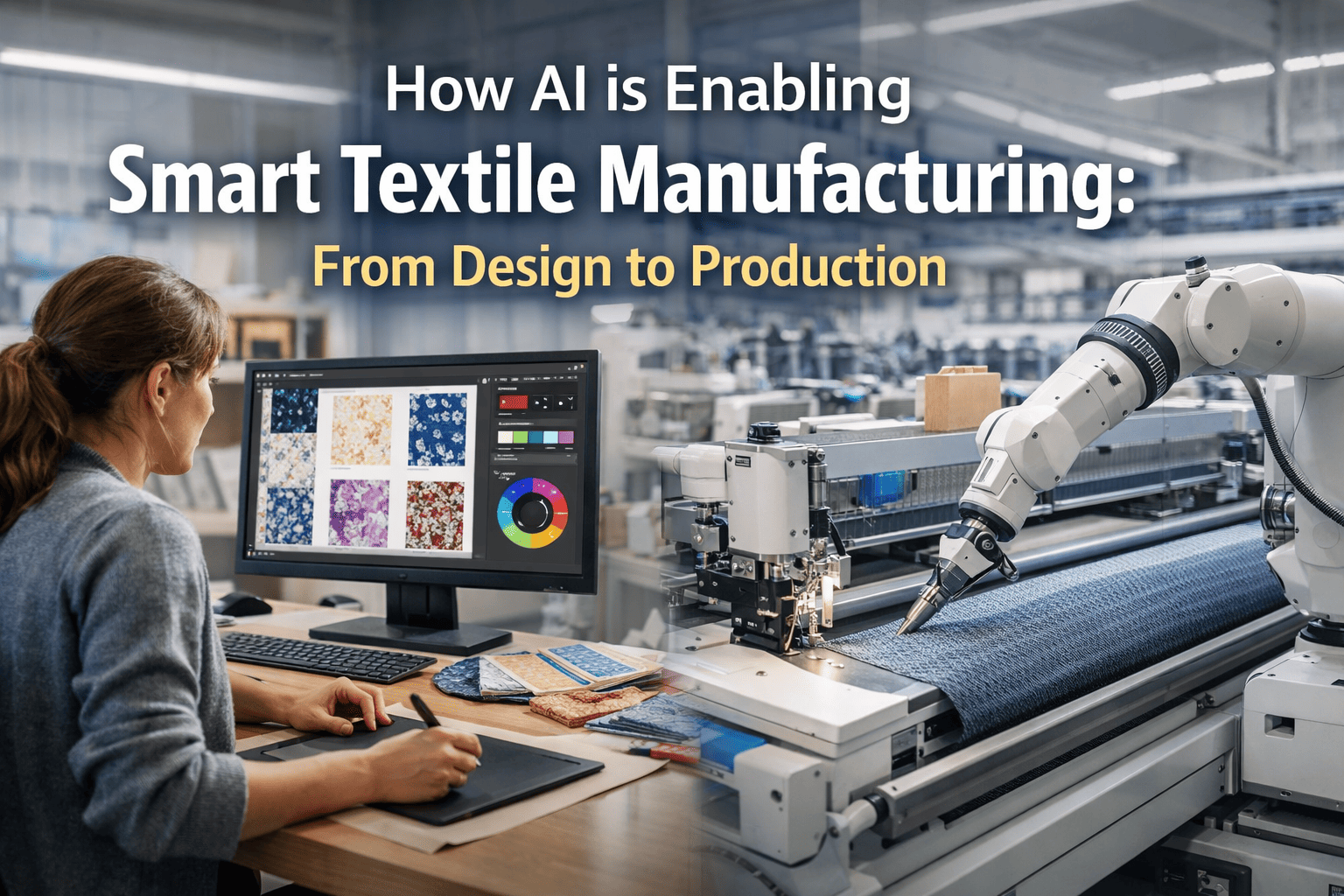
Smart textiles — fabrics that sense, react, and communicate — represent the convergence of textile manufacturing with electronics, materials science, and data processing. The global smart textiles market is projected to reach $9 to $12 billion by 2030, driven by demand from healthcare monitoring, sportswear biometrics, industrial safety, and military protective systems. At the core of every smart textile is a conductive fiber or yarn that enables electrical functionality within the fabric structure. Understanding the types of conductive fibers available, their properties and limitations, and the methods for integrating sensors into fabric is essential for textile mills evaluating whether to enter this high-growth segment. Three generations of smart textiles exist today — passive, active, and intelligent — each requiring progressively more sophisticated manufacturing capabilities and electronics integration. Mills that invest now in conductive fiber processing and sensor integration capabilities will be positioned to capture a share of the fastest-growing segment of the textile industry.
Assess Your Mill's Readiness for Smart Textile Manufacturing
iFactory Smart Textile Module evaluates your current equipment, material handling, and quality control capabilities against the requirements of conductive fiber processing and sensor integration — and generates a capability upgrade roadmap.
Three Generations of Smart Textiles — Passive, Active & Intelligent
Smart textiles are categorized by their level of functionality. Each generation builds on the previous one, adding sensing, response, and decision-making capabilities. Understanding the tier structure helps mills identify which applications they can manufacture with their current equipment and what upgrades are needed for higher-tier products.
Passive Smart Textiles
Sense OnlyMonitor and measure environmental conditions or physiological parameters using conductive fibers as sensing elements. No response or decision-making capability. The fabric itself acts as the sensor — resistance or capacitance changes in response to stretch, pressure, temperature, or moisture.
Active Smart Textiles
Sense + ReactDetect a specific stimulus and respond with a pre-programmed action. The response may be thermal, optical, chemical, or mechanical. Active smart textiles integrate both sensing elements and actuating elements within the fabric structure, often requiring a power source and basic control circuitry.
Intelligent Smart Textiles
Sense + React + AdaptProcess data, make decisions, communicate wirelessly, and adapt behavior over time. Intelligent smart textiles integrate microcontrollers, flexible printed circuits, wireless communication modules, and sometimes on-device machine learning. They represent the frontier of textile-electronics integration and require multidisciplinary manufacturing capabilities.
Conductive Fiber Types Compared — Properties & Applications
The conductive fiber or yarn is the fundamental building block of every smart textile. Five material types dominate the market, each with distinct trade-offs between conductivity, wash durability, cost, and manufacturing compatibility. The choice of conductive fiber determines what types of sensors and circuits can be created, and at what cost.
| Fiber Type | Conductivity | Stretchability | Washability | Cost per Meter | TRL | Best Application |
|---|---|---|---|---|---|---|
| Silver-coated nylon | $2–$5 | 9 | ECG monitoring, heating elements | |||
| Carbon nanotube (CNT) | $10–$30 | 6–7 | High-sensitivity strain sensors | |||
| Graphene fiber | $15–$40 | 5–6 | Chemical sensors, supercapacitors | |||
| Copper wire | $1–$3 | 9 | Power transmission, heating | |||
| PEDOT:PSS | $5–$15 | 6–7 | Stretchable sensors, bio-signals |
Four High-Growth Markets for Smart Textiles in 2026
Smart textile adoption is concentrated in four sectors that share common requirements — reliable sensing, durable integration, and washable electronics. Each sector has distinct performance requirements, regulatory constraints, and willingness to pay for smart functionality.
Healthcare & Medical
Continuous patient monitoring, smart bandages with infection detection, compression therapy with pressure feedback, and post-surgical rehabilitation tracking. Driven by aging populations and remote healthcare adoption.
Sportswear & Fitness
Biometric performance tracking, muscle activity monitoring, recovery optimization, and form correction. Consumer demand for quantified self drives adoption in premium activewear and professional sports.
Industrial & PPE
Worker safety monitoring, hazardous gas detection, fatigue alerting, connected PPE for lone workers, and emergency location tracking. Regulatory mandates for worker safety drive adoption across manufacturing, construction, and mining.
Military & Defense
Battlefield physiological monitoring, camouflage with adaptive coloration, communication-integrated uniforms, injury detection and hemorrhage control, and chemical/biological threat detection.
Identify Your Mill's Best Smart Textile Market Entry Point
iFactory analyzes your existing equipment, material handling, and quality systems against the requirements of each application sector — and recommends the smart textile product category with the shortest time-to-revenue for your facility.
Sensor Integration Methods — How Electronics Meet Fabric
Five primary methods exist for integrating conductive fibers and electronic components into textile structures. The choice of integration method determines sensor performance, wash durability, production speed, and cost — and must be matched to both the application requirements and the mill's existing manufacturing capabilities.
Embroidery
Conductive yarns stitched onto fabric surface. Best for discrete sensor placement and electrical connections. High wash durability. Medium production speed.
Lamination
Conductive films or flexible circuits bonded to fabric. Best for large-area sensors and complex circuits. Lower wash durability. Fast production speed.
Weaving
Conductive yarns integrated during weaving. Best for continuous sensing across large areas. High wash durability. Fast if loom-configured from the start.
Knitting
Conductive yarns knit into fabric structure. Best for stretch sensors and form-fitting garments. High wash durability. Fast production speed.
Screen Printing
Conductive inks printed onto fabric. Best for electrodes, heating zones, and large-area sensors. Lower wash durability. Fastest production speed.
Smart Textile Market Growth by Sector — 2026 to 2030
The smart textiles market is projected to grow at a compound annual rate of 18 to 22 percent across all sectors, with healthcare and industrial segments showing the fastest adoption due to regulatory drivers and aging demographics.
Frequently Asked Questions
What is the difference between passive and active smart textiles?
Passive smart textiles sense and measure environmental or physiological parameters without responding — they monitor temperature, heart rate, pressure, or moisture using conductive fibers as passive sensing elements, and the data is transmitted to an external device for processing. Active smart textiles add a response capability: when the sensor detects a specific stimulus, the fabric reacts by heating, changing color, releasing a chemical, or adjusting its insulation properties. The key distinction is that passive textiles are sensor-only, while active textiles integrate both sensors and actuators within the fabric structure. Passive textiles are simpler to manufacture and have fewer washability challenges, while active textiles require power delivery and control circuitry integrated into the garment.
Can smart textiles be washed, and how many cycles do they withstand?
Wash durability is the single biggest technical challenge in smart textile manufacturing. Washability depends on three factors: the conductive fiber type (copper and silver-coated nylon are most wash-resistant, PEDOT:PSS degrades fastest), the integration method (embroidery and weaving offer the best wash durability, screen printing the least), and the encapsulation method used to protect connections and electronics. Typical smart textile products withstand 20 to 50 home laundry cycles before measurable conductivity loss, with premium products achieving 100-plus cycles. Industrial and medical smart textiles often use removable electronic modules that detach before washing, allowing the fabric component to be washed 200-plus cycles while the electronics are protected. Mills entering the smart textile market should prioritize wash testing as a core quality validation step.
What is the most cost-effective conductive fiber for a mill starting smart textile production?
Silver-coated nylon yarn is the most cost-effective entry point for mills starting smart textile production. At $2 to $5 per meter with high conductivity, good stretchability, and robust wash durability (TRL 9), it supports the widest range of applications from ECG monitoring to heating elements. Silver-coated nylon is compatible with standard knitting, weaving, and embroidery equipment without modification, making it accessible to mills with existing textile machinery. The primary limitation is cost sensitivity — at scale, material cost can account for 30 to 50 percent of the finished smart textile product cost. Mills should also evaluate copper wire at $1 to $3 per meter for applications requiring maximum conductivity with minimal stretch (heating elements, power transmission), but copper's lack of stretchability limits its use in form-fitting and wearable applications.
How does iFactory support smart textile manufacturing?
iFactory supports smart textile manufacturing through three capabilities: the Capability Assessment module evaluates existing equipment, material handling systems, and quality control processes against the specific requirements of each conductive fiber type and integration method, generating a quantified readiness score per smart textile product category; the Production Tracking module provides real-time monitoring of conductive yarn tension, temperature, and humidity during processing — critical parameters that affect conductivity consistency in smart textiles; and the Quality Analytics module tracks conductivity test results per batch, correlates process parameters with electrical performance, and generates the statistical process control documentation that medical and military smart textile buyers require as part of their supplier qualification process.
What are the main barriers to scaling smart textile production?
Smart textile production faces four main barriers to industrial scale. First, wash durability remains inconsistent across production batches — conductivity loss after 20 to 30 washes is common, and achieving 100-plus wash cycles reliably at production scale requires tight process control that most mills lack. Second, connectorization — attaching electronic modules to fabric in a way that survives washing and flexing — has no standardized solution and is often done manually, creating a bottleneck in production throughput. Third, testing and quality assurance for electrical properties requires new equipment (conductivity meters, impedance testers, wash cycle simulators) and trained personnel that most textile mills do not have in-house. Fourth, raw material supply for specialty conductive fibers — particularly CNT and graphene fibers — is limited to small-scale producers, creating lead times of 8 to 16 weeks and price volatility. Each barrier is addressable with targeted investment, but mills should budget 12 to 24 months for process development and qualification before achieving commercial-scale smart textile production.
From Conductive Fiber to Smart Product — One Platform
iFactory assesses your mill's smart textile readiness, tracks conductive fiber processing parameters in real time, and provides the quality analytics that medical, sportswear, and industrial buyers require for supplier qualification.

.jpg)