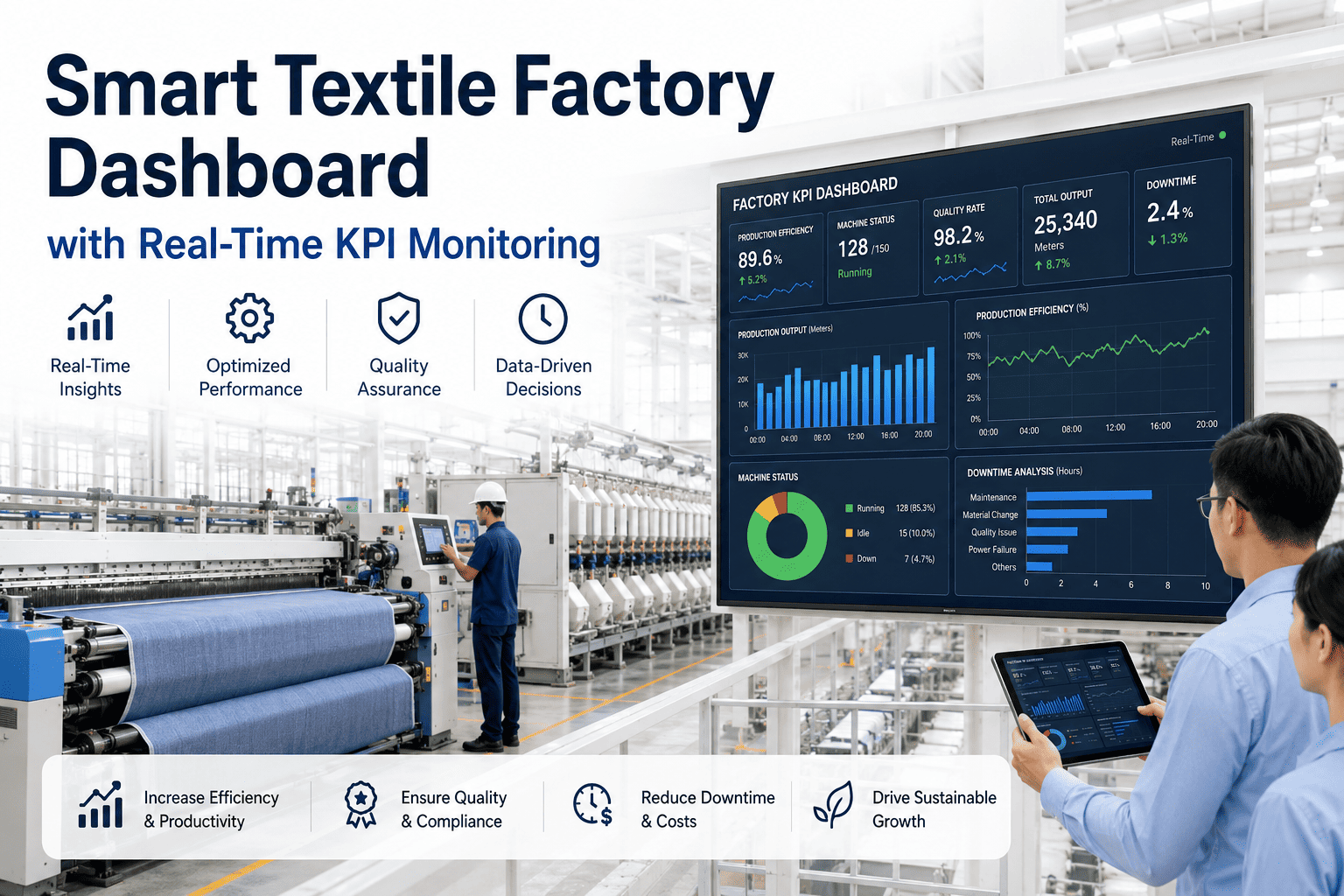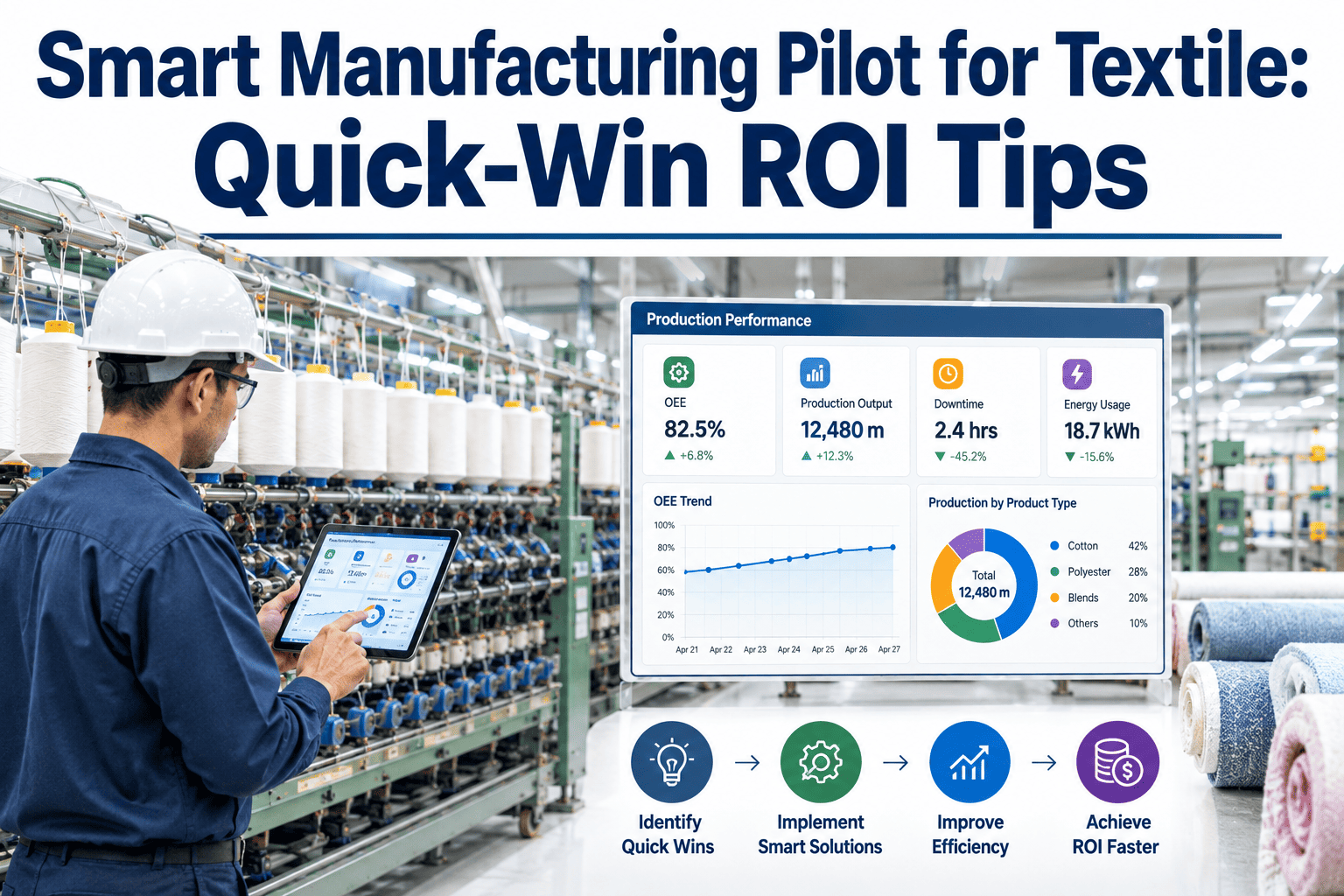
Most smart manufacturing conversations in textile mills stall at the same point: leadership wants proof before committing to a factory-wide rollout, and nobody wants to be the one who spent budget on a pilot that produced a nice dashboard but no measurable business result. The mills that actually get past this stall point don't start with the most ambitious technology available, they start with the narrowest possible pilot that can show a real number within ninety days. A pilot scoped around one line, one loss category, and one clear before-and-after metric turns an abstract digital transformation pitch into a concrete decision leadership can approve or reject on evidence. Mills ready to scope a pilot like that can talk it through with iFactory's support team before committing to a full rollout.
Prove It in 90 Days Before You Ever Ask for a Factory-Wide Budget
iFactory scopes pilots around one line and one measurable loss category, so your first smart manufacturing win produces a real number in under three months instead of a stalled proof of concept nobody will sign off to expand.
Why So Many Textile Pilots Never Get Past the Pilot Stage
Ambitious pilots fail for a predictable reason: they try to prove too much at once, across too many lines, with a success metric too vague for anyone to agree it actually worked. A pilot that monitors five different loss categories across three departments simultaneously produces a mountain of dashboards and no single number leadership can point to when deciding whether to expand it.
No Baseline Measured Before Starting
Without a documented before number, even a genuinely successful pilot has nothing concrete to compare against when the review meeting arrives.
Scope Creep Into Every Department at Once
Trying to pilot spinning, weaving, and dyeing simultaneously multiplies integration complexity and delays the first result far past the point where momentum matters.
Success Metric Chosen After the Fact
Deciding what counts as success only once the pilot is already running invites disagreement exactly when a clear result is needed most.
No Decision Point Built Into the Timeline
A pilot without a scheduled go or no-go review tends to drift indefinitely, quietly consuming budget without ever forcing a scale-up decision.
Choosing the Right Loss Category for a First Pilot
Not every operational loss makes an equally good pilot target. The best first pilot targets a loss that's frequent enough to generate meaningful data within weeks, visible enough that the improvement is obvious to everyone on the floor, and contained enough to measure without needing data from three other departments.
| Loss Category | Data Needed | Typical Time to First Signal | Pilot Fit |
|---|---|---|---|
| Machine Downtime | Stop/start events per shift | 2-3 weeks | Strong first pilot choice |
| Fabric Defect Rate | Inspection logs by defect type | 3-4 weeks | Strong, especially at one process stage |
| Energy Consumption | Meter data by line or machine | 4-6 weeks | Good for utilities-conscious plants |
| Cross-Department OEE | Multiple integrated systems | 8-12 weeks | Better suited to a phase two pilot |
The 90-Day Pilot Structure That Actually Produces a Decision
A pilot built to reach a clean scale-up decision follows a deliberately tight structure, with each phase producing something specific rather than open-ended exploration.
Baseline and Scope, Weeks 1-2
Document the current loss level precisely, on the specific line chosen, before any new system touches the process.
Connect and Go Live, Weeks 3-6
Integrate the minimum data sources needed for the chosen metric, resisting the urge to add extra tracking scope mid-pilot.
Run and Track, Weeks 7-10
Operate under normal production conditions while tracking the agreed metric daily, resisting the urge to change scope mid-run.
Present and Decide, Weeks 11-13
Bring the measured before-and-after result to a scheduled review meeting where a scale-up or stop decision actually gets made.
Scope a Pilot That Actually Reaches a Decision
iFactory helps mills pick the right loss category, the right pilot line, and the right success metric so the first ninety days produces a real number, not another open-ended proof of concept.
A Composite Scenario: The Weaving Pilot That Unlocked the Rest of the Mill
A mid-size composite mill had discussed smart manufacturing investment for over a year without committing budget, largely because two previous proposals had asked for mill-wide rollouts leadership wasn't comfortable approving sight unseen. The quality and operations teams instead scoped a single pilot around downtime tracking on four looms in one weaving shed, with a specific target of reducing unplanned stops by fifteen percent within the ninety-day window.
The baseline period showed those four looms losing an average of eleven percent of scheduled run time to unplanned stops, mostly undocumented beyond a generic maintenance log entry. Once real-time stop-cause tracking went live, patterns emerged within the first three weeks that hadn't been visible before, including a recurring tension-related stoppage traceable to a specific bobbin supplier. By the ninety-day review, unplanned stops on the pilot looms had dropped to just under seven percent, comfortably clearing the target, and the specific, documented cause data made the case for expanding the same tracking across the full weaving shed an easy approval.
Common Mistakes That Sink a First Pilot
Choosing the Most Complex Line to Impress Leadership
A pilot on the mill's most complicated, highest-visibility line multiplies integration risk exactly where a first pilot needs the fewest variables.
Skipping the Baseline Because It Feels Obvious
A remembered estimate of the before state rarely survives scrutiny once the after number is presented, undermining an otherwise successful pilot.
Letting the Pilot Run Without a Scheduled Review Date
An open-ended pilot with no fixed decision point tends to quietly extend for months without ever forcing the scale-up conversation.
Measuring Too Many Metrics to Tell a Clean Story
A pilot report with a dozen secondary metrics dilutes the one number that actually needs to convince leadership.
Is Your Mill Ready to Scope a First Pilot
You can name one loss category costing real money today
Downtime, defect rate, or energy waste that leadership already recognizes as a problem makes the strongest pilot case.
You have one line where a pilot can run without disrupting others
Isolating the pilot to a single line or shed keeps integration simple and makes the before-and-after comparison cleaner.
Leadership has agreed on what success looks like in advance
A specific target number, set before the pilot starts, removes ambiguity from the final review conversation.
A review date is already on the calendar
Scheduling the go or no-go meeting before the pilot begins is what actually forces a decision rather than indefinite drift.
Frequently Asked Questions
How do we pick which loss category to pilot first?
Choose the loss category that's frequent enough to generate a meaningful sample within a few weeks, visible enough that everyone on the floor recognizes the problem, and contained enough to measure without needing integration across multiple departments at once. Machine downtime and defect rate at a single process stage both tend to make strong first pilots for exactly this reason, while cross-department OEE or energy programs usually work better as a second-phase expansion. Mills unsure which category fits their situation can talk it through with iFactory support.
Is ninety days really enough time to see a meaningful result?
For a well-scoped, software-first pilot focused on a frequent loss category like downtime or defect rate, yes, ninety days is generally enough to establish a baseline, go live, run under normal production conditions, and gather enough data for a statistically meaningful before-and-after comparison. Hardware-heavy pilots involving new sensors or automated inspection equipment sometimes need a longer window to reach full payback, though the pattern-level insights usually still emerge within the first several weeks of live data.
What happens if the pilot doesn't hit its target number?
A pilot that falls short of its target still produces valuable information, provided the baseline and metric were defined clearly enough to understand why. Sometimes the shortfall points to a root cause the pilot itself uncovered, like a supplier or maintenance issue that needs addressing before the technology can show its full impact, which is itself a useful outcome worth reporting honestly rather than a failed pilot to bury.
Can a successful single-line pilot really justify a mill-wide rollout decision?
A single well-documented pilot with a clear baseline, a specific target, and a measured result is often exactly the evidence leadership needs to approve broader investment, since it replaces an abstract technology pitch with a concrete number from the mill's own floor. Book a demo to see how a pilot result typically translates into a scoped rollout plan for the rest of the facility.
Do we need new hardware to run a first pilot, or can it work with what we already have?
Most software-first pilots, including downtime tracking, digital work orders, and inspection logging, can run on top of existing machine controls and manual data entry points without new sensors, which is exactly why they tend to reach a measurable result faster than hardware-intensive pilots. Retrofit sensors or automated inspection systems can be added in a later phase once the software-first pilot has already proven the underlying value case.
Get a Real Number in 90 Days, Not Another Stalled Pilot
iFactory helps mills scope a focused pilot around one line and one measurable loss category, turning your first smart manufacturing investment into evidence, not another dashboard nobody expands.