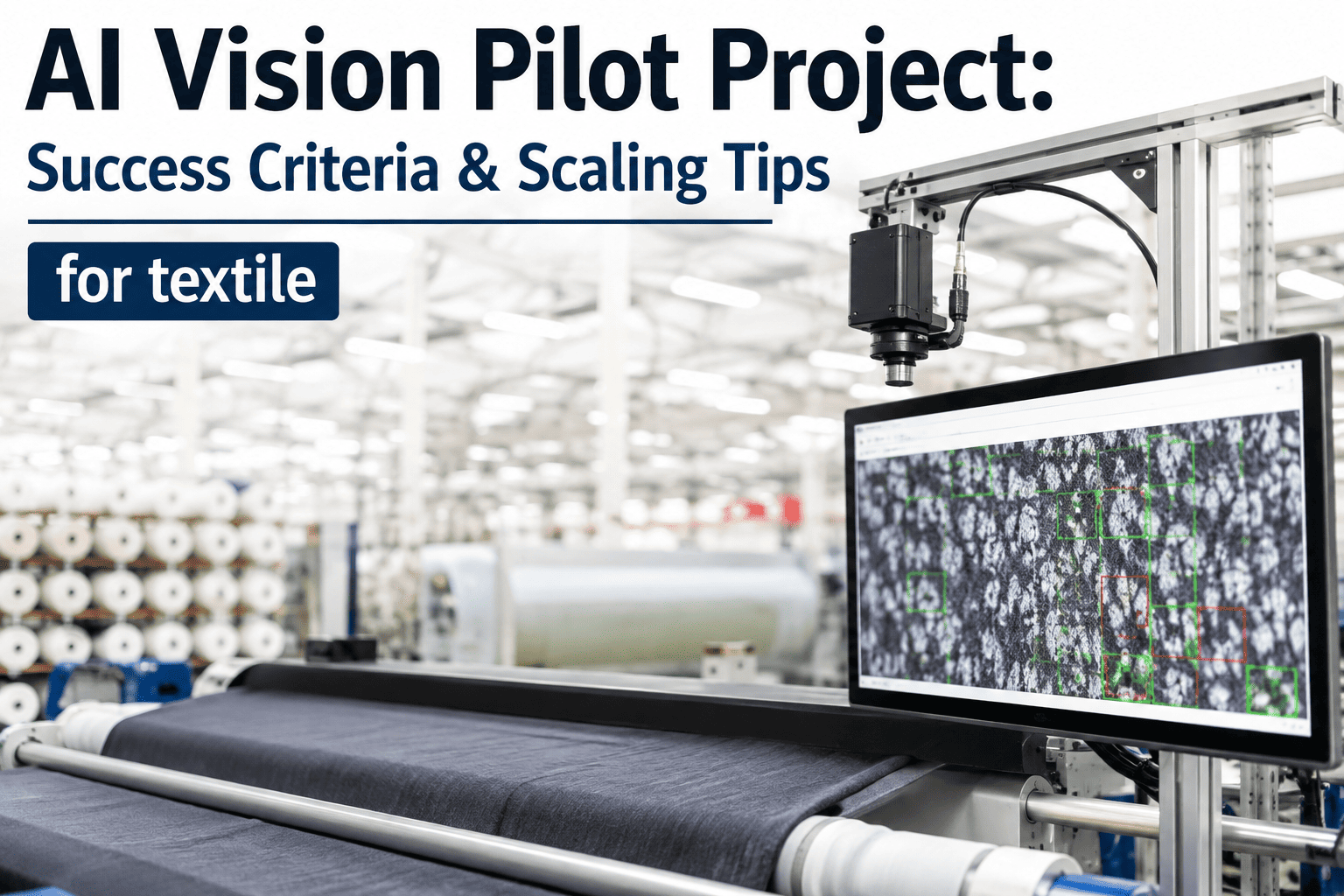
Most AI vision pilots in textile plants fail for a reason that has nothing to do with the technology: nobody defined what success looked like before the pilot started. Three months in, the AI system is running, the data is accumulating, and the plant manager is being asked whether it worked — but without a pre-agreed metric, that question gets answered by opinion instead of evidence. A pilot with clear success criteria set on day one produces a scaling decision everyone trusts. To design a properly scoped pilot for your line, book a demo with iFactory AI.
Design a Pilot With Success Criteria Set Before You Start.
iFactory AI helps you pick the right pilot line, define measurable success metrics, and build the scaling plan before the pilot even begins.
Choosing the Right Line for Your First AI Vision Pilot
Not every line is a good pilot candidate. Picking the wrong one — too low-volume to generate meaningful data, too complex to isolate variables, or too critical to tolerate any disruption during setup — is one of the most common reasons pilots stall before producing a clear result. The right pilot line balances four specific criteria.
High Defect-Cost Line
Choose the line where quality rejection or rework cost is currently highest — this is where the ROI signal will be clearest and fastest to measure.
Stable Fabric Type
Pick a line running a consistent fabric type or product family during the pilot window, so the model isn't asked to generalize across too much variation too early.
Existing Manual Baseline
Select a line where manual inspection data already exists, giving the pilot a direct accuracy and speed comparison point from day one.
Moderate Line Speed
Avoid your fastest or most complex line for the first pilot — moderate speed lines are easier to validate and de-risk the initial deployment.
The Four Phases of a Well-Structured AI Vision Pilot
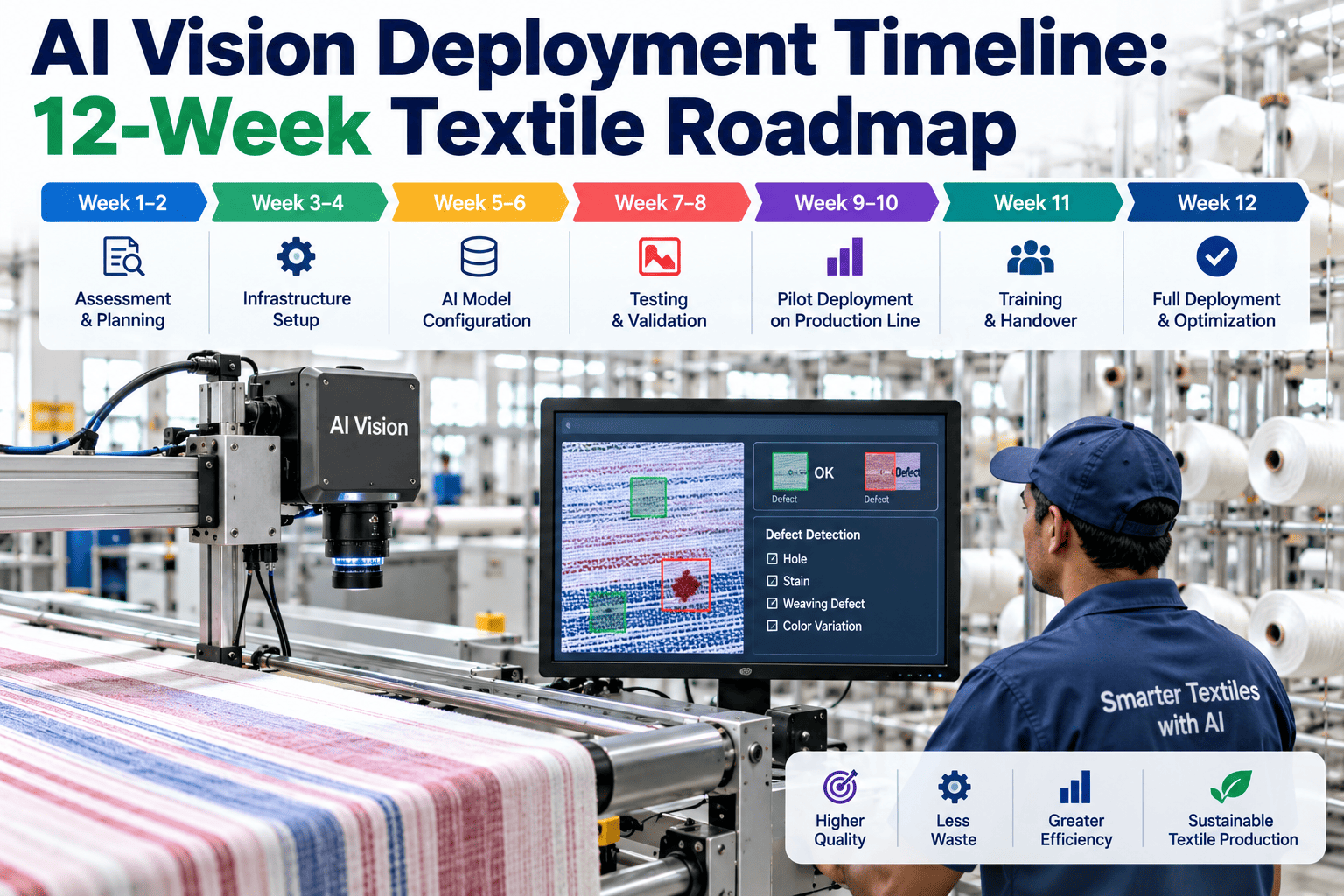
A pilot that produces a trustworthy scaling decision moves through four distinct phases, each with its own duration and its own exit criteria before moving to the next.
Setup & Baseline
Camera installation, initial model training on fabric samples, and capture of current manual inspection accuracy and speed as the comparison baseline.
Shadow Mode
AI system runs alongside manual inspection without making live decisions, generating a direct accuracy comparison across a statistically meaningful sample size.
Live Trial
System takes over live accept/reject decisions on a defined shift or portion of production, with manual spot-checks to validate confidence.
Evaluation & Decision
Results compared against pre-defined success criteria to produce a clear go/no-go and scaling recommendation, backed by measured data.
The Metrics That Should Define Pilot Success — Set Before Day One
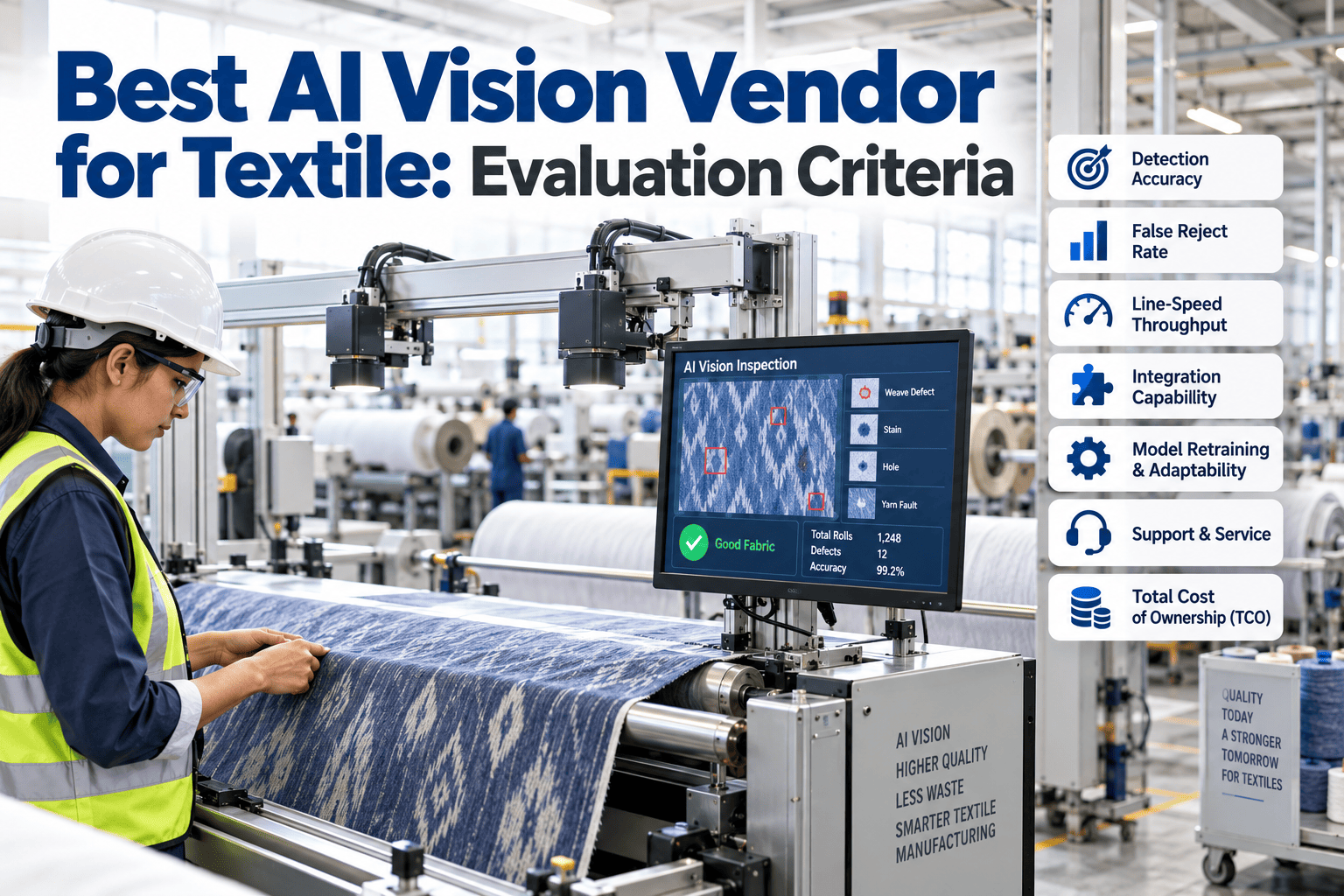
Success criteria should be numeric and agreed upon before the pilot begins, not negotiated after the results come in. The four metrics below form the core dashboard most textile AI vision pilots should track.
Detection Accuracy
Percentage of known defects correctly identified versus the manual inspection baseline, measured across a statistically significant sample.
False Reject Rate
Percentage of good material incorrectly flagged as defective — a high rate here erodes operator trust even with strong true-positive detection.
Inspection Throughput
Line speed the system can sustain without becoming a bottleneck, compared against current manual inspection throughput capacity.
Cost Per Defect Caught
Total pilot cost divided by defects caught that would have otherwise passed, compared against the cost of those defects reaching downstream customers.
From Successful Pilot to Plant-Wide Deployment
A pilot that clears its success criteria doesn't automatically justify a full-plant rollout in one step. Scaling works best as a graduated sequence, with each stage validating the previous one's assumptions at a larger scale before committing further capital.
| Stage | Scope | Primary Goal |
|---|---|---|
| Stage 1 — Pilot | 1 camera, 1 line | Validate accuracy and cost against manual baseline |
| Stage 2 — Line Expansion | Full coverage on pilot line | Confirm consistent performance across shifts and fabric variation |
| Stage 3 — Department Rollout | All lines in one department | Validate integration and support model at moderate scale |
| Stage 4 — Plant-Wide | All qualifying lines | Full deployment with proven ROI and support processes |
Map Out Your Four-Stage Scaling Roadmap Before the Pilot Ends.
Know exactly what stage two, three, and four look like before you finish stage one.
Why Some Pilots Produce Inconclusive Results
A pilot that runs its full duration but ends without a clear go or no-go decision has usually fallen into one of a handful of recurring traps. Recognizing these upfront during pilot design avoids wasting the twelve-week window on an ambiguous outcome.
No Pre-Agreed Threshold
Measuring accuracy without first agreeing what accuracy percentage constitutes success leaves the interpretation open to post-hoc debate once results are in.
Changing the Fabric Mix Mid-Pilot
Introducing a new fabric type or product line partway through invalidates the comparison baseline and muddies the accuracy trend the pilot was designed to establish.
Insufficient Sample Size
Drawing conclusions from too few defect instances produces a result that looks decisive but isn't statistically reliable once production volume scales up.
Skipping the Shadow Mode Phase
Moving straight to live decision-making without a shadow-mode comparison period removes the direct accuracy benchmark against current manual inspection.
Keeping Production, Quality, and Finance Aligned During the Pilot
A pilot's technical success can still be undermined by poor internal communication if stakeholders across departments are not kept informed as the pilot progresses. Establishing a lightweight but consistent update rhythm prevents surprises at the final evaluation meeting.
A simple weekly or bi-weekly summary shared with production, quality, and finance stakeholders — covering current accuracy trend, any issues encountered, and progress against the twelve-week timeline — keeps everyone anchored to the same facts as the pilot unfolds. This is particularly important during the shadow-mode phase, when the system is not yet making live decisions and it can be tempting for stakeholders outside the immediate project team to assume the pilot is further along or further behind than it actually is. Regular, honest updates, including any gaps identified and how they are being addressed, build the kind of trust that makes the final scaling decision a formality rather than a contentious debate.
Sizing the Investment for a Single-Line Pilot
One reason pilots stall before they even start is uncertainty about how much budget to actually request. A pilot's cost structure is meaningfully different from a full deployment, and understanding that difference helps set a realistic and approvable budget ask.
A single-camera pilot typically requires a fraction of the capital that a full-line or multi-line deployment would need, since it covers one inspection point rather than an entire production floor. The primary cost components are the camera and optics hardware for that one station, a limited-scope software license covering the pilot duration, integration labor for mounting and initial setup, and the model training effort specific to the fabric and defect types being tested. Because the pilot is explicitly time-bound and scoped to generate a go/no-go decision rather than immediate production value, it should be budgeted and evaluated as a controlled investment in de-risking a larger decision, not as a project expected to deliver full return on its own. Framing the request this way to finance — as the cost of getting a reliable answer before committing to a much larger spend — tends to get approved faster than framing it as the first phase of an assumed full rollout.
What Changes Operationally Once the Pilot Line Goes Permanent
A pilot that clears its success criteria and transitions to permanent operation on that line brings a handful of operational changes that are worth planning for in advance, so the transition from pilot to steady-state operation doesn't introduce new friction of its own.
Inspection staff roles typically shift from primary visual inspection to system oversight and edge-case validation, which usually requires a brief but structured transition period where responsibilities are formally redefined rather than left ambiguous. Maintenance responsibility for the camera and edge AI hardware needs to be assigned to a specific team, usually a hybrid of existing electrical maintenance staff and the vendor's remote support relationship. Quality reporting processes need to be updated to reflect the new structured defect data flowing from the AI system, which often reveals defect patterns and frequencies that manual inspection logs never captured with the same consistency, creating an opportunity to refine quality standards using data that simply wasn't available before.
AI Vision Pilot Projects — Common Questions
How long should a pilot run before making a scaling decision?
Twelve weeks is a common and reasonable duration for a textile AI vision pilot, structured across setup, shadow mode, live trial, and evaluation phases. This is long enough to capture a statistically meaningful sample of defects and to observe performance across different shifts and any fabric variation within the product family being tested, while short enough to keep the evaluation timeline reasonable for budget planning purposes.
What if the pilot line doesn't produce enough defect volume to validate accuracy?
This is exactly why site selection matters — choosing a line with your highest current defect-cost rate, rather than your lowest-defect line, ensures the pilot generates enough real defect instances to produce a statistically meaningful accuracy comparison. If defect volume still proves too low during the pilot's early weeks, the evaluation window can be extended, or synthetic defect samples can supplement the training data to validate detection capability before live volume accumulates.
Who should be involved in defining the success criteria before the pilot starts?
Success criteria should be agreed upon jointly by production, quality, and finance stakeholders before the pilot begins, since each group has a different definition of success — production cares about throughput, quality cares about accuracy, finance cares about cost per defect caught. Setting all three metrics upfront, with agreed thresholds for each, prevents the post-pilot disagreement that derails many otherwise successful evaluations. Contact our support team for a template to structure this conversation internally.
What happens if the pilot doesn't meet the pre-agreed success criteria?
A pilot that falls short of its criteria is still valuable information, not a failure to be hidden — it typically reveals a specific, addressable gap such as a particular defect type the model needs more training data on, or a fabric variation that wasn't represented in the initial sample set. In most cases, a second shorter validation cycle focused specifically on the identified gap resolves the issue before a final go/no-go decision is made. Book a demo to discuss how gap remediation typically works.
Design Your AI Vision Pilot With Clear Success Criteria From Day One.
iFactory AI helps you pick the right line, define the metrics, and build the scaling roadmap before you commit to full deployment.