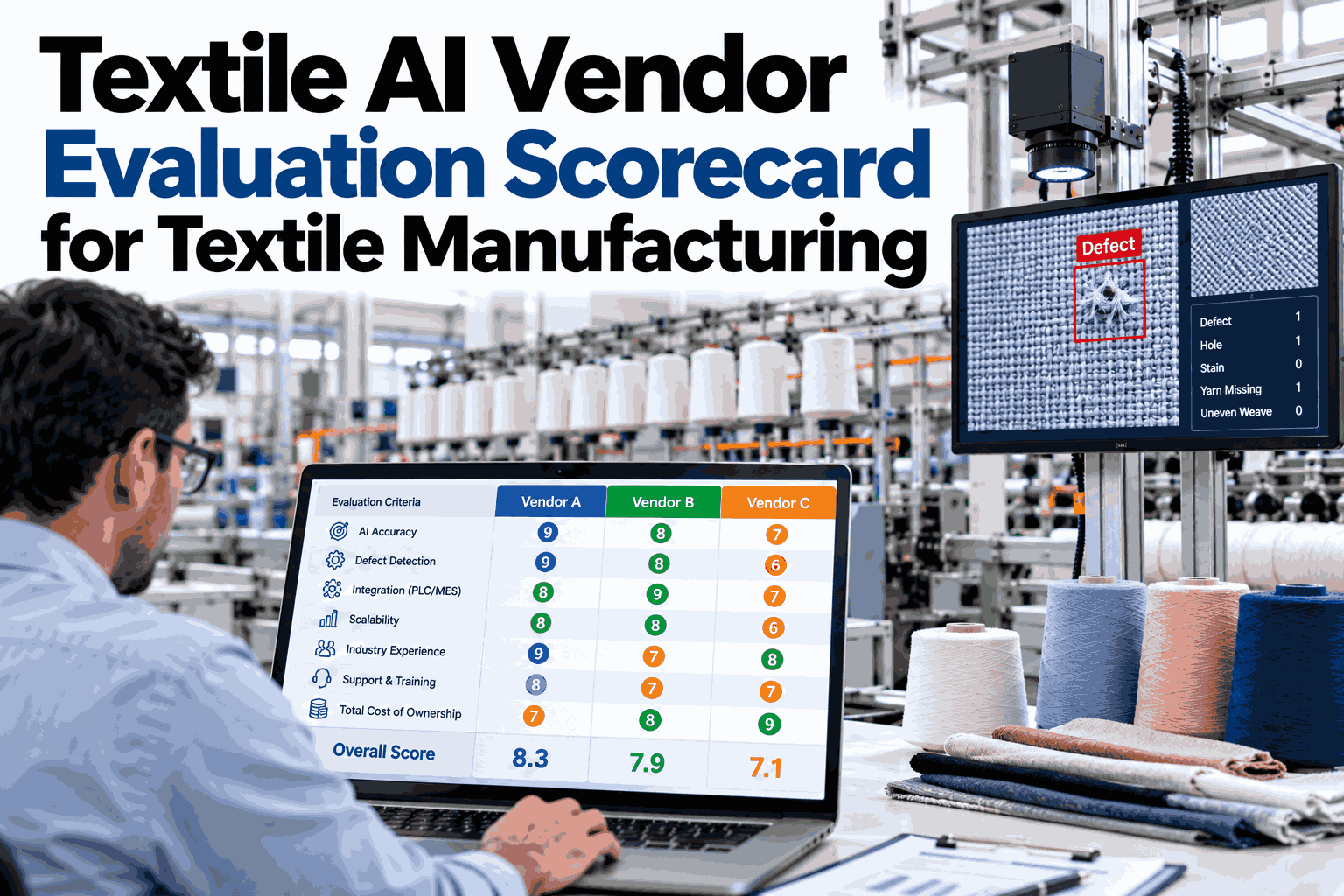
Choosing an AI vision vendor by feature checklist alone is how mills end up with a system that looks impressive in a sales demo and then struggles the moment it meets their actual fabric, their actual lighting, and their actual defect variety. The vendors that genuinely perform well for textile applications distinguish themselves less by generic AI capability and more by specific, demonstrable experience with fabric inspection, a support model that can actually retrain a model when a new defect pattern shows up, and a willingness to prove accuracy against a mill's own samples before any contract gets signed. A structured evaluation across a small set of concrete criteria protects a mill from the two most common vendor selection mistakes: choosing based on the most polished demo, or choosing based on price alone without verifying the system will actually work on the mill's specific product. Mills building a vendor evaluation process can start that conversation with iFactory's support team.
The Best Demo Doesn't Always Come From the Best Vendor for Your Fabric
iFactory helps mills evaluate AI vision vendors against concrete, verifiable criteria, textile-specific experience, real support capability, and proof against your own samples, not just a polished sales pitch.
Why the Most Polished Demo Isn't the Right Selection Criteria
A sales demo is built to show a vendor's system at its best, usually on curated sample images under controlled conditions, which tells a mill very little about how that system will actually perform on its own production floor with its own fabric quirks and lighting setup.
Generic AI Experience Gets Mistaken for Textile Expertise
A vendor strong in electronics or automotive inspection doesn't automatically transfer that capability to fabric, where defect types and material behavior are entirely different.
Reference Customers Go Unverified
A case study logo on a vendor's website means little without actually speaking to that customer about real deployment experience and results.
Support Capability Gets Assumed, Not Confirmed
A vendor's ability to retrain a model quickly when a new defect pattern emerges is rarely tested during evaluation, then becomes a painful surprise after go-live.
Price Comparison Happens Before Capability Is Verified
Comparing quotes before confirming each vendor can actually detect the mill's specific defects sets up a decision based on the wrong variable first.
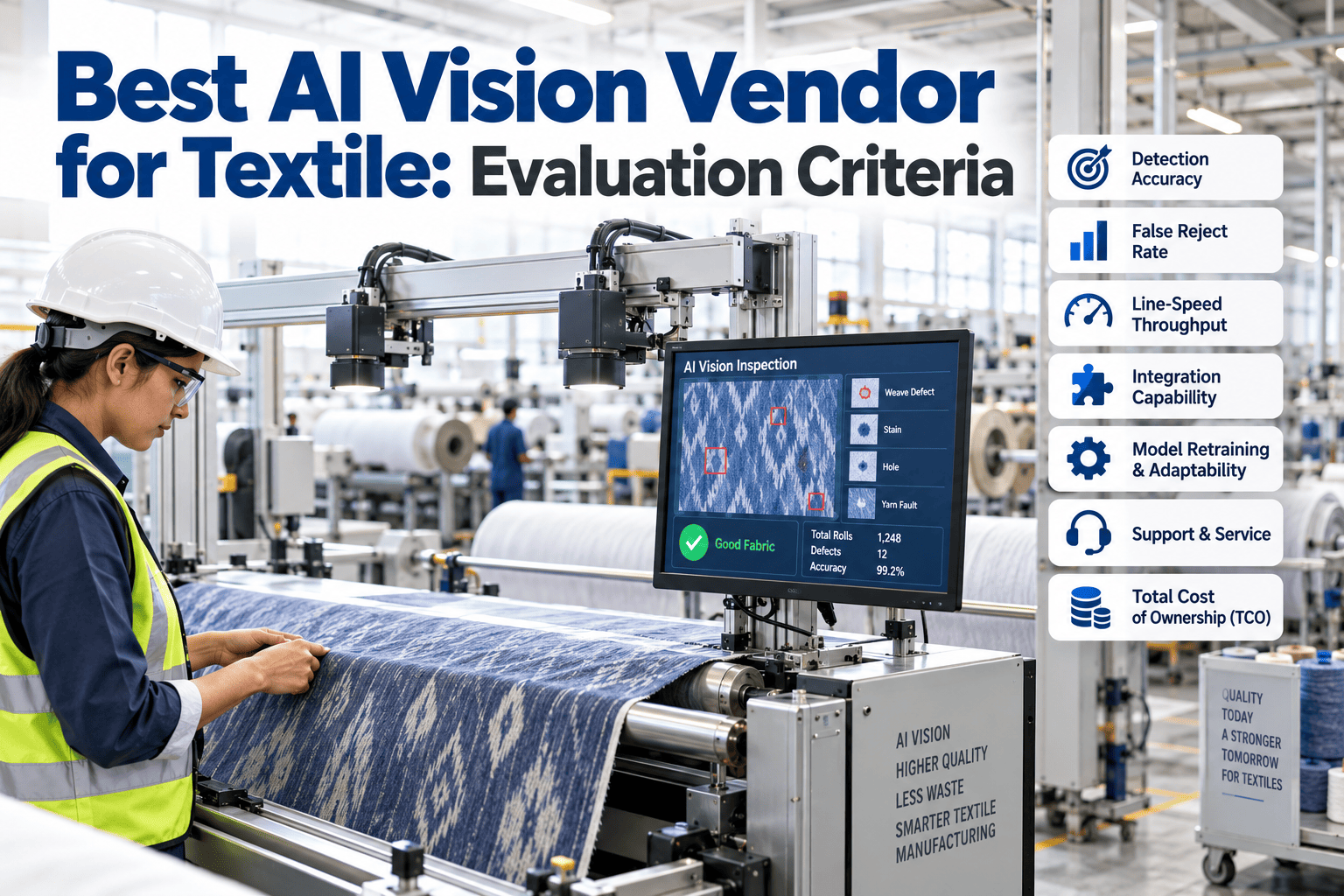
The Core Evaluation Criteria That Actually Predict Success
A focused set of concrete, verifiable criteria separates vendors who will genuinely perform on a specific mill's fabric from those who simply present well.
| Criteria | What to Verify | Why It Matters |
|---|---|---|
| Textile-Specific Experience | Named textile customers, not just general manufacturing | Fabric defects behave differently than rigid-part defects |
| Performance on Your Own Samples | A trial run using your specific fabric and defect examples | Generic accuracy claims don't guarantee your results |
| Retraining Support Model | Documented turnaround time for new defect categories | Fabric and supplier changes require ongoing model updates |
| Verified References | Direct conversations with existing customers, not just case studies | Real deployment experience differs from marketing material |
Running a Structured Vendor Evaluation
A disciplined evaluation process moves through a specific sequence, testing each vendor against the same criteria rather than letting the most persuasive sales conversation drive the decision.
Shortlist Based on Genuine Textile Experience
Narrowing the field to vendors with named, verifiable textile customers before evaluating anything else.
Request a Trial Against Your Own Samples
Providing real fabric and defect images from your own production, not relying on the vendor's curated demo set.
Call Reference Customers Directly
Asking specifically about deployment timeline, support responsiveness, and how accuracy held up after go-live.
Compare Pricing Only Once Capability Is Confirmed
Bringing cost into the decision only after every remaining vendor has proven it can actually do the job.
Choose a Vendor Proven on Your Fabric, Not Just a Good Demo
iFactory welcomes evaluation against your own samples and real reference conversations, because a genuine track record in textile inspection should hold up to scrutiny.
A Composite Scenario: The Vendor That Looked Best on Paper
A composite garment fabric mill initially favored a vendor with the most polished demo and the lowest quoted price among three finalists, based largely on a sales presentation using the vendor's own curated sample images. Before signing, the quality team insisted on testing all three finalists against the mill's own fabric samples, including several less common defect types the mill's inspectors flagged as historically difficult to catch consistently.
The initially favored vendor's accuracy on the mill's own rarer defect types came in noticeably lower than its general marketing figures suggested, while a different finalist, with less polished sales material but demonstrated textile-specific experience, performed consistently well across every defect category tested. The mill selected the second vendor despite its higher initial quote, and a reference call with that vendor's existing textile customer confirmed a support responsiveness the mill's team considered decisive.
Common Mistakes in AI Vision Vendor Selection
Selecting Based on Demo Polish Alone
A curated demonstration reveals little about real performance on a mill's specific, less predictable production conditions.
Skipping Testing Against Your Own Fabric Samples
Generic accuracy claims from other deployments don't guarantee the same result on a different fabric type and defect mix.
Trusting Case Studies Without Direct Reference Calls
A published success story doesn't reveal the operational challenges a direct conversation with that customer usually surfaces.
Comparing Price Before Confirming Capability
A lower quote from a vendor who can't reliably detect a mill's actual defects isn't actually the cheaper option once real performance is accounted for.
Is Your Mill Ready to Run a Structured Vendor Evaluation
You have representative fabric and defect samples ready to share
Real samples are what allow a vendor's system to be tested honestly rather than judged on a curated demo.
You've identified which defect types matter most to your evaluation
Knowing your priority defects in advance keeps the vendor comparison focused on what actually matters to your operation.
You're willing to make direct reference calls, not just read case studies
A real conversation with an existing customer reveals far more than marketing material ever will.
Leadership agrees to hold price comparison until capability is confirmed
Sequencing the evaluation this way prevents cost from driving a decision before performance is actually verified.
Frequently Asked Questions
What's the single most important criterion when evaluating an AI vision vendor for textile applications?
Verified performance against your own fabric samples, rather than a generic accuracy claim, is generally the most predictive single criterion, since it directly tests whether the vendor's system can actually detect your specific defect types under your specific conditions. A vendor unwilling to run this kind of test before a contract is signed should raise real questions about how confident they actually are in their own system's performance. Mills wanting help structuring this kind of trial evaluation can talk to iFactory support.
How many vendors should realistically be included in an evaluation?
Three to four finalists is generally enough to make a well-informed comparison without the evaluation process itself becoming unwieldy, provided each finalist has already been screened for genuine textile-specific experience before entering that shortlist. Evaluating too many vendors at once often means shallower testing on each one, which defeats the purpose of a rigorous, sample-based comparison.
What should we ask reference customers during a vendor evaluation call?
Useful questions focus on real deployment experience: how long the actual implementation took compared to the original timeline, how the vendor responded when a new defect type needed to be added to the model, and whether accuracy in production matched what was demonstrated during the sales process. Specific, concrete questions like these tend to reveal far more than a general "would you recommend them" question.
How do we test a vendor's retraining support before committing to a contract?
Asking a vendor directly for their documented service-level commitment on retraining turnaround time, and confirming that commitment with a reference customer who has actually needed a new defect category added, are both good ways to verify this capability before signing. Book a demo to see how retraining support and turnaround commitments work in practice.
Is a higher-priced vendor always the better choice if they score higher on capability?
Not necessarily, but price should be weighed only after every finalist's actual capability against your own samples and defect priorities has been confirmed, since a lower-priced vendor that can't reliably detect your key defects isn't genuinely the more economical option once rework and claim costs are factored in. The right decision balances verified capability against total cost, not price in isolation.
Evaluate a Vendor Willing to Prove Itself on Your Own Fabric
iFactory welcomes testing against your specific samples and direct reference conversations, because real textile experience should hold up to scrutiny.