Textile plants investing in AI often find that generic manufacturing software falls short when it meets the loom, the dyeing machine, or the quality lab. An AI vendor evaluation scorecard built specifically for textile manufacturing gives your team a structured way to compare solutions on the metrics that actually drive fabric quality, machine utilization, and order-to-shipment speed instead of generic dashboards. Before committing to a platform, you need a framework that exposes integration gaps and predictive accuracy, so you can evaluate your next AI vendor against textile-specific benchmarks with our team.
Textile AI Evaluation 2026
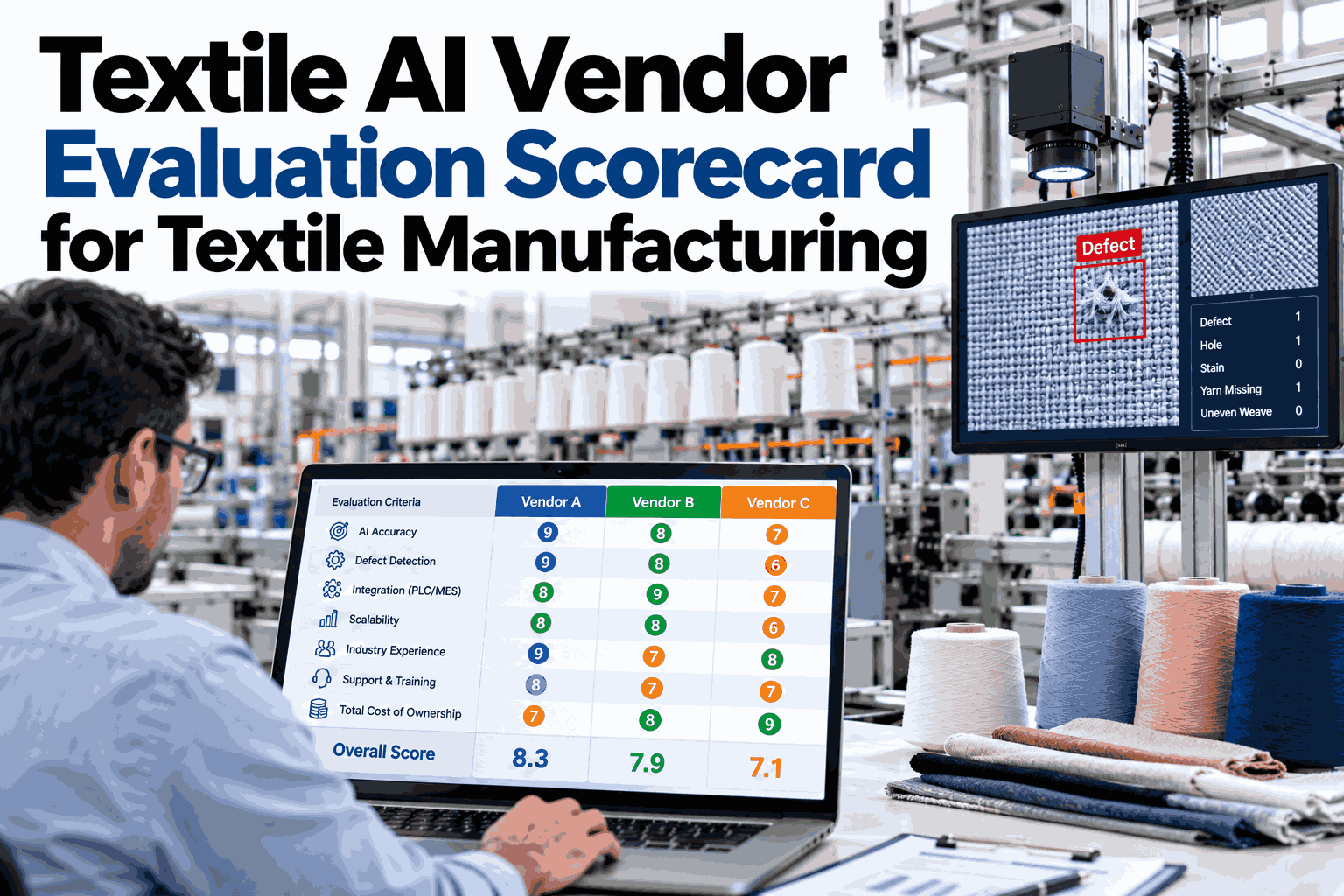
Textile AI Vendor Evaluation Scorecard for Manufacturing
A structured framework to grade AI platforms on machine connectivity, vision inspection accuracy, predictive maintenance, and ERP integration for textile production lines.
8Critical Dimensions
42Evaluation Criteria
5Integration Layers
Why a scorecard matters
Why Generic Software Evaluations Fail in Textile Plants
Textile manufacturing carries process complexities that general factory software ignores. Dyeing variations, high-speed weaving defects, and fabric batch traceability require domain-specific AI, not repackaged automotive dashboards.
Machine Variability
Textile lines mix legacy looms with modern automated machines, demanding AI that handles inconsistent data payloads rather than rejecting older equipment protocols.
Visual Defect Speed
Fabric inspection moves at meters per minute. A vision AI vendor must prove sub-millisecond latency on defect detection at line speed, not just on static images.
Batch Traceability
Dye lot shifts and raw cotton batch variations require AI models that track micro-process adjustments across lots, which general QMS platforms rarely support.
Wet Process Nuance
Dyeing and finishing involve chemical and thermal variables that change by fabric type. Vendors without textile wet-process models produce inaccurate predictive maintenance alerts.
The 8 dimensions
Core Dimensions of the Textile AI Vendor Scorecard
Evaluate every AI vendor across these eight non-negotiable dimensions to ensure the platform can handle the unique speed, variability, and compliance demands of modern textile manufacturing.
Loom and Machine Connectivity
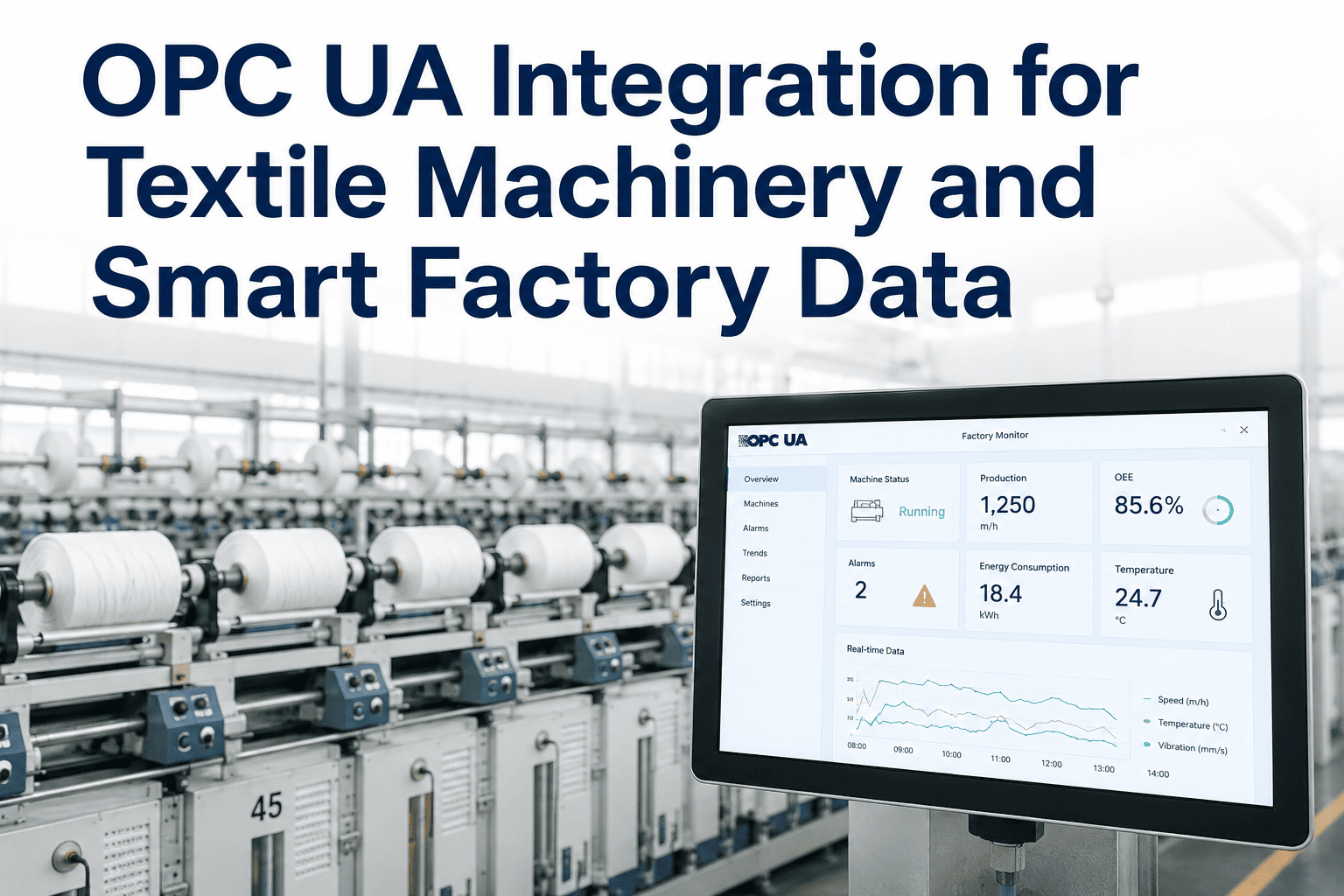
Assess native support for textile protocols like OPC-UA for modern looms and serial polling for legacy rapier or air-jet machines. Vendors should auto-discover data points without custom coding.
Fabric Vision Inspection
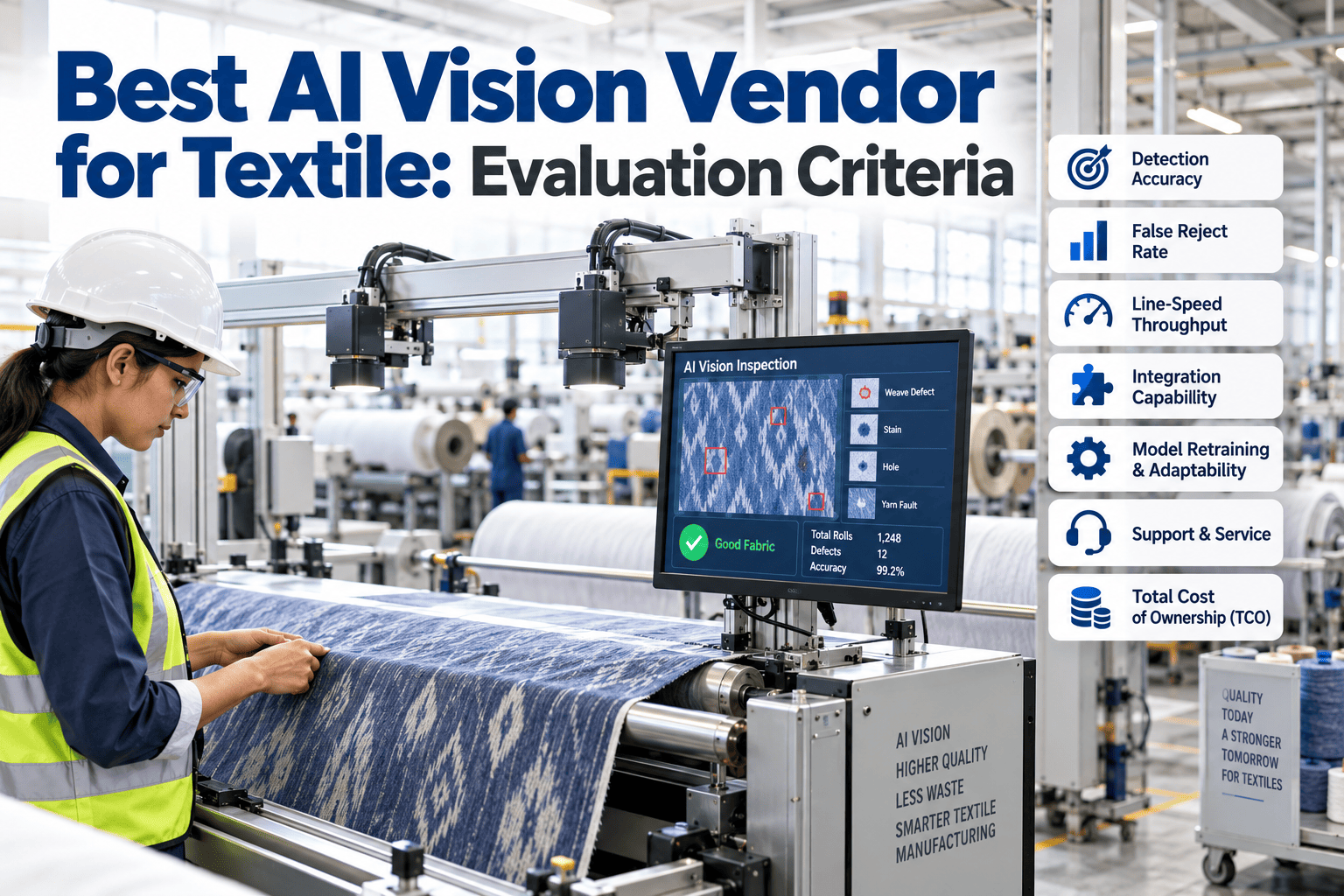
Grade the vision AI on defect classification accuracy for weaving flaws like broken picks, oil stains, and selvedge issues. Require live edge-compute demonstration on your specific fabric substrates.
Dyeing Predictive Control
Evaluate predictive models for shade matching and chemical dosage optimization. The AI must adjust for humidity and water quality variations in real-time during the wet process cycle.
ERP and MES Integration
Verify pre-built connectors for textile-specific ERP modules like BOM for fabrics, greige inventory tracking, and production scheduling across spinning, weaving, and finishing stages.
Quality Traceability
Determine if the AI links fabric roll defects back to specific raw cotton batches or dye lots. End-to-end traceability is critical for compliance and reducing recurring defect loops.
Energy and Water Optimization
Textile finishing is resource-intensive. Score the AI on its ability to recommend cycle temperature reductions and water reuse strategies without compromising fabric quality standards.
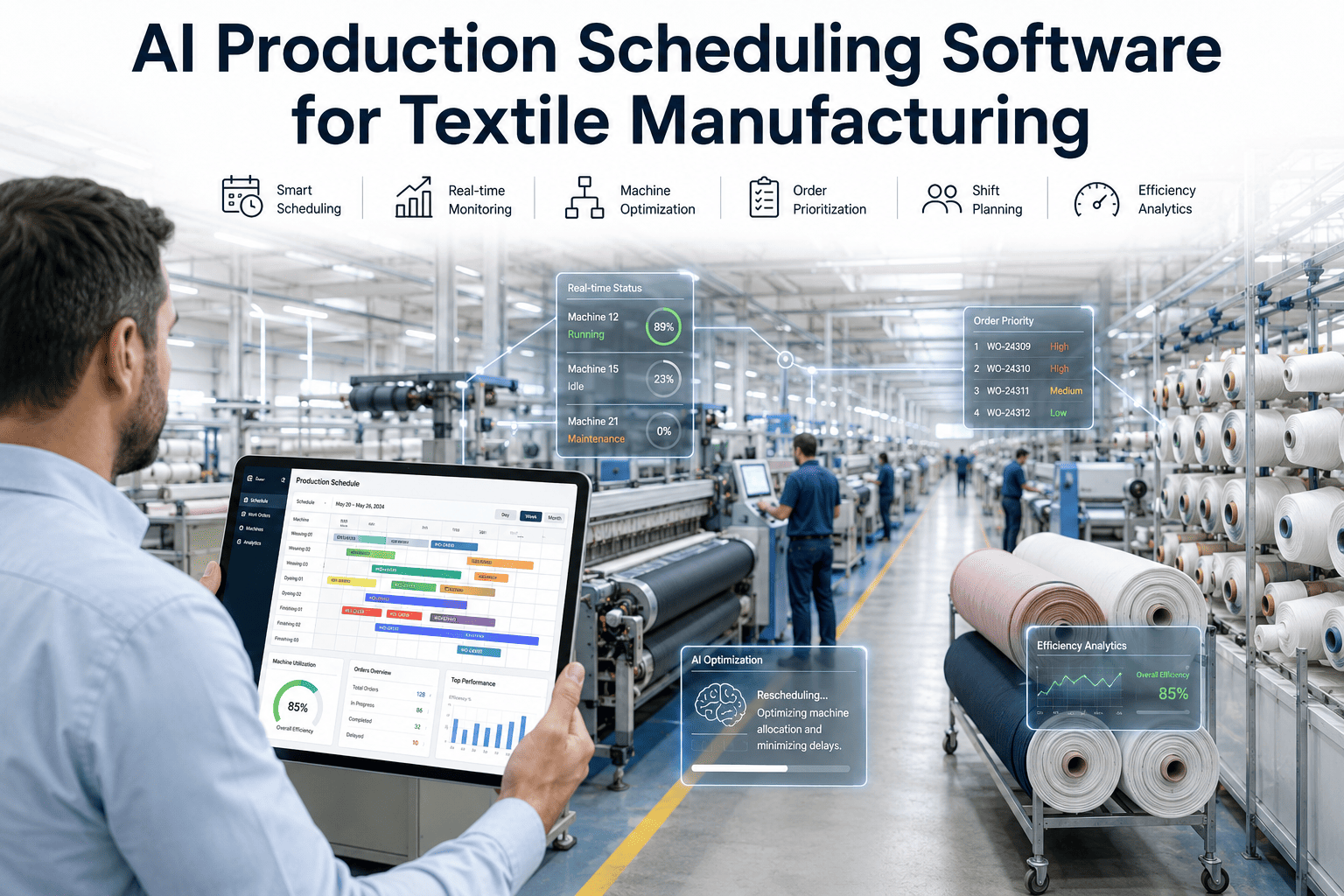
Production Scheduling AI
Check if the scheduling engine respects fabric batch constraints like minimum run lengths and changeover sequences between colors, preventing unweavable combinations on the same loom.
Model Customization Speed
Measure how quickly the vendor can retrain defect detection or predictive models when you introduce a new fabric construction or yarn count. Weeks of downtime for retraining is unacceptable.
Grade Your Current AI Platform Against This Scorecard
Discover exactly where your existing software falls short on textile-specific metrics and what a world-class manufacturing AI platform should actually deliver.
Vision vs Predictive
Weighting Vision AI Against Predictive Maintenance
Textile plants often prioritize vision inspection for immediate quality gains, but predictive maintenance for high-value looms drives larger long-term OEE improvements. Balance your scorecard weighting based on your plant's biggest loss category.
Vision Inspection Value
85%
Predictive Maintenance Value
78%
Process Optimization Value
65%
Supply Chain Forecast Value
45%
Vision AI delivers instant ROI by reducing second-grade fabric, while predictive maintenance requires longer data baselines but prevents catastrophic loom breakdowns that halt entire weave rooms. Calculate the ROI weighting for your plant with iFactory AI specialists.
Integration check
Minimum Integration Requirements for Textile AI
Any AI vendor must seamlessly connect to your existing technology stack without requiring custom middleware that breaks during upgrades. Evaluate their pre-built integration depth across these critical systems.
| System Layer |
Essential Textile Capabilities |
Vendor Evaluation Question |
Minimum Acceptable Answer |
| ERP Integration |
Greige goods receipt, fabric BOM, dye lot tracking |
Do you have standard APIs for textile-specific ERP modules? |
Native REST APIs with zero custom scripting required |
| MES Connectivity |
Machine status, operator assignment, order execution |
How do you handle real-time machine event streaming? |
Event-driven architecture with sub-second latency |
| QMS Linkage |
Inspection results, fabric test reports, SPC charts |
Can AI write defect data back to our quality system? |
Bi-directional sync with automatic test report generation |
| PLC Protocols |
Loom data, dyeing machine parameters, finisher temps |
Which industrial protocols do you support natively? |
OPC-UA, Modbus, and proprietary loom protocol support |
| CMMS Sync |
Work order creation, spare parts prediction |
Does predictive maintenance auto-generate work orders? |
Direct integration with CMMS for closed-loop execution |
Red flags
Warning Signs That an AI Vendor Lacks Textile Depth
Vendors often mask their lack of industry expertise behind impressive generic AI demos. Watch for these specific red flags during your evaluation to avoid purchasing a platform that requires endless customization.
01
Generic OEE Only
If the vendor only calculates standard OEE without tracking weaving efficiency picks or dyeing uptake percentages, they lack the textile process depth needed to improve actual production output.
02
No Edge Compute
Vision inspection that sends fabric images to a cloud server for analysis will always lag behind high-speed looms. Without edge computing, defect detection alerts arrive after the fabric is rolled.
03
Black Box Models
Predictive maintenance models that cannot explain why a loom failure is predicted prevent maintenance teams from trusting the alerts. Textile AI must provide explainable logic for machine health scores.
How iFactory AI scores
How iFactory AI Meets the Textile Scorecard Requirements
iFactory AI was built from the ground up for discrete and process manufacturing variability, delivering out-of-the-box capabilities that generic platforms simply cannot match on the textile floor.
Machine Connectivity
95% Native Coverage
Vision Defect Latency
Sub-millisecond Edge
ERP/MES Sync Depth
Bi-directional REST
Model Retrain Speed
Under 48 Hours
By focusing specifically on the nuanced demands of textile manufacturing, iFactory AI eliminates the integration gaps and model retraining delays that plague generic industrial software. See the full integration list on our support portal.
Scoring methodology
How to Score Vendors Using This Framework
Apply a consistent scoring methodology across all vendors to remove bias and ensure your team selects the platform that genuinely drives textile production improvements.
1
Assign weights from one to five for each of the eight dimensions based on your plant's primary loss drivers. If second-grade fabric is your biggest loss, weight Vision Inspection highest.
2
Score each vendor from one to ten on the 42 individual criteria. Use mandatory fail thresholds on critical items like edge compute latency and protocol support.
3
Multiply the criteria score by the dimension weight to get the weighted total. Sum these totals to find the overall vendor scorecard percentage.
4
Validate top-scoring vendors with a controlled proof of concept on a single line. Ensure defect detection and predictive models prove their accuracy on your actual fabric data.
Frequently asked questions
Common Questions About Textile AI Evaluation
How long does a full vendor scorecard evaluation take to complete?
A thorough evaluation using this framework typically requires three to four weeks, including time for vendor demos, reference checks with other textile plants, and technical validation of integration claims.
Schedule a timeline review to plan your evaluation process.
Can we use this scorecard for legacy looms with no data connectivity?
Yes, the machine connectivity dimension specifically evaluates how a vendor handles retrofitting edge sensors to legacy equipment, measuring the cost and reliability of adding data acquisition to older rapier and projectile looms.
Ask support about retrofit options for your specific machines.
What is the minimum viable dataset for predictive maintenance?
Most textile predictive maintenance models require at least six months of continuous operational data including vibration, temperature, and stop-log reasons to establish accurate failure baselines for looms and spinning frames.
Discuss your data readiness with our specialists.
Should we prioritize vision AI or scheduling AI first?
If your second-grade rate exceeds industry benchmarks, deploy vision AI first for immediate quality recovery. If delivery performance and changeover delays are the primary bottleneck, prioritize scheduling AI for weaving and dyeing sequences.
Get a priority assessment based on your KPIs.
How do we handle vendor lock-in risks with textile AI?
The scorecard evaluates data portability and open API architecture. Ensure your contract specifies that all trained models and collected machine data remain your property and can be exported in standard formats if you switch providers.
Review our data portability standards on the support page.
Stop guessing on software
Build Your Textile AI Vendor Scorecard Today
Book a session with iFactory AI to apply this evaluation framework to your shortlist and find the platform that actually delivers on production visibility, quality, and efficiency.