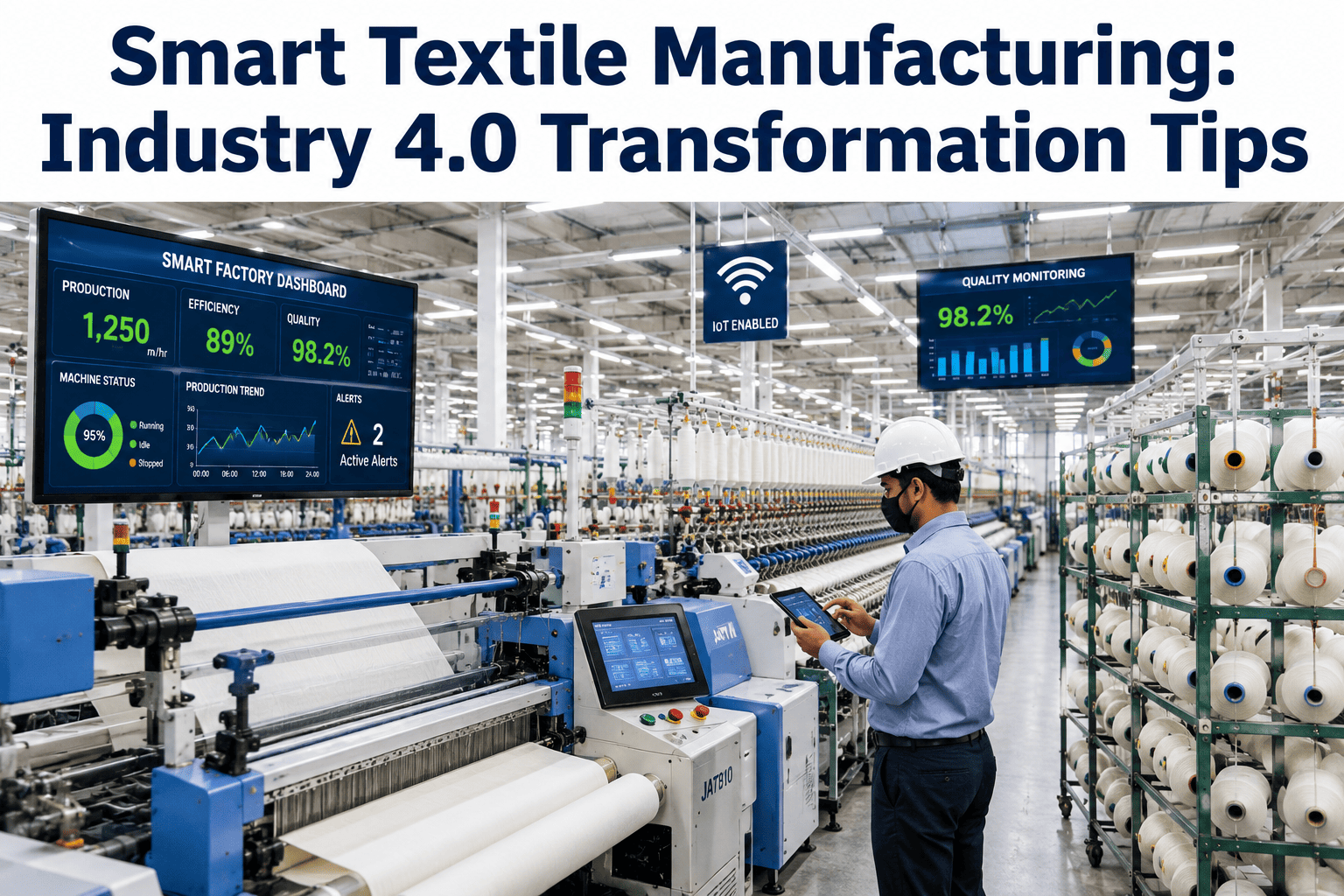
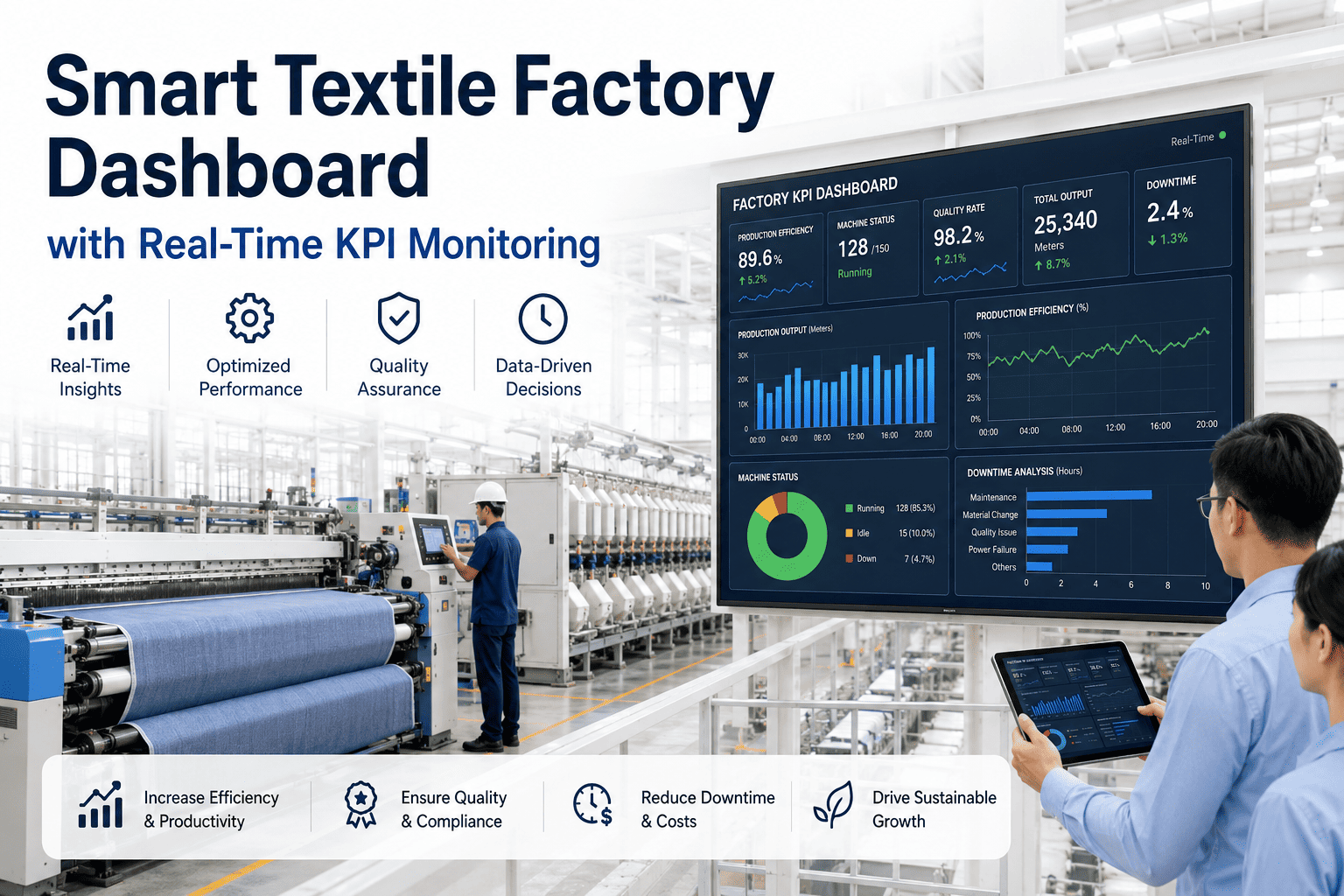
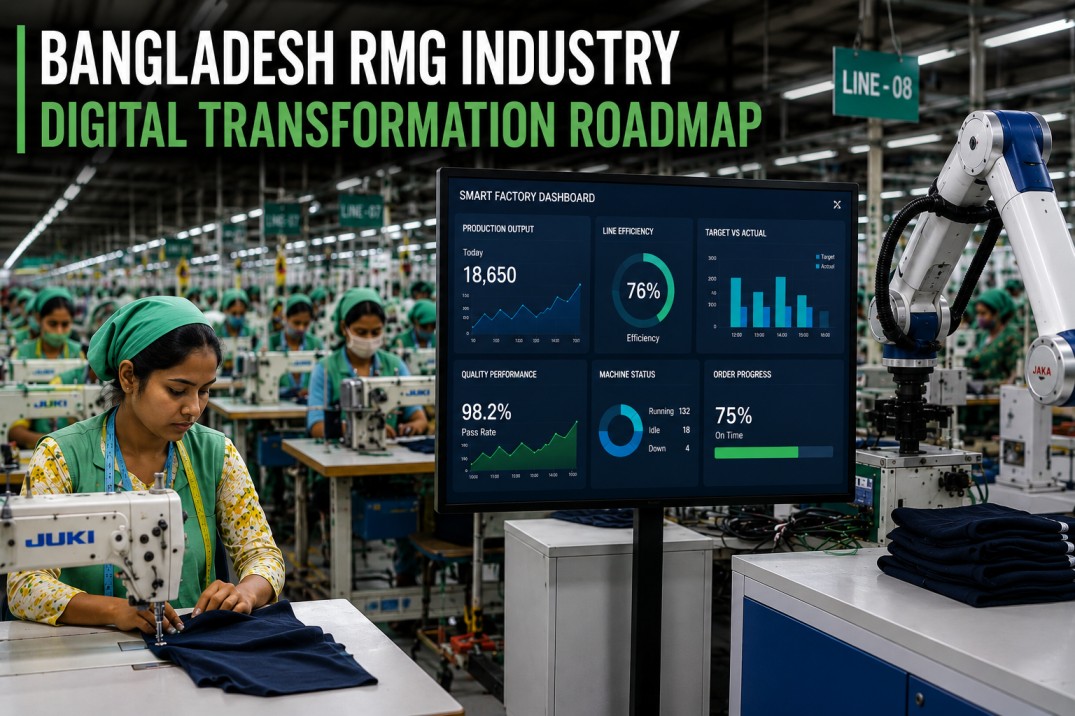
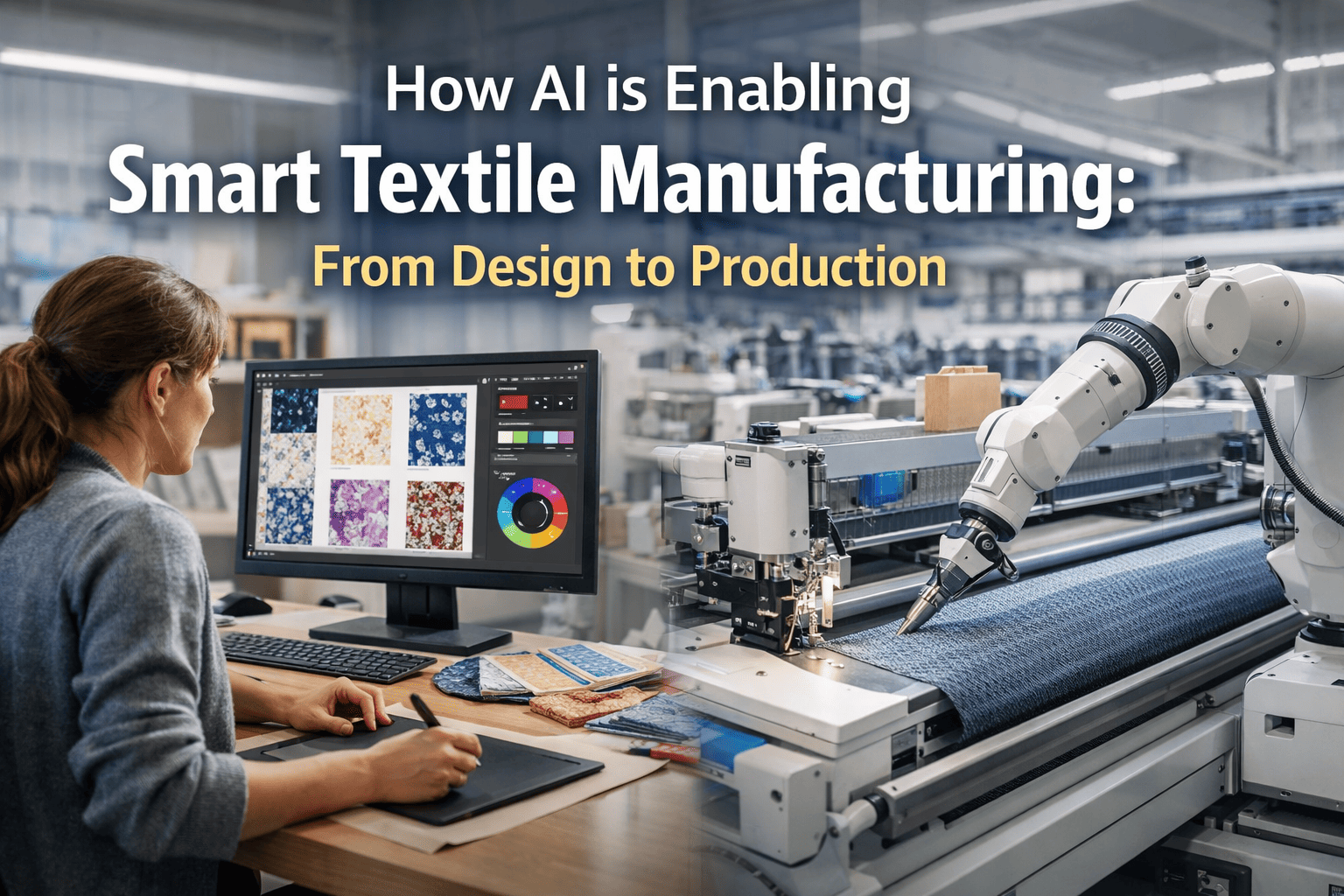
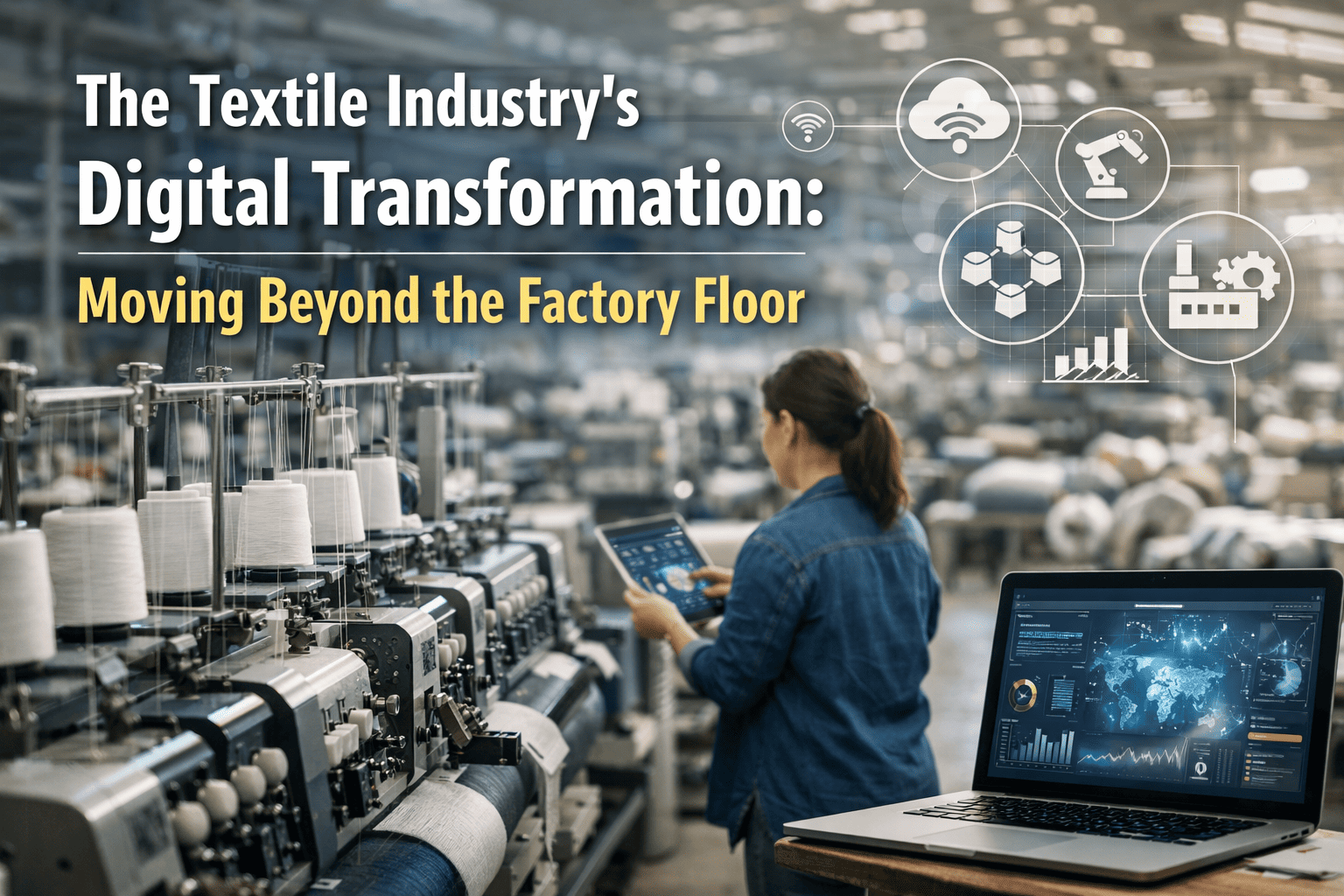
Most conversations about smart textile manufacturing list the same four technologies in no particular order: AI, IoT, digital twins, connected quality. Treating them as an unordered menu is a mistake, because each one is actually a layer that depends on the layer beneath it. IoT sensing without AI just produces more data nobody reviews. AI without connected quality data produces smart insights nobody can verify against a customer's standard. A digital twin without both of those underneath it is a simulation running on guesses instead of reality. Understanding Industry 4.0 transformation as a stack, not a shopping list, is what separates a mill that adopts one flashy technology from one that actually becomes a smart factory. To see how this stack would apply to your specific production line, book a demo.
TEXTILE 4.0 · SMART MANUFACTURING · CONNECTED PRODUCTION
Four Layers, Built in Order, Make a Textile Mill Actually Smart
iFactory builds smart textile transformation as a stack — connected sensing, AI intelligence, quality integration, and digital twin simulation — each layer depending on the one beneath it, rather than a collection of disconnected point solutions.
The Four-Layer Smart Factory Stack
4
Digital Twin Simulation
Virtual model of the line tests scheduling and process changes before they touch the physical floor
3
Connected Quality
Defect and grading data tied to lot, line, and machine, feeding both dashboards and AI models
2
AI Intelligence
Vision inspection, predictive maintenance, and anomaly detection turning raw sensor data into decisions
1
Connected Sensing (IoT)
Cameras, vibration sensors, and machine data feeds providing the raw signal everything above depends on
LAYER ONE
Connected Sensing Is the Foundation Everything Else Depends On
Before AI can detect anything or a digital twin can simulate anything, a mill needs a continuous, reliable stream of data describing what its machines and fabric are actually doing. This is the layer most textile plants have partially built already, often without realizing it counts as the first step of a much larger transformation.
Line-Scan Cameras
Continuous visual capture at production speed, the raw input every fabric inspection AI model depends on.
Vibration and Temperature Sensors
Machine health signals feeding predictive maintenance models before a failure becomes visible any other way.
Machine and PLC Data Feeds
Speed, tension, and cycle data from existing control systems, connected rather than replaced.
Environmental Sensors
Humidity, temperature, and dust monitoring relevant to both process consistency and equipment longevity.
A mill does not need every sensor type deployed everywhere to start this layer. It needs reliable, continuous data from wherever the next layer up is going to use it, which is why sensing deployment should follow from a specific AI or quality use case rather than being installed generically and hoping for value later. A common early mistake is instrumenting broadly across a plant before deciding what any of that data will actually feed into, which produces a large volume of collected readings that nobody has built the next layer to interpret yet.
LAYER TWO
AI Intelligence Turns Raw Signal Into an Actual Decision
Sensor data by itself is not intelligence, it is volume. The second layer is where that volume becomes something a person or a system can act on, and this is the layer most mills mean when they say they have "started their AI journey," even though it only works well once layer one is solid underneath it.
| AI Capability |
What It Replaces |
Typical Accuracy or Impact |
| AI Vision Fabric Inspection |
Manual end-of-line visual grading |
95–99% defect detection accuracy at production speed |
| Predictive Maintenance |
Time-based or reactive maintenance schedules |
Failures flagged weeks ahead of a threshold-based alarm |
| Multivariate Anomaly Detection |
Single-sensor threshold alarms |
Catches correlated drift no individual reading would trigger |
| Autonomous Scheduling |
Static, spreadsheet-based production schedules |
Real-time reoptimization in minutes when conditions change |
Each of these capabilities is a distinct model trained on a distinct data stream, which is why "adding AI" is rarely one project. A mill typically starts with whichever capability addresses its most expensive current problem, then expands as the underlying sensing and data infrastructure matures. It is worth being explicit that these four capabilities do not need to launch simultaneously, and attempting all four at once with a single team is a common way to dilute focus across every initiative rather than doing any one of them well enough to prove its value quickly.
Find out which layer of the stack your mill should build next
iFactory audits your current sensing, AI, and quality infrastructure to show exactly where the next investment delivers the fastest return.
LAYER THREE
Connected Quality Is Where AI Output Becomes a Business Record
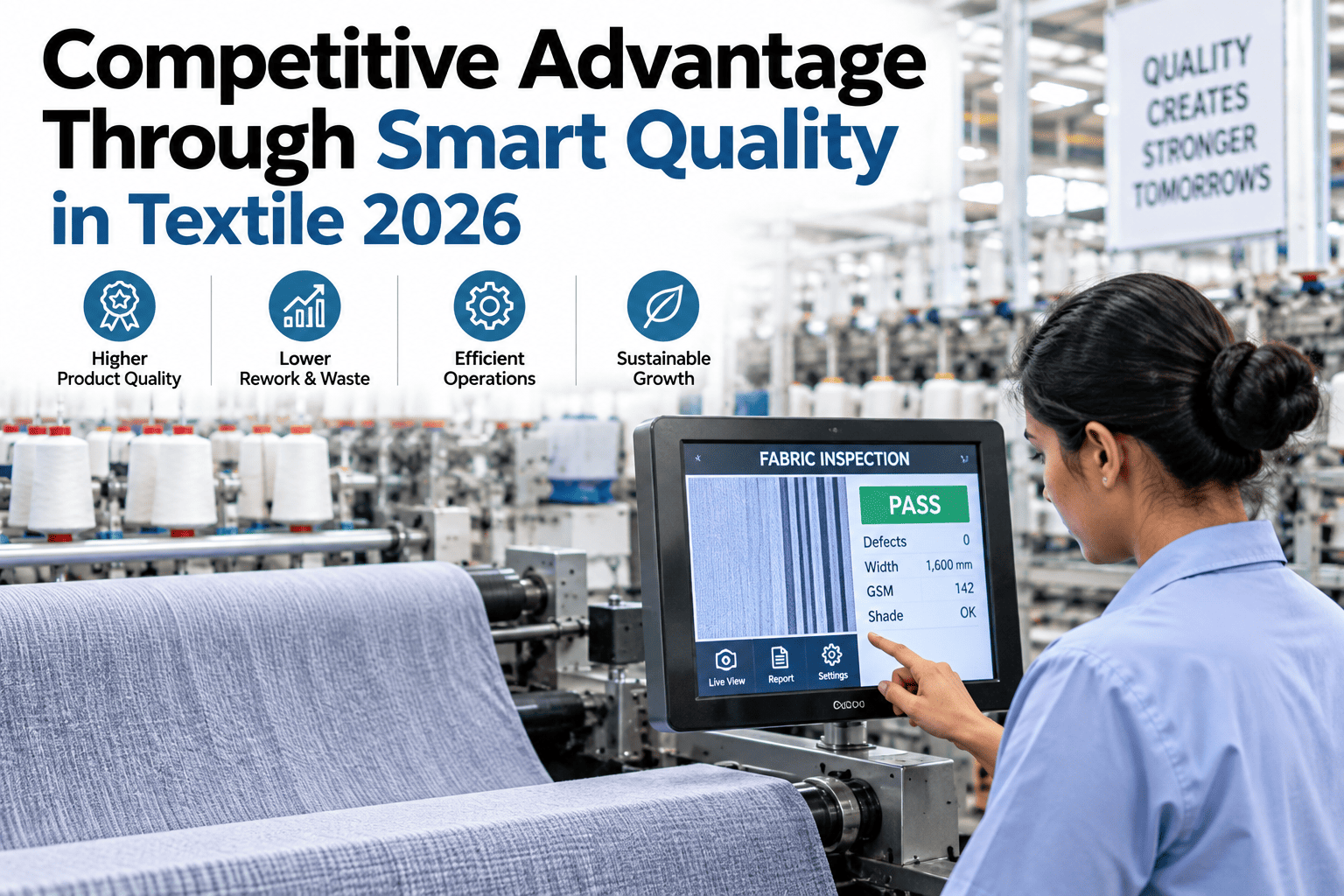
An AI model that detects a defect accurately is only half the value. The other half is what happens to that detection afterward, whether it becomes structured, traceable data tied to a lot and a customer standard, or just a number that briefly appeared on a screen and then disappeared.
Defect Data Tied to Lot and Line
Every detection is recorded against the specific production context that generated it, not aggregated into an anonymous daily total.
Grading Applied Consistently
The same standard applied identically regardless of shift or inspector, closing the consistency gap manual grading struggles with.
Dashboards for Internal Teams
Real-time visibility for quality and production management, replacing after-the-fact manual compilation.
Exportable Records for Buyers
The same underlying data, packaged for the traceability documentation buyers increasingly expect before discussing a contract.
This is also the layer where the AI models from layer two get better over time. Quality data that shows which defect calls were confirmed accurate and which were corrected by an operator becomes the training signal for the next model refinement, closing the loop between detection and improvement.
LAYER FOUR
Digital Twin Simulation Is Only as Good as the Three Layers Beneath It
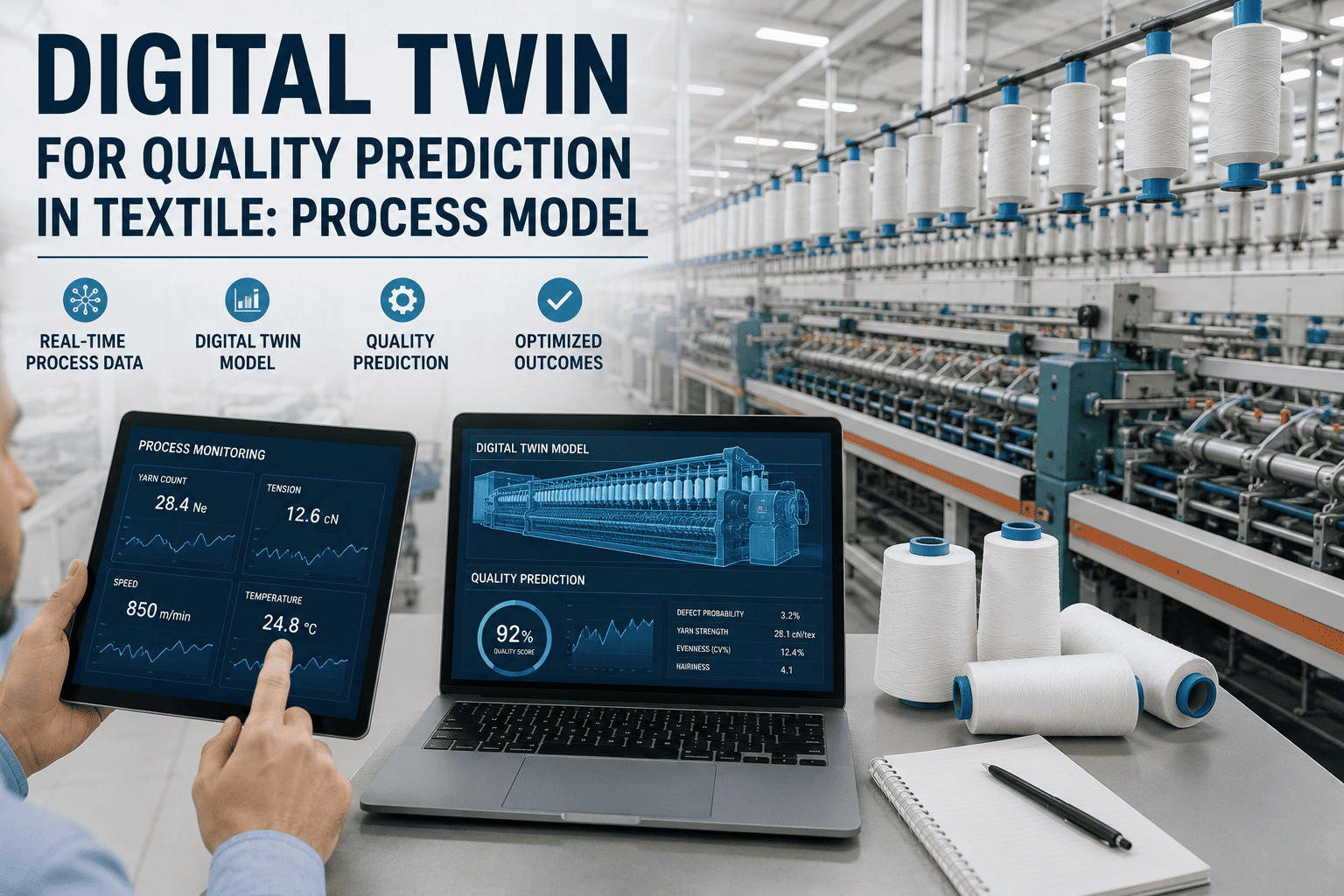
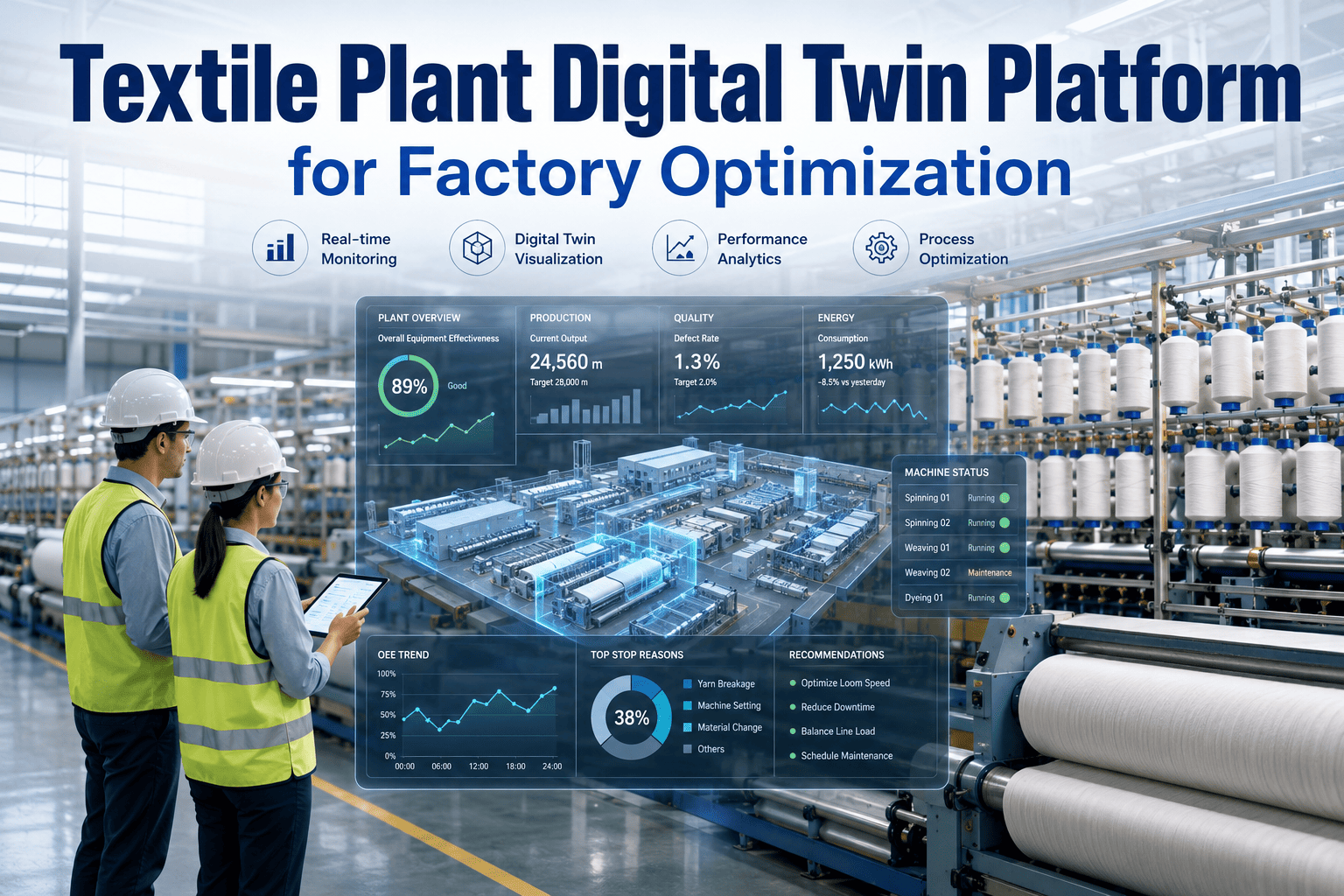
A digital twin is a virtual model of the physical line, and it is the layer that gets the most attention in Industry 4.0 marketing while depending most heavily on everything built beneath it. A twin fed by unreliable sensing, unvalidated AI, and disconnected quality data is a simulation running on guesses, no matter how polished its visualization looks.
Schedule and Changeover Simulation
Testing an alternate shift schedule or changeover sequence against real current line conditions before committing production time to it.
Process Change Validation
Modeling the effect of a process parameter change against the twin before applying it to live production, catching unintended consequences early.
Predictive Scenario Planning
Combining predictive maintenance data with production scheduling to simulate the impact of an upcoming maintenance window on order commitments.
A mill attempting to build a digital twin before its sensing, AI, and quality layers are solid is building the most visible, least foundational piece of the stack first. It is a common ordering mistake precisely because digital twins are the most compelling thing to demonstrate in a sales pitch, not because they are the right place to start a real transformation. This does not mean a digital twin is unnecessary or overhyped as a technology, it means sequencing matters — the mills getting genuine value from twin simulation today are almost universally the ones who spent the prior year or two getting their sensing and AI layers reliable first, even if that groundwork was less visually impressive along the way.
WHERE TO ACTUALLY START
A Practical Starting Sequence for Most Textile Mills
Given the dependency structure across all four layers, the right starting point is rarely "everything at once." A staged sequence that builds real capability at each step tends to outperform an ambitious plan that tries to install the full stack in one initiative.
1
Instrument the Highest-Value Problem First
Deploy sensing specifically for whichever problem costs the most today, fabric defects, unplanned downtime, or energy waste, rather than instrumenting generically.
2
Deploy the AI Model That Addresses That Problem
Vision inspection, predictive maintenance, or anomaly detection, matched directly to the sensing already in place from step one.
3
Connect the Output Into Quality and Reporting Systems
Make sure the AI's detections become structured, traceable records rather than staying siloed in a standalone dashboard nobody else sees.
4
Expand to Additional Lines and Capabilities
Repeat the same sequence for the next highest-value problem, growing the stack's coverage rather than its complexity all at once.
5
Build the Digital Twin Once the Foundation Is Solid
Once sensing, AI, and quality data are reliable across the areas that matter most, a digital twin has something real to simulate against.
This sequence typically delivers measurable results at every stage rather than requiring a mill to wait until the entire transformation is complete before seeing any return, which is also what keeps the initiative funded and supported internally as it grows. A leadership team that can point to a concrete win after phase one is far more likely to approve funding for phase two than one being asked to commit an entire multi-year budget upfront against a promise of eventual, combined value.
TURNKEY DELIVERY
How iFactory Builds the Stack With You, One Layer at a Time
iFactory's deployment approach mirrors the stack itself, starting with an assessment of what you already have and building each layer in the sequence that delivers value fastest for your specific plant.
What Gets Assessed
Current sensing coverage across your highest-cost problem areas
Existing SCADA, PLC, and historian data availability
Quality data flow from inspection point to reporting system
Readiness for digital twin simulation, if that stage is in scope
Deployment Approach
Phase 1: Sensing and AI deployed against the single highest-value problem
Phase 2: Quality integration connecting AI output to traceable records
Phase 3: Expansion to additional lines, then digital twin simulation once ready
FREQUENTLY ASKED QUESTIONS
What Textile Mills Ask About Starting an Industry 4.0 Transformation
Do we need to build all four layers before seeing any real return?
No, this is exactly the misconception the layered approach is meant to correct. Deploying sensing and an AI model against your single highest-value problem, layers one and two, typically delivers measurable results well before layers three and four are ever built, since each layer's value stands on its own once the layer beneath it is solid. Waiting to see any return until the entire stack is complete is neither necessary nor how successful deployments are usually structured.
Book a demo to identify which single layer would deliver the fastest return for your mill.
We already have some IoT sensors installed — does that mean we've completed layer one?
Partially, and this is common — most mills have some sensing in place already, often installed for a different original purpose than AI or quality integration. The real question is whether that existing sensing produces reliable, continuous data specifically where your next AI or quality initiative needs it, since sensing installed generically for one purpose does not automatically support a different downstream use case without validation.
Contact our support team to assess whether your current sensing coverage supports your next planned initiative.
Why shouldn't we just start with a digital twin since that seems like the most impressive capability?
A digital twin is only as accurate as the sensing, AI, and quality data feeding it, so building one before those three layers are solid produces a polished simulation running on unreliable or incomplete underlying data. This is a common ordering mistake precisely because digital twins demonstrate well in a sales pitch, not because they are the right starting point for a real transformation — the mills that get the most value from a digital twin are consistently the ones who built the foundation underneath it first.
Book a demo to see what foundation a meaningful digital twin would actually require at your plant.
How long does it typically take to build out this entire stack?
The timeline depends heavily on how many production lines and problem areas are in scope, but a single-line deployment through layers one and two, sensing and an initial AI capability, commonly reaches go-live within a similar window to other focused AI deployments, roughly eight to twelve weeks. Layer three integration and eventual digital twin work extend the timeline further, but the staged approach means your mill is seeing value at each phase rather than waiting for one long combined project to finish.
Contact our support team to build a realistic timeline for your specific scope.
Is this approach only realistic for large mills with big technology budgets?
No, the layered, problem-first approach is specifically designed to work for mills of any size, since starting with your single highest-value problem rather than instrumenting the entire plant at once keeps the initial investment proportional to a specific, measurable return rather than requiring a large upfront commitment. A mid-sized mill that builds the stack in sequence, expanding as each stage proves its value, can reach the same end state as a larger competitor without needing the same initial capital outlay.
Book a demo to scope a starting investment sized appropriately for your mill.
BUILD THE STACK IN THE RIGHT ORDER
Start Your Smart Factory Transformation Where the Foundation Actually Is
iFactory assesses your current sensing, AI, and quality infrastructure, then builds the next layer of the stack in the sequence that delivers real, measurable value first.