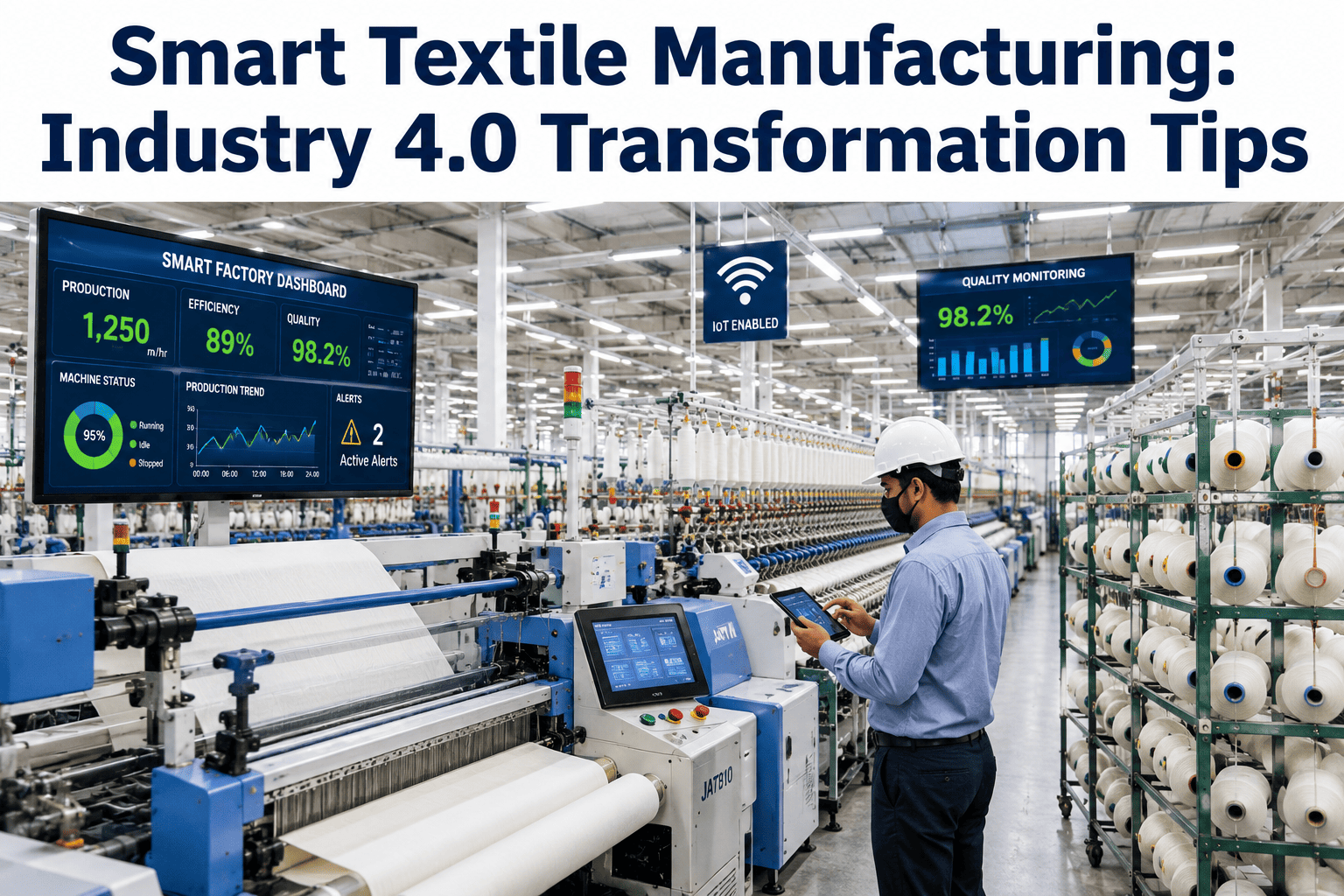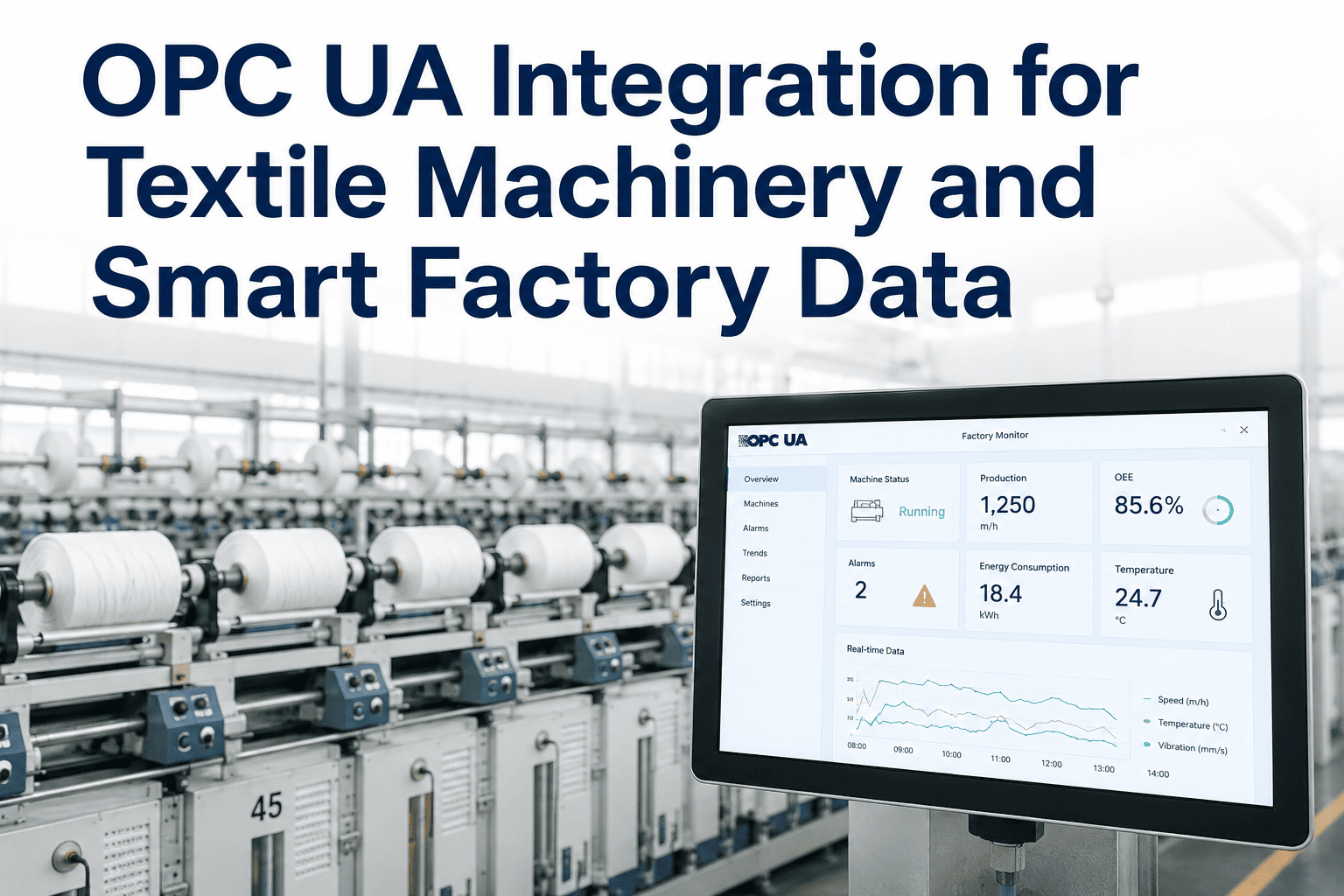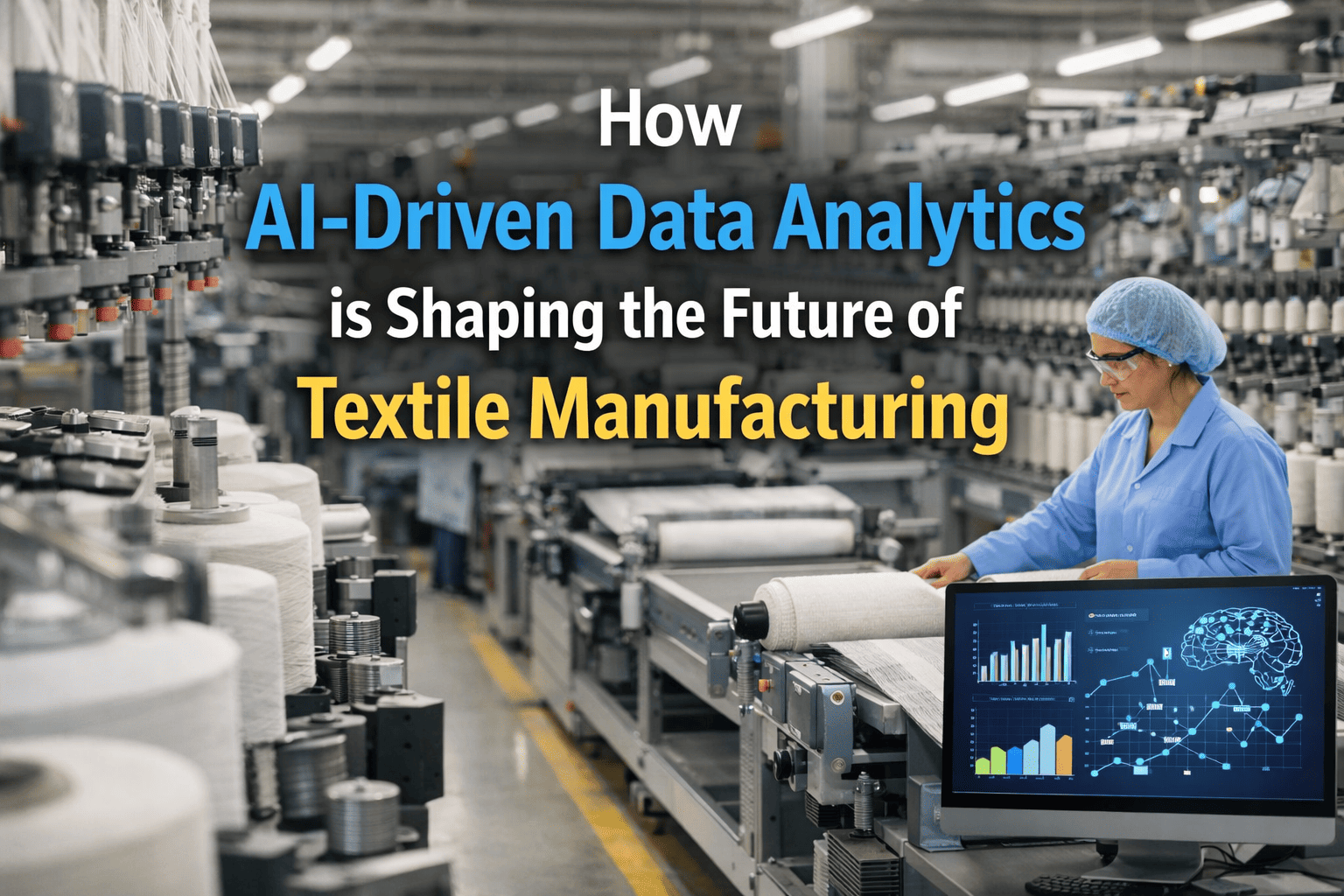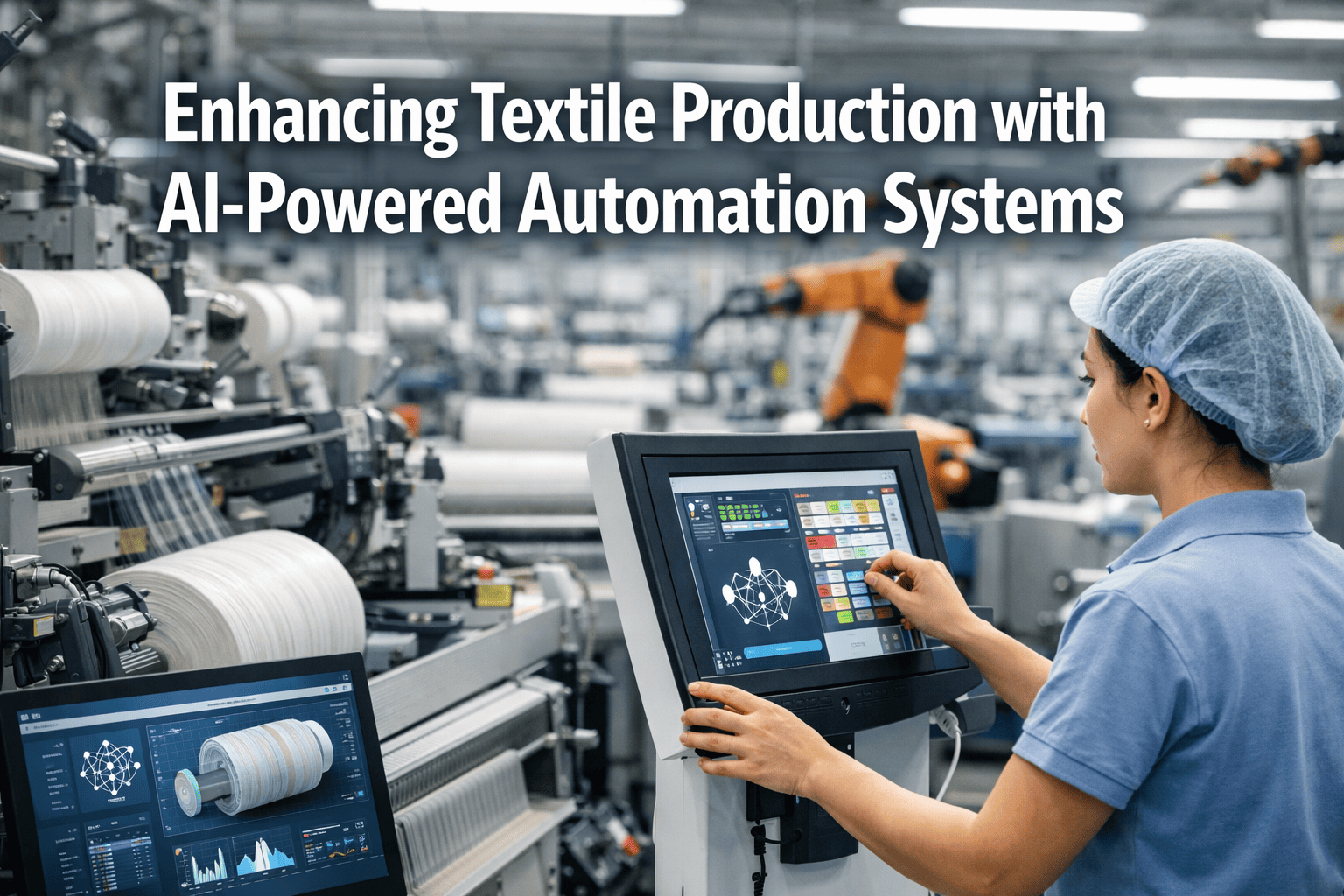
The textile industry is in the middle of its most profound transformation in over a century. Factory floors that once ran entirely on paper logs, manual counting, and tribal knowledge are being rewired with sensors, cloud platforms, and intelligent automation — and the manufacturers who act now are pulling decisively ahead of those who wait. If you manage a spinning mill, weaving unit, dyeing house, or integrated textile plant and want to understand what Industry 4.0 actually means for your floor — and how to act on it — book a free demo with iFactory and see exactly how these technologies apply to your specific operations.
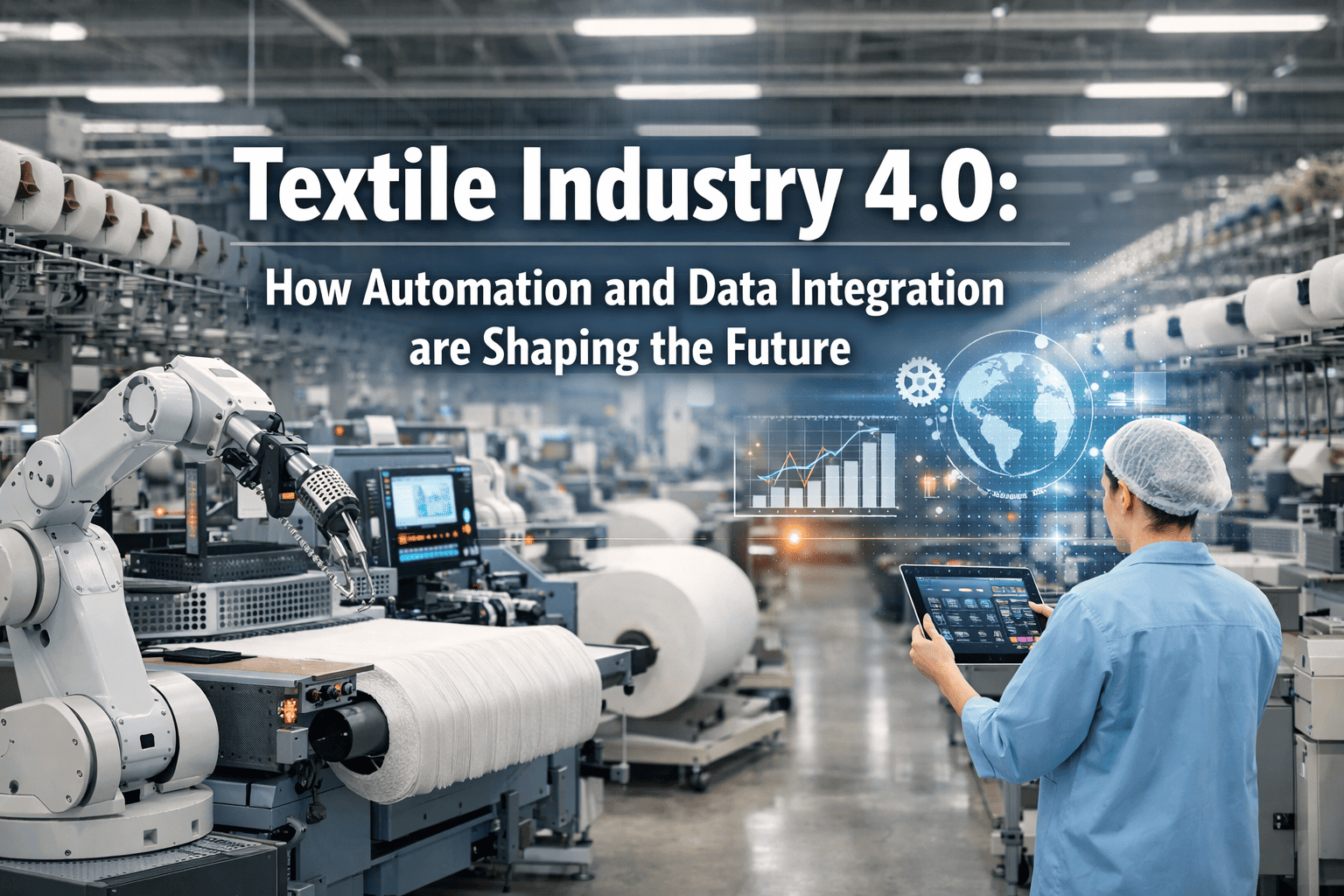
Textile Industry 4.0:
Automation & Data Integration Are Reshaping Manufacturing
From IoT-connected looms to AI-driven production planning — the fourth industrial revolution is no longer a future concept. It is happening on factory floors right now.
What Exactly Is Industry 4.0 — And Why Does It Matter to Textile Factories?
Industry 4.0 is the integration of digital technology into physical manufacturing. In textile terms, it means your spinning frames, looms, dyeing machines, and finishing lines stop being isolated equipment — and start becoming interconnected data sources that can be monitored, analyzed, and optimized in real time. The shift is not about replacing workers. It is about giving every worker, supervisor, and manager far better information to act on — and removing the delays, errors, and blind spots that cost factories time and money every single day.
Sensors on every machine stream production data — speed, temperature, tension, output — to a central platform continuously.
85% adoption rate in advanced millsAI models detect quality defects mid-process, predict machine failures before they happen, and optimize production scheduling automatically.
61% of smart factories use AI quality checksAll production data — from raw material entry to finished goods dispatch — lives in one connected cloud platform accessible from anywhere.
73% reduction in data silos across departmentsRoutine tasks — work order creation, task assignment, quality reporting, shift handovers — are automated, freeing human attention for decisions that matter.
78% faster throughput in automated workflowsThe Real Cost of Not Adopting Industry 4.0
Before exploring the gains, it is worth being clear about what textile manufacturers are losing every day they delay digitization. These are not theoretical numbers — they are operational realities reported across mills in India, Bangladesh, Turkey, and Vietnam.
How much is your factory losing to outdated workflows? Book a free assessment — our textile specialists will calculate your exact productivity gap and show you how to close it.
How Industry 4.0 Technologies Apply Across the Textile Value Chain
Industry 4.0 is not a single tool — it is a connected layer that runs across every department of a textile factory. Here is how the transformation looks stage by stage.
Five Industry 4.0 Capabilities That Are Already Delivering ROI in Textile Manufacturing
These are not pilot projects or roadmap items. They are capabilities that textile manufacturers are deploying today — and measuring returns on within the first quarter of implementation.
Predictive Maintenance
Vibration, temperature, and power consumption sensors on looms, ring frames, and dyeing machines detect abnormal patterns before a breakdown occurs. Factories using predictive maintenance report 55% fewer unplanned stoppages and a 38% reduction in maintenance costs annually. The machine tells you it needs attention — before it stops your production line.
Real-Time Quality Control
Automated vision systems and in-line sensors check fabric density, color consistency, weave defects, and dimensional accuracy at production speed — not at end-of-line inspection. When a defect pattern is detected, the system flags the specific machine, batch, and operator immediately. Quality teams report up to 40% reduction in end-of-line rejections and 60% faster root-cause identification.
Intelligent Production Scheduling
AI-driven scheduling systems consider machine availability, operator skill profiles, material readiness, order deadlines, and energy cost windows simultaneously — and generate optimized production plans in minutes instead of hours. When a rush order arrives or a machine goes down, the system recalculates the entire schedule instantly and pushes updated tasks to every department.
Digital Traceability Across the Supply Chain
From raw fibre lot to finished fabric roll — every batch carries a complete digital record of which machine processed it, which operator handled it, what parameters were used, and which quality checks it passed. This is no longer optional: 72% of global textile buyers now require documented production traceability from their suppliers, especially for compliance with OEKO-TEX, GOTS, and EU sustainability regulations.
Energy and Resource Optimization
Smart energy meters on dyeing machines, humidification systems, and compressors identify consumption spikes in real time. Factories that implement energy monitoring as part of their Industry 4.0 stack report 18–25% reduction in energy spend within 12 months — a significant gain given that energy costs represent 15–20% of total operating expenses in most textile plants.
Industry 4.0 Readiness: Where Is the Textile Sector Today?
The pace of adoption varies significantly across regions and factory types — but the direction is universal. Here is a snapshot of where the global textile industry stands on its Industry 4.0 journey in 2025–2026.
How iFactory Brings Industry 4.0 to Your Textile Factory — Without a Multi-Year IT Project
The gap between knowing Industry 4.0 is important and actually implementing it in a textile factory is real. Most manufacturers are not struggling with conviction — they are struggling with complexity, cost, and where to start. iFactory was built specifically to solve this problem for textile manufacturers.
Textile-Native Platform
Pre-built for spinning, weaving, dyeing, knitting, and finishing — not a generic manufacturing tool adapted for textiles. iFactory understands your workflow stages, your machines, and your production language out of the box.
ERP & System Integration
iFactory connects with SAP, Oracle, Tally, and most existing ERP systems — pulling buyer orders, material data, and machine records into a unified production intelligence layer without replacing your existing investments.
Mobile-First Operator Interface
Operators in dyeing basements and finishing halls with poor connectivity can still receive tasks, update status, and log quality checks — synced automatically when connection returns. Available in Hindi, Bengali, Tamil, and other regional languages.
Measurable Returns Fast
Reduction in rework, overtime, paper-handling overhead, and production delays typically delivers full investment payback within 60–90 days of go-live — with ongoing compounding gains as data accumulates and AI recommendations improve.
Industry 4.0 in textile is not about buying expensive machines. It is about connecting the intelligence already in your factory — your people, your processes, your data — into a system that can actually learn and improve. The manufacturers who understand this are winning buyer orders that paper-based competitors cannot even bid for.
Ready to See Industry 4.0 in Action on Your Factory Floor?
Our textile production specialists will walk you through a live iFactory demo built around your specific departments — spinning, weaving, dyeing, or finishing. No generic walkthroughs.
Industry 4.0 Myths That Are Holding Textile Manufacturers Back
Conversations with factory owners across South Asia and Southeast Asia reveal consistent misconceptions about Industry 4.0 adoption. Here is the reality behind each one.
"Industry 4.0 is only for large factories with big IT budgets."
Cloud-based SaaS platforms like iFactory have made Industry 4.0 tools accessible to mills with 50 machines. The entry cost is a fraction of what on-premise ERP systems cost a decade ago — and the ROI timeline is measured in weeks, not years.
"Our operators won't be able to use digital systems."
Operators using smartphones for WhatsApp already have the skills required. Modern operator interfaces are designed to be as simple as receiving a message — task shown, confirm button tapped. Most operators are proficient within a few hours of first use.
"We need to replace all our machines before we can digitize."
Industry 4.0 software works with your existing equipment. Digital work orders, production tracking, and quality management can be implemented without touching a single machine — connecting the workflow intelligence layer above your current hardware.
"Implementation will disrupt our production for months."
With a parallel-run approach, digital and paper systems run side by side for 2–3 weeks. Production continues without interruption. Most factories fully retire paper within the first month after go-live, with zero disruption to active orders.
Frequently Asked Questions
Your Competitors Are Digitizing.
Don't Get Left Behind.
iFactory gives textile factories a practical, textile-native path into Industry 4.0 — starting with digital work orders and production visibility, scaling to full data integration across every department.