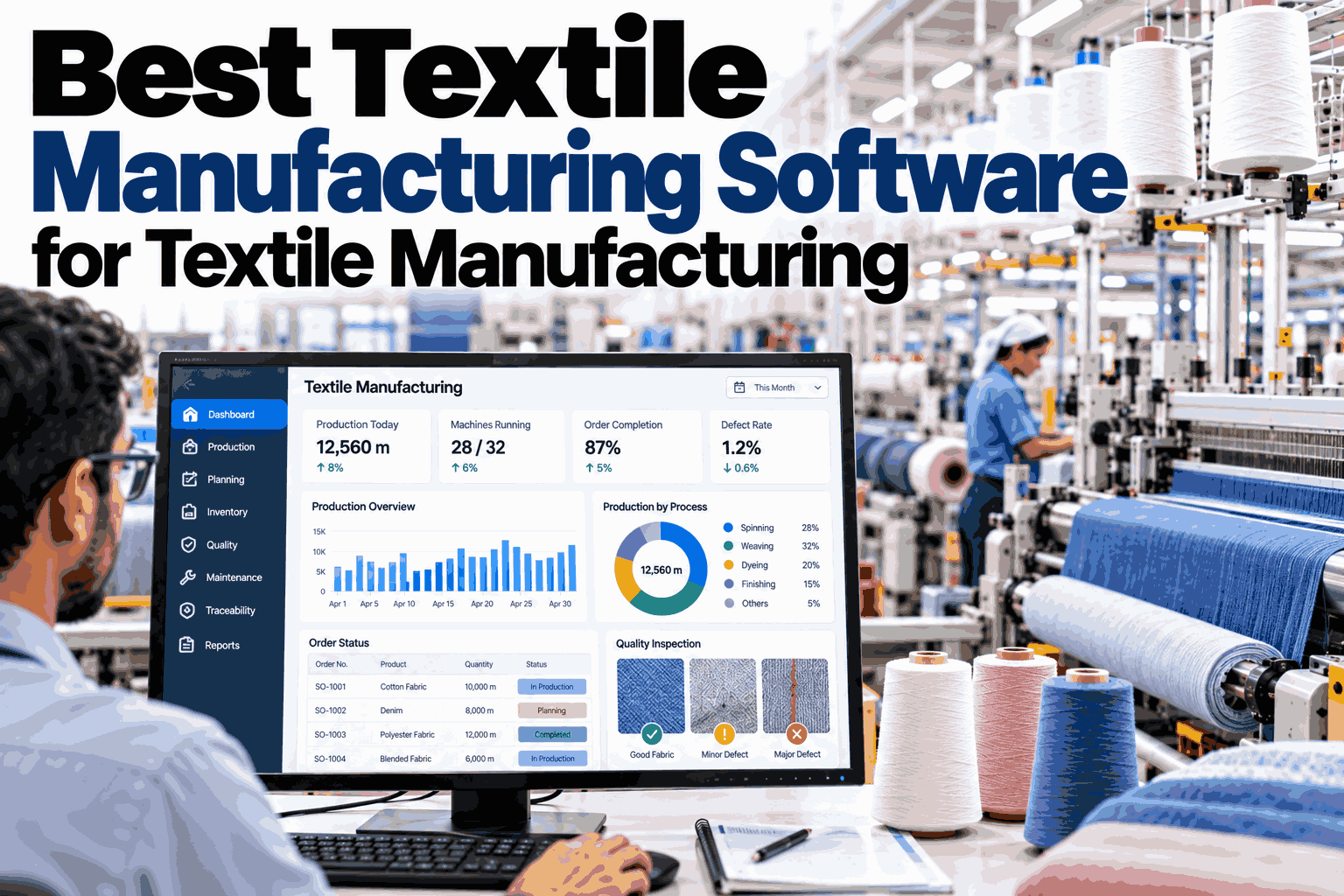
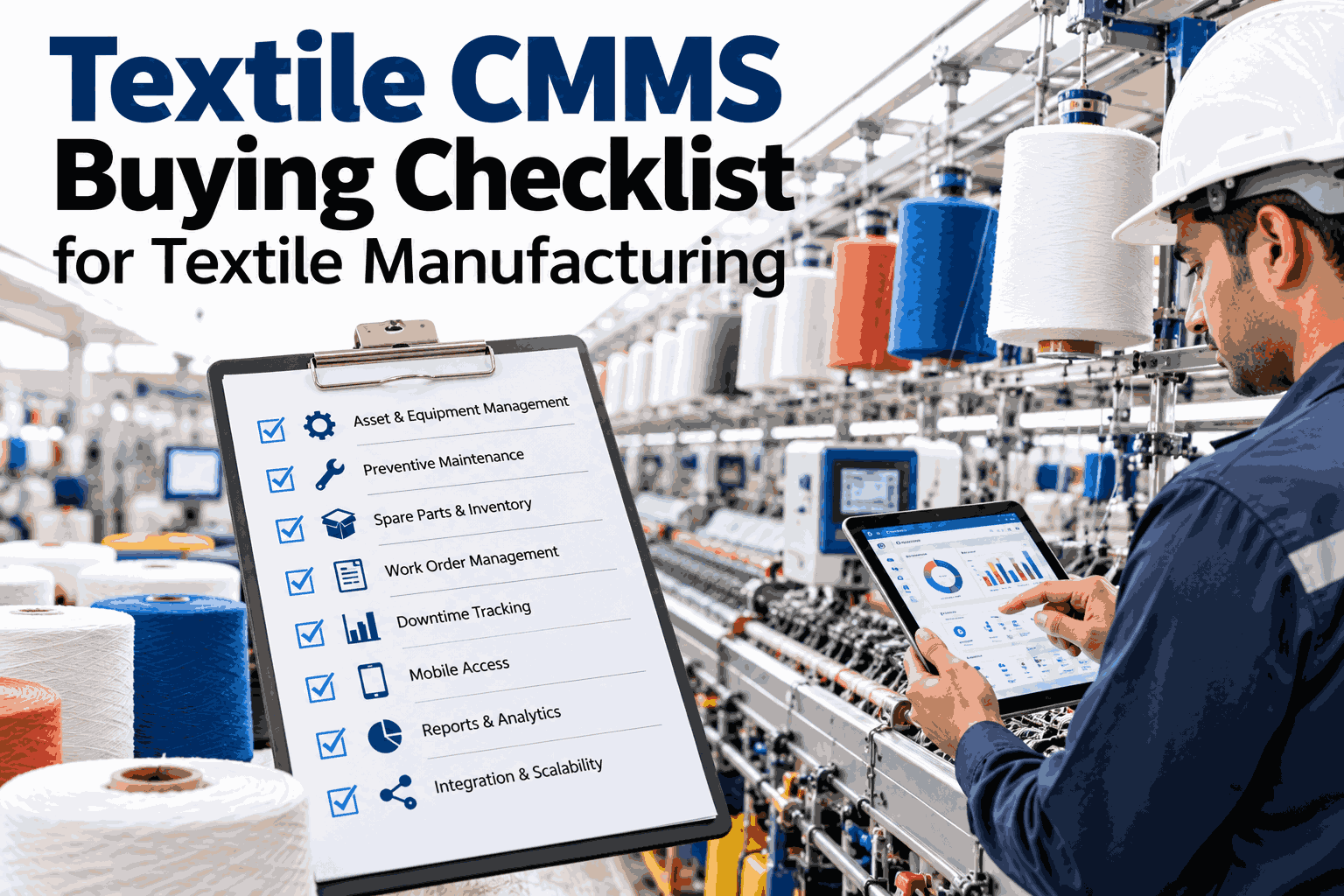
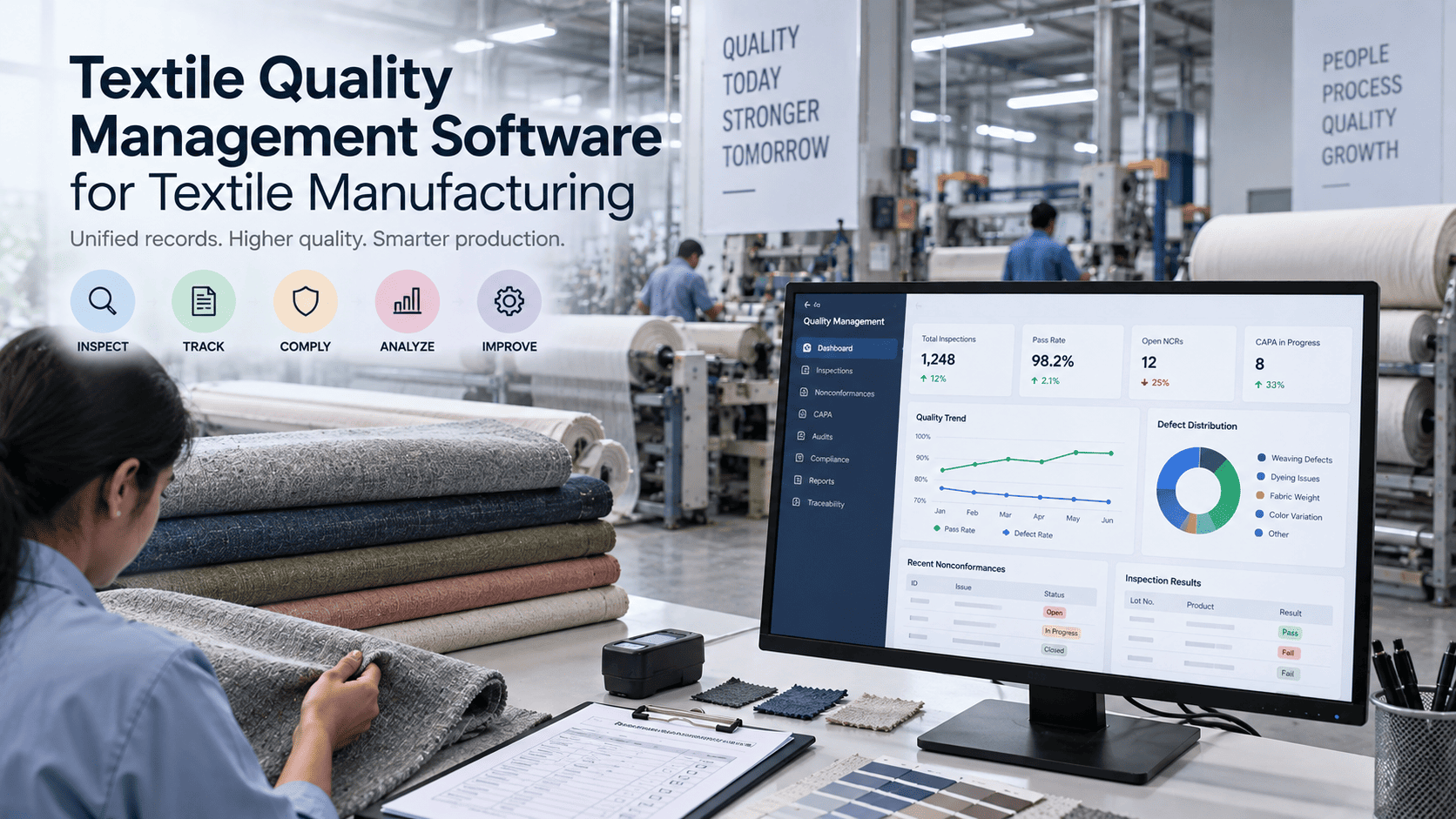
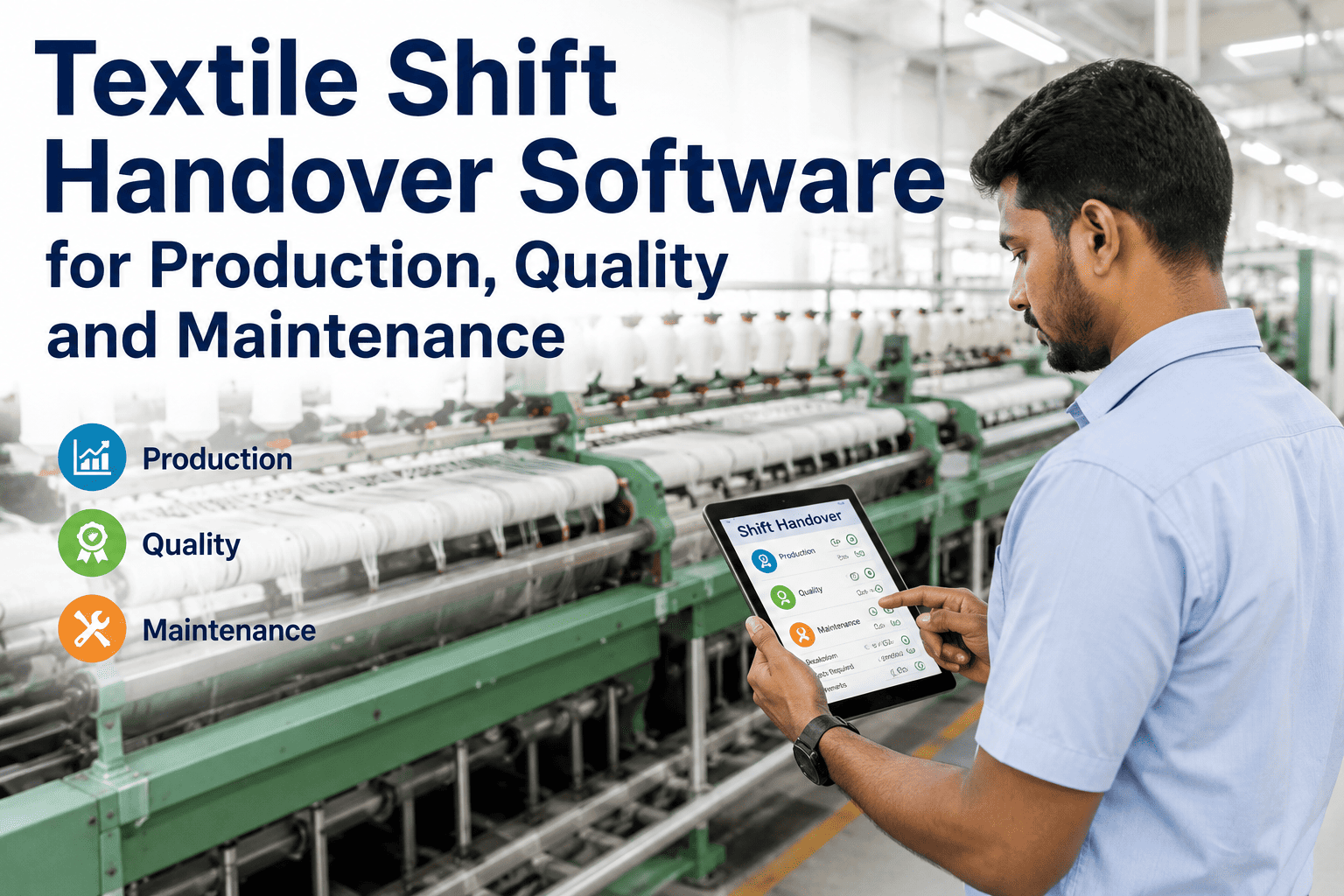
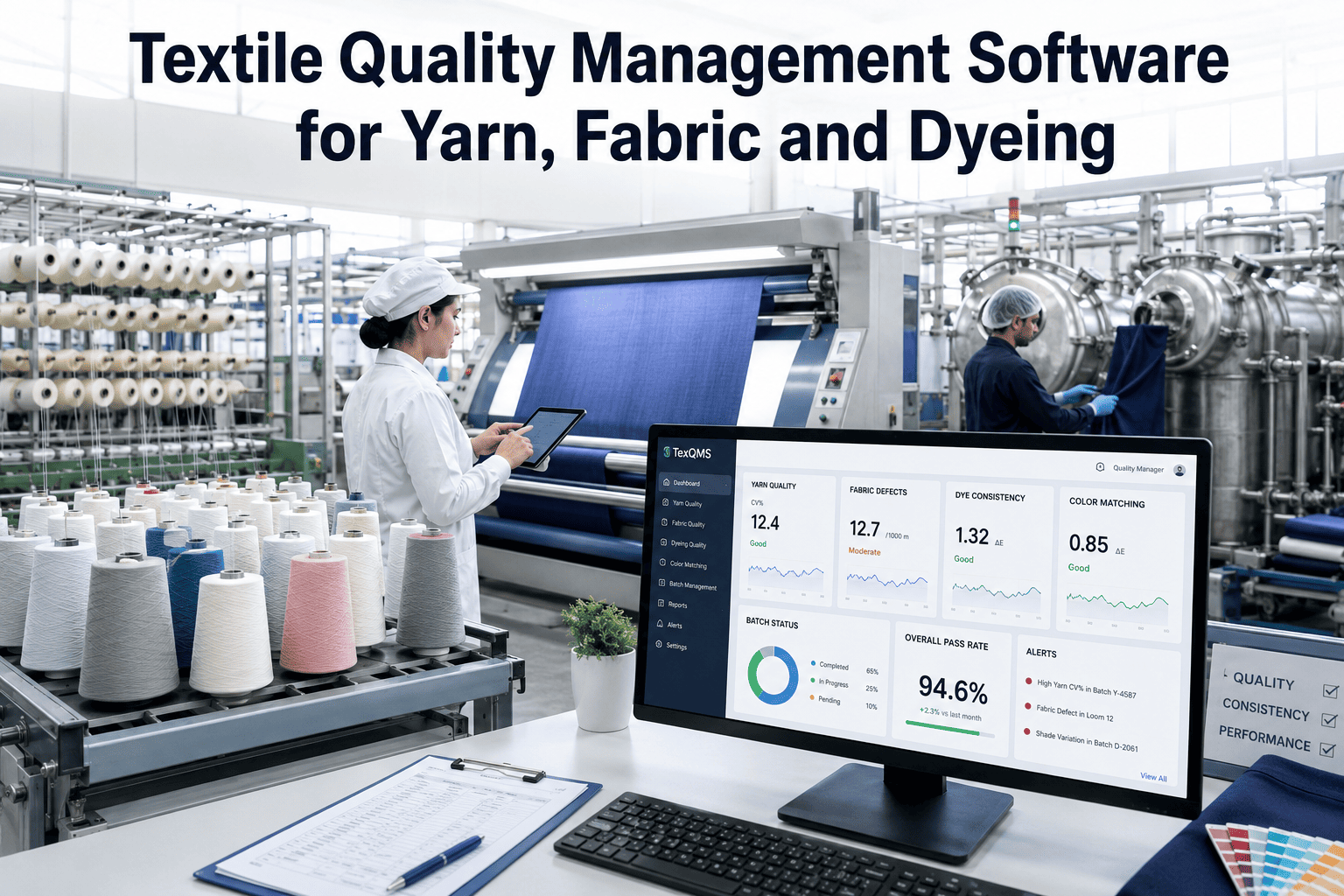
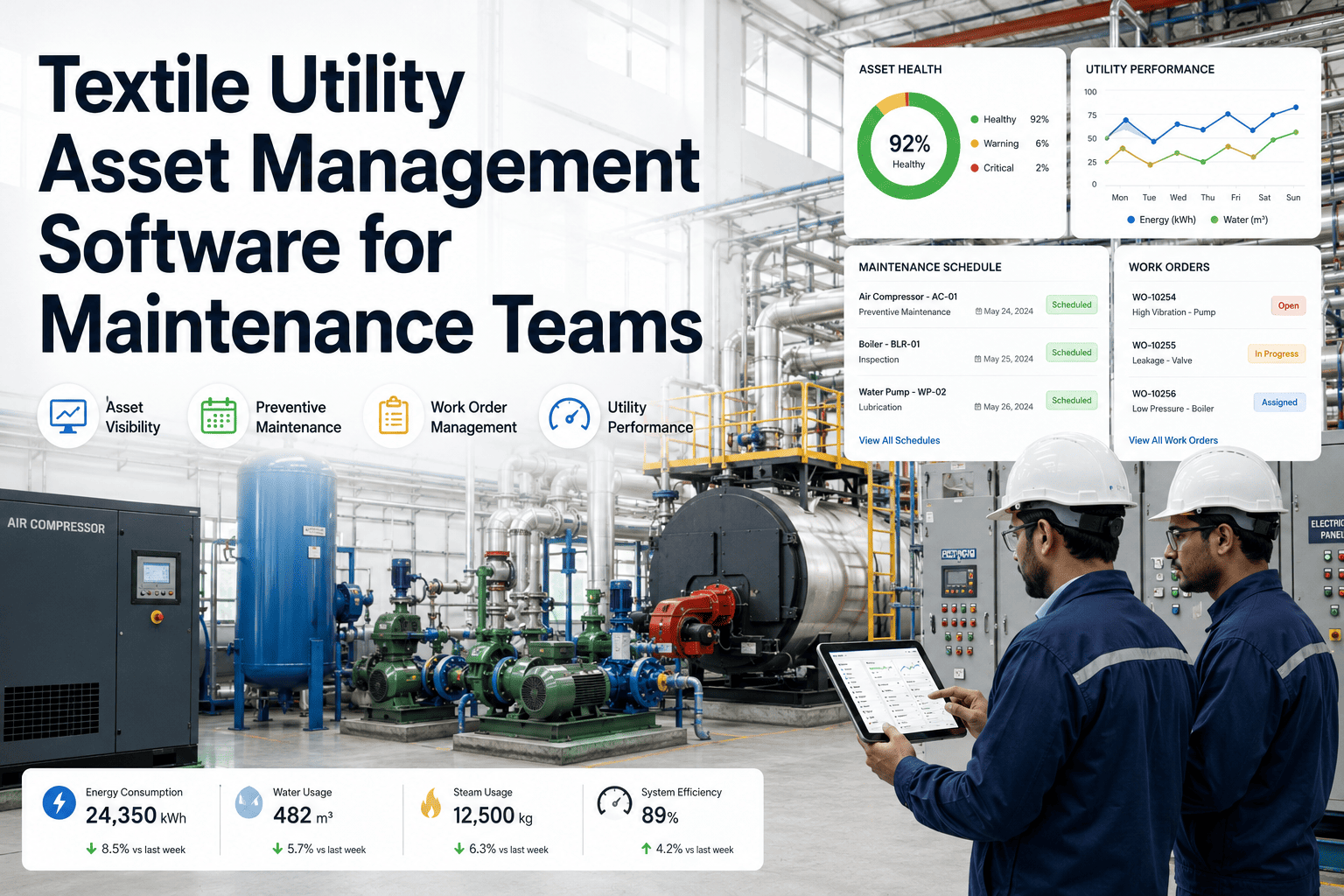
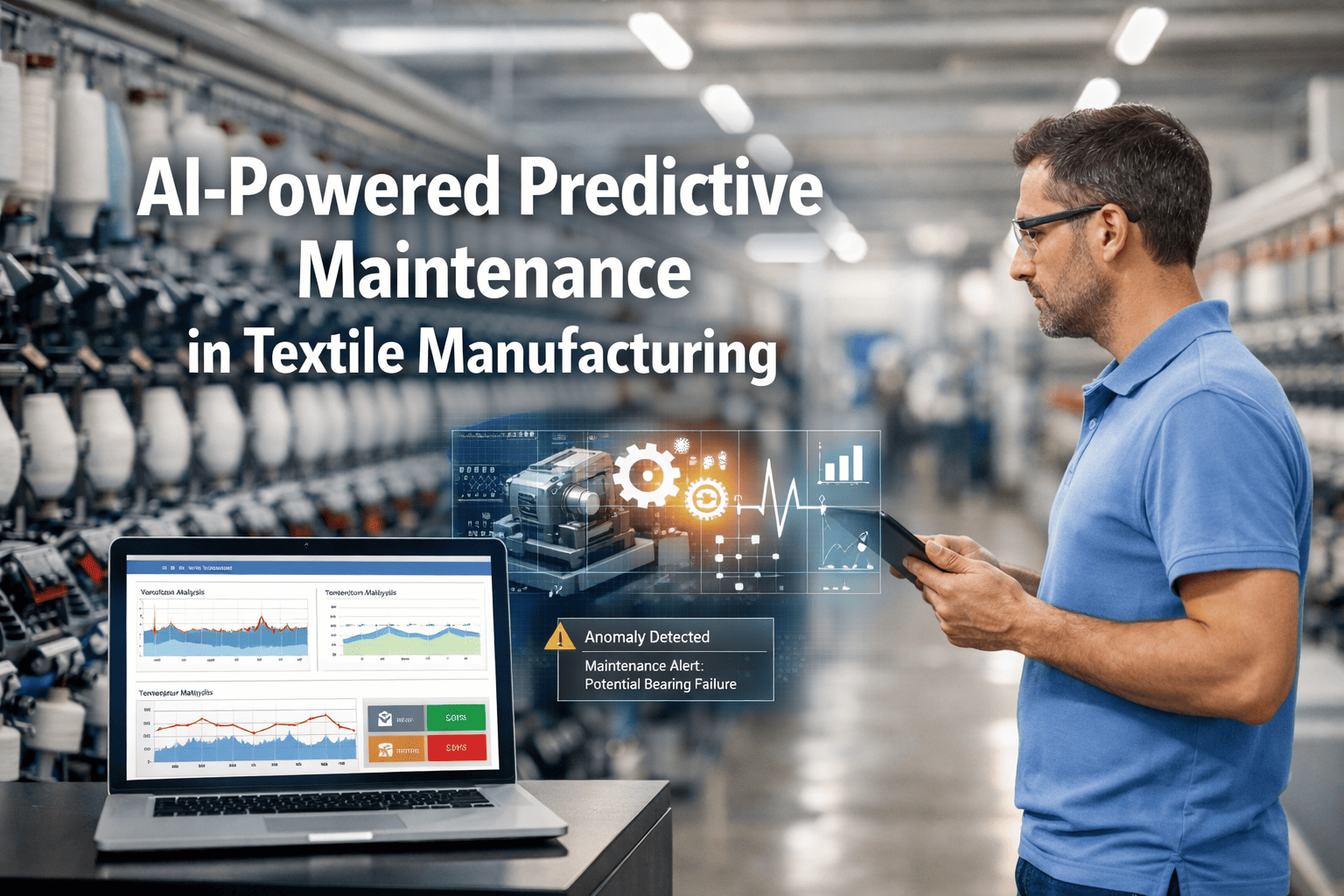
Selecting manufacturing software for a textile plant requires more than just checking generic ERP boxes, yet many facilities end up with systems that cannot handle dye lot traceability or loom-level efficiency tracking. Evaluating the best textile manufacturing software means demanding domain-specific logic for fabric construction, wet processes, and quality inspection that standard industrial platforms simply do not possess. Apply the right evaluation criteria to avoid costly customization traps, and assess your software requirements with our team to find the right fit.
Textile Software Guide 2026
Best Textile Manufacturing Software Evaluation Criteria
How to evaluate manufacturing platforms on the domain-specific logic required for fabric traceability, loom efficiency, and dye lot control that generic systems completely miss.
6Core Criteria
72%Generic Software Fails
3xFaster ROI Domain Fit
The generic trap
Why Standard Manufacturing Software Fails in Textiles
General manufacturing platforms are built for discrete assembly, not the continuous batch and reel-to-reel flows that define textile production.
01
Missing Traceability
Generic ERPs track lot numbers, but textiles require full genealogy from raw cotton bale through spinning, dyeing, and finishing to the final fabric roll, which standard systems cannot model.
02
Inaccurate OEE Logic
Standard OEE calculations fail on looms. Weaving efficiency depends on pick counts and warp breaks, not just machine runtime, requiring domain-specific performance formulas.
03
Rigid BOM Structures
Fabric BOMs change dynamically based on dye shade variations and shrinkage tolerances. Static BOMs force workarounds that corrupt inventory data and cost allocation.
Core evaluation criteria
Six Non-Negotiable Criteria for Textile Software
Evaluate every manufacturing platform against these six domain-specific requirements before committing to a purchase.
Dye Lot and Shade Traceability
The software must track chemical recipes, water conditions, and shade variations across dye lots, linking finished fabric performance directly back to the specific dye bath cycle.
Loom-Level Efficiency Tracking
Verify the system calculates OEE using textile-specific metrics like picks per minute, warp break frequency, and weft insertion rate instead of generic part counts.
Quality Defect Mapping
Require the platform to map fabric defects spatially on the roll, tracking whether issues cluster at the selvedge or center, which generic QMS platforms cannot visualize.
Dynamic Fabric BOMs
Ensure the software handles variable yarn counts and shrinkage allowances that adjust the required input quantities dynamically based on actual greige weight.
Machine Protocol Support
Demand native support for loom protocols like Picanol, Dornier, and Toyota data interfaces without requiring expensive custom middleware or manual data entry.
Production Scheduling Logic
The scheduler must respect textile constraints like minimum dye batch sizes and changeover sequences between colors to prevent unweavable combinations on the same machine.
Stop Compromising on Generic Software Features
Evaluate iFactory AI against your textile-specific requirements and see exactly how domain logic eliminates costly workarounds and customizations.
Feature depth matrix
Generic vs Textile-Specific Software Capabilities
Use this matrix to expose the dangerous gaps in generic manufacturing software when applied to textile production environments.
| Required Capability |
Generic Manufacturing Software |
Textile-Specific Platform |
| Fabric Roll Genealogy |
Tracks single lot ID only |
Maps bale to yarn to dye to finish roll |
| Loom OEE Calculation |
Runtime vs scheduled time |
Picks inserted vs theoretical max speed |
| Defect Data Capture |
Pass or fail with text code |
Spatial mapping on fabric width and length |
| Changeover Scheduling |
Time-based sequential logic |
Color and yarn count constraint matrix |
| Wet Process Tracking |
Manual log entries |
Automated chemical and temperature loop |
Every gap in the generic column represents a manual workaround that degrades data quality and slows down your production reporting. Review the full capability matrix on our support portal.
Integration depth
Required Integration Depth for Textile Stacks
Software evaluation must extend beyond features to integration depth. The best platforms connect seamlessly to the systems that actually run the textile floor.
ERP Linkage
Bi-Directional
Syncs fabric orders, greige inventory, and finished goods seamlessly without batch uploads or manual sync triggers.
Loom Connectivity
Native Protocols
Reads stop reasons, pick counts, and warp breaks directly from the loom PLC without custom translation layers.
QMS Integration
API Driven
Pushes defect maps and test results directly into quality systems, replacing clipboard data entry at inspection tables.
Dye Machine Sync
Real-Time
Captures temperature and chemical dosage curves from dye controllers for complete batch traceability.
The iFactory advantage
How iFactory AI Meets Every Textile Criteria
iFactory AI was engineered specifically for the nuances of textile manufacturing, delivering out-of-the-box logic that generic platforms require months of customization to attempt.
1
Native fabric genealogy tracks every transformation from raw fiber through spinning, weaving, dyeing, and finishing without manual data bridges or lot splitting workarounds.
2
Textile-specific OEE engines calculate loom efficiency using actual weft insertion rates and warp stop frequencies, exposing real weaving constraints hidden by generic runtime metrics.
3
Automated defect mapping captures spatial quality data on fabric rolls, allowing quality teams to trace recurring selvedge issues back to specific looms or beam setups.
4
Constraint-based scheduling respects dye batch minimums and color changeover sequences, maximizing line utilization while preventing unweavable product combinations.
Frequently asked questions
Textile Software Evaluation Questions
Can generic ERP modules handle fabric BOMs adequately?
Generic ERPs handle static BOMs well, but fabric BOMs require dynamic yield calculations based on actual greige weight and shrinkage tolerances that standard modules cannot process without heavy customization.
See how dynamic fabric BOMs work in iFactory AI.
How long does integration to legacy looms typically take?
With iFactory AI, native protocol support for major loom brands allows integration within days. Generic software requiring custom middleware development often takes months per line.
Ask support about your specific loom models and integration timelines.
Do we need separate software for dyeing and weaving?
The best textile platforms unify wet and dry processes into a single data model. Running separate systems creates traceability gaps at the handoff between greige production and dyeing.
Review unified process tracking with our specialists.
What is the biggest risk of choosing generic software?
The largest risk is user abandonment. When operators are forced into manual workarounds to make generic software fit textile processes, data quality degrades rapidly and the system becomes an expensive accounting tool rather than a production platform.
Read our implementation case studies to learn more.
How does textile-specific OEE differ from standard OEE?
Standard OEE measures machine runtime versus schedule. Textile OEE measures actual picks inserted versus theoretical maximum speed, factoring in warp breaks and style changes to reflect true weaving productivity.
Calculate your true loom OEE on a call with our team.
Demand domain logic
Evaluate the Best Textile Manufacturing Software Today
Book a session with iFactory AI to score your shortlist against these evaluation criteria and ensure your next platform drives actual production improvement.