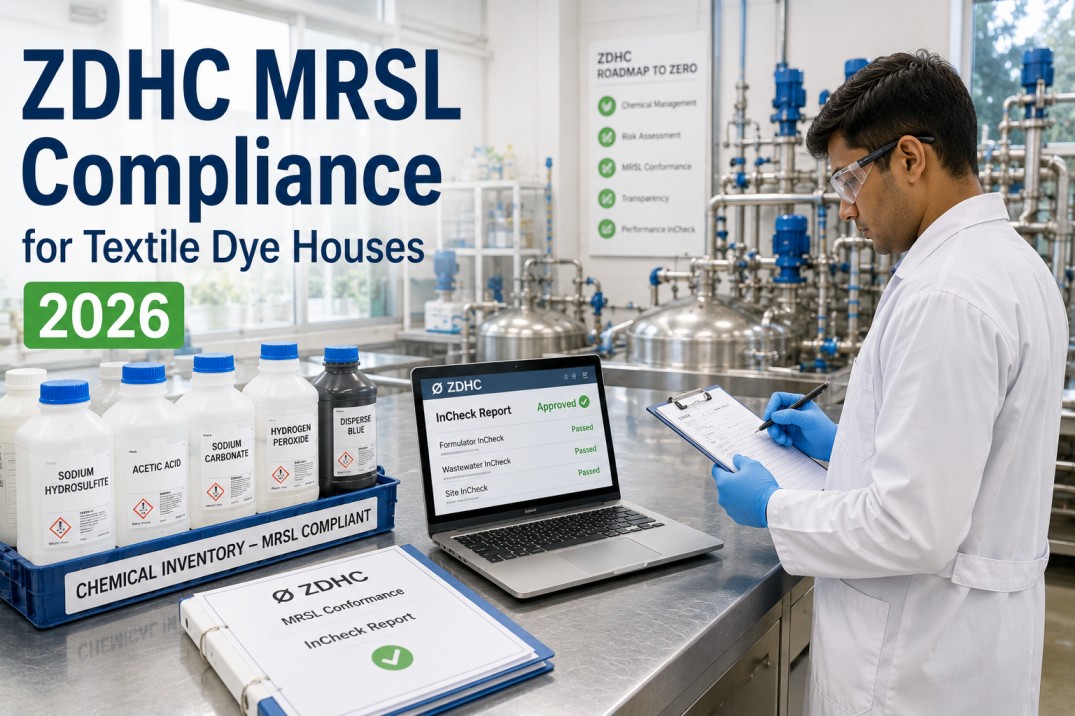
ZDHC MRSL compliance is no longer a competitive differentiator for textile dye houses. It is a contractual requirement. Every major brand group including Inditex, H&M, Nike, Adidas, and BESTSELLER now mandates that wet processing facilities maintain ZDHC MRSL-conformant chemical inventories verified through Performance InCheck reports. Non-compliant facilities face delisting from approved supplier rosters, regardless of price or quality. This framework maps the compliance pathway from baseline chemical inventory through Level 3 conformance, covering the Gateway workflows, audit preparation, and continuous improvement cycle that keeps your facility certified and your brand relationships secure.
Achieve ZDHC MRSL Conformance and Protect Your Brand Supplier Status
A structured compliance program evaluates your current chemical inventory against ZDHC MRSL requirements, identifies non-conformant products, and builds the management system needed to maintain Level 3 conformance. Facilities that complete this assessment typically identify 20 to 35 percent of their chemical inventory that requires replacement with ZDHC-registered alternatives.
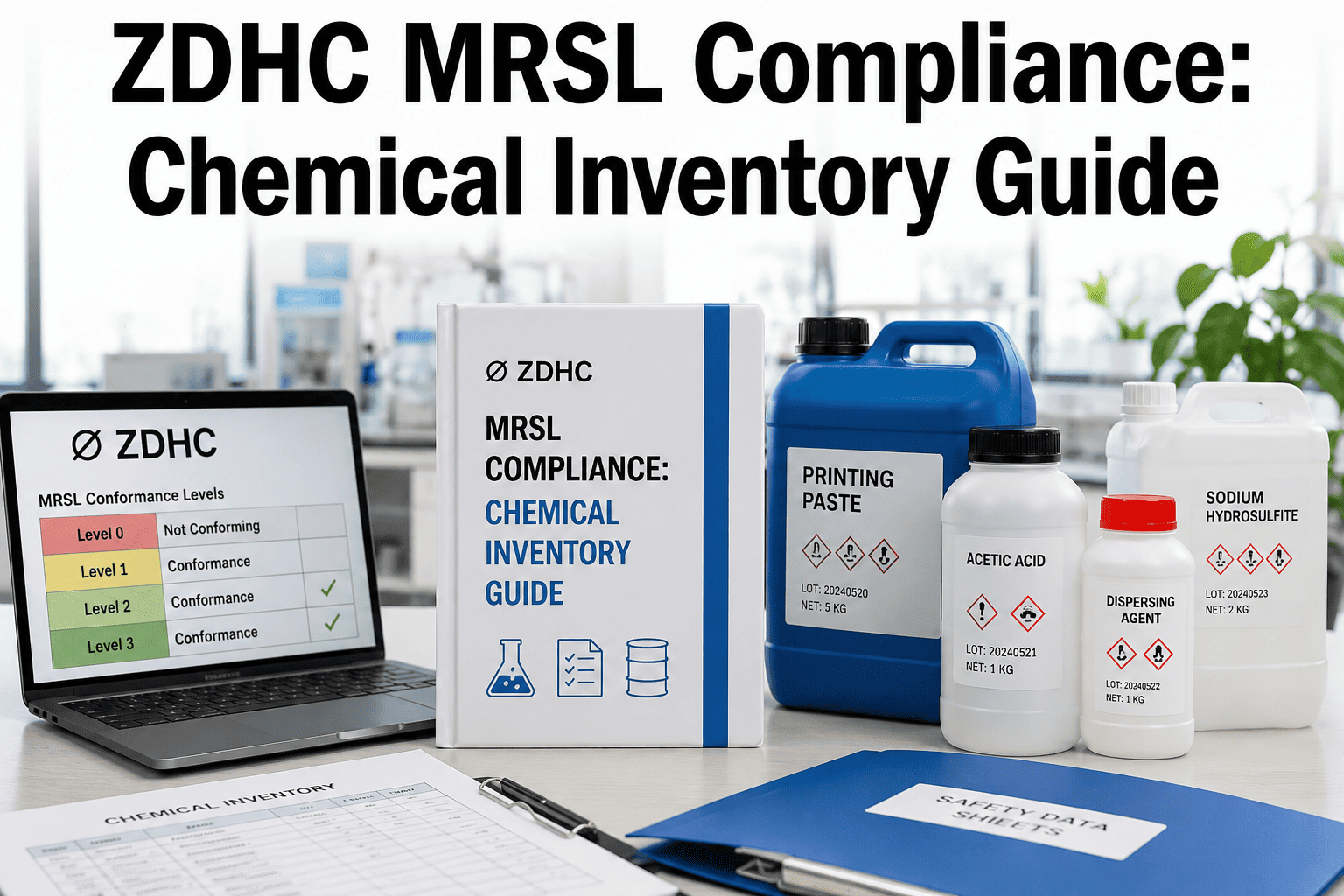
The Three Levels of ZDHC MRSL Conformance
ZDHC defines three progressive conformance levels for chemical formulations. Each level represents a higher degree of verification rigor and is required by different brand programs. Understanding the requirements at each level is essential for planning your compliance roadmap.
The ZDHC Compliance Cycle: From Inventory to InCheck Report
Achieving and maintaining ZDHC MRSL conformance is a continuous cycle. Each phase builds on the previous one, with the Performance InCheck report serving as the documented evidence that brands require for supplier approval.
Chemical Inventory Audit
Document every chemical product used across all wet processing operations. Record product name, supplier, function, ZDHC Gateway registration status, and conformance level. Identify gaps where non-registered products need replacement.
Chemical Substitution
Replace non-conformant chemical products with ZDHC MRSL-registered alternatives sourced from the Gateway. Prioritize Level 3 chemicals for highest brand confidence. Validate performance equivalence before full-scale adoption.
System Documentation
Establish chemical management system per ZDHC guidelines. Maintain SDS library, inventory tracking logs, staff training records, and wastewater test results. Document standard operating procedures for chemical receiving, storage, and dispensing.
InCheck Report Generation
Generate monthly Performance InCheck report through an approved solution provider. The report scores your chemical inventory against ZDHC MRSL requirements and provides a clear conformance percentage. Share directly with brand customers through the Gateway platform.
Stop Managing Chemical Compliance With Spreadsheets. Automate Your ZDHC Workflow.
Our chemical compliance platform connects your chemical inventory directly to the ZDHC Gateway, automates InCheck report generation, and tracks substitution deadlines for expiring or non-conformant products. Dye houses using the system reduce chemical compliance management time by 60 percent, maintain real-time visibility into their conformance score, and eliminate the audit prep scramble that consumes weeks before every brand assessment. When a new MRSL version is released, the platform automatically flags affected products and recommends registered alternatives from the Gateway.
ZDHC Compliance Audit: What Brands Verify
Brand audit teams evaluate four critical domains during ZDHC compliance assessments. Each domain carries specific evidence requirements that must be documented and current.
- Complete inventory of all chemical products used on-site
- ZDHC Gateway registration status for each product
- Conformance level documented (Level 1, 2, or 3)
- Monthly Performance InCheck report on file
- Non-conformant product replacement plan active
- Chemical management policy signed by facility management
- Standard operating procedures for chemical handling
- Staff training records with dates and attendance
- SDS library complete and accessible to all operators
- Emergency response plan for chemical spills
- Wastewater testing per ZDHC guidelines schedule
- ClearStream report generated and shared with brands
- Treatment system operating within design parameters
- Sludge disposal records compliant with local regulations
- Effluent quality within ZDHC discharge limits
- Quarterly review of InCheck score trends
- Substitution roadmap for Level 0 and Level 1 chemicals
- Corrective action plan for any non-conformance findings
- Management review meetings documented quarterly
- Transition plan prepared for next MRSL version update
What ZDHC Compliance Means for Your Facility Metrics
Beyond brand access, ZDHC compliance drives measurable operational improvements. Facilities that achieve and maintain Level 3 conformance report significant co-benefits in chemical efficiency, risk reduction, and supplier confidence.
Frequently Asked Questions
What is the difference between ZDHC MRSL and RSL?
The ZDHC MRSL governs chemical substances restricted during the manufacturing process, covering what enters the facility and what leaves as waste. The RSL governs restricted substances in finished products. A facility must comply with both. The MRSL focuses on input chemistry and workplace safety, while the RSL focuses on consumer safety. Most brand programs require conformance to both lists, and the ZDHC MRSL conformance program is typically the first step because it addresses the chemical inventory that determines both worker exposure and wastewater output.
How often must a Performance InCheck report be generated?
Performance InCheck reports must be generated monthly to maintain active compliance status. The report captures the current chemical inventory snapshot and scores each product against ZDHC MRSL requirements. Monthly frequency ensures that any chemical substitutions, new product introductions, or expiring certifications are reflected in the facility's conformance score within weeks rather than months. Brands typically request the most recent InCheck report during supplier reviews and will flag gaps in monthly reporting as a compliance concern.
What happens during a ZDHC Level 3 on-site audit?
A Level 3 audit is conducted by an approved certification body and includes a physical site visit that verifies the chemical management system documented at Level 2 is fully operational. The auditor inspects chemical receiving, storage, dispensing, and waste handling areas. Staff interviews verify training effectiveness. Records are sampled to confirm that inventory tracking, SDS management, and wastewater testing are current and accurate. The audit also reviews the effectiveness of corrective actions from any prior findings. A successful Level 3 audit confirms that the facility not only has the right chemicals but also the right processes to manage them safely.
How do I find ZDHC MRSL-conformant chemical alternatives?
The ZDHC Gateway Chemical Module is the primary database for finding registered chemical products. It allows you to search by function, supplier, and conformance level. Products in the Gateway have been verified by approved certification bodies at Level 1, 2, or 3. Most chemical suppliers also indicate ZDHC MRSL conformance in their product documentation. When substituting a non-conformant product, request samples from multiple Gateway-registered alternatives and validate performance under your specific process conditions before committing to full-scale adoption.
What is the cost of ZDHC MRSL compliance for a typical dye house?
Compliance costs vary based on facility size, current chemical inventory composition, and target conformance level. Typical costs include chemical substitution premiums for ZDHC-registered products (often 5 to 15 percent higher than non-registered equivalents), solution provider fees for monthly InCheck report generation, wastewater testing laboratory costs, and Level 3 audit fees. Most facilities report that chemical substitution costs are partially offset by improved process efficiency and reduced worker exposure risk. The business cost of non-compliance including potential delisting from brand supplier programs far exceeds the compliance investment.
Protect Your Brand Relationships With Automated ZDHC Compliance Management
Stop scrambling before every brand audit. Our platform connects your chemical inventory to the ZDHC Gateway, automates InCheck report generation, and tracks every substitution deadline and MRSL version update. When your next brand assessment arrives, your compliance documentation is current, complete, and shareable with a single click. Dye houses using automated compliance management reduce audit preparation time by 60 percent and maintain 100 percent ZDHC-conformant chemical inventories year-round, not just during audit season.