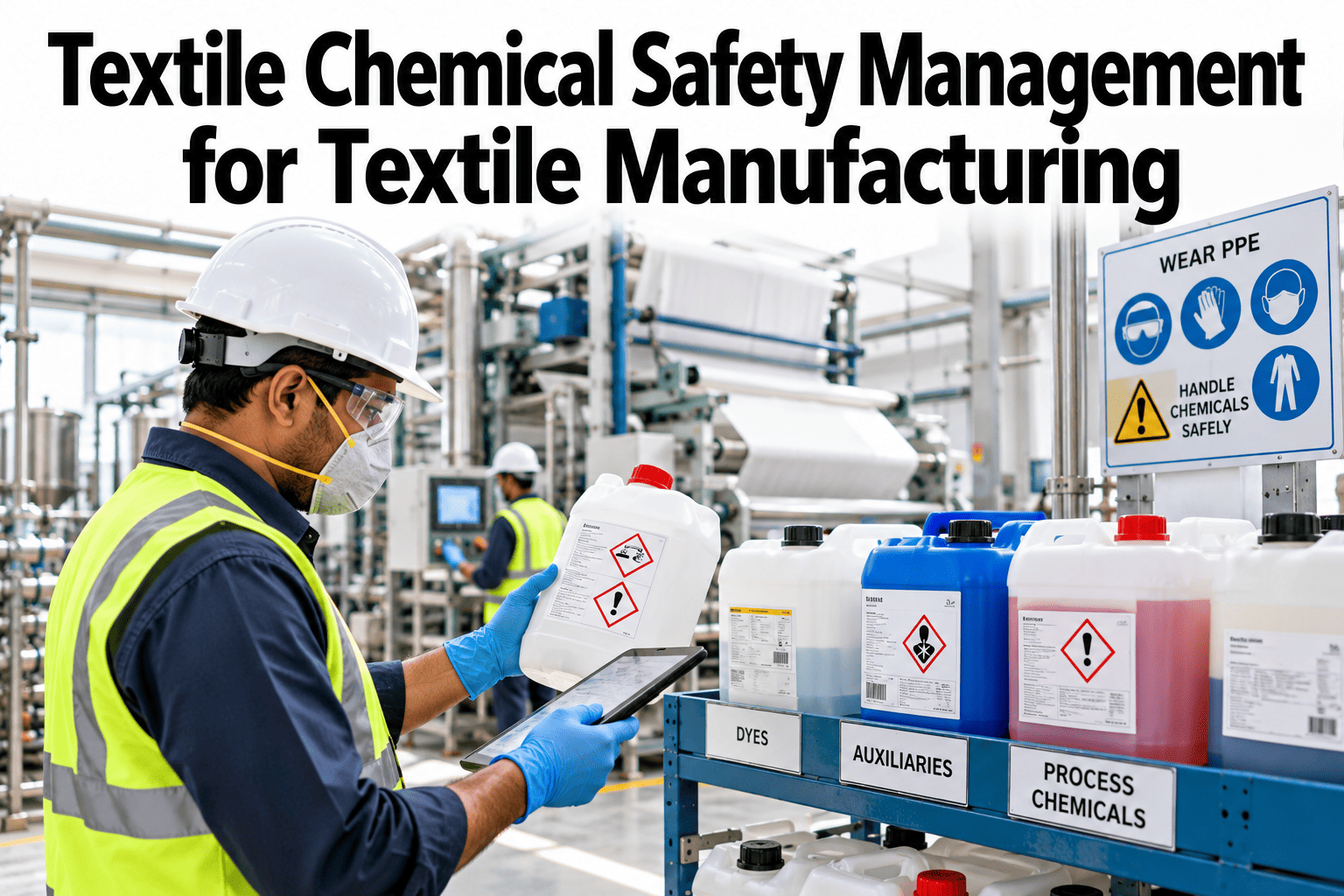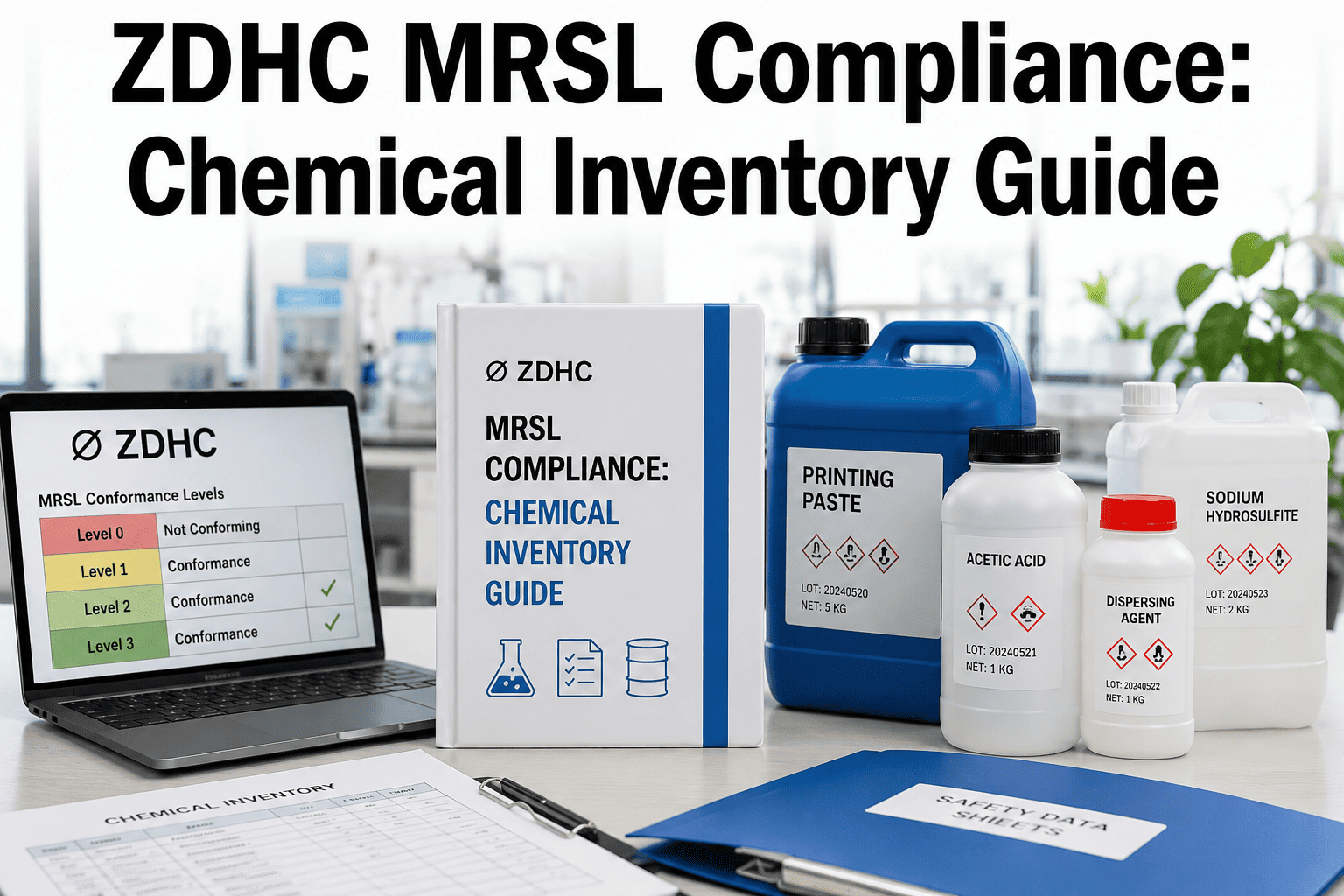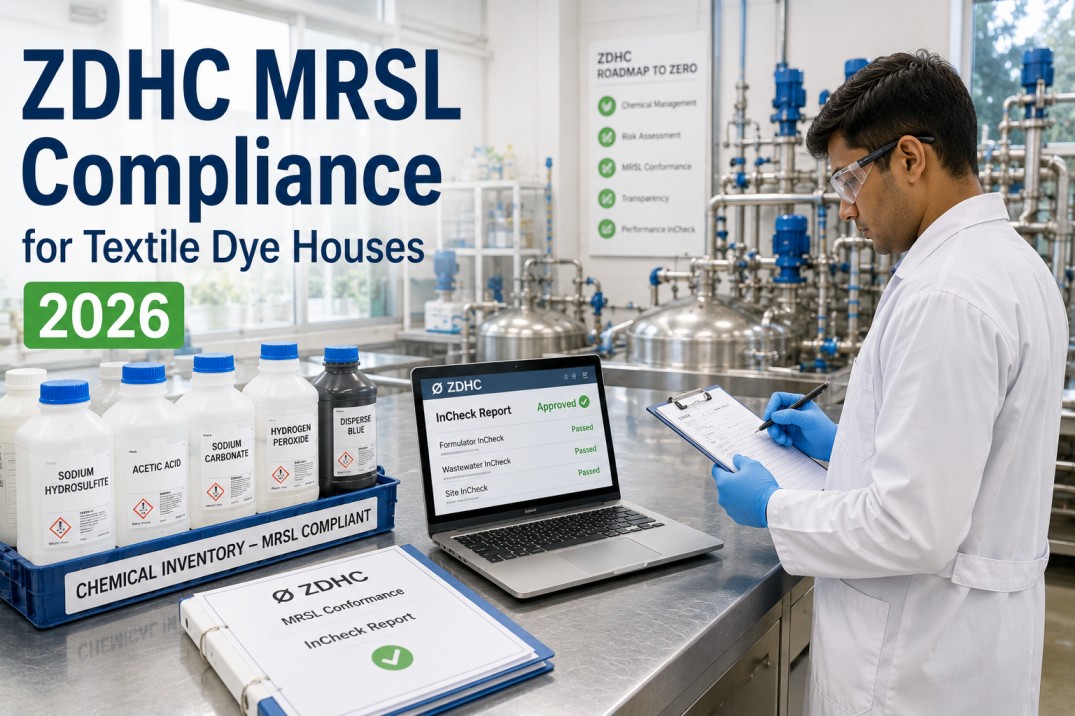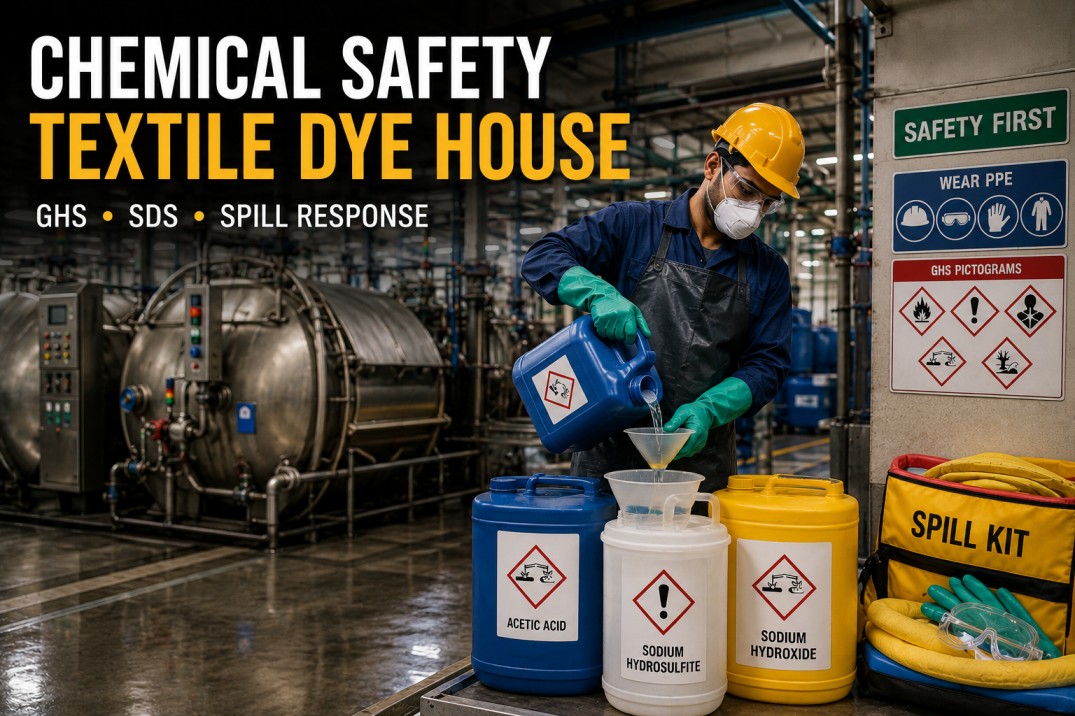
A typical textile dyehouse stores and uses between 200 and 500 distinct chemical products on any given day — dyestuffs, auxiliaries, finishing agents, acids, alkalis, oxidizing and reducing agents, surfactants, and solvents — many of which carry GHS hazard classifications including acute toxicity, skin corrosion, serious eye damage, aquatic hazard, flammable liquid, and oxidizing solid classifications. The challenge is not the presence of these chemicals but the systemic management gap: fewer than 30% of dyehouses have a complete digitized SDS inventory, over 60% rely on paper binders that are updated quarterly at best, and 45% of spill incidents in textile dyehouses result from incompatible chemical storage according to the Textile EHS Association's 2025 incident database. A single SDS compliance failure during an OSHA or EPA inspection can trigger fines of $13,653 to $136,532 per violation, while a major chemical spill in a dyehouse can shut down production for 72 hours or more and cost $50,000–$250,000 in cleanup, lost production, and regulatory penalties. This page maps the seven GHS hazard categories most relevant to textile dyehouse chemicals with their pictograms, signal words, and precautionary statements, presents a digital SDS management workflow that reduces retrieval time from 25 minutes to under 30 seconds, defines a three-tier spill response framework with containment kits and PPE requirements, provides a chemical storage compatibility table covering acids, alkalis, oxidizers, flammables, and toxics, and details a five-step chemical inventory digitization process that creates an audit-ready chemical register within four weeks.
Seven GHS Hazard Categories Critical for Dyehouse Chemical Safety
The Globally Harmonized System (GHS) classifies chemical hazards into categories that determine labeling, SDS content, storage requirements, and spill response protocols. The seven categories below are the most frequently encountered in textile dyehouse operations and must be understood by every employee who handles, stores, or transports chemicals.
Digital SDS Management — From 25 Minutes to 30 Seconds
Safety Data Sheets are the legal foundation of chemical safety compliance, but paper-based SDS binders in dyehouses routinely fail audits due to missing pages, outdated versions, and retrieval times that exceed the 15-minute target for emergency response. Digital SDS management transforms this critical compliance function.
Is Your Dyehouse Chemical Inventory Audit-Ready?
iFactory's chemical safety module digitizes SDS management, generates GHS-compliant labels, and provides one-click audit reports. Book a demo to see a live chemical inventory dashboard from an operating dyehouse.
Three-Tier Spill Response Framework for Dyehouse Chemicals
Every textile dyehouse must have a documented spill response plan that covers the range of potential chemical releases — from a 500 mL bottle of acetic acid knocked off a dispensing shelf to a 1,000 L bulk tank rupture of caustic soda solution. The three-tier framework below is based on EPA spill prevention control and countermeasure (SPCC) guidelines adapted for textile dyehouse operations.
Chemical Storage Compatibility Matrix for Dyehouse Chemicals
Incompatible chemical storage is the leading cause of preventable chemical incidents in textile dyehouses. When incompatible chemicals mix due to container failure, spill, or misplacement, the results can include toxic gas release, fire, explosion, or violent reactions. The matrix below shows storage compatibility for the seven most common dyehouse chemical groups.
| Chemical Group | Acids | Alkalis | Oxidizers | Reducers | Flammables | Toxics | Dyes |
|---|---|---|---|---|---|---|---|
| Acids | C | X | S | X | S | S | S |
| Alkalis | X | C | S | C | C | S | C |
| Oxidizers | S | S | C | X | X | X | S |
| Reducers | X | C | X | C | S | S | C |
| Flammables | S | C | X | S | C | S | C |
| Toxics | S | S | X | S | S | C | S |
| Dyes | S | C | S | C | C | S | C |
C = Compatible — may store together. X = Incompatible — must be separated by distance or fire-rated wall. S = Segregated storage required — same room allowed with secondary containment or 3 m separation.
Is Your Chemical Storage Layout Safe and Compliant?
iFactory's chemical safety module includes storage compatibility verification, auto-generated GHS labels, and digital SDS management with one-click audit reports. Book a demo to see the platform running in an operating textile dyehouse.
Five-Step Chemical Inventory Digitization Process
Creating a complete digitized chemical inventory is the foundational step for all chemical safety compliance. The five-step process below has been validated across 22 dyehouse digitization projects and typically requires 3–4 weeks for a facility with 300–500 chemical products.
Frequently Asked Questions About Dyehouse Chemical Safety
What are the most common OSHA chemical violations in textile dyehouses?
The five most frequently cited chemical safety violations in textile dyehouses are: failure to maintain a written hazard communication program (29 CFR 1910.1200) accounting for 28% of citations, missing or outdated Safety Data Sheets (22%), unlabeled or improperly labeled chemical containers (18%), inadequate employee chemical safety training (16%), and failure to conduct periodic chemical inventory audits (10%). The average penalty per serious violation ranges from $13,653 to $15,623, with willful or repeat violations reaching $136,532. OSHA's National Emphasis Program on chemical hazards in textile manufacturing has increased inspection frequency by 35% since 2023.
How often must Safety Data Sheets be reviewed and updated?
GHS requires that SDS be reviewed and updated within three months of becoming aware of any significant new hazard information. In practice, OSHA expects the SDS to reflect the current formulation and hazard profile of the chemical product. Most chemical manufacturers issue revised SDS at least every three years, but many update annually. The responsible party (typically the chemical manufacturer or importer) must provide the updated SDS to downstream users — including textile mills — within 30 days of the revision. Digital SDS management systems automate this by flagging any SDS that has not been reviewed within 12 months and sending automated requests to suppliers for updated versions.
What PPE is required for handling concentrated acids and alkalis in a dyehouse?
OSHA requires chemical-resistant PPE appropriate for the specific chemical and concentration. For concentrated acids (above 10%) and alkalis (above 5%) handled in textile dyehouses, the minimum PPE includes: chemical-resistant gloves (nitrile 15 mil or neoprene, with gauntlet length covering the forearm), chemical splash goggles meeting ANSI Z87.1, a face shield for splash protection, a chemical-resistant apron (PVC or neoprene), and chemical-resistant boots. Additional PPE required for specific operations includes: a full chemical splash suit for bulk chemical transfer, a respirator with organic vapor cartridge for flammable solvent handling, and SCBA for major spill response. Emergency showers and eyewash stations must be within 10 seconds travel from any point where corrosive chemicals are used.
What is the most common incompatible chemical storage combination found in dyehouses?
The most frequently observed incompatible storage combination in textile dyehouse audits is oxidizers stored near flammable liquids or reducing agents. Hydrogen peroxide (a Class 1 oxidizer) stored adjacent to isopropanol (a Class 2 flammable) or sodium hydrosulfite (a strong reducing agent used in vat dyeing) is found in approximately 35% of dyehouse inspections. This combination can produce an exothermic reaction, oxygen gas release, and potential fire or explosion. The second most common is acids stored with bleach (sodium hypochlorite), which generates toxic chlorine gas. The third is concentrated sulfuric acid stored with caustic soda — mixing produces a violent exothermic reaction with boiling and splashing. Digital chemical inventory systems with storage compatibility alerts eliminate these risks.
How should expired or unused chemicals be disposed of in a textile dyehouse?
Expired and unused chemicals must be disposed of as hazardous waste through a licensed hazardous waste disposal contractor. Textile dyehouses cannot dispose of chemical waste through regular municipal wastewater or solid waste streams. The disposal process includes: identifying the chemical and its hazard class from the SDS, placing it in a compatible waste container with a completed hazardous waste label, storing it in a designated hazardous waste accumulation area with secondary containment, and scheduling pickup by a licensed transporter within 90 days of the waste start date (per EPA 40 CFR 262). The dyehouse must maintain a hazardous waste manifest for every shipment. Digital chemical inventory systems can track waste accumulation dates and auto-generate hazardous waste labels and manifests.
Complete Dyehouse Chemical Safety — From SDS to Spill Response
iFactory's chemical safety module covers digital SDS management, GHS-compliant label generation, storage compatibility verification, spill response workflow, and audit-ready chemical registers. Book a demo to see the platform managing 400+ chemicals in an operating textile dyehouse.