A textile mill's waste stream isn't just a cost problem — a meaningful part of it is a compliance problem, because dye sludge, spent solvents, and certain finishing chemical residues fall under hazardous waste regulations the moment they leave the process, whether or not anyone in the plant has classified them that way yet. Regulatory waste reporting exists to make sure hazardous material is tracked from generation to disposal with a paper trail that regulators, and increasingly buyers running their own compliance audits, can verify. Getting waste classification wrong isn't a paperwork inconvenience — misclassifying a hazardous stream as non-hazardous is the kind of finding that shows up in an audit and can halt a facility's operating permit. This guide covers how hazardous waste gets classified in textile operations, what disposal documentation actually needs to exist, and the reporting cadence most regulatory frameworks expect. Mills managing multi-site waste compliance can book a 30-minute demo to see how iFactory keeps waste classification, disposal documentation, and reporting deadlines tracked against every generating site.
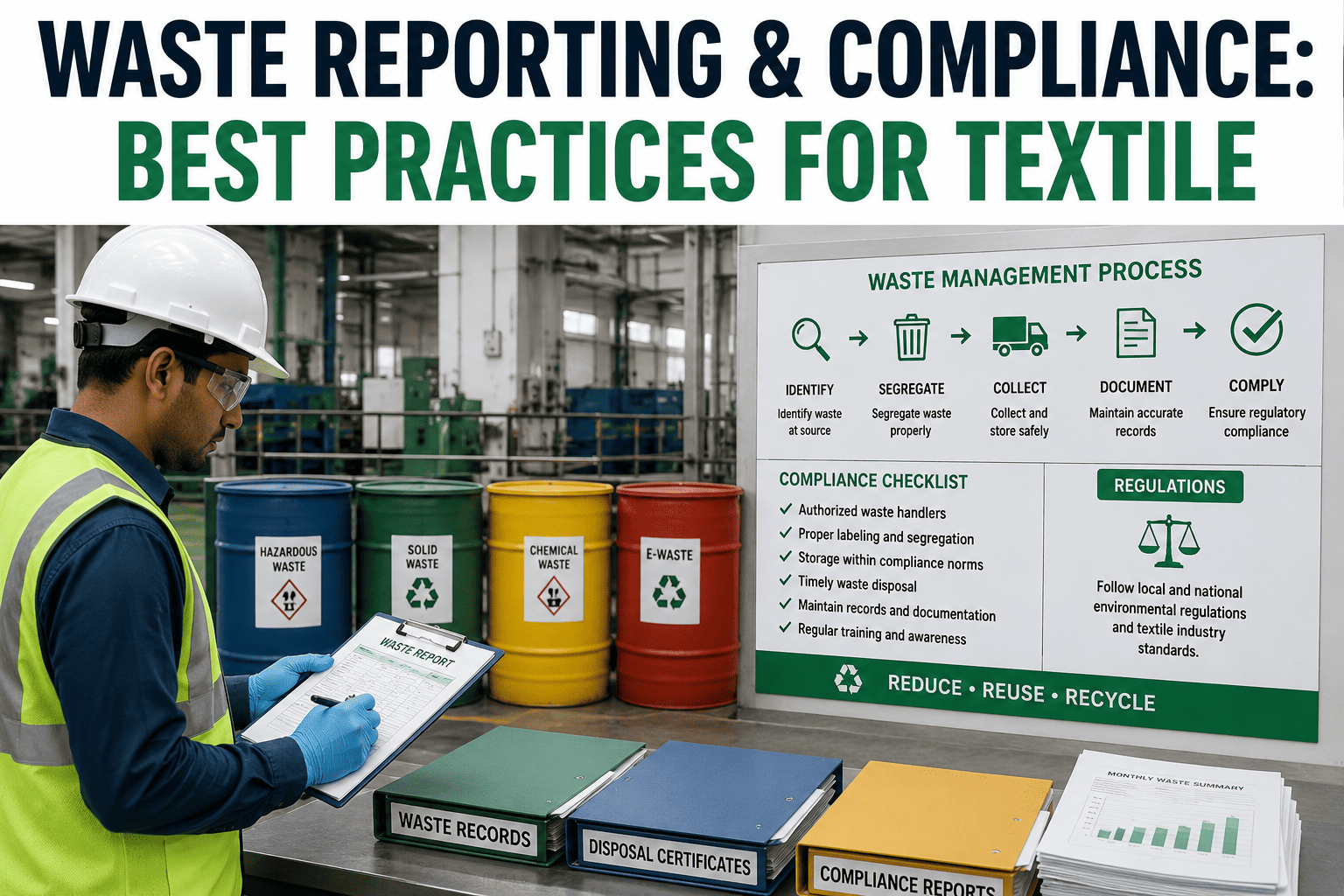
Waste Reporting & Regulatory Compliance — Best Practices for Textile
How hazardous waste gets classified in textile operations, what disposal documentation regulators and buyer audits actually expect, and how to build a reporting cadence that doesn't rely on someone remembering a deadline manually.
Why Waste Classification Is the Step Most Facilities Get Wrong First
Hazardous waste classification depends on the specific chemical composition of a waste stream, not on how the stream is generally perceived on the floor — a dye bath residue that looks like ordinary wastewater sludge can carry heavy metal content or chemical characteristics that legally classify it as hazardous, while a stream assumed hazardous out of caution may not actually meet the regulatory criteria at all. Getting this classification wrong in either direction creates a real problem: under-classifying exposes the facility to a serious compliance finding, while over-classifying drives unnecessary hazardous disposal cost for material that never needed that treatment path.
Common Hazardous Waste Streams in Textile Operations
Dye bath residues, spent dye liquor, and print paste waste can carry heavy metal content or organic chemical characteristics depending on the specific dye class used, requiring composition testing rather than a blanket assumption either way.
Spent finishing chemical baths, including flame retardant and water-repellent treatment residues, frequently carry regulated chemical characteristics and require specific handling separate from general wastewater treatment.
Spent solvents from certain cleaning or specialty finishing processes are among the most consistently regulated hazardous waste categories in textile operations, requiring dedicated collection and disposal tracking separate from aqueous waste streams.
Sludge generated from on-site effluent treatment can concentrate contaminants removed from process wastewater, meaning its classification depends on what was actually in the water being treated upstream.
Building a Compliance-Ready Documentation Trail
Test and classify at the point of generation. Composition testing done at or near the point a waste stream is generated gives the most accurate and defensible classification basis, rather than testing a blended, aggregated stream downstream where composition is harder to attribute back to its source process.
Maintain a manifest for every regulated shipment. Hazardous waste leaving the facility for disposal or treatment needs a documented chain of custody covering generation, transport, and final disposal, with signatures at each handoff point.
Retain records for the full regulatory retention period. Disposal documentation typically needs to be retained for a period well beyond the disposal date itself, and a facility unable to produce historical records during an audit faces the same finding as a facility that never generated the documentation at all.
Reconcile generated volume against disposed volume. A gap between how much hazardous waste a facility reports generating and how much its disposal contractor reports receiving is one of the most common findings in a regulatory audit, and it usually points to a documentation gap rather than actual missing material.
Reporting Cadence and Common Requirements
| Requirement Area | Typical Cadence | Common Failure Point |
|---|---|---|
| Hazardous waste generator reporting | Annual, with some jurisdictions requiring quarterly summaries | Generator status classification not reassessed as volumes change year to year |
| Manifest tracking | Per shipment, ongoing | Missing signed copy from the final disposal facility |
| Internal waste audits | Quarterly or semi-annual, varies by facility policy | Audit findings logged but not closed out with a corrective action |
| Buyer compliance audits | Varies by buyer program, often annual | Documentation format not aligned with what the specific buyer's audit checklist requires |
Regulatory requirements vary significantly by jurisdiction and facility size classification, so the cadence above is a general reference point — a facility's specific generator status and local regulatory framework determine its actual reporting obligations.
Frequently Asked Questions
How is hazardous waste classification actually determined for a textile waste stream?
Classification is based on the specific chemical composition and characteristics of the waste stream — factors like heavy metal content, pH, flammability, or the presence of specific regulated chemicals — rather than a general assumption based on which department generated it. This means composition testing at the point of generation is the only reliable basis for classification, since two dye bath residues from different dye classes can have very different regulatory status even though they look identical on the floor. Contact iFactory Support for help setting up point-of-generation waste testing protocols.
What happens if a facility discovers it has been misclassifying a waste stream after the fact?
Most regulatory frameworks expect a facility to correct the classification going forward and, depending on the jurisdiction and severity, may require disclosure of past misclassification along with documentation showing the corrective testing that identified the error. Self-identifying and correcting an error is generally viewed far more favorably by regulators than the same error being discovered during an external audit, which is a strong argument for periodic internal re-testing of waste streams rather than assuming an original classification remains accurate indefinitely.
Why does a volume reconciliation gap matter if the waste was actually disposed of properly?
A gap between generated volume and disposal contractor-reported received volume is treated seriously in an audit because regulators can't distinguish between a documentation error and actual improper disposal just by looking at the numbers — the burden falls on the facility to demonstrate the gap is administrative rather than substantive. Even when the underlying disposal was handled correctly, an unreconciled volume gap is itself a compliance finding, which is why reconciliation should happen routinely rather than only when an audit specifically requests it. Book a demo to see automated reconciliation between generated and disposed waste volumes.
Do buyer compliance audits require different documentation than government regulatory reporting?
Often yes — while both are built on the same underlying waste generation and disposal data, a buyer's audit checklist may require the information formatted or summarized differently than the government reporting format, and may cover a broader scope than the minimum legal requirement in a given jurisdiction. Facilities working with multiple buyers each running their own compliance program frequently end up maintaining several documentation formats from the same underlying data, which is a strong argument for a system that can generate multiple report formats from one consistent data source.
How long should hazardous waste disposal records actually be retained?
Retention periods vary by jurisdiction, but most regulatory frameworks require records to be kept well beyond the disposal date itself, often for several years, precisely because audits can look back at historical disposal activity rather than only the current reporting period. A facility unable to produce a historical manifest during an audit faces essentially the same finding as one that never generated the documentation at all, which makes retention as operationally important as the original documentation itself. Contact iFactory Support for help setting up long-term retention policies for waste disposal documentation.
A missing manifest is treated the same as a compliance failure.
iFactory keeps waste classification, manifests, and disposal documentation tracked and retrievable against every generating site, so an audit request doesn't turn into a scramble through paper files. A 30-minute demo builds a live view against your own compliance data.