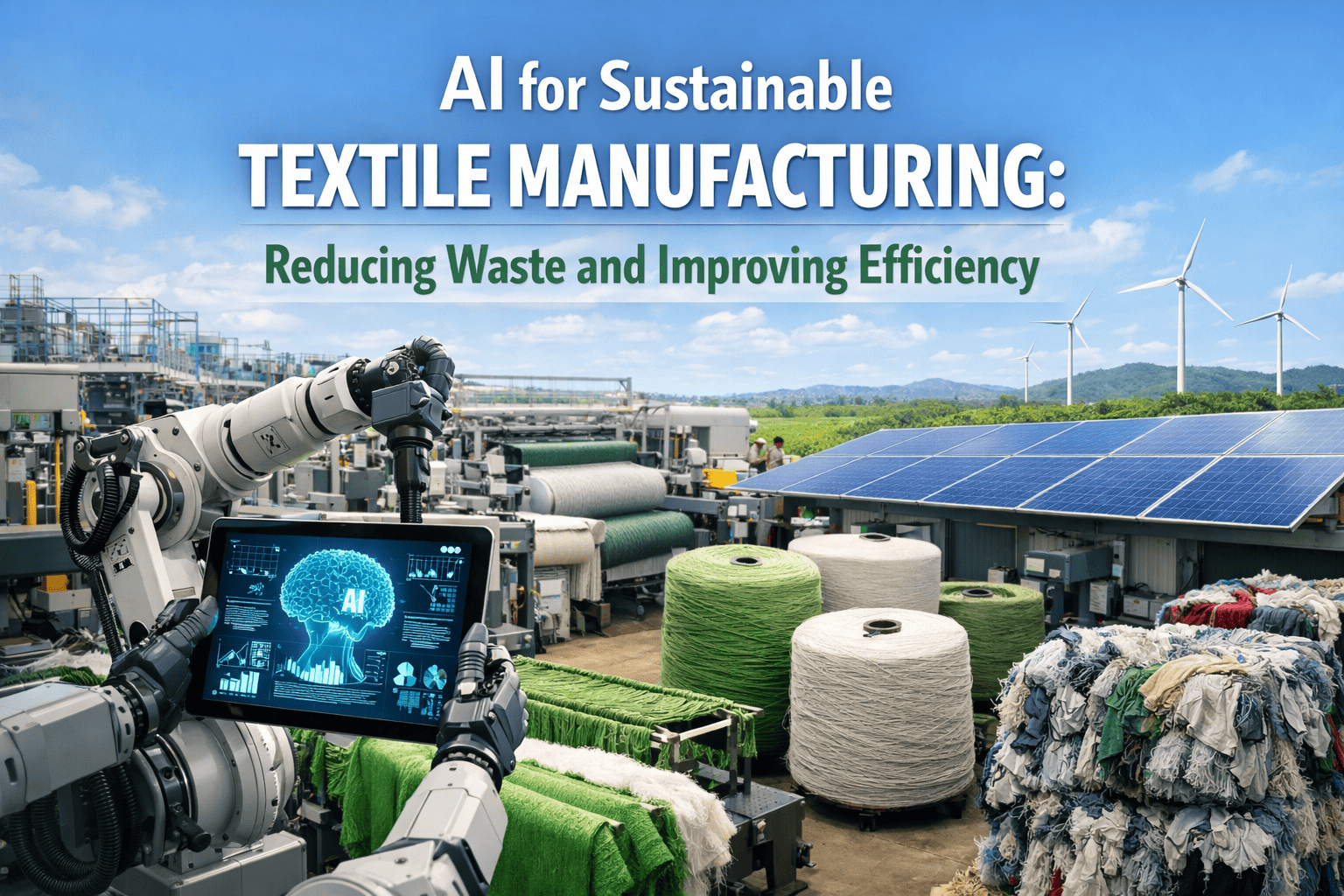
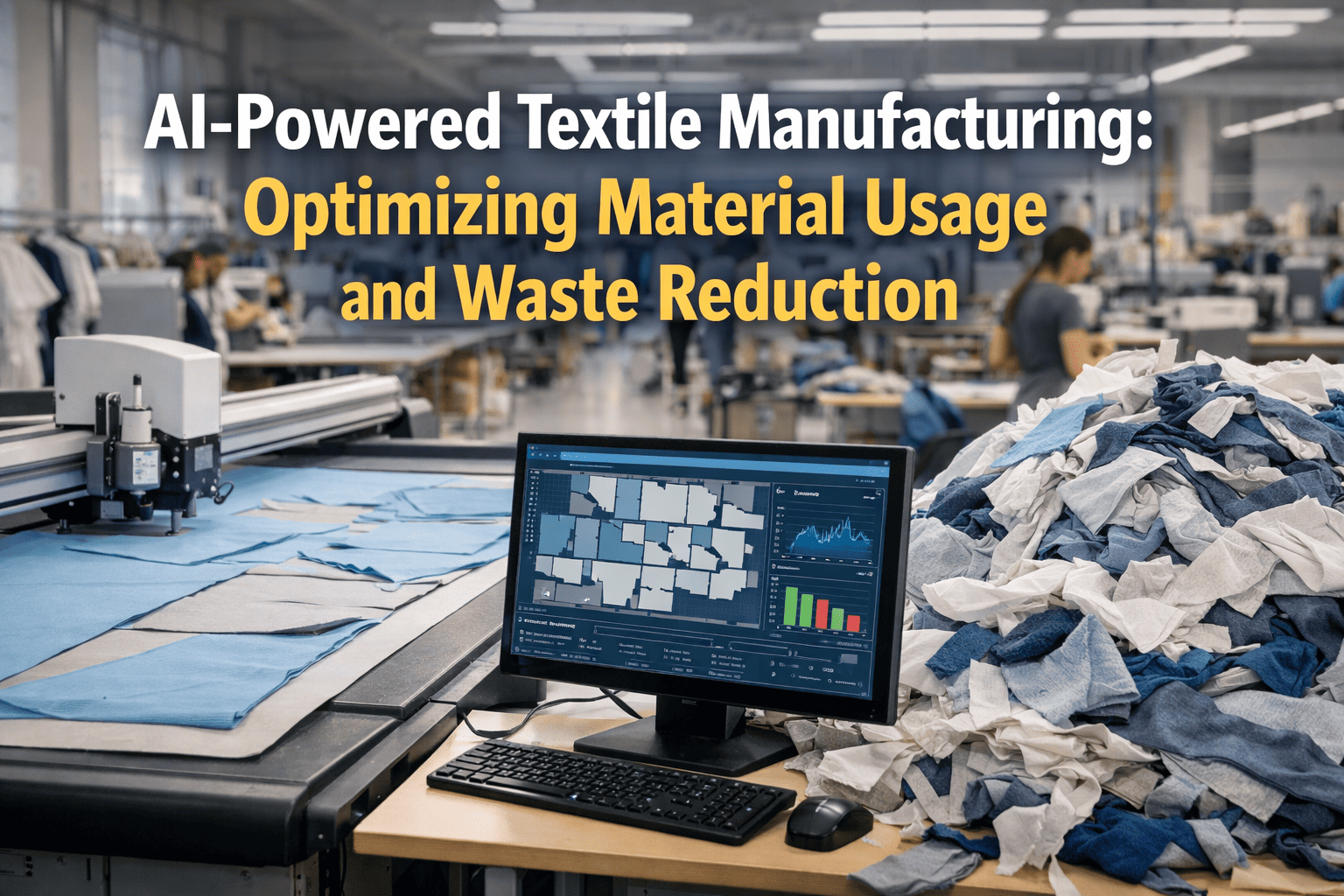
Textile manufacturing is one of the most resource-intensive industries on earth — consuming 93 billion cubic metres of water annually, releasing 1.2 billion tonnes of CO₂, and generating waste at every stage of the production chain. The challenge is no longer awareness. It is action. AI-driven waste management systems are now giving factories the precision tools to cut material loss, reduce chemical discharge, optimise energy, and build the sustainability data trail that global buyers demand. Book a free demo with iFactory and discover how AI transforms textile waste from an overhead cost into a competitive advantage.
From Factory Floor to a Cleaner Planet
AI is giving textile manufacturers real-time control over the waste they generate — material, chemical, water, and energy — and the compliance proof that buyers now require.
The Real Scale of Textile Waste — And Why It's Mostly Avoidable
Textile waste is not just an end-of-line problem. It compounds at every stage — from yarn spinning through dyeing, finishing, and dispatch. Most factories have no real-time visibility into where waste is occurring, how much is being generated per shift, or which process parameter is responsible. This is exactly the gap that AI closes.
Yarn breakages, count deviations, and incorrect twist rates result in rejected bobbins and excess fibre loss. Without real-time tension monitoring, these losses repeat across every shift.
Reed marks, broken picks, and warp beam inconsistencies produce defective metres that cannot be sold. Each defect discovered late multiplies downstream processing waste.
Shade failures caused by pH drift or temperature deviation result in entire lot rejections. Wasted dye chemicals and water from repeated re-dyeing carry significant environmental and financial cost.
Incorrect stenter temperatures, over-application of finishing chemicals, and unoptimised overfeed settings drive energy waste and non-compliant chemical discharge in finishing.
How AI Manages Waste Across Every Production Stage
AI waste management is not a single feature. It is a connected intelligence system that monitors parameters, learns from production patterns, predicts failures before they cause waste, and automatically guides operators and supervisors toward corrective action.
Every machine parameter — temperature, speed, tension, pH, GSM — is tracked in real time across all production stages. Deviations from waste-optimal ranges trigger instant alerts before material is lost.
Machine learning models trained on your production history identify the early signatures of defects — before they propagate into full batch rejections. AI catches waste at its source, not at final inspection.
AI analyses order mixes, fabric widths, and dye recipe targets to recommend cutting plans and chemical dosages that minimise material overage and dye wastage per production run.
Machine schedule optimisation and bath reuse recommendations reduce energy and water consumption per metre — tracked automatically and reported against sustainability targets in real time.
When waste events occur, AI links them to the exact machine, operator, batch, and parameter set responsible — enabling targeted corrections that prevent recurrence rather than just managing consequences.
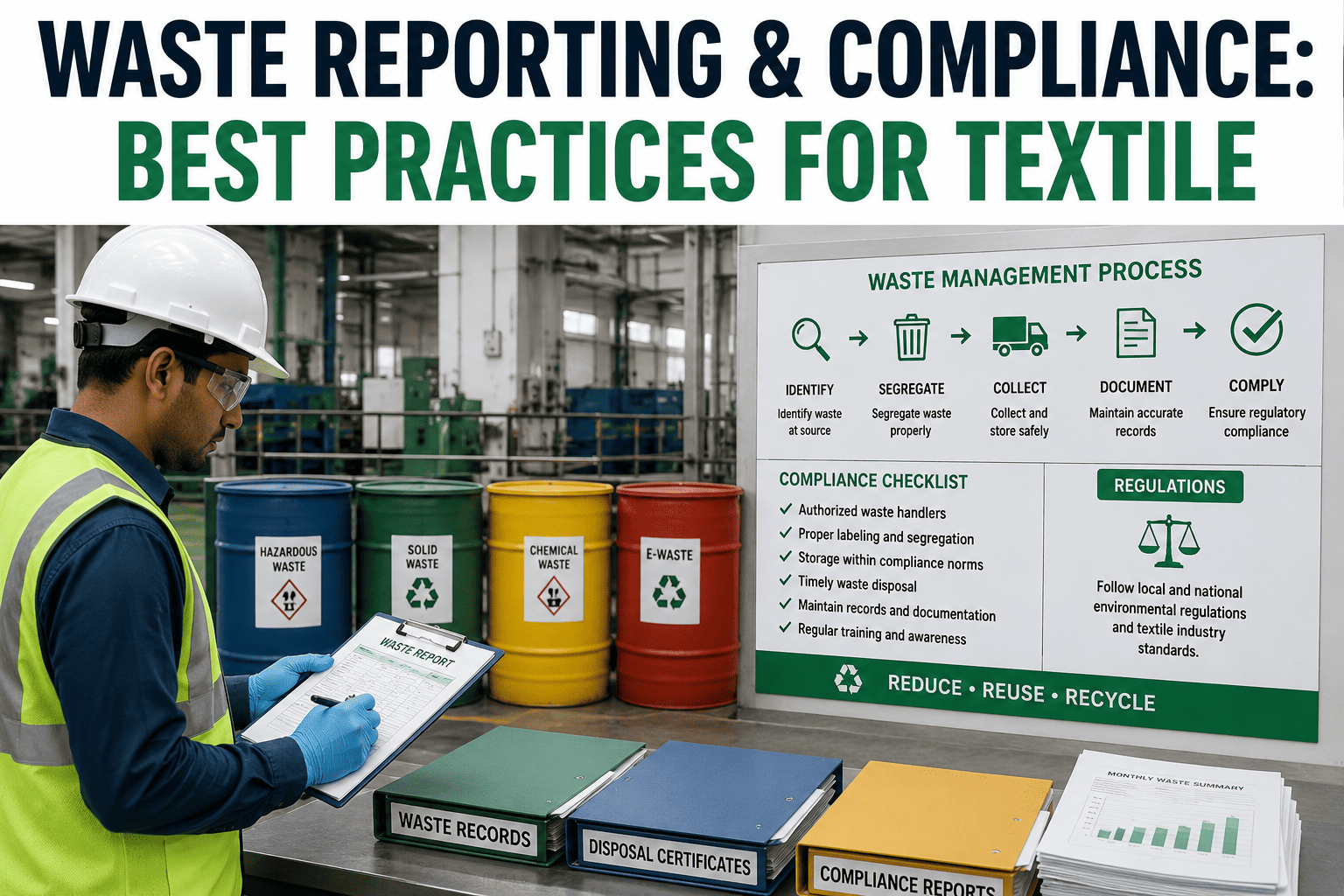
All waste, water, energy, and chemical usage data is automatically structured into compliance reports — ready for GOTS, OEKO-TEX, and buyer sustainability audits without manual document preparation.
Watch how iFactory monitors, traces, and reduces waste across all production stages on a live textile factory floor.
AI vs Traditional Approach: The Numbers That Matter
Across mills that have deployed AI waste management, the impact on key environmental and financial metrics is consistent and measurable. Here is what the data shows after the first production quarter.
The Regulatory and Buyer Pressure Every Mill Needs to Know
Sustainability in textile manufacturing is no longer optional. Regulatory mandates and buyer requirements are tightening globally — and factories without real-time waste data are being left behind in sourcing decisions.
The EU Ecodesign for Sustainable Products Regulation requires full supply chain traceability — including waste, water, and chemical usage data — for all textiles sold in European markets.
of global fashion brands now mandate verified environmental data from Tier 1 and Tier 2 suppliers as a condition of contract renewal for 2025–26.
Certification now requires documented proof of water and chemical usage limits per production batch — data that AI systems capture automatically and continuously.
faster buyer audit clearance is reported by mills using AI-generated sustainability dashboards compared to those relying on manual documentation.
Recycling Integration: AI Closing the Loop
Beyond reducing waste at source, AI is now helping textile factories integrate recycling workflows directly into their production intelligence systems — tracking offcut volumes, flagging recyclable batches, and feeding waste data into circular economy reporting required by brands and regulators alike.
AI logs the volume, fabric type, and grade of every cutting offcut generated per order — making it possible to route high-quality offcuts to recycling partners rather than landfill automatically.
When a batch fails quality thresholds, AI assesses whether it can be recycled, repurposed, or downgraded — reducing the volume that is written off as unrecoverable waste.
Waste diversion rates, recycled volume per month, and landfill avoidance metrics are auto-generated — giving factories the data they need to participate in brand circular economy programmes.
Within six weeks of deploying AI monitoring in our dyeing department, we had reduced our dye lot rejection rate from 11% to under 2.8%. More importantly, we were able to show our European buyer an automated water and chemical usage report for every lot — something that previously took our compliance team three full days to prepare manually.
— Production Director, Knit Fabric Export Mill, Tirupur | Q1 2026 Benchmark ReviewWho Benefits — and How
Tracks water, energy, and chemical usage against targets in real time. Generates GOTS and OEKO-TEX audit documentation automatically without cross-department data chasing.
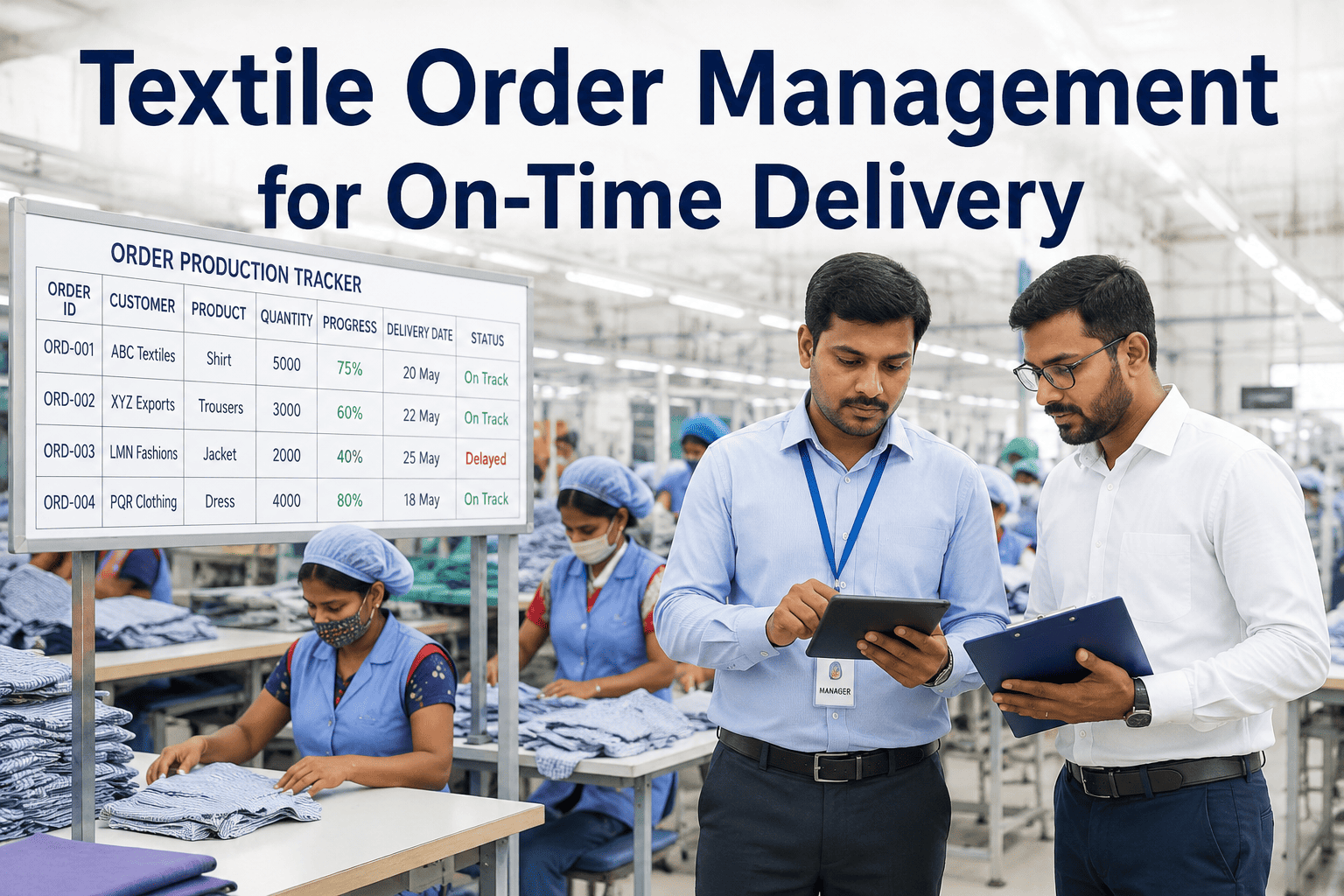
Receives real-time waste alerts tied to specific machines and batches. Traces every defect to its source within seconds — stopping waste events before they escalate across the production run.
Monitors waste cost per metre, energy intensity, and batch rejection trends from any device. Makes investment decisions backed by accurate, current environmental and production data.
Produces verified sustainability traceability reports for global buyers in minutes. Meets EU ESPR, SEDEX, and buyer-specific environmental requirements without weeks of preparation.
Frequently Asked Questions
Start Managing Textile Waste with AI
Join manufacturers across India, Bangladesh, and Vietnam who are using iFactory's AI platform to cut material waste, reduce chemical discharge, track water and energy usage, and deliver the sustainability proof that global buyers require.