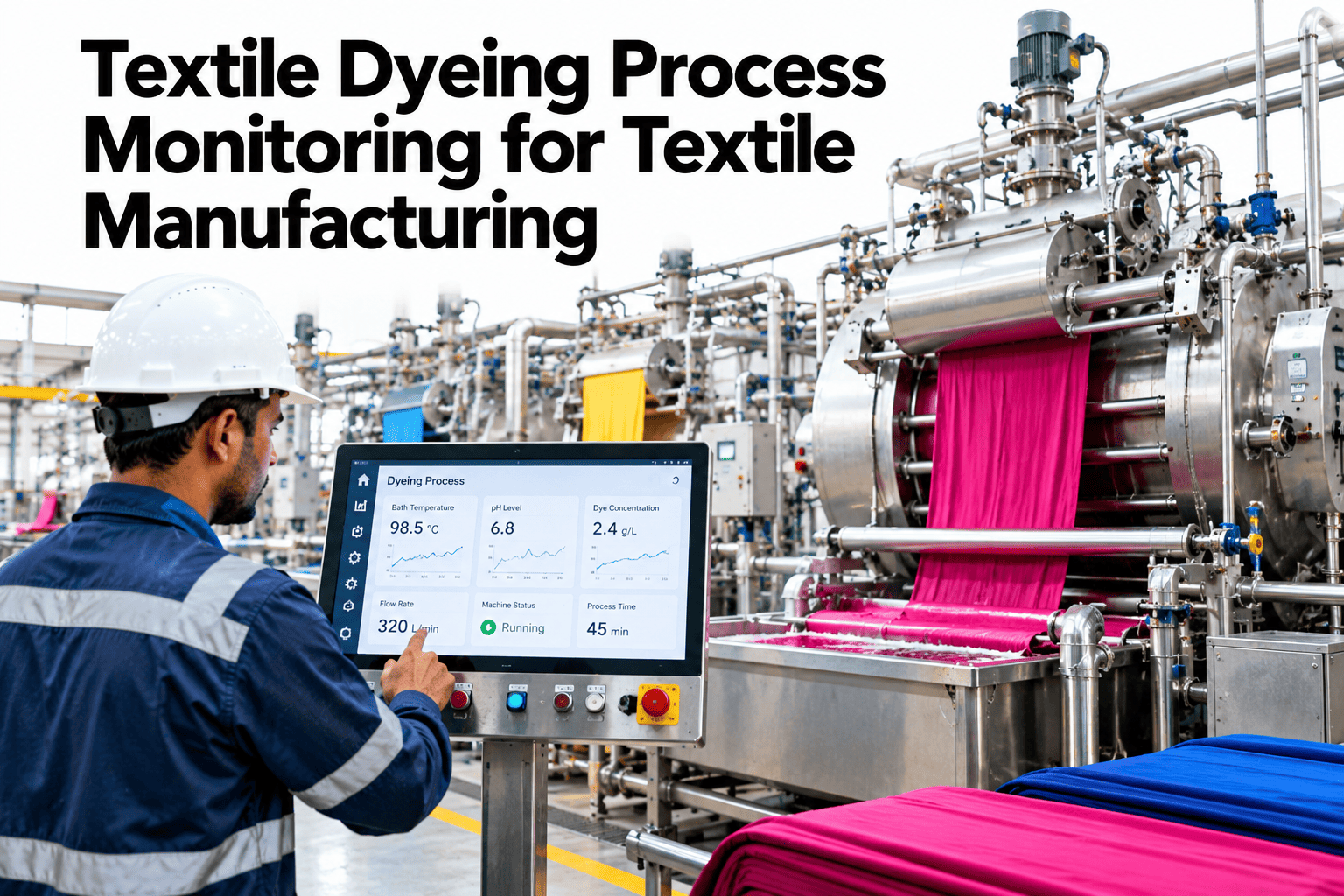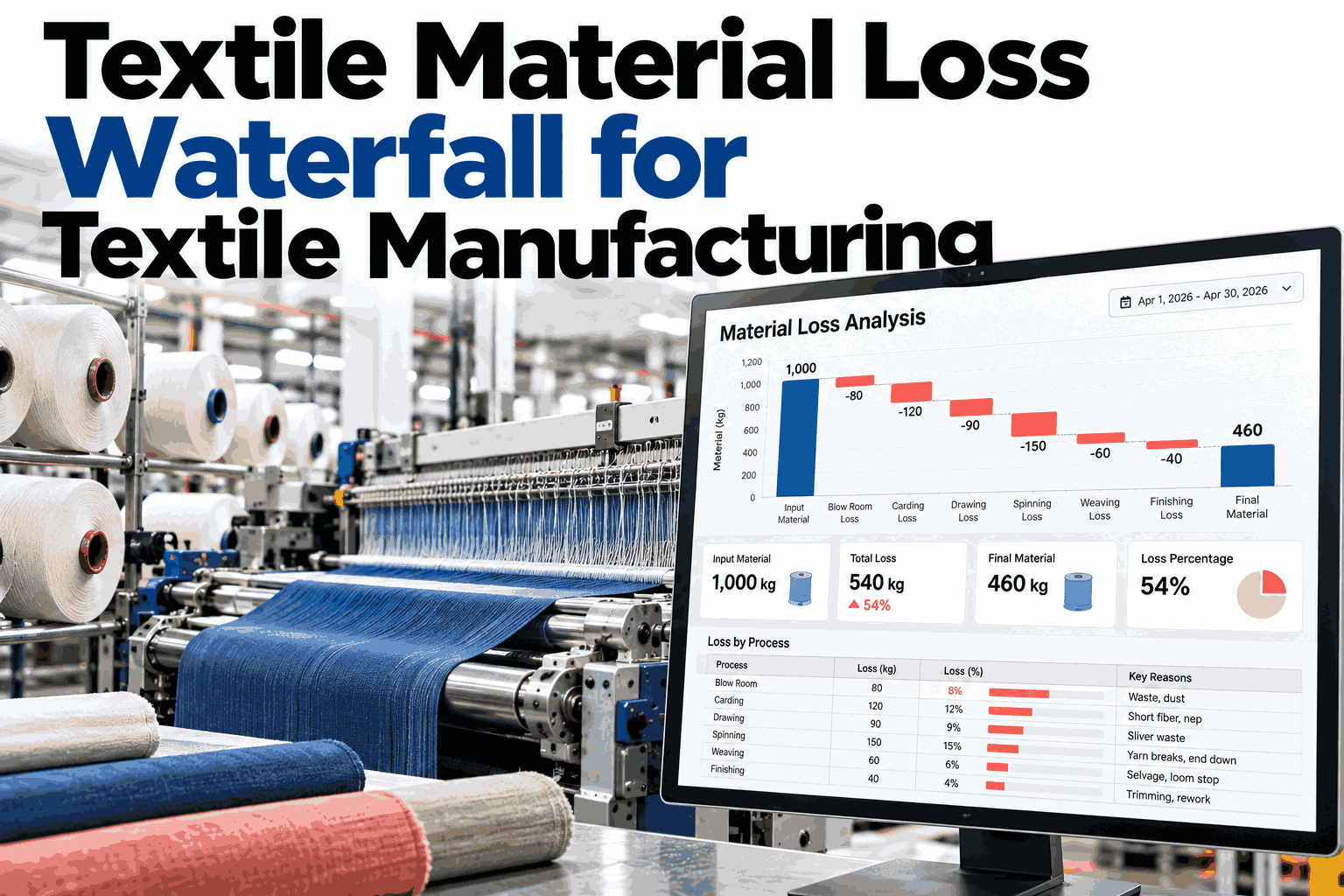
A dyehouse manager reviewing the monthly utility bill notices water consumption climbing again, and nobody on the floor can say exactly which stage is driving it — scouring, dyeing, or the rinse cycles after. The dye machines are running the recipes they were built for, the liquor ratio hasn't changed on paper, but the meter tells a different story every month. Water footprint in textile wet processing is rarely one leak — it is a dozen small inefficiencies compounding across pretreatment, dyeing, and finishing that nobody is measuring stage by stage. Book a demo to see water consumption tracked by process stage on your dyeing floor.
Textile Water Footprint — What Drives It, the Real Liter-Per-Kilogram Benchmarks, and How Mills Are Cutting It
Wet processing — pretreatment, dyeing, and finishing — is where a textile mill's water footprint is actually decided, not the loom or the knitting machine. Understanding the stage-by-stage benchmark is the first step to reducing it.
Wet Processing, Not Spinning or Weaving, Is Where a Mill's Water Footprint Is Decided
Cotton cultivation is by far the most water-intensive stage of a garment's entire lifecycle when measured in absolute terms, consuming thousands of litres per kilogram of raw fibre. But for a manufacturer looking at what it can actually influence on its own factory floor, wet processing — sizing, desizing, scouring, bleaching, mercerizing, dyeing, and finishing — is the stage where real reduction opportunity lives, because this is the water a mill directly controls, meters, and pays for.
Industry benchmarks place conventional wet processing water consumption at roughly 100 to 150 litres per kilogram of fabric, with some studies citing figures as high as 200 litres depending on fibre type, dye class, and equipment age. The single largest lever inside that number is the liquor ratio — the volume of water used relative to fabric weight in the dye bath — which varies enormously between older and modern equipment.
The gap between a mill's best-case and worst-case figure on paper is rarely a difference in dye chemistry or fabric type — it is almost always a difference in equipment age and process discipline. Two mills dyeing the identical fabric to the identical shade can differ by a factor of three or more in litres per kilogram, purely as a function of which decade their dyeing machines were built in and how tightly their rinse cycles are controlled.
Water Use by Wet Processing Stage
Every Litre Saved in the Dyehouse Is a Litre You Stop Paying to Source and Treat Twice
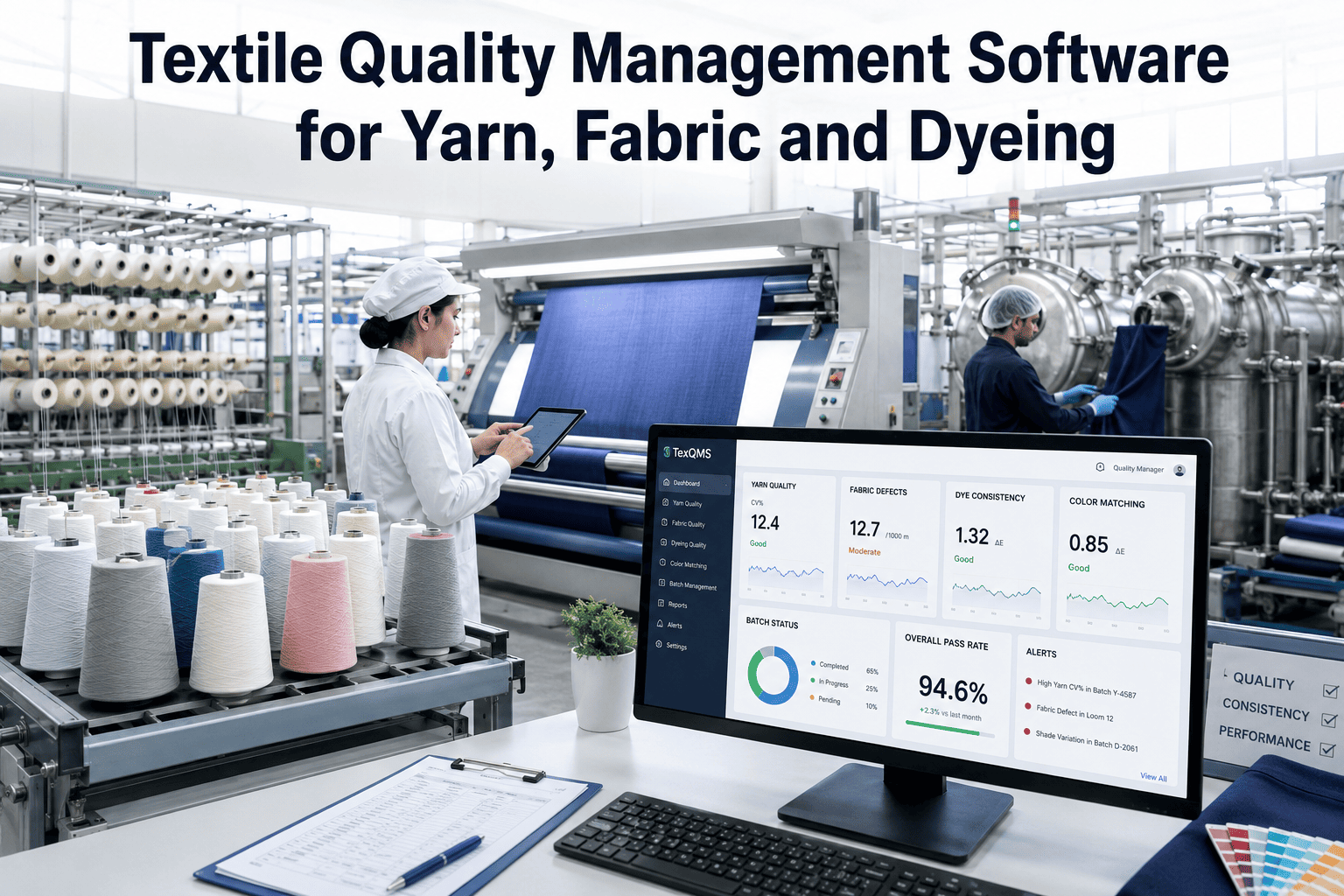
A live water-tracking dashboard by machine and process stage turns a monthly utility surprise into a daily, actionable number.
Liquor Ratio — the Single Number That Explains Most of the Difference Between Mills
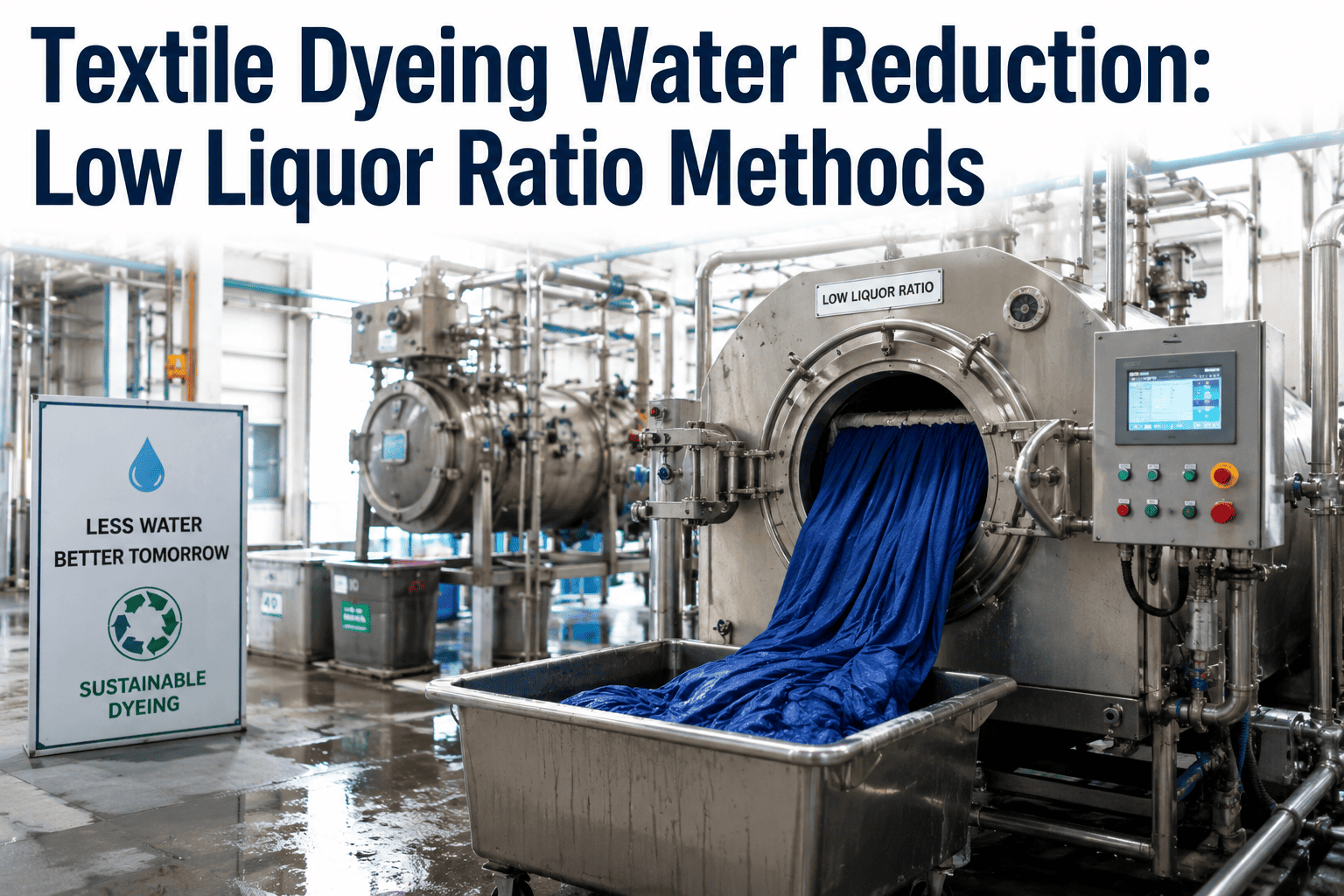
Liquor ratio is the ratio of water to fabric weight in a dye bath, and it is the clearest single explanation for why one mill's dyeing water consumption looks nothing like another's running the same fabric. Older jet and jigger dyeing machines commonly ran at liquor ratios as high as 1:20 — twenty litres of water for every kilogram of fabric. Modern soft-flow and air-flow dyeing machines run at 1:4 to 1:6, cutting water volume in the dye bath itself by a wide margin without changing the underlying dye chemistry at all.
| Equipment Type | Typical Liquor Ratio | Water per kg Fabric | Relative Efficiency |
|---|---|---|---|
| Older Jet / Jigger Machines | 1:15 to 1:20 | 150–200 L | Baseline |
| Modern Soft-Flow Machines | 1:6 to 1:8 | 60–80 L | 50–60% Lower |
| Air-Flow Dyeing Machines | 1:4 to 1:6 | 40–60 L | 60–75% Lower |
| Waterless (Supercritical CO2) | Not applicable | Near zero in dye step | Up to 95% Lower |
The Technologies Mills Are Actually Deploying to Cut Water Consumption
What Real Water Reduction Programs Have Actually Delivered
A knit dyeing cluster running a structured water reduction program cut consumption from roughly 95 litres to 55 litres per kilogram of fabric over a two-year period — a 42% reduction — through a combination of rainwater harvesting, dye-bath optimization, and closed-loop recycling investment. The capital outlay for that specific program ran into the low millions of dollars, with a payback period measured in a few years rather than decades, driven by the combined savings on water sourcing, effluent treatment, and the energy required to heat that water in the first place.
Sustainability-focused freshwater reduction programs across major textile hubs have collectively reduced freshwater use by tens of millions of cubic metres annually, demonstrating that these are not theoretical savings confined to pilot facilities — they are being realized at cluster and regional scale where mills adopt them consistently rather than as a one-off capital project.
Why Every Mill Hasn't Already Made the Switch
Cost and infrastructure are the two most consistent barriers cited across the industry. Waterless dyeing equipment carries a significantly higher upfront capital cost than a conventional dye machine, and supercritical CO2 systems in particular have material limitations that make them unsuitable for every fibre and fabric type currently in production. Zero Liquid Discharge systems demand a meaningful footprint of their own for the treatment infrastructure and ongoing operating cost of running a closed loop rather than a simple single-pass discharge. Seasonal rainfall variability also complicates rainwater harvesting programs in regions where wet processing clusters concentrate, meaning a technology that pays back well on paper still needs the right site conditions and capital access to actually get installed.
Why Water Discharge Standards Are Tightening Faster Than Water Sourcing Rules
Regulatory attention on textile water use is increasingly focused on what leaves the mill, not just what enters it. Zero discharge of hazardous chemicals commitments, adopted across major apparel supply chains, push mills toward wastewater treatment standards well above what local regulation alone would require, because global brands are applying their own conformance standard uniformly across every supplier regardless of jurisdiction. Groundwater extraction limits in water-stressed textile hubs are tightening in parallel, forcing mills that once drew freely from bore wells to justify consumption against increasingly strict permits.
The mills best positioned for this direction are the ones already measuring consumption and discharge by stage, since a permit renewal or a brand's supplier audit both ask for the same underlying data — actual litres consumed, actual effluent quality, and evidence of a functioning treatment process, not an estimate reconstructed after the fact from a utility bill.
Building an Internal Water Balance Before Investing in New Equipment
Before a mill commits capital to waterless dyeing or a Zero Liquid Discharge system, a clear internal water balance pays for itself many times over. That means metering consumption separately at sizing, scouring, bleaching, dyeing, and rinsing rather than reading one combined utility total, and correlating that stage-level data against specific machines, shifts, and fabric types running through them. Mills that skip this step consistently misallocate their reduction investment — installing an expensive dyeing-stage technology when the actual largest opportunity was excessive rinse cycles nobody had isolated in the data.
Questions Mills and Sustainability Teams Ask About Water Footprint Reduction
See Water Consumption by Process Stage, Machine, and Batch — Not Just a Monthly Utility Total
Connect existing meters and dye machine data into one live view, catch consumption drift before it shows up as a surprise on the utility bill, and build the evidence base for your next water reduction investment.