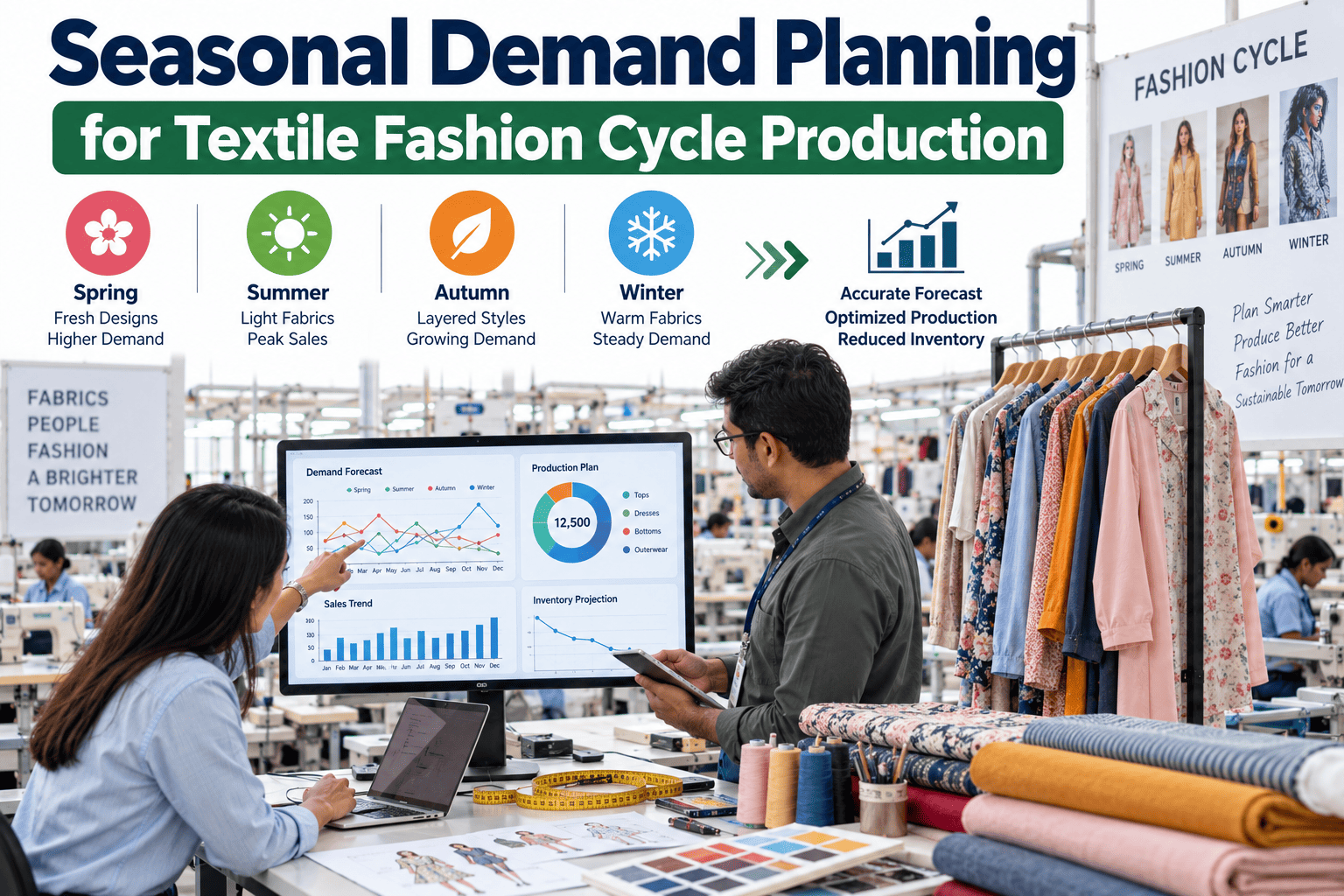
Textile manufacturers have always relied on gut instinct and historical spreadsheets to plan production. But in a world where fashion cycles shrink every season, buyer preferences shift overnight, and raw material costs fluctuate weekly — that approach is costing factories crores in unsold inventory and missed orders. AI-driven demand forecasting changes the equation entirely. It reads market signals, historical patterns, and real-time data to tell you exactly what to produce, how much, and when — before the market moves. Book a free demo with iFactory and see how predictive AI turns your production planning from reactive to razor-sharp.
Stop Guessing.
Start Predicting.
iFactory's AI reads demand signals weeks ahead — so your production plan is always one step ahead of the market.
Why Traditional Demand Planning Fails Textile Factories
Every textile factory does some form of demand planning. The problem isn't effort — it's the tools. Legacy approaches break down precisely when market accuracy matters most.
Spreadsheet Forecasting
Built on last season's numbers with no ability to read emerging trends, buyer signals, or market shifts. By the time the data is collected and analyzed, the window to act has closed.
Salesperson Estimates
Verbal commitments from sales teams that are often optimistic, inconsistent across regions, and impossible to reconcile into a reliable production plan without significant manual effort.
Seasonal Pattern Matching
Assuming this year mirrors last year ignores fashion trend shifts, retail buyer behaviour changes, and the growing influence of fast-fashion cycles that compress traditional seasonality.
Monthly Review Cycles
When demand sensing happens once a month, the factory is always behind the curve. A demand spike identified in week 2 can't be met if the production adjustment only happens in week 5.
Still planning on spreadsheets? See how iFactory's AI forecasting works on real textile demand data — live, in a 30-minute session.
How AI-Driven Forecasting Works in Textile Manufacturing
iFactory's forecasting engine doesn't just look at your past orders. It reads a much wider picture — and updates predictions continuously as new data flows in.
The True Cost of Getting Demand Wrong
Demand forecasting errors in textile manufacturing don't just create inconvenience — they cascade into financial losses that compound across the supply chain.
- Excess fabric stored in warehouse — space and capital tied up for months
- Discounted clearance sales erode margins by 20–35%
- Yarn, dye, and energy costs wasted on unsold production
- Working capital blocked — unable to fund new orders
- Lost sales when buyers place orders you cannot fulfill on time
- Emergency production runs at 2× the cost — rushed overtime and premium materials
- Damaged buyer relationships — repeat orders go to competitors
- Air freight for late deliveries — killing the shipment margin
- Producing the wrong yarn counts, constructions, or finishes for buyer season
- Re-dyeing or re-finishing at significant extra cost and time
- Fabric held in WIP — blocking machines for the right orders
- Buyer substitution refusals — cancelled orders, chargebacks
What AI Forecasting Changes — Metric by Metric
The shift from manual to AI-driven forecasting delivers improvements across every production planning KPI. Here's the before-and-after picture.
Key Applications: Where AI Forecasting Drives the Most Value
AI forecasting isn't a single tool — it transforms multiple planning functions across your textile operation simultaneously.
Seasonal Production Planning
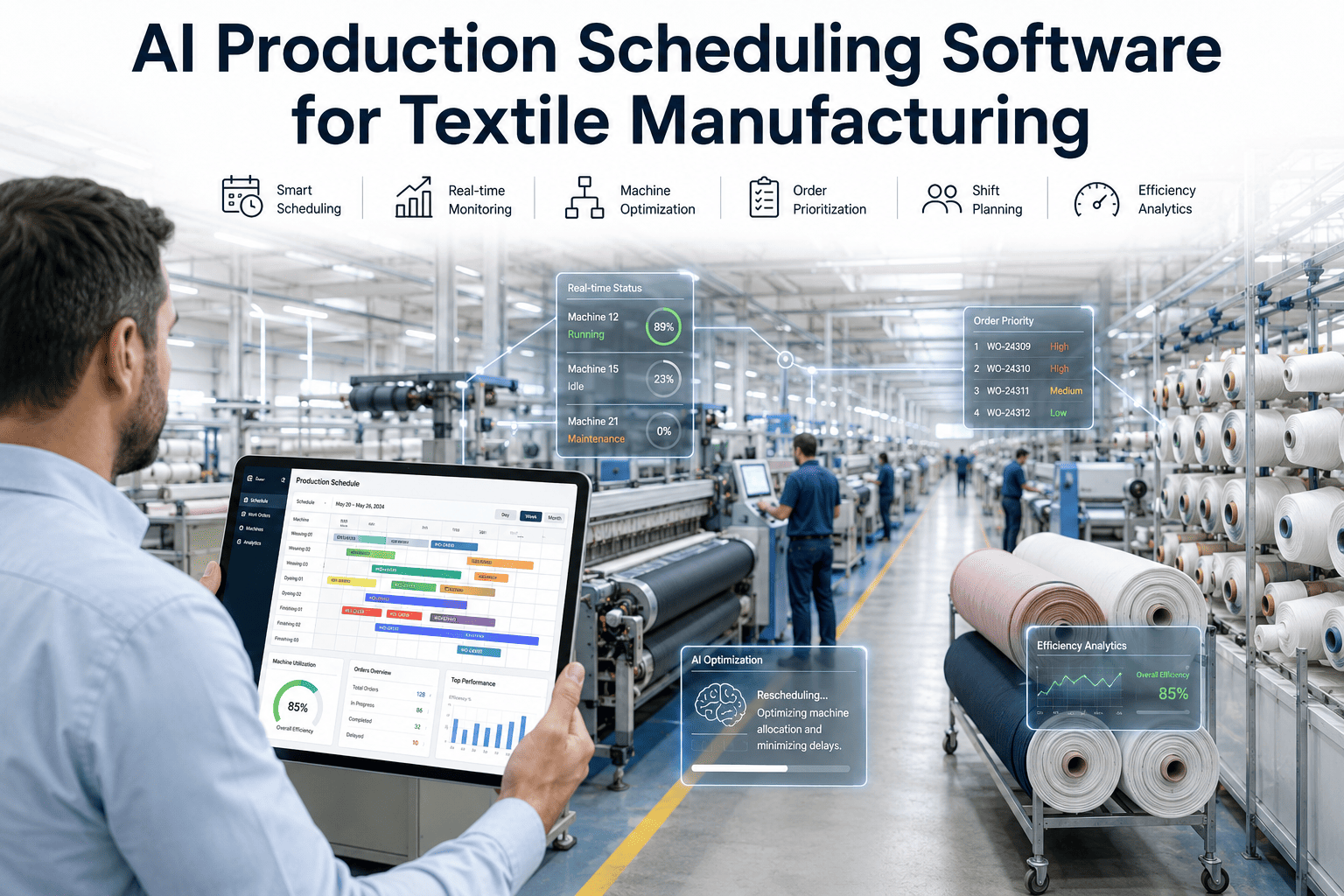
AI builds a 12–16 week production calendar that accounts for buyer seasonality, fabric lead times, and machine availability — updated weekly as new demand signals arrive.
Raw Material Procurement Timing
AI predicts yarn and dye requirements 6–10 weeks in advance, enabling planned purchases at standard pricing — eliminating emergency orders at premium rates.
Machine Capacity Allocation
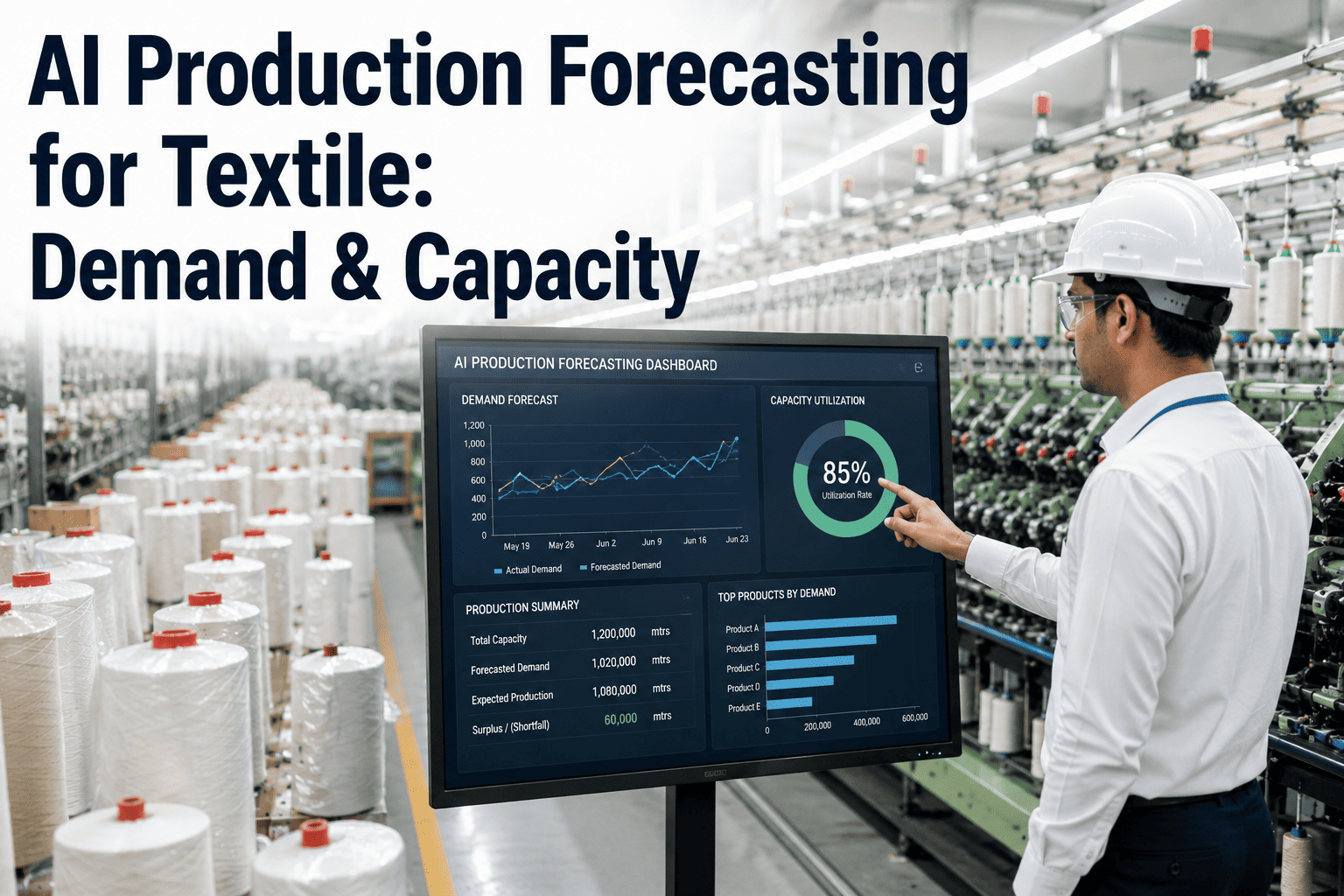
Forecasted demand is mapped against machine availability across spinning, weaving, and finishing — so capacity is allocated to highest-value orders automatically, weeks before production begins.
Buyer Order Acceptance Decisions
When a buyer places a new order, AI instantly checks forecast demand, current capacity, and material availability — giving your sales team a confident, data-backed commit date within minutes.
Logistics & Shipment Scheduling
AI coordinates production completion forecasts with carrier booking windows — so shipments are scheduled before production ends, not after — eliminating last-minute freight scrambles.
Workforce & Shift Planning
Peak demand weeks require more operators and extended shifts. AI's 4–6 week demand outlook gives HR teams time to plan casual workforce hiring or overtime schedules — not react to them.
The Market Is Moving — Textile Factories That Forecast with AI Win
Demand volatility in textile manufacturing is at an all-time high. The factories that adapt first gain a structural advantage over competitors still guessing their production numbers.
of fashion buyers plan to reduce order lead times by 30% before 2027 — making accurate demand forecasting a supplier prerequisite
of textile factories currently lose 10–15% of annual revenue to demand planning errors — overstock write-downs, stockout penalties, and rework
of tier-1 textile exporters have already begun deploying AI tools for demand sensing and production planning as of Q1 2026
global market size for AI in textile manufacturing, growing at 17.3% CAGR — the industry's fastest-growing technology investment
iFactory's Forecasting Engine: Built for Textile, Not Adapted from It
Most AI forecasting tools are built for retail or FMCG and adapted for textile. iFactory is different — it's trained on textile production data from the ground up.
Pre-trained on spinning, weaving, knitting, and dyeing production cycles — not generic manufacturing patterns that require months of reconfiguration.
Updated daily, not monthly. Your planning view refreshes automatically as new buyer signals, market data, and production completions feed into the model.
Run optimistic, expected, and conservative demand scenarios simultaneously — and see the production, cost, and inventory impact of each before committing to a plan.
Forecasts pull directly from your existing buyer order data in SAP, Oracle, or Tally — no manual data re-entry, no reconciliation headaches.
Every forecast comes with a plain-language explanation — "Demand for 40s combed yarn projected +22% due to confirmed Q3 buyer orders and regional trend shift." No black-box mystery.
The model learns from every production cycle — comparing its predictions to actual demand outcomes and continuously recalibrating for your specific factory and buyer profile.
The competitive advantage in textile manufacturing has fundamentally shifted. It's no longer about who has the most machines — it's about who has the most accurate picture of future demand. Factories with AI forecasting are making better sourcing decisions, winning more buyer confidence, and running leaner operations. The gap between them and everyone else is widening every quarter.
Frequently Asked Questions
Make Demand Uncertainty Your Competitive Advantage
Join textile manufacturers using iFactory's AI forecasting to plan production with confidence, reduce waste, and deliver on every buyer commitment.