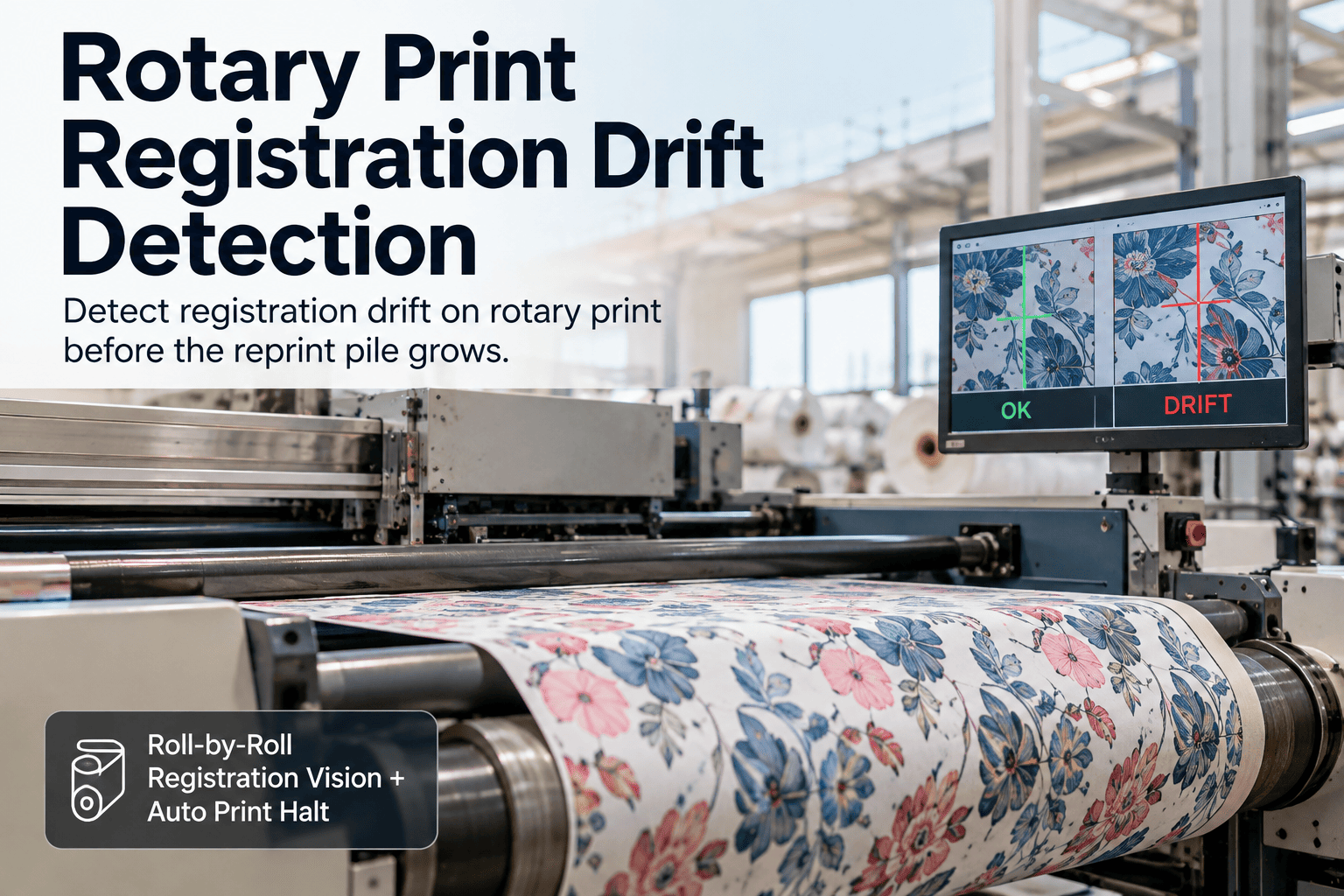
Textile printing plants average 2 to 10 percent seconds across production runs, with machine stops alone accounting for up to 40 percent of all print defects. In rotary screen printing, the three leading causes of seconds are misfits between color separations, stick-ins from lint accumulation on screens, and scrimps from fabric creasing during print application. Digital inkjet printing introduces a separate set of defect modes including banding from print head scanning misalignment, misfires from nozzle clogging, and color bleeding from improper fabric pretreatment. In both technologies, the common factor is that printing defects cannot be repaired once applied the fabric must be downgraded, discounted, or discarded. Manual inspection of printed fabric catches 60 to 75 percent of defects under ideal conditions, but detection rates fall below 50 percent for subtle defects such as fine misregistration, intermittent nozzle misfires, and gradual color drift. AI-powered print defect detection systems using high-resolution line-scan cameras and deep learning models achieve 95 to 99 percent detection accuracy for registration errors, color smearing, screen wear, and pattern repeat faults at full production line speed, reducing print seconds by 40 to 60 percent and delivering return on investment within 8 to 14 months for most textile printing operations.
Print Defect Detection for Rotary and Digital Textile Printing
Reduce print seconds from 10 percent to under 4 percent. iFactory AI print defect detection catches misregistration, color smearing, screen wear, and nozzle misfires in real time at full production speed.
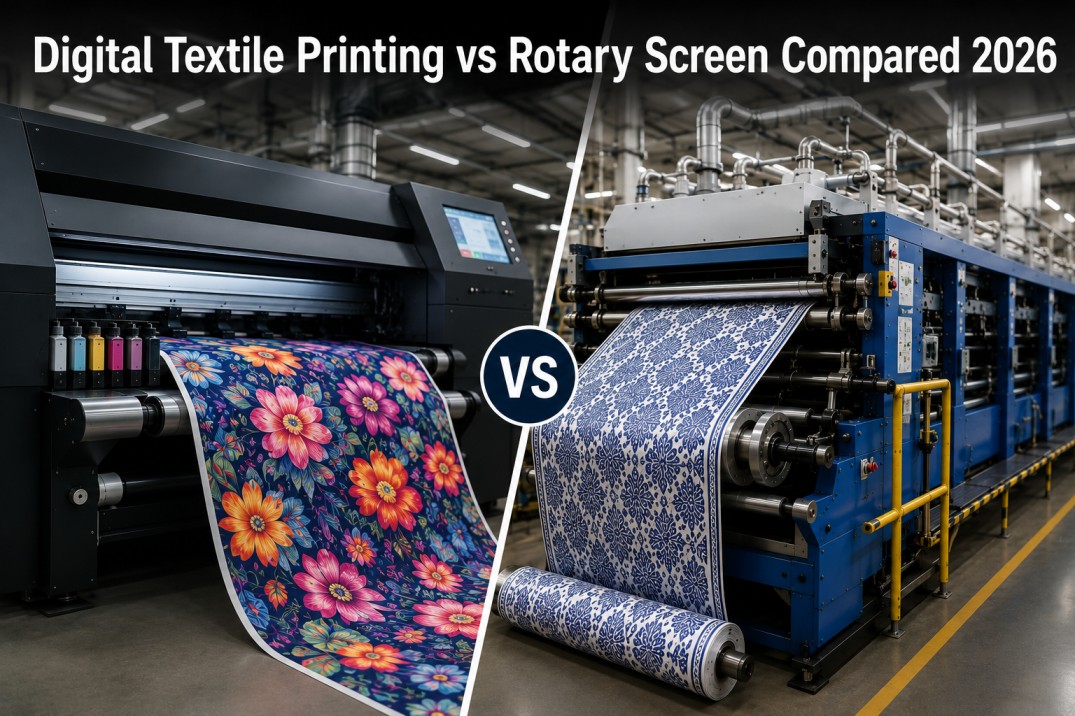
Rotary Screen versus Digital Printing Defects
Rotary screen and digital inkjet printing generate fundamentally different defect profiles because the underlying print mechanisms are different. Rotary defects are predominantly mechanical, originating from screens, squeegees, and blanket synchronization. Digital defects are predominantly fluid dynamic, originating from nozzle performance, ink chemistry, and fabric pretreatment. An effective inspection system must be tuned to the defect modes of the specific technology.
Print Defect Classification and Detection Accuracy
Modern AI vision systems classify print defects into three broad categories ink-related, registration-related, and mechanical process defects. Each category requires different detection algorithms and camera configurations. The table below shows detection accuracy ranges for production-grade AI systems operating at standard print line speeds.
| Defect Category | Common Defect Types | Primary Causes | AI Detection Accuracy |
|---|---|---|---|
| Ink-Related | Missing ink, color variation, ink contamination, color bleeding | Improper viscosity, uneven transfer, nozzle clogging, pretreatment failure | 93-97% |
| Registration | Color misregistration, image shift, ghosting, banding | Screen misalignment, web tension fluctuation, scanning head error | 95-99% |
| Mechanical Process | Streaks, repeating defects, screen wear, scrimps, machine stops | Worn rollers, damaged screens, blanket synchronization, fabric creasing | 94-98% |
| Substrate-Related | Pinholes, stick-ins, fiber contamination, selvage defects | Lint accumulation, poor singeing, inadequate fabric preparation | 90-95% |
| Color Consistency | Side-to-side shading, batch-to-batch variation, color drift | Uneven dye delivery, pH variation, temperature fluctuation in fixation | 92-96% |
How AI Print Defect Detection Works
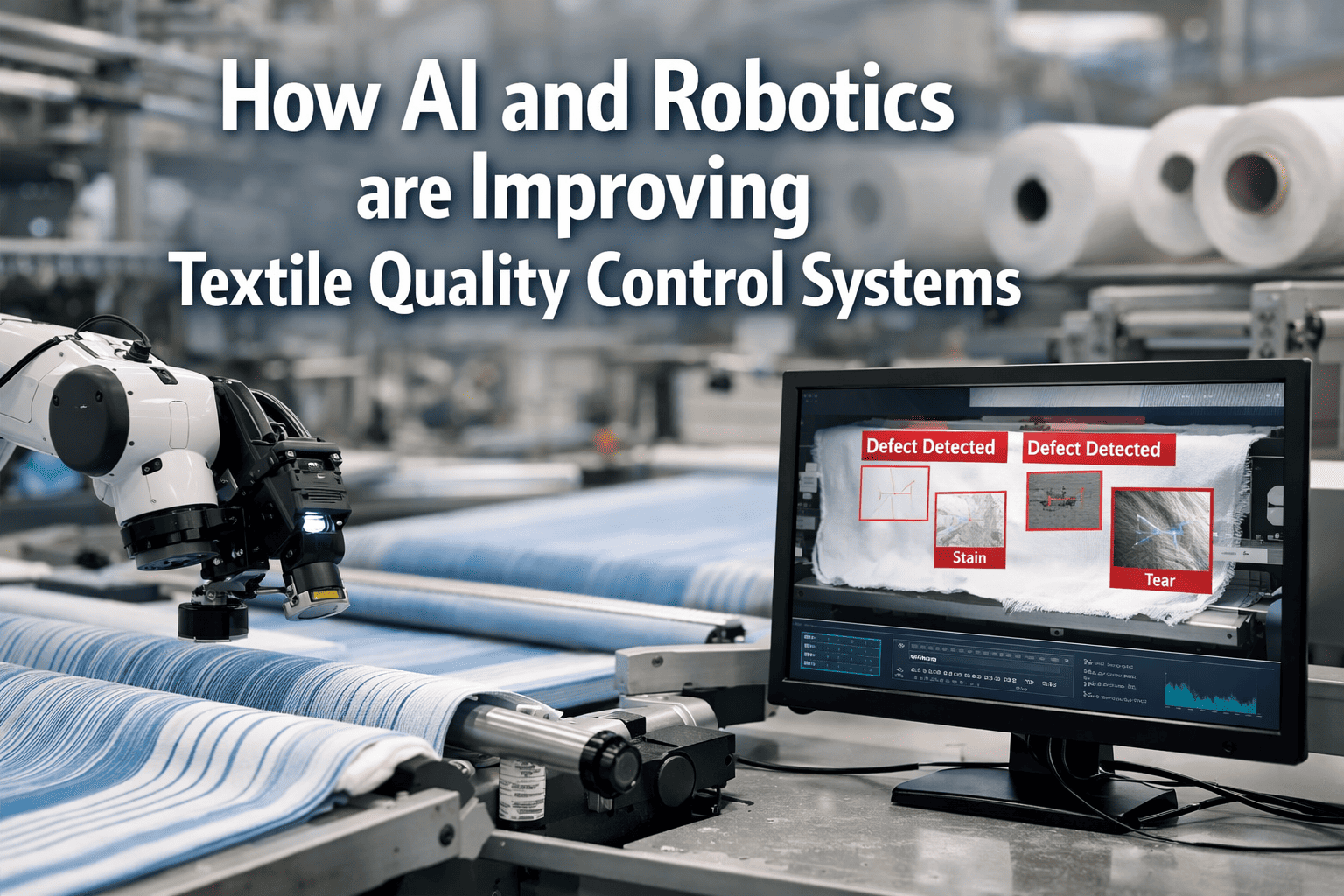
AI-powered print inspection systems combine high-speed line-scan cameras, precision LED strobe lighting, and deep learning models trained on thousands of labeled defect images. The system compares each printed repeat against a reference template or learned defect model and classifies deviations in real time.
Image Acquisition
Line-scan cameras capture the full fabric width at 4K to 8K resolution. Precision LED strobe lighting eliminates motion blur at speeds up to 120 meters per minute.
Image Registration
The system registers each camera frame to a reference template using polynomial warp algorithms. Sub-pixel alignment ensures defect detection is not triggered by normal web movement.
Defect Classification
Deep learning CNN models classify detected anomalies by defect type, severity, and size. The system distinguishes between true defects and permissible design variation within the pattern repeat.
Alert and Response
Real-time alarm triggers operator intervention or automatic machine stop for critical defects. Defect map with position, type, and image is logged for quality reporting and root cause analysis.
Catch misregistration and color smearing before they become seconds. iFactory AI print inspection runs at full production speed and classifies every defect by type, severity, and position.
Six Selection Criteria for Print Defect Detection Systems
Print inspection systems vary significantly in their ability to handle different fabric types, print technologies, and defect profiles. Evaluate every system against these six criteria, which are derived from deployment experience across 30-plus textile printing facilities producing rotary screen, flatbed, and digital inkjet printed fabrics.
Detection Algorithm and Training Data
The core of any AI inspection system is its deep learning model and the defect database it was trained on. Demand proof of performance on print defect types specific to your technology rotary screen misfits and stick-ins or digital banding and nozzle misfires. A system trained on fewer than 5,000 labeled print defect images per category will miss subtle defects that occur in your production.
Camera Resolution and Lighting Configuration
Print defect detection requires higher resolution than greige fabric inspection because print defects are often subtle color or pattern deviations rather than structural gaps. Minimum 4K line-scan cameras are recommended, with 8K preferred for fine registration measurement. Multi-angle LED lighting front, back, and oblique is essential for detecting different defect types. Transmitted light reveals scrimps and missing ink; reflected light reveals color smearing and surface contamination.
Pattern Repeat and Template Management
For rotary screen printing with fixed pattern repeats, the system should support golden template comparison where each printed repeat is compared against a stored reference image. For digital printing with variable data, the system needs adaptive pattern recognition that detects defects without a fixed template. Verify that the system can handle pattern repeat lengths from 20 centimeters to 2 meters and switch between styles in under 5 minutes.
False Positive Rate and Alert Thresholds
Printed fabrics with complex patterns generate more false positives than solid-color fabrics because the AI must distinguish between intentional design variation and actual defects. Demand a false positive rate below 5 percent for your specific fabric and pattern types. The system should allow configurable severity thresholds that trigger operator alerts only for defects above a defined point level, preventing alert fatigue while ensuring critical defects are never missed.
Integration with Print Machine Controls
The highest-value print inspection systems close the loop with the print machine itself. For rotary screen, the system should trigger an automatic stop when critical defects such as misfits or blanket marks are detected, preventing continued production of defective fabric. For digital printing, the system should flag the specific nozzle or nozzle row causing misfires, enabling targeted maintenance rather than full print head replacement.
Data Output and Quality Reporting
Print defect data is most valuable when it feeds into your quality management system and informs root cause analysis. The system should generate per-roll defect maps, classify defects by type and severity, calculate print seconds percentage per style and per shift, and export data in standard formats for MES or ERP integration. Systems that track defect trends over time enable predictive maintenance scheduling for screens and print heads.
Financial Impact of Print Defect Detection
The financial case for automated print inspection is driven by reduction in seconds, lower inspection labor requirements, and faster root cause correction. The table below models the annual return for a mid-size textile printing facility processing 2 million linear meters per year with an average fabric value of 4 dollars per meter and an industry-average seconds rate of 6 percent.
| Cost Category | Before AI Inspection | After AI Inspection | Annual Savings |
|---|---|---|---|
| Print seconds and downgrade cost | $480,000 | $192,000 | $288,000 |
| Inspection labor (2 shifts, 3 inspectors) | $27,000 | $81,000 | |
| Waste fabric from late defect detection | $96,000 | $28,800 | $67,200 |
| Customer claims and returns | $60,000 | $12,000 | $48,000 |
| Total annual cost | $744,000 | $259,800 | $484,200 |
Frequently Asked Questions
What is the difference between print defect detection and fabric defect detection?
Fabric defect detection focuses on structural defects in greige or finished fabric holes, broken yarns, slubs, and stains that are present in the substrate before printing. Print defect detection focuses on defects introduced during the printing process misregistration, color smearing, banding, nozzle misfires, and screen wear. Print inspection systems require higher camera resolution, color imaging capability, and pattern-specific algorithms that fabric inspection systems do not need. Many textile mills deploy both systems fabric inspection at the greige stage and print inspection at the printing stage as separate quality control gates.
Can the same inspection system handle both rotary screen and digital printing?
Yes, but the system must support dual-mode operation. Rotary screen inspection relies on fixed pattern repeat comparison using a golden template, while digital inspection requires adaptive algorithms that handle variable data and detect print head specific defects such as nozzle misfires and banding. The camera hardware is similar for both applications, but the software algorithms and defect classification models are different. When evaluating systems for a facility running both technologies, verify that the supplier offers proven defect libraries for both rotary and digital print defect types and can switch between modes without hardware reconfiguration.
What is the minimum defect size an AI print inspection system can detect?
Production-grade AI print inspection systems with 4K line-scan cameras can reliably detect defects of 0.3 millimeters or larger at line speeds of 60 to 80 meters per minute. Systems with 8K cameras can detect defects as small as 0.15 millimeters, which is sufficient for even the most demanding print quality standards. Detection of color shading and drift requires color-calibrated cameras capable of measuring Delta-E differences below 0.5. The limiting factor is typically not the camera resolution but the quality and diversity of the training data used to build the defect classification model.
How does AI handle pattern designs that change frequently?
Modern AI print inspection systems offer template auto-generation from the first printed repeat of each new design. When a new pattern is loaded, the system captures the first defect-free repeat and uses it as the reference template for subsequent comparison. This eliminates the need for manual template creation for each new design. For digital printing with variable data where each repeat may differ, the system uses learned defect models that detect anomalies without template comparison. Style changeover including template generation and algorithm tuning typically takes less than 10 minutes for standard patterns.
What is the typical payback period for a print defect detection system?
Most textile printing facilities achieve full return on investment within 8 to 14 months. The primary financial driver is reduction in print seconds, which typically drops from an industry average of 6 to 10 percent down to 2 to 4 percent after AI inspection deployment. Secondary savings include inspection labor reduction of 60 to 75 percent, lower fabric waste from earlier defect detection, and fewer customer claims. Facilities with higher production volumes, higher fabric values, or higher current seconds rates see faster payback. Small operations with single-shift production and simple solid-color prints may see payback in 14 to 20 months.
Cut print seconds by 40 to 60 percent with AI-powered defect detection that runs at full production speed. Book a demo of iFactory print inspection to see how your print defects are detected, classified, and eliminated in real time.