Choosing a printing technology for a fabric order is really a question about order size in disguise — a print run of 50,000 meters and a print run of 500 meters have almost nothing in common economically, even if the design and fabric are identical. Rotary screen printing dominates bulk orders because its cost per meter drops sharply with volume, digital inkjet printing wins short runs and fast turnarounds because it eliminates screen-making entirely, and flat-bed printing still holds a niche for specialty effects neither of the other two can replicate. iFactory helps printing floors track cost, quality, and throughput across all three technologies so the choice is based on real production data rather than habit.
Rotary, Digital, and Flat-Bed Printing: Choosing the Right Technology by Order Size
Cost per meter, print resolution, and turnaround time shift dramatically between these three technologies — the right choice depends on your specific order profile, not a single universal answer.
Three Technologies, Three Different Economic Curves
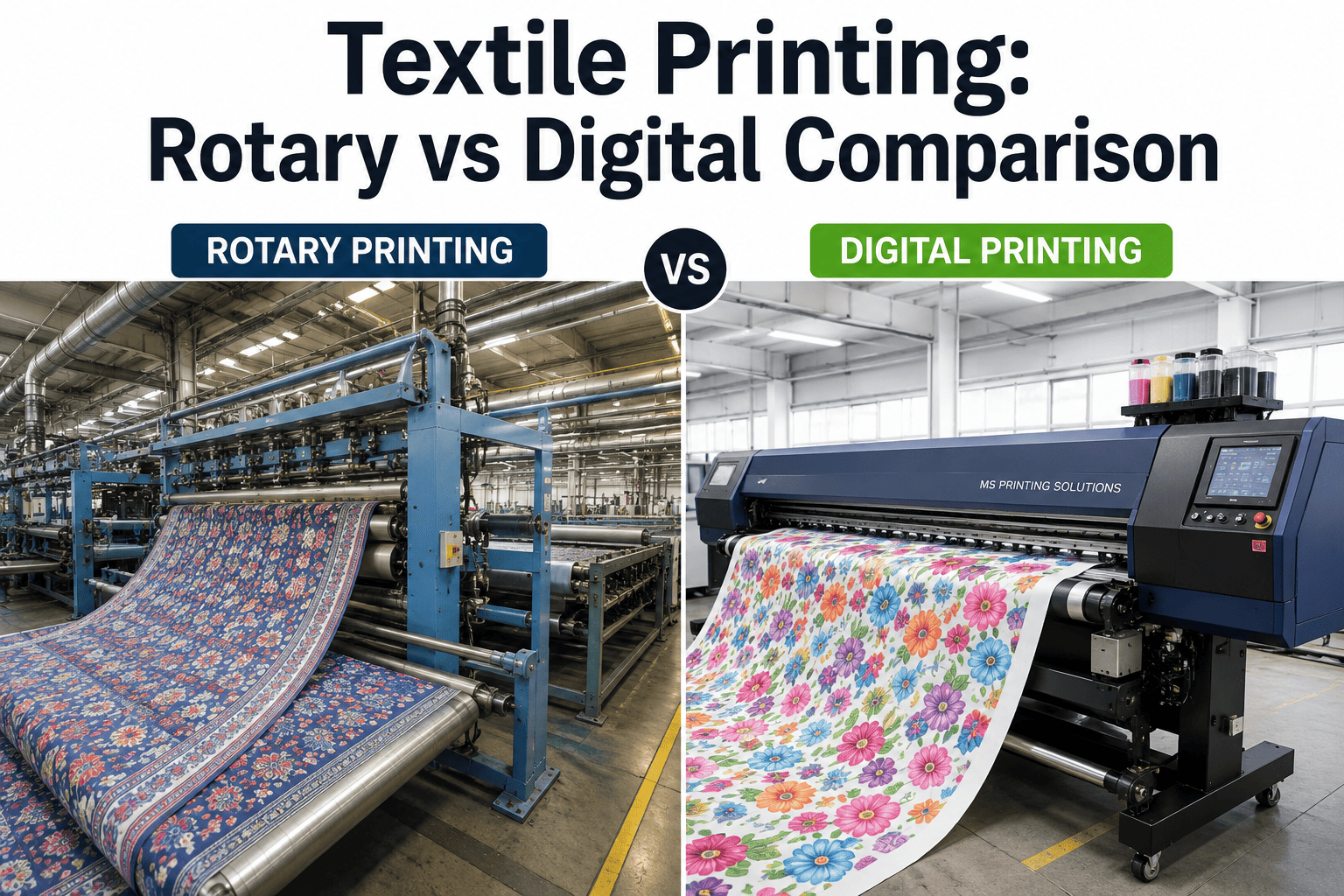
The single biggest factor separating these technologies is how their cost per meter behaves as order volume changes. Rotary screen carries high upfront screen-engraving cost but very low marginal cost per meter at scale. Digital carries almost no upfront cost but a higher, relatively flat cost per meter regardless of volume. Flat-bed sits in between, suited to specialty runs where its unique capability matters more than speed.
Rotary Screen Printing
Best for Bulk Orders
High initial screen engraving cost per color, but cost per meter falls steeply as run length increases, making it the clear winner for large volume orders with a fixed repeat design.
Digital Inkjet Printing
Best for Short Runs
No screens to engrave, so setup cost is minimal and turnaround is fast, but cost per meter stays relatively constant regardless of volume, making it economical mainly at lower run lengths.
Flat-Bed Screen Printing
Best for Specialty Prints
Slower throughput than rotary but capable of heavier ink deposits and specialty effects like foil, flock, and puff prints that neither rotary nor digital can reliably replicate.
Head-to-Head Comparison: Cost, Quality, Speed and Flexibility
Scroll to compare technologies
Print Quality Variables That Matter Regardless of Technology Chosen
Whichever technology a mill selects, a consistent set of quality variables determines whether the final print meets buyer approval. These variables are worth tracking continuously rather than checking only at final inspection, since drift in any one of them compounds visually across a full print run.
Registration Accuracy
Misalignment between colors in a multi-color design becomes visibly obvious even at small deviations, especially on fine line and outline designs.
Ink Viscosity Consistency
Viscosity drift changes how ink penetrates fabric fibers, altering both color depth and hand feel across a print run.
Drying and Curing Temperature
Under-cured prints show poor wash and rub fastness, while over-curing can scorch fabric or cause unwanted color shift.
Screen or Print Head Wear
Worn screens or clogged print heads gradually degrade print sharpness, often unnoticed until a full batch shows the defect.
Track Print Quality and Cost Across Every Technology on Your Floor
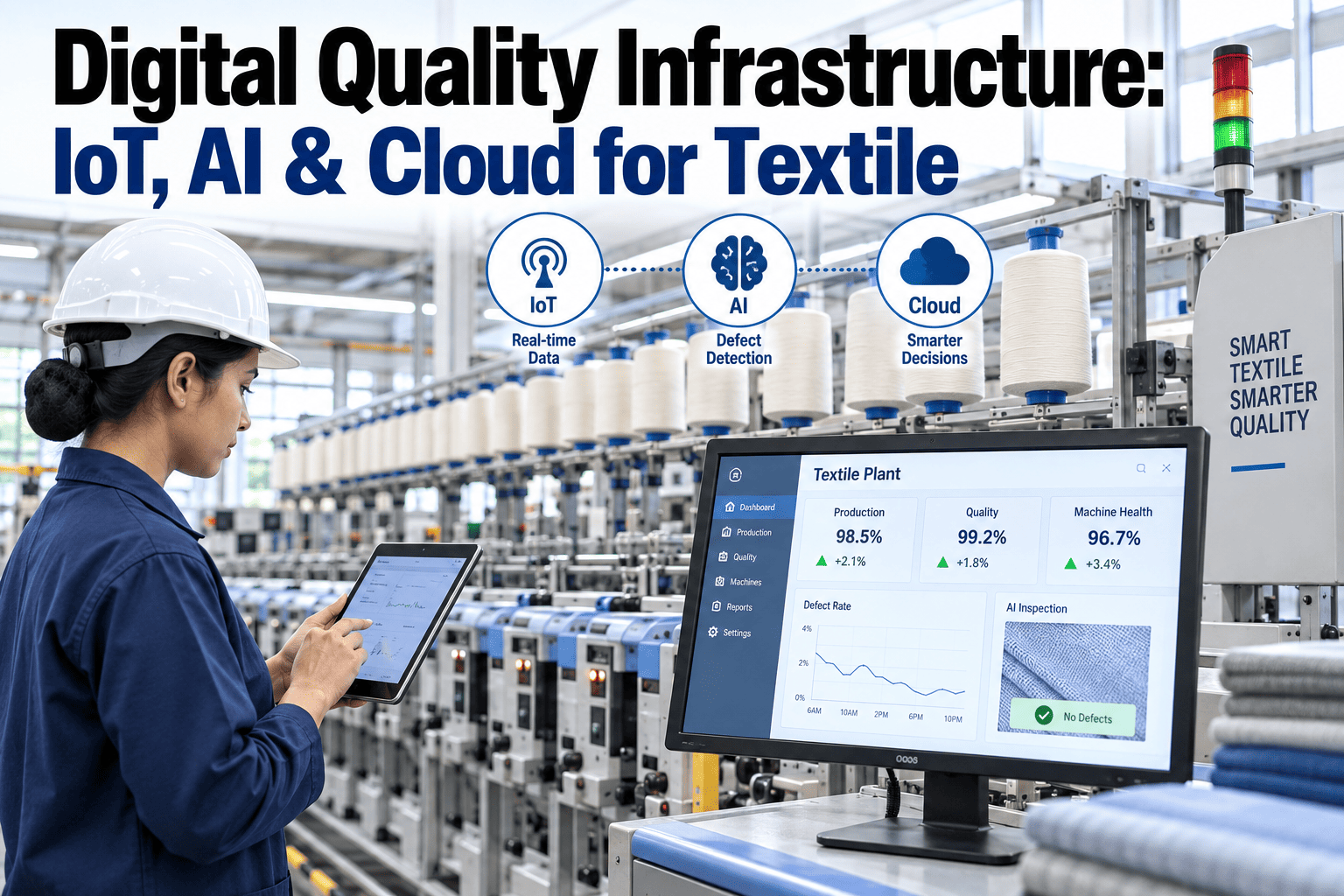
iFactory connects to rotary, digital, and flat-bed printing lines to monitor registration, viscosity, and curing parameters in real time, giving production teams the data to catch defects before a full run is affected.
Making the Decision: A Practical Framework for Choosing Print Technology
Rather than defaulting to whichever machine happens to be free, mills that consistently make profitable technology decisions run through the same short set of questions for every new order before committing capacity.
What is the confirmed order quantity, not the forecast? Committing rotary screens to an order that later shrinks in confirmed volume erodes the cost advantage that justified the choice.
How many colors and how complex is the repeat? Designs with many colors or photographic detail favor digital regardless of volume, since screen cost scales with color count.
Does the design require a specialty finish? Foil, flock, or heavy puff effects typically point toward flat-bed regardless of the volume-based economics of the other two.
What is the buyer's turnaround expectation? A tight fast-fashion deadline can outweigh a marginal cost advantage that rotary would otherwise offer at that volume.
Frequently Asked Questions
Q: At what order volume does digital printing stop being cost-competitive with rotary?
The crossover point varies by design complexity and screen cost, but digital printing generally remains cost-competitive up to a few thousand meters for simpler designs, after which rotary's amortized screen cost typically pulls ahead. Designs with many colors shift this crossover point higher in digital's favor, since each additional color adds proportional screen cost to rotary but no meaningful cost increase to digital. Running your own cost model against actual screen and ink pricing gives a more accurate crossover than a generic industry rule of thumb.
Q: Can rotary and digital printing be combined on the same fabric order?
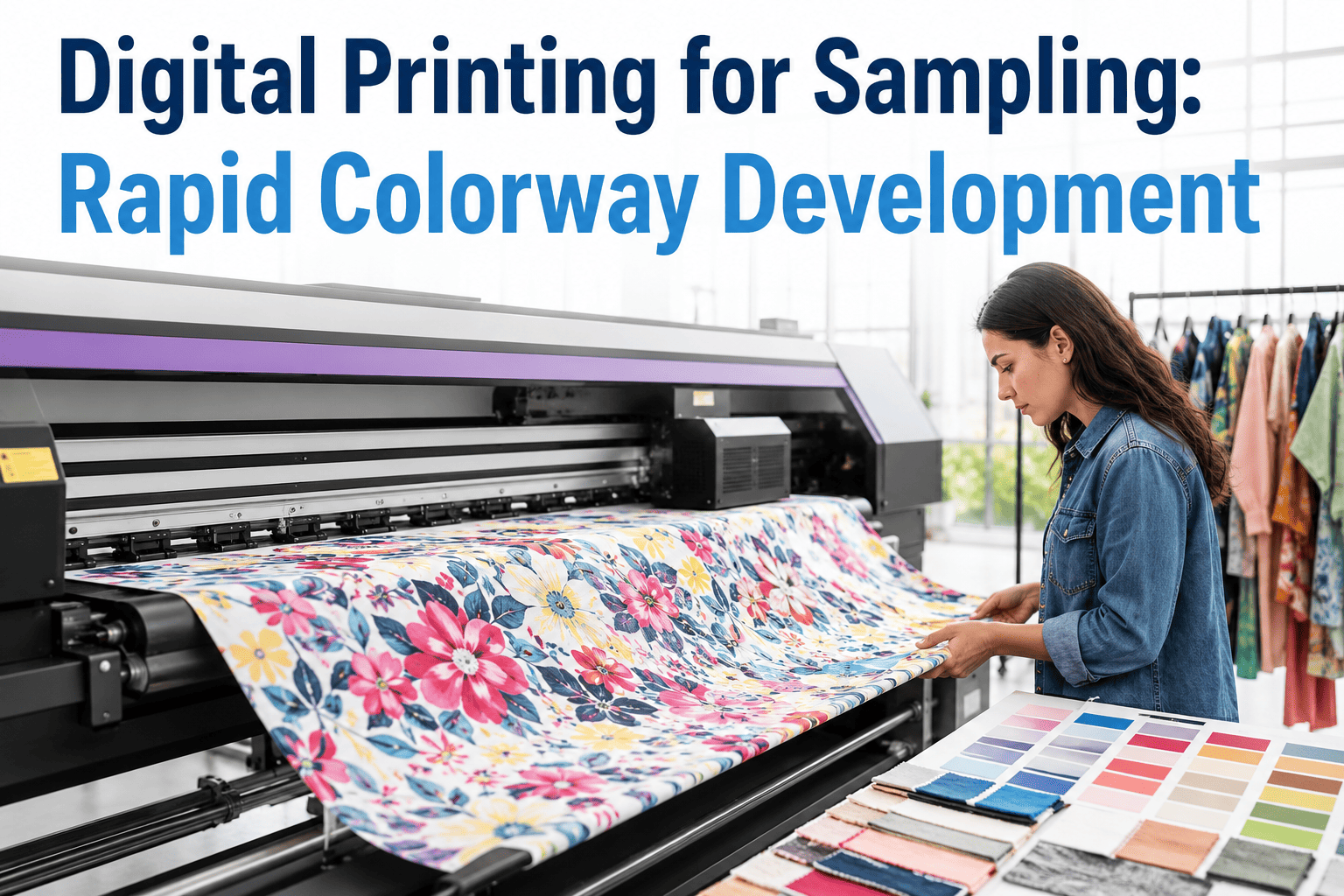
Yes, hybrid approaches are increasingly common, particularly using digital for sampling and initial small-batch fulfillment while rotary handles the bulk reorder once demand is confirmed. This lets a brand test a design in market with digital's fast turnaround before committing to rotary's screen investment, reducing the risk of an unsold bulk print run.
Contact our team to discuss how a hybrid print planning workflow fits your order patterns.
Q: Why does flat-bed printing still exist if rotary and digital cover most cases?
Flat-bed printing remains the practical choice for specialty effects requiring heavier ink deposits, such as foil application, flock finishes, and high-build puff prints, where rotary's cylinder mechanics and digital's ink-jet nozzles cannot achieve the same physical result. For designs built around these specific finishes, flat-bed is often not a cost decision at all but the only technology capable of the specified effect.
Q: What is the biggest quality risk specific to digital textile printing?
Print head clogging and nozzle drop-out are the most common quality risks in digital printing, since even a few blocked nozzles create visible fine lines running the length of a print run. Regular head cleaning cycles and continuous nozzle monitoring catch this early, but mills that skip preventive maintenance often discover the defect only after a substantial length of fabric has already been printed.
Q: How can print technology data help reduce reprint and rejection rates?
Correlating registration accuracy, ink viscosity, and curing temperature against final inspection results reveals which specific parameter drift precedes most defects on a given machine, letting maintenance and quality teams intervene before a full batch is affected.
Book a demo to see how this correlation works across your specific printing equipment.
Make Every Print Technology Decision With Real Production Data
iFactory tracks cost, quality, and throughput across rotary, digital, and flat-bed printing lines so your team chooses the right technology for every order, not just the one that's free.


.jpg)
