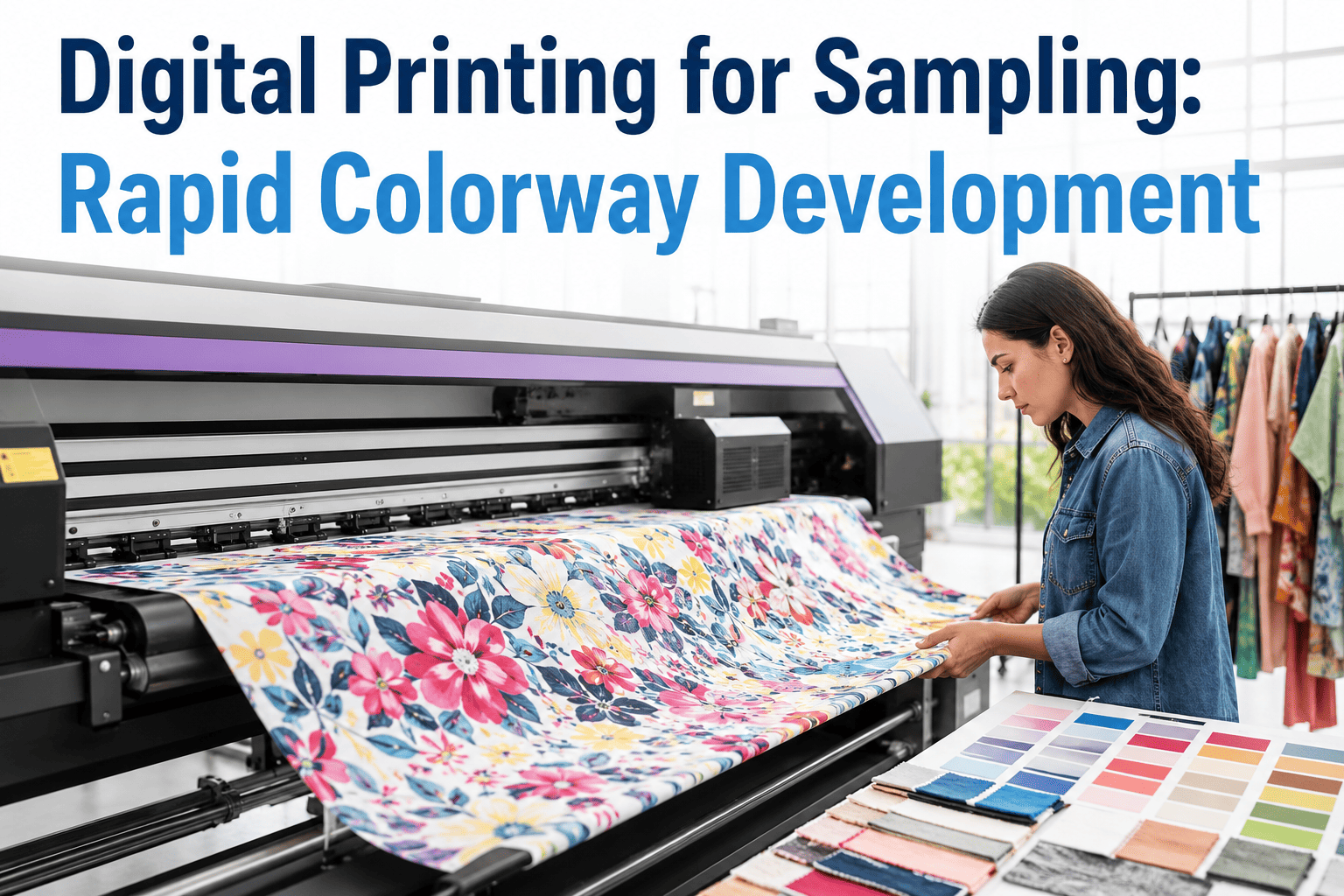
Screen printing a single colorway strike-off requires engraving a physical screen, mounting color separations, and running a test pass before anyone even sees the result — a process that takes days before a designer can hold the sample. A digital printer, by contrast, can produce one repeat of several patterns across multiple colorways in a matter of minutes, because the artwork exists as a file and the press simply reads it. The practical consequence for a design team is enormous: options that were once too expensive in tooling time to even consider testing become genuinely evaluable, changing not just how fast sampling happens but how many real alternatives get considered before a final decision is made. iFactory's digital sampling workflow connects design files directly to print-ready output, so a designer testing twelve colorway variations sees all twelve the same day instead of waiting weeks for screens to be engraved one design at a time.
Where Digital Printing Wins — and Where Screens Still Do
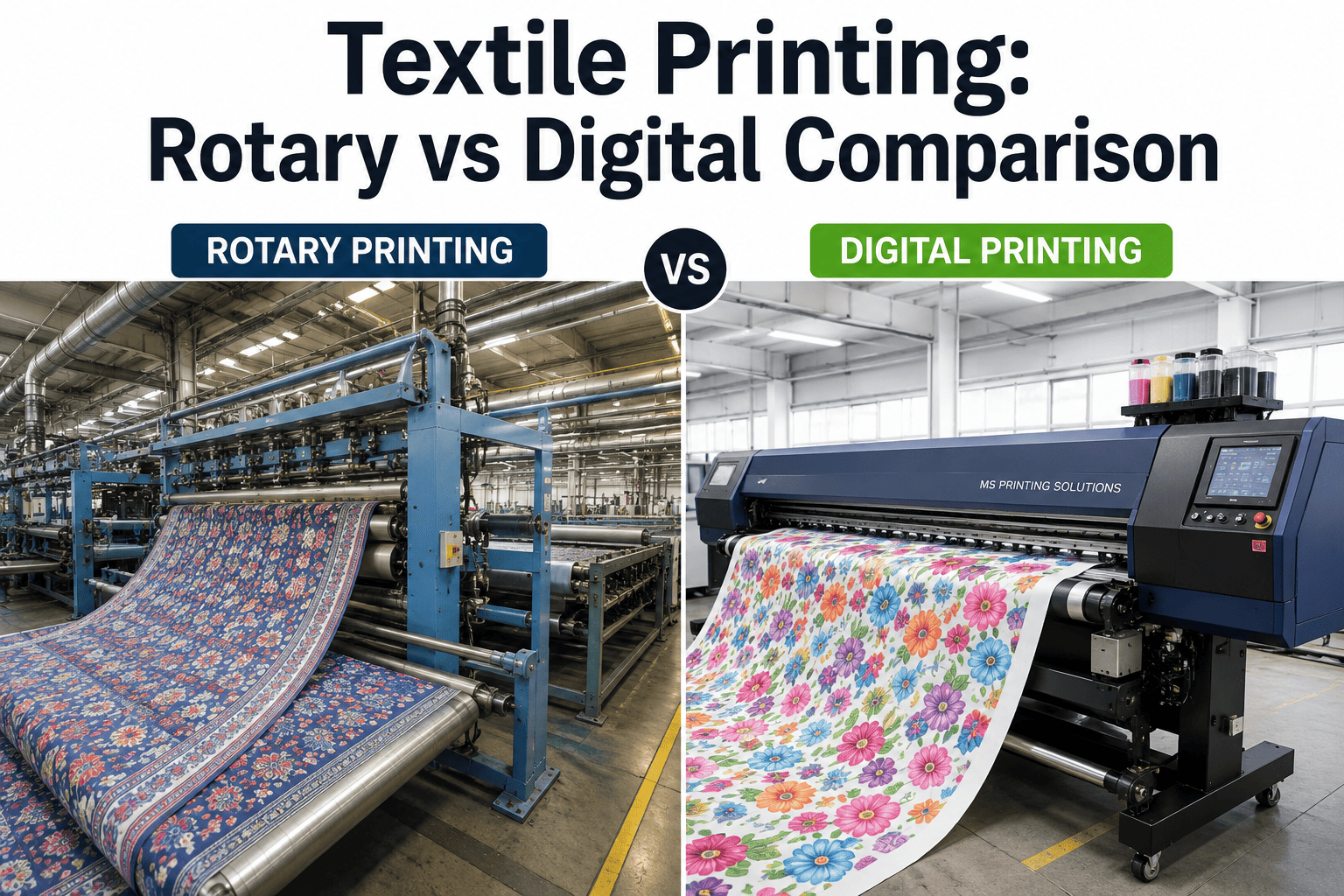
Digital eliminates screen cost entirely and compresses sampling from weeks to hours. Screen printing still wins at high volume. The crossover point is what determines which technology belongs in your sampling workflow.
What Screen Printing Actually Requires Before a Sample Exists
Understanding why digital sampling is faster requires understanding exactly what screen printing demands before a single strike-off comes off the line. Every one of these steps has to happen before a designer can evaluate whether a colorway actually works — and every one of them has to be repeated for every additional colorway under consideration, which is precisely what makes broad colorway exploration so expensive under a screen-based process.
Color Separation
The design has to be broken into individual color layers, each one requiring its own screen — a design with six colors needs six separate screens engraved before any printing can begin.
Screen Engraving
Each separated color layer is physically engraved onto a screen or roller — a tooling step with real material and labor cost, repeated for every colorway variation under evaluation.
Registration & Mounting
Screens have to be precisely aligned to each other so colors register correctly on the fabric — a mechanical setup step prone to its own errors and adjustment time.
Strike-Off & Review
A test print run evaluates the result — and if the colorway needs adjustment, several of the preceding steps repeat, extending the cycle by days each time.
What Digital Printing Removes From the Sampling Cycle
Digital textile printing deposits ink directly onto fabric using inkjet print heads, without engraved screens or rollers at all. There is no setup of physical screens, no color separations to mount, no minimums driven by tooling — the artwork is a file, and the press reads it. That is the structural break from screen printing, and it's the reason a full multi-colorway sampling cycle compresses from weeks into hours, without requiring any change to the underlying design itself, only to the process that turns the design into a physical fabric sample.
| Step | Screen Printing | Digital Printing |
|---|---|---|
| Color Separation | Required — manual layer preparation per colorway | Eliminated — file-based color handled by the RIP software |
| Screen Engraving | Required — physical tooling cost per color, per colorway | Eliminated entirely |
| Registration Setup | Required — mechanical alignment of multiple screens | Eliminated — handled automatically by the print head |
| Colorway Change | New screens typically required for a materially different colorway | File edit only — reprint in minutes |
| Typical Sample Turnaround | Days to weeks per colorway iteration | Hours, often same-day for multiple colorways |
This is the core structural advantage: because there's no tooling cost tied to a specific colorway, testing twelve variations of a print costs no more in setup time than testing one. Screen printing inverts that economics entirely — every additional colorway variation multiplies the tooling cost and lead time, which is exactly why design teams historically narrowed their colorway options early, before ever seeing a physical sample of most of them.
The Break-Even Point: When Screen Printing Still Wins
Digital printing is not universally cheaper — it wins decisively at sampling and short runs, and screen printing remains the more economical choice at genuine production volume. Understanding where that crossover sits is what keeps a design team from either over-relying on digital for a run that should have gone to screen, or defaulting to screen tooling for a sample volume that never needed it, and getting this calculation wrong in either direction erodes exactly the cost advantage each method is meant to provide over the course of a full development season.
The exact break-even point shifts based on color count, substrate, and local labor rates, but the general pattern holds across most textile categories: everything short of full production volume, and every single sample regardless of eventual production method, belongs on digital. A design that will ultimately be produced on screens at 5,000 meters should still be sampled digitally first — the production method and the sampling method don't need to match, and treating them as if they must is one of the most common and costly misunderstandings teams carry over from the screen-only era of textile development.
Ink Chemistry: Matching the Right Ink Type to the Fabric
Digital textile printing is not one uniform technology — it's a family of processes, and the ink chemistry has to match the fiber content for the print to actually perform correctly once washed, worn, or exposed to light. Choosing the wrong ink family for a substrate produces a sample that looks fine on day one and fails colorfastness testing within weeks.
Reactive Inks
Bond chemically with cellulosic fibers like cotton and viscose, producing strong colorfastness and a soft hand feel well suited to apparel and home textiles built on natural fiber content.
Disperse Inks
Formulated specifically for polyester and other synthetic fibers, typically applied through sublimation transfer, and the standard choice for performance and sportswear fabrics built on synthetic content.
Acid Inks
Suited to protein fibers like silk and nylon or nylon-spandex blends, commonly used for high-fashion and intimate apparel applications where those fiber types dominate the fabric composition.
Pigment Inks
Applied to the fabric surface rather than bonding chemically with the fiber, offering broad compatibility across fiber types and commonly used for home furnishing applications where a wide range of substrates needs a single consistent ink system.
Getting the ink-to-fiber match right at the sampling stage matters as much as getting the color itself right — a colorway approved on the wrong ink chemistry for the intended fabric can pass initial visual review and still fail wash or light fastness testing down the line, sending the design back for rework at a much later, more expensive stage of development than if the correct ink family had simply been used from the first sample. This is one of the less obvious advantages of bringing digital sampling in-house rather than outsourcing it: a team with direct control over ink selection can verify the fiber-ink match at the same moment a colorway is first evaluated, rather than discovering a chemistry mismatch weeks later when an outsourced sample finally comes back from fastness testing.
A Composite Scenario: Twelve Colorways in a Single Afternoon
Picture a print design team evaluating a new floral pattern for an upcoming season, with the merchandising team asking to see the design across an initial range of twelve possible colorways before narrowing to a final three or four for full development. Under a screen-based workflow, this request would have been effectively impossible to fulfill as asked — engraving and testing twelve full colorway variations would require weeks of tooling time and thousands of dollars in screen costs, so in practice a design team would narrow to two or three "safe" colorway guesses before ever committing to physical screens, sampling only a fraction of what merchandising actually wanted to evaluate in the first place.
Working from a digital print sampling workflow instead, the design team builds all twelve colorway variations as separate file versions in an afternoon, sends them to the digital printer, and has physical fabric samples of every single variation back within hours rather than days. The merchandising team reviews all twelve side by side — not two or three educated guesses standing in for a broader range — and identifies a colorway combination the design team would never have prioritized under the old narrowed-down approach, simply because it wouldn't have made the cut to justify screen tooling cost under the old process. The final production run still goes to screen printing once volume is confirmed, since the eventual order size clears the break-even threshold — but the colorway actually selected for that production run was chosen from a genuinely comprehensive comparison, not a narrowed guess made under tooling-cost pressure. The design team, reflecting on the exercise afterward, noted that at least two of the eventually top-performing colorways would never have been sampled at all under the old process — they simply wouldn't have survived the initial narrowing that screen tooling economics used to force before anyone ever saw a physical result.
Where Digital Printing Still Has Real Limitations
Digital textile printing is genuinely newer technology than screen printing, and the available equipment does carry real limitations that a fair evaluation has to account for rather than glossing over in favor of an unqualified "digital is always better" narrative. Overselling digital's advantages without acknowledging these constraints tends to produce disappointment during the first production-scale attempt, when the economics and technical characteristics that worked well at sample volume don't automatically carry over to a full commercial run.
Equipment Investment
High-quality single-pass digital printers, capable of production-grade speed, carry a significant upfront equipment cost — a real barrier for facilities transitioning away from existing multi-pass or screen-based infrastructure.
Printhead Maintenance
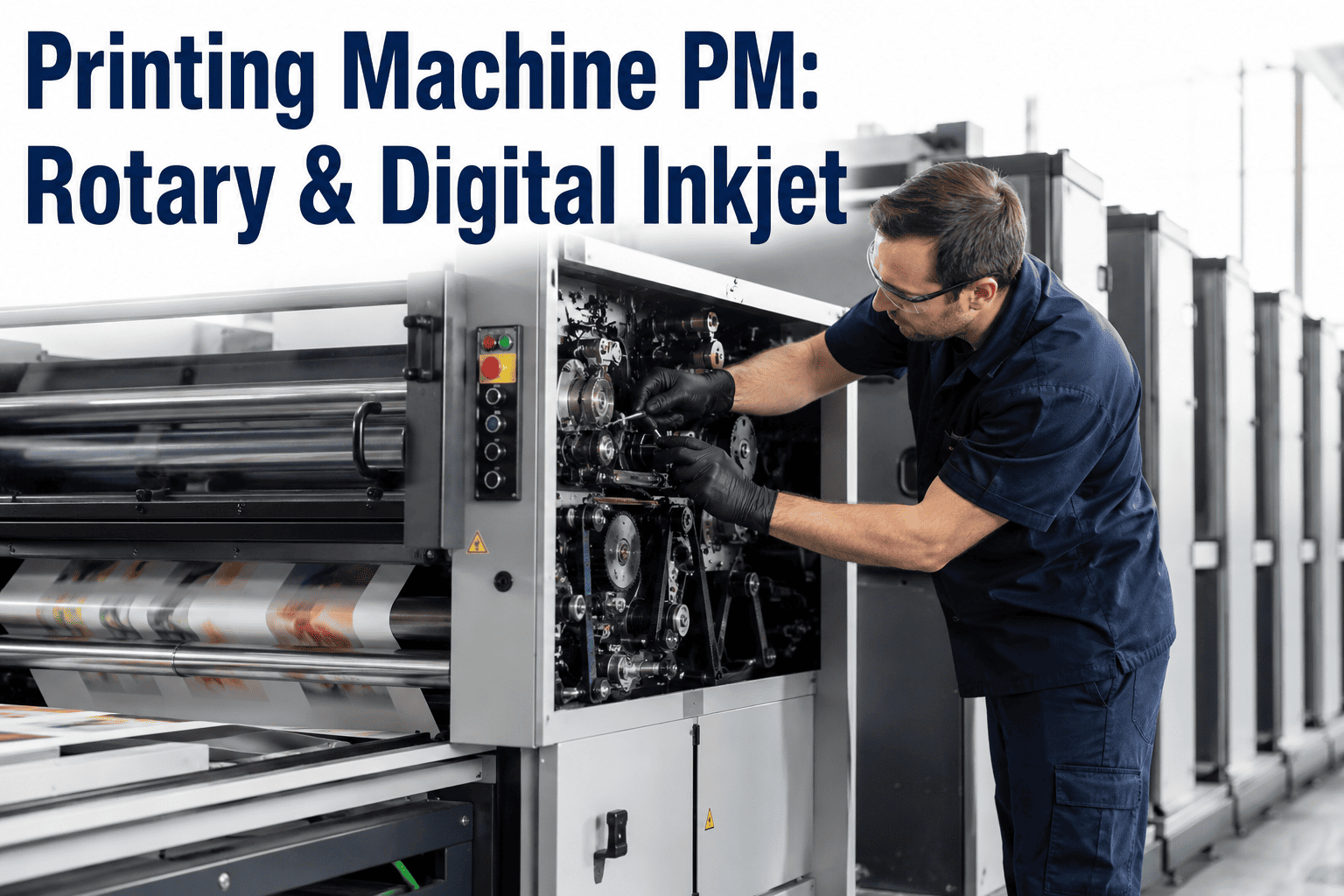
Multiple printheads running simultaneously increase the risk of clogging, and a dirty or misaligned printhead produces visible streaking or dropout in the printed output — a maintenance discipline screen printing doesn't require in the same way.
Per-Meter Cost at Volume
Beyond the break-even point, digital's per-meter ink and consumable cost genuinely exceeds screen printing's amortized cost — treating digital as universally cheaper regardless of volume produces a worse economic outcome at production scale.
Color Gamut on Certain Substrates
Not every fiber and ink combination available in digital matches the full color range achievable with certain screen printing pigments and processes — a genuine, if narrowing, technical gap worth verifying for demanding color requirements.
Sample Digitally, Produce Wherever the Volume Makes Sense
iFactory doesn't lock you into one printing method — it connects your digital sampling workflow to whichever production process fits the final order volume, screen or digital.
Connecting Digital Samples to a Structured Approval Workflow
Producing fast digital samples solves only half the speed problem if the approval process reviewing them still runs through email chains, spreadsheets, and physical courier shipments. A structured digital approval workflow — tracking which strike-off is the latest version, routing revisions to the right reviewer, and keeping supplier and internal teams aligned on status — is what actually converts faster sample production into a faster overall development calendar, rather than simply producing samples faster while the review bottleneck downstream stays exactly the same.
Version Control
With colorway iterations now arriving in hours rather than weeks, tracking which specific version is under review, and which has already been rejected, becomes a genuine organizational challenge without a structured system to manage it.
Centralized Review
Routing every digitally printed strike-off through the same centralized approval process used for solid-color lab dips keeps print development from becoming a separate, disconnected workflow running on its own informal system.
Who Drives Digital Sampling Adoption Inside a Design Team
Bringing digital sampling into a design workflow touches design, merchandising, and production planning simultaneously — each with a different stake in whether the transition actually delivers a faster calendar or simply adds a new tool without changing how decisions get made. Treating the rollout as a purely technical equipment purchase, without addressing how the surrounding review and approval process needs to change, is a common reason the promised speed gain never fully reaches the overall development calendar.
Design Team
Owns the colorway exploration itself — generating and evaluating the range of variations digital sampling now makes economically feasible, rather than pre-narrowing options to fit a screen-tooling budget before anyone has actually seen them.
Merchandising & Production Planning
Owns the eventual production method decision — confirming order volume against the break-even threshold and routing the final approved colorway to screen or digital production accordingly, once the design stage has actually concluded.
Without clear coordination between these functions, a common failure pattern emerges: design teams generate a wider colorway range enabled by digital sampling, but merchandising still evaluates and approves at the old, narrower pace because the review process itself never adapted to the new volume of options now available for consideration. The speed gain at the sampling stage only translates into a genuinely faster overall calendar when the approval and decision-making process downstream is restructured to actually handle the increased throughput — otherwise the bottleneck simply relocates from tooling time to review time, and the calendar benefit that motivated the investment never fully materializes.
Measuring Whether Digital Sampling Is Actually Paying Off
Beyond the intuitive sense that faster sampling is better, a few concrete metrics indicate whether a digital sampling investment is genuinely improving development outcomes rather than simply producing more samples without changing the decisions those samples actually inform at the merchandising and production planning stage of a season.
Colorways Evaluated Per Style
Tracking whether the average number of colorway variations genuinely tested per style has increased meaningfully since adoption — if it hasn't, the team may still be narrowing options out of habit rather than taking full advantage of the lower sampling cost.
Days From Concept to Colorway Approval
The clearest end-to-end measure of whether the sampling speed gain is translating into an actually shorter development calendar, rather than being absorbed by an unchanged downstream review process that still moves at its old, pre-digital pace.
Facilities that track these metrics consistently tend to catch the "faster samples, same slow calendar" failure pattern early, while those that only measure sample production speed itself can miss it entirely — celebrating a technically successful equipment rollout that never actually shortened the season's overall timeline or changed how many genuine options reached a final decision.
Frequently Asked Questions
The questions below reflect what design and production teams most commonly ask as they weigh bringing digital sampling into an existing screen-based development workflow.
Does adopting digital printing for sampling mean abandoning screen printing for production?
No — the two methods serve different volume ranges, and most facilities benefit from using both. Digital dominates sampling and short runs regardless of what production method is eventually used, while screen printing remains the more economical choice once an order clears the roughly 2,000-to-5,000-meter break-even range, depending on color count and substrate. Visit support to see how a hybrid digital-sampling, screen-production workflow is typically structured.
How many colorways can realistically be sampled digitally in a single day?
This depends on print head capacity and fabric preparation time, but a design team working with an in-house or closely integrated digital printer can typically produce a dozen or more colorway variations within a single working day — a volume that would be economically and logistically impossible to achieve through screen tooling in the same timeframe. Book a demo to see realistic throughput for your specific equipment and fabric type.
Is digital-printed fabric color-accurate enough to represent what screen printing will ultimately produce?
Digital and screen printing use different ink chemistries and application methods, so an exact one-to-one color match between a digital sample and an eventual screen-printed production run isn't guaranteed without calibration. Many facilities build a correlation reference between their digital and screen output specifically so digital samples can be trusted as a reliable proxy during the design and approval stage, even when final production will run on screens.
What's the realistic upfront investment required to bring digital sampling in-house?
Costs vary substantially by printer type, resolution, and throughput capability, with production-grade single-pass equipment representing a significant capital investment. Many design teams start with a smaller-format sampling printer specifically scoped for design and approval work, rather than production-volume equipment, which meaningfully lowers the entry cost while still delivering the speed advantage for the sampling stage specifically. Contact support for guidance on right-sizing equipment to your sampling volume.
Does faster sampling actually shorten the overall product development calendar, or just the sampling stage?
The sampling stage compression is real and significant, but the overall development calendar benefit depends heavily on whether the approval process reviewing those samples is equally fast. Faster sample production paired with a slow, email-and-spreadsheet-based approval process still bottlenecks the overall timeline — the full benefit requires both a faster sampling method and a structured digital approval workflow working together.
Stop Narrowing Colorway Options Before You've Even Seen Them
iFactory connects your design files directly to digital print sampling, so a season's full colorway range gets tested in hours — and the final production decision comes from a real comparison, not a tooling-cost guess.


.jpg)
