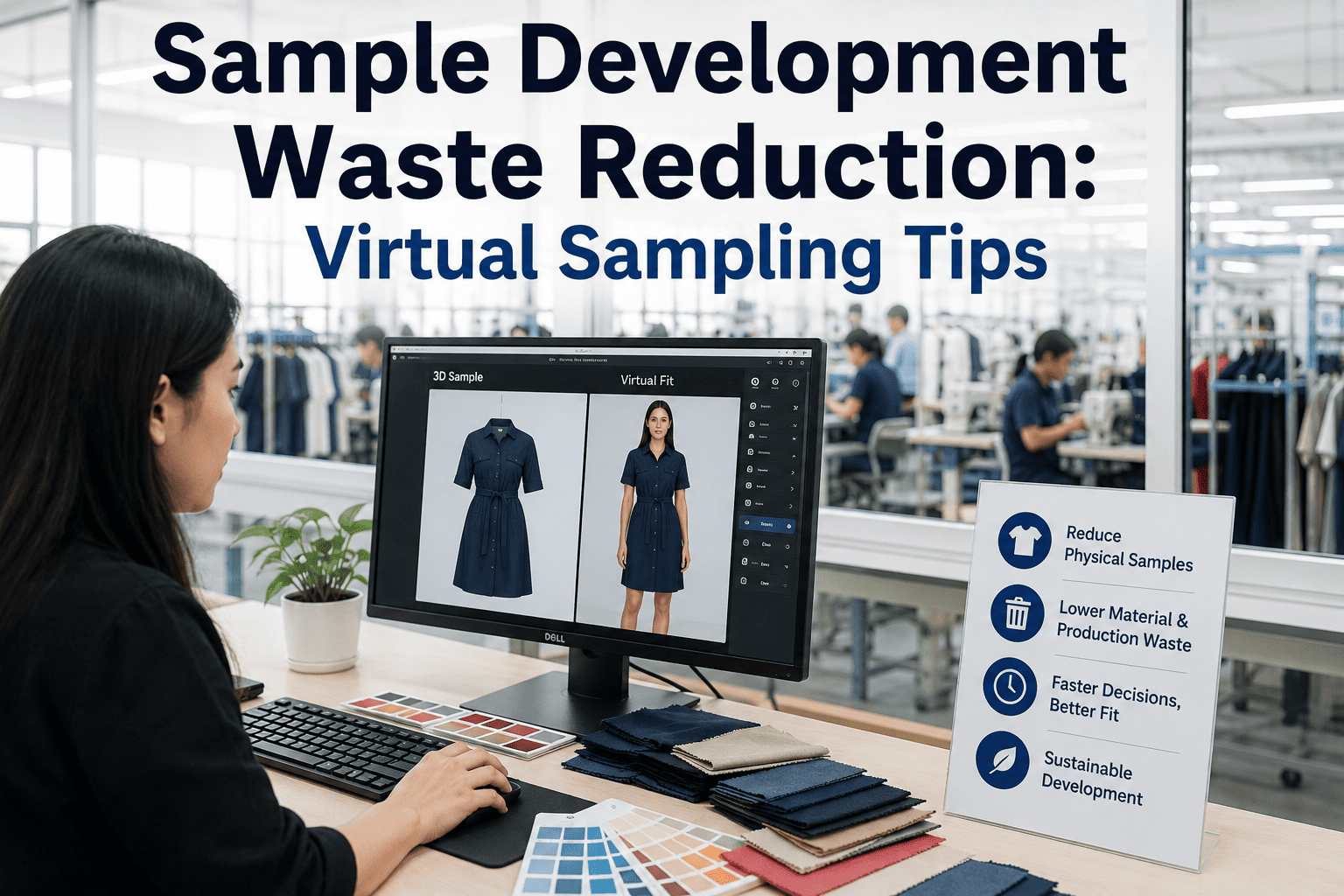
A single style can pass through six or seven rounds of samples before a buyer signs off — lab dip, strike-off, fit sample, salesman sample, pre-production sample — and at most mills, nobody is actually tracking what each round costs or how many days it adds to the calendar. Sample development is treated as a cost of doing business rather than a process that can be measured and shortened, which is exactly why it quietly eats margin on every order. iFactory's production intelligence platform tracks sample cycle time and cost by type, department, and buyer, turning a process most mills manage on instinct into one they can actually plan around — see how it works through iFactory support.
Sample Room Efficiency · Textile Development
Every Sample Round Costs Money and Days. Most Mills Only Track One of the Two.
iFactory maps sample development cost and cycle time across lab dips, strike-offs, fit samples, and pre-production samples, so development managers can see exactly where rounds are being repeated unnecessarily and where the calendar is genuinely tight.
The Sample Journey
Six Stages a Single Style Typically Passes Through Before Bulk Production
Where the Money Actually Goes
Relative Cost and Time Investment by Sample Type
Lab dips are rarely the most expensive single round, but because they repeat most often, they typically account for the largest share of cumulative sample-stage cost and delay on a given style.
Two Extra Lab Dip Rounds Don't Look Like Much on Their Own. Across 40 Styles a Season, They're a Real Number.
iFactory tracks round counts and cycle time by style, buyer, and department, so development managers can see exactly where repeated rounds are concentrated and act before it becomes a seasonal pattern.
Common Bottlenecks
Five Reasons Sample Cycles Run Longer Than They Need To
•
Unclear approval comments — vague buyer feedback like "adjust the color slightly" forces a guessing-game round instead of a targeted correction, often costing an entire extra cycle.
•
Shared lab and sample room capacity — when lab dip and strike-off work queues aren't prioritized against calendar deadlines, urgent styles wait behind lower-priority ones with no visibility into the backlog.
•
Fabric or trim availability delays — a fit sample round that's ready to start but waiting on a specific trim delivery silently extends the calendar without showing up as a "problem" anywhere.
•
Courier and shipping lag between mill and buyer — international sample shipment time is frequently as long as the actual development work itself, yet rarely gets tracked as part of the cycle.
•
No visibility into which styles are repeating rounds — without a tracked history, a style that's already on its fourth lab dip looks identical in the system to one that's on its first, so nothing flags it for escalation.
Applied Example
Cutting a Season's Average Lab Dip Rounds From 3.8 to 2.1 by Fixing One Handoff
A mid-sized woven fabric mill supplying several apparel brands had accepted an average of nearly four lab dip rounds per style as simply how color approval worked. When development cycle data was tracked by round and by buyer through iFactory, a clear pattern emerged — over 60% of second and third rounds were driven by the same root cause, a mismatch between the physical lab dip swatch and the digital color reference sent to the buyer's technical team, caused by inconsistent lighting conditions in the color matching booth. Standardizing the booth calibration and pairing every physical swatch with a properly calibrated digital reference cut average rounds per style from 3.8 to 2.1 within two seasons, without any change to dyeing chemistry or process.
3.8 → 2.1Average lab dip rounds per style
60%Of repeat rounds traced to one root cause
2 seasonsTo fully realize the improvement
Typical Outcomes
What Development Teams See After Tracking Sample Cost and Time Systematically
22%
Reduction in Average Rounds per Style
9 days
Average Cycle Time Saved per Style
1 view
Consolidated Tracking Across Sample Types
Frequently Asked Questions
Sample Development Cost and Time Management — Common Questions
How does iFactory actually calculate the cost of a sample round?
Cost is built from actual labor hours logged against the sample by department, material consumption specific to that round, and an allocated share of lab and sample room overhead, rather than a flat estimate applied to every sample regardless of complexity. This gives development managers a real per-round cost figure they can compare against the fabric or garment's eventual order value, which is often the missing piece when deciding how many rounds a particular style genuinely deserves.
Book a Demo to see the cost model applied to a recent style.
Can this integrate with our existing PLM or ERP system for sample tracking?
Yes — iFactory connects to commonly used PLM and ERP platforms to pull existing style, sample, and approval status data rather than requiring your team to re-enter information in a separate system. Where a mill doesn't use a formal PLM, iFactory can also work from spreadsheet-based tracking as a starting point while a more structured workflow is set up.
Contact support to confirm compatibility with your current systems.
Does tracking sample rounds actually help reduce them, or just measure them?
Measurement is the first step, but the practical value comes from pattern detection — once round counts and root causes are tracked consistently across styles and buyers, recurring bottlenecks like the lab dip calibration issue in the case study above become visible in a way they never were when each style's history lived only in someone's memory or a scattered email thread. Most mills find two or three systemic causes account for the majority of their repeated rounds once the data is actually reviewed.
How is this different from a standard sample tracking spreadsheet?
A spreadsheet can log dates and statuses, but it rarely captures cost per round, ties rounds back to a specific root cause, or makes cross-style and cross-buyer patterns visible without significant manual analysis. iFactory automates that aggregation and surfaces the patterns directly, so development managers spend their time acting on the findings instead of compiling them.
How long does it take to get useful sample cost and cycle time data flowing?
Mills with an existing PLM or structured sample tracking process typically see initial cost and cycle time reporting within two to three weeks of connecting their systems. Mills starting from manual or spreadsheet-based tracking generally need an additional few weeks to establish consistent data entry habits before the reporting becomes reliable enough to act on.
Book a Demo to scope a rollout timeline for your development team.
Stop Guessing How Much Sample Development Actually Costs You Each Season.
Get a real, round-by-round view of sample cost and cycle time across every style, buyer, and department.