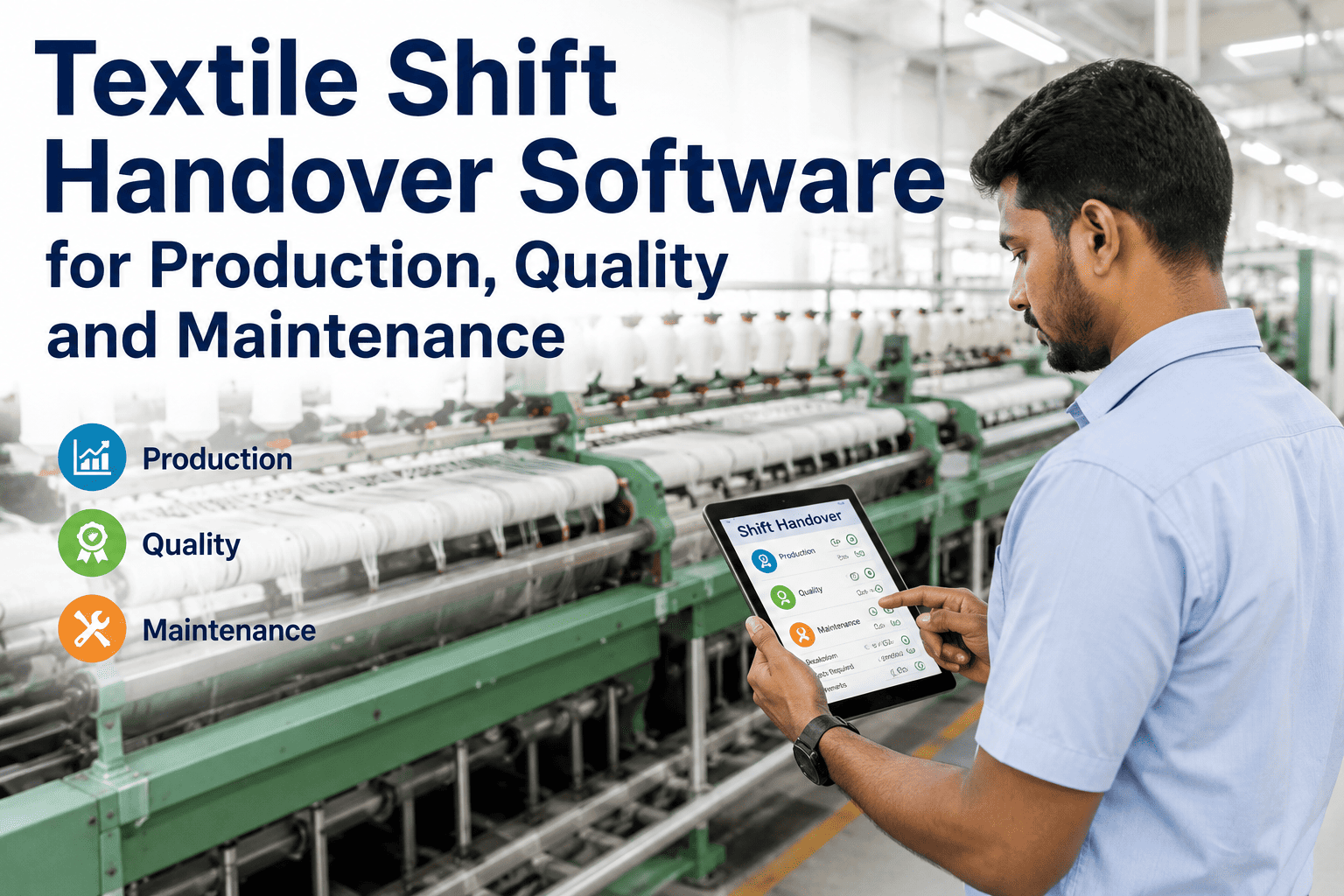
The ten minutes between one shift leaving and the next one starting decide how the next eight hours go, and in most textile mills those ten minutes still happen through a handwritten logbook or a rushed verbal handoff at the machine. Whatever the outgoing operator forgets to mention, whether it's a frame running slightly off tension or a pending maintenance call, becomes the incoming shift's problem to rediscover the hard way. That rediscovery costs real production time, and it repeats every single shift change across every line in the plant. Digital shift handover software fixes the weak link by capturing machine status, pending work, and safety notes in one structured format that the next shift actually reads before they touch a machine, and plants can book a demo to see a real handover flow.
SHIFT HANDOVER · TEXTILE OPERATIONS
Stop Losing Production Time in the Gap Between Shifts
Digital shift handovers capture machine status, downtime notes, pending work, and safety checks in one place, so the incoming shift starts working instead of starting from scratch.
Why the Handover Gap Is Where Production Time Disappears
A paper logbook only works if the outgoing operator writes clearly, remembers everything that happened, and the incoming operator actually reads it before starting the machine. In a rushed shift change, at least one of those three steps usually fails. The incoming operator then spends the first thirty to sixty minutes of their shift figuring out what state the line is actually in, which is time that never shows up as downtime on any report but still costs real output.
01
Outgoing Shift Logs Machine Status
Each machine's running condition, quality flags, and any in-progress work order gets captured in structured fields, not free text.
02
AI Summarizes the Shift
Downtime events, pending maintenance calls, and safety notes from the shift are pulled into a short summary automatically.
03
Incoming Shift Reviews Before Starting
The next operator sees the summary and open items on a screen at the machine before taking over, with acknowledgment logged.
04
Open Items Carry Forward Automatically
Anything unresolved doesn't get lost between shifts, it stays visible until it's closed out by whichever shift handles it.
SEE A REAL HANDOVER FLOW
Watch a Shift Change Happen in Minutes, Not Guesswork
See how machine status and open items carry cleanly from one shift to the next.
Paper Logbooks vs Digital Shift Handover
Paper Logbook
Handwriting quality determines how usable the log actually is
Open items get missed if the next operator skips a page
No record of whether the incoming shift actually read it
Historical handover data is hard to search or analyze later
Digital Shift Handover
Structured fields keep every handover consistent and complete
Open items stay visible until they're formally closed out
Acknowledgment is logged when the incoming shift reviews it
Handover history is searchable across machines and shifts
50%
Reduction in unplanned downtime achievable when handoff and maintenance notes stay connected
35%
Share of textile plants that have adopted some form of Industry 4.0 digital workflow tooling
Every Shift
Handover summaries generate automatically without extra data entry from operators
What a Shift Supervisor Told Us
The first hour of every shift used to be spent figuring out what actually happened on the last one. Now the incoming operator reads a two-minute summary before they even reach the machine, and open maintenance items don't disappear into a notebook nobody reopens.
Shift Supervisor, Weaving Unit
Frequently Asked Questions
Do operators need to type long notes for this to work?
No, most handover data comes from structured fields, checkboxes, and quick voice or short text notes rather than long written entries. The system pulls machine status and downtime data automatically where it's already connected to plant sensors, so operators mainly confirm and add context rather than writing from scratch. Plants can see the actual data entry flow during a demo.
What happens to handover data over time?
Every handover is stored and searchable, which means recurring issues on a specific machine or shift become visible in a way a stack of paper logbooks never allowed. Maintenance teams can pull up the history of a machine's handover notes when diagnosing a repeat issue, cutting down on repeated troubleshooting for the same root cause across different shifts.
Can this integrate with our existing maintenance or CMMS system?
Yes, open maintenance items logged during a handover can flow into work order systems so pending repairs aren't just noted, they're tracked to closure. This connection is what prevents the common failure mode where a handover note gets read but never turns into an actual scheduled fix. Integration specifics for your current systems can be discussed through support.
How is this different from a shared spreadsheet or messaging app?
Spreadsheets and chat apps aren't built for structured, machine-linked handovers, so critical status details get buried in unrelated messages or inconsistent rows. Digital handover software ties every note to a specific machine, shift, and operator, tracks whether it was acknowledged, and keeps open items visible until resolved, which a general-purpose tool wasn't designed to do.
How long does it take operators to adjust to the new workflow?
Most operators are comfortable with the structured handover screen within the first few shifts, since the fields mirror what they were already tracking on paper, just organized consistently. Supervisors typically see full adoption across a shift team within one to two weeks, especially once operators notice they're spending less time reconstructing what happened on the previous shift.
CLOSE THE HANDOVER GAP
Give Every Shift a Clean Start
See how status, downtime, and safety notes carry forward automatically.