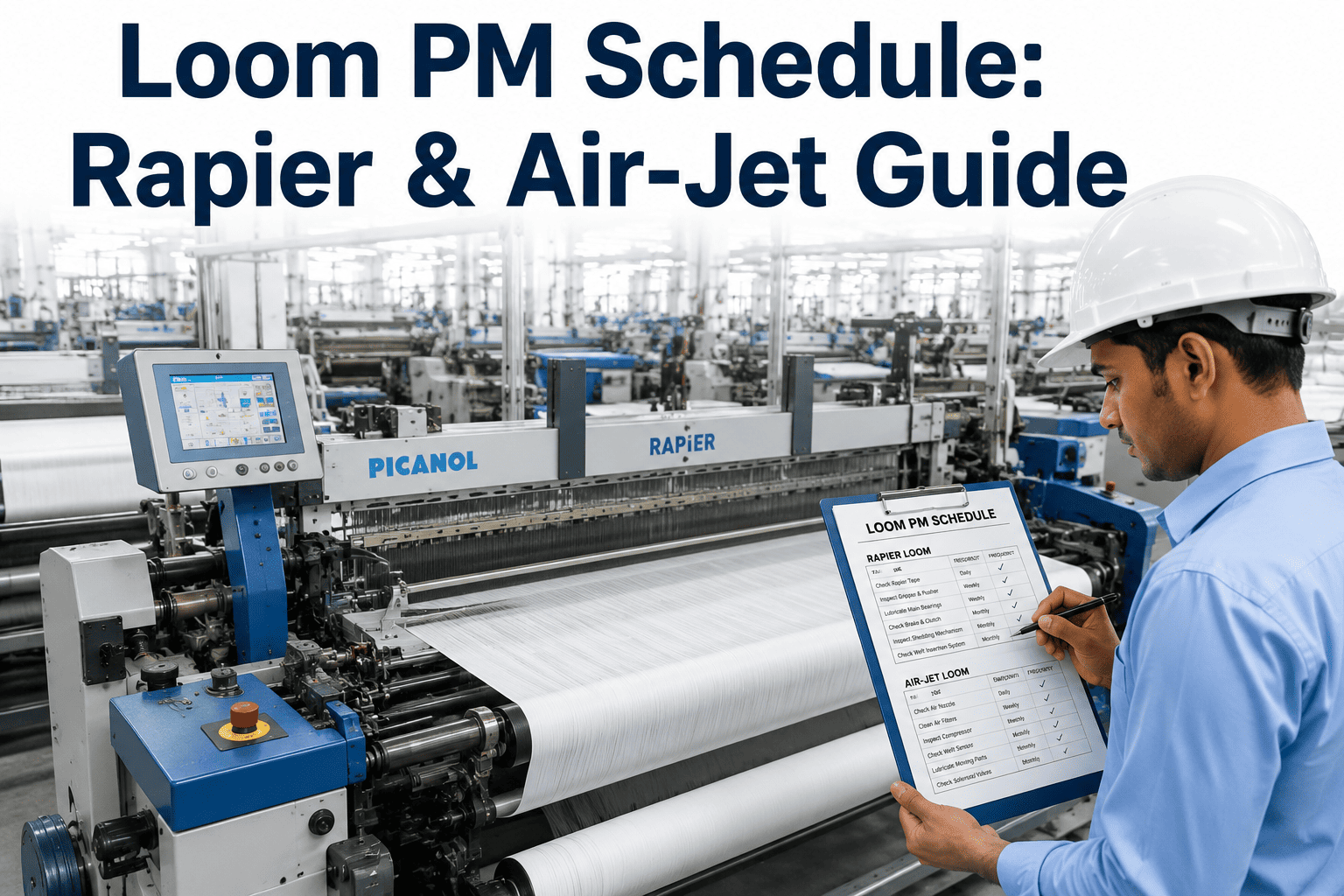
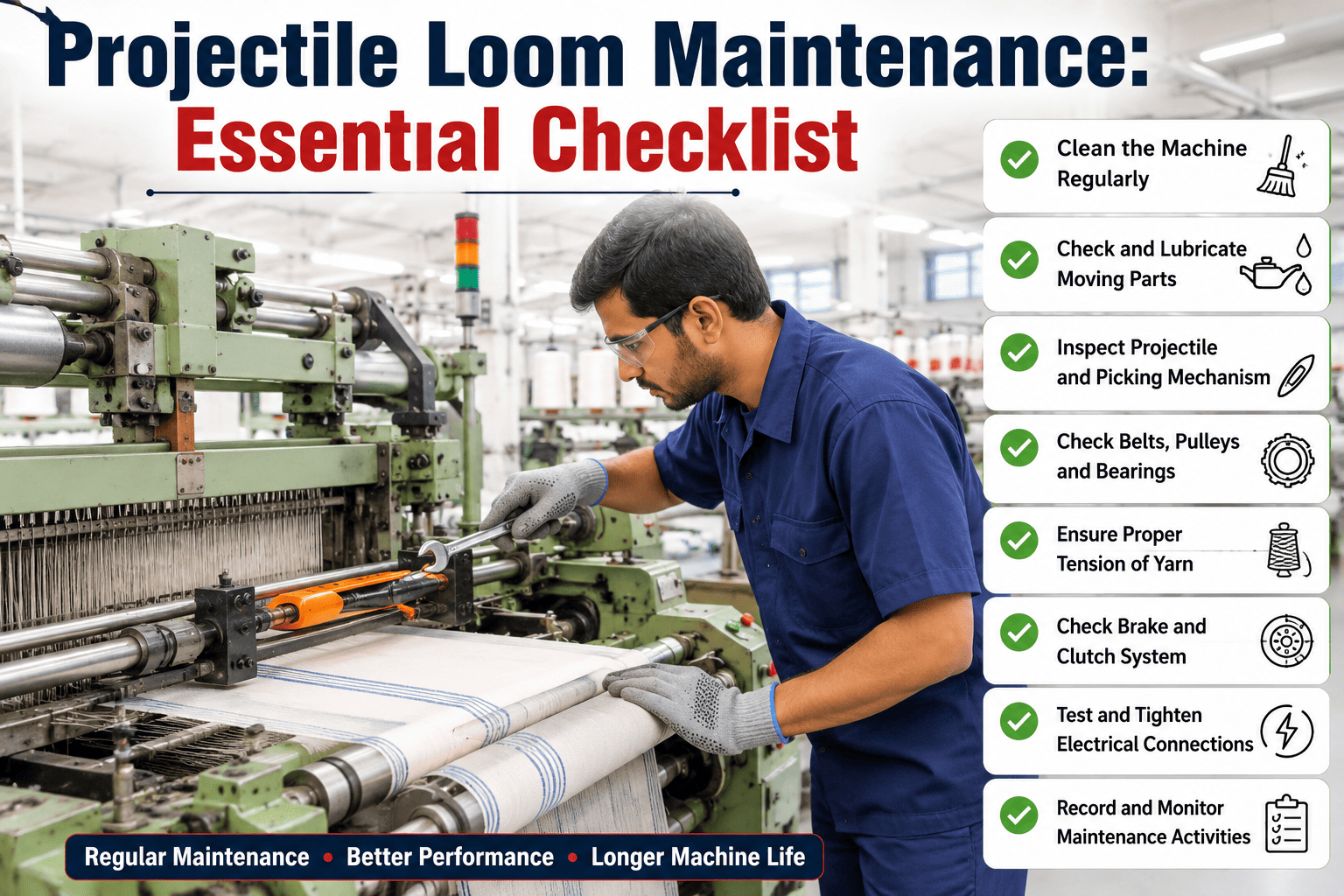
A weaving loom that stops unexpectedly costs between 800 and 1,400 dollars per hour in lost production depending on fabric width, weave complexity, and machine speed. For a mill running 60 air-jet looms at 850 picks per minute, every unplanned stop cascades through the entire weaving department, creating quality defects at restart, wasting yarn through machine threading, and pushing delivery schedules past customer deadlines. Despite this, many weaving mills still operate their loom maintenance programs on informal schedules driven by operator intuition rather than structured intervals. The mills that consistently achieve 92 percent or higher loom efficiency do not rely on memory. They run documented preventive maintenance programs with defined inspection intervals, lubrication schedules, and replacement cycles tailored to each loom type. The best practices outlined below reflect the protocols used by the top-performing mills in the industry.
Get the Complete Loom PM Best Practices Guide
iFactory provides a ready-to-deploy preventive maintenance framework for air-jet, rapier, and projectile looms with configurable checklists, lubrication schedules, and real-time OEE tracking. Deployed in 7 to 14 days.
PM Requirements by Loom Type
Each loom insertion technology requires a different maintenance focus. Understanding the specific failure modes and service intervals for your loom type determines whether your PM program prevents breakdowns or just documents them after they occur.
Air-Jet Loom
Rapier Loom
Projectile Loom
Loom Inspection Frequency Matrix
The matrix below maps critical inspection areas to their recommended frequency. Mills that follow this schedule achieve measurable reductions in stop events across all shift patterns.
| Inspection Area | Daily | Weekly | Monthly | Quarterly |
|---|---|---|---|---|
| Air pressure and nozzle condition | ||||
| Warp stop motion sensitivity | ||||
| Weft insertion timing | ||||
| Rapier head and gripper wear | ||||
| Harness and heald frame alignment | ||||
| Main drive belt tension | ||||
| Gearbox oil analysis and level | ||||
| Braking system response time | ||||
| Torsion bar tension calibration | ||||
| Take-up and let-off mechanism | ||||
| Electrical panel component inspection |
Standard Loom Lubrication Schedule
Proper lubrication is the single most cost-effective preventive action on any loom type. The schedule below covers all major lubrication points across the three primary loom technologies.
| Lubrication Point | Loom Type | Lubricant | Frequency | Method |
|---|---|---|---|---|
| Main gearbox | All | ISO 220 gear oil | Quarterly | Oil change |
| Cam shaft bearings | All | NLGI 2 grease | Weekly | Grease gun |
| Air relay nozzles | Air-jet | ISO 32 turbine oil | Monthly | Mist lubrication |
| Rapier guide rods | Rapier | ISO 68 way oil | Daily | Manual application |
| Projectile gripper slide | Projectile | Molybdenum grease | Weekly | Grease gun |
| Take-up roller bearings | All | NLGI 2 grease | Monthly | Grease gun |
| Let-off drive chain | All | ISO 150 chain oil | Weekly | Drip lubrication |
| Main drive motor bearings | All | NLGI 2 grease | Quarterly | Regrease |
Ready to Standardize Loom Maintenance Across Your Weaving Department?
iFactory’s maintenance platform configures loom-specific PM schedules, tracks lubrication intervals, and provides real-time compliance dashboards for every machine in your weaving department.
Loom PM Performance Benchmarks
These KPIs represent the performance targets that structured PM programs consistently achieve. Each metric is tracked in real time across the iFactory platform and benchmarked against the top quartile of weaving mills.
Five-Step Loom PM Implementation Roadmap
The mills that achieve the fastest returns on loom preventive maintenance follow a structured rollout sequence. Each phase builds on the previous one and delivers measurable results within the first month.
Audit and Baseline
Document current loom maintenance practices, failure history, and downtime data. Establish baseline OEE and MTBF for each loom type.
Week 1Define PM Task Library
Build loom-specific inspection checklists, lubrication routes, and replacement schedules in the iFactory platform with assigned roles and frequencies.
Week 2Mobile Deployment
Roll out mobile checklists to weaving technicians and operators. Conduct hands-on training and run a two-week parallel period with paper records.
Week 3Monitor and Optimize
Track compliance rates, completion times, and resulting loom efficiency trends. Adjust frequencies based on data showing over or under maintenance.
Week 4Continuous Improvement
Establish monthly PM review cycles using iFactory analytics. Refine task libraries based on failure pattern data and operator feedback.
Month 2 onwardFrequently Asked Questions
Stop Repairing Looms. Start Preventing Stops.
iFactory gives weaving mills a complete preventive maintenance platform with loom-type-specific task libraries, mobile checklists, automated compliance tracking, and real-time OEE dashboards. Deployed in 7 to 14 days.