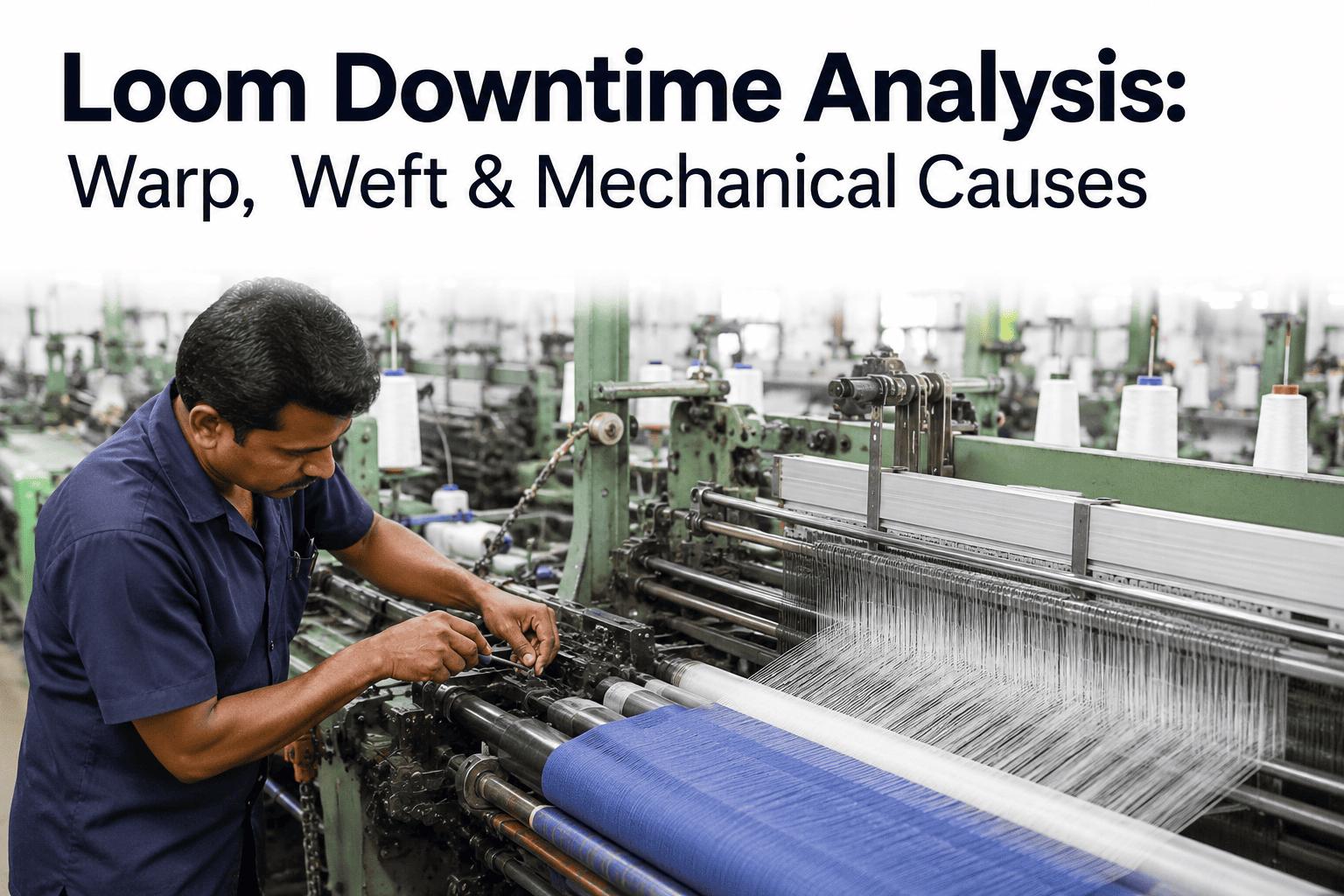
A loom rarely fails without warning, but the warning is easy to miss when it is a slightly warmer bearing, a creeping rise in stops or a vibration nobody measures. Predictive maintenance listens for those early signs and schedules the repair before the loom stops mid-shift. For rapier and air jet weaving alike, the goal is the same, fewer surprise breakdowns and fewer ruined warps. Weaving units exploring this can ask iFactory AI how loom condition signals are collected and scored.
Fix Looms Before They Stop, Not After
iFactory AI watches condition signals across rapier and air jet looms and flags the ones drifting toward failure, so repairs land in planned windows instead of mid-warp.
Where Your Weaving Shed Sits Today
Maintenance maturity moves in steps. Knowing your current step makes the next one realistic instead of overwhelming.
Four Signals Worth Trending
No single reading predicts a failure. A combination of slow trends does, which is why signals are read together.
Vibration
Rising or changing vibration often marks bearing, gear or drive wear well before a stop.
Motor load
Climbing current for the same pick rate suggests friction or mechanical drag.
Temperature
Bearings and drives that run steadily hotter deserve inspection.
Stop pattern
A rising stop frequency on one loom against its neighbours is an early flag.
Which Failures Matter for Which Loom
Rapier and air jet looms wear in different places. The matrix shows typical emphasis, not a measured shed.
| Failure Mode | Rapier | Air Jet |
|---|---|---|
| Rapier tape and gripper wear | High | Low |
| Reed and heald frame wear | Moderate | Moderate |
| Nozzle and valve blockage | Low | High |
| Main motor and bearing wear | Moderate | Moderate |
| Shed timing and drive wear | Moderate | Moderate |
| Compressed air and filter condition | Low | High |
What Unplanned Loom Stops Really Cost
A breakdown costs more than the repair. The visible bill is only part of the story, and the hidden parts are why prevention pays.
From Raw Signal to Maintenance Task
Behind every useful prediction is a short chain of steps. Knowing the chain helps teams trust the output.
Find the Looms Most Likely to Fail Next
Book a 30-minute session and iFactory AI will review your loom types, stop records and maintenance history to show where predictive monitoring pays off first.
Rapier and Air Jet Maintenance Focus
The same method applies to both, but the watch list differs. Tailoring it avoids both missed faults and false alarms.
A Composite Scenario: The Loom That Whispered First
This is a composite example, not a named weaving unit. It shows how slow signals precede a visible failure.
What iFactory AI Adds to the Loom Shed
iFactory AI is smart manufacturing and industrial software for textile operations. Explore loom monitoring in a live product tour and see it on realistic data.
Spare Parts and Planning for Predicted Failures
A prediction is only useful if the part is on the shelf when the window arrives. Planning stock around predicted wear closes that gap.
| Part Group | Why It Matters | Planning Note |
|---|---|---|
| Bearings and drive components | Common slow-wear failures that give early warning | Stock the common sizes for your loom models |
| Rapier tapes, grippers and guides | Wear steadily with use and speed | Track usage so replacements are ordered ahead |
| Nozzles, valves and filters | Blockage and wear affect air jet insertion | Match stock to air quality and style mix |
| Reeds and heald frames | Damage causes quality as well as stop issues | Keep reconditioned sets ready to swap |
Common Pitfalls in Predictive Maintenance
Predictive programs fail for ordinary reasons, rarely technical ones. These pitfalls come up again and again.
Sensors without a plan
Data collected with no owner or action path ends up unread.
Too many alerts at once
A flood of low-value alerts teaches the team to ignore the system.
No feedback from technicians
Without recorded findings, predictions never improve.
Starting on the whole fleet
Large first rollouts stall, while small pilots finish and spread.
How to Prove It Is Working
Leaders want evidence, not enthusiasm. Track a few measures from the start so improvement can be shown plainly.
Your First 60 Days
A steady start matters more than a fast one. This sequence keeps the first two months realistic and useful.
Pick the looms and styles, confirm signals and set the baseline.
Connect data and review early trends with maintenance staff.
Act on the first flagged looms and record every inspection result.
Tune alert thresholds based on what was actually found.
Review the results and agree the next group of looms.
Review of a Predictive Maintenance Rollout
A practical review of what separates useful loom predictions from noise, written as editorial guidance rather than a named expert quote.
Start with the costly looms
Begin where a breakdown hurts most, such as wide, high-value or hard-to-warp styles.
Keep humans in the loop
Maintenance staff should confirm each early call, which builds trust and tunes the system.
Record what you find
Every inspection result should be logged, because findings are what improve later predictions.
Frequently Asked Questions
Is predictive maintenance only for new looms?
No. Older looms can often be monitored through added sensors or existing controller data, though newer ones expose more signals. Check what your loom models can report in a live session before deciding on a scope. Adding sensors to one or two critical looms first is a low-risk way to test what your fleet can report.
How early can a failure be spotted?
It varies by failure type. Gradual wear such as bearings often gives days or weeks of warning, while sudden faults give little. A realistic goal is catching the slow ones early. Sudden faults still need fast response, so predictive monitoring complements a spare-parts plan rather than replacing it.
Will it replace preventive maintenance?
No, it refines it. Calendar tasks remain for items that wear predictably, while condition data removes unnecessary work and highlights urgent jobs. Ask support how both approaches are combined in one schedule. The practical benefit is fewer unplanned stops and fewer repairs done in a rush on an expensive warp.
Does it work for both rapier and air jet looms?
Yes, with a watch list tuned to each type. Rapier looms emphasise tape, gripper and frame wear, while air jet looms emphasise nozzle, valve and air quality. Tuning the watch list by loom type keeps alerts relevant and stops maintenance teams from ignoring false alarms.
What does a first pilot look like?
Usually a small group of looms on one style for a few weeks, with weekly reviews against maintenance findings. Book a call to design a pilot around your busiest looms. Review each early alert against what the technician actually finds, since that feedback sharpens every later prediction.
Turn Loom Surprises Into Planned Maintenance
iFactory AI helps your team repair looms on its own schedule instead of the loom stopping on its own. Book a walkthrough to see it against your own shed and stop records.