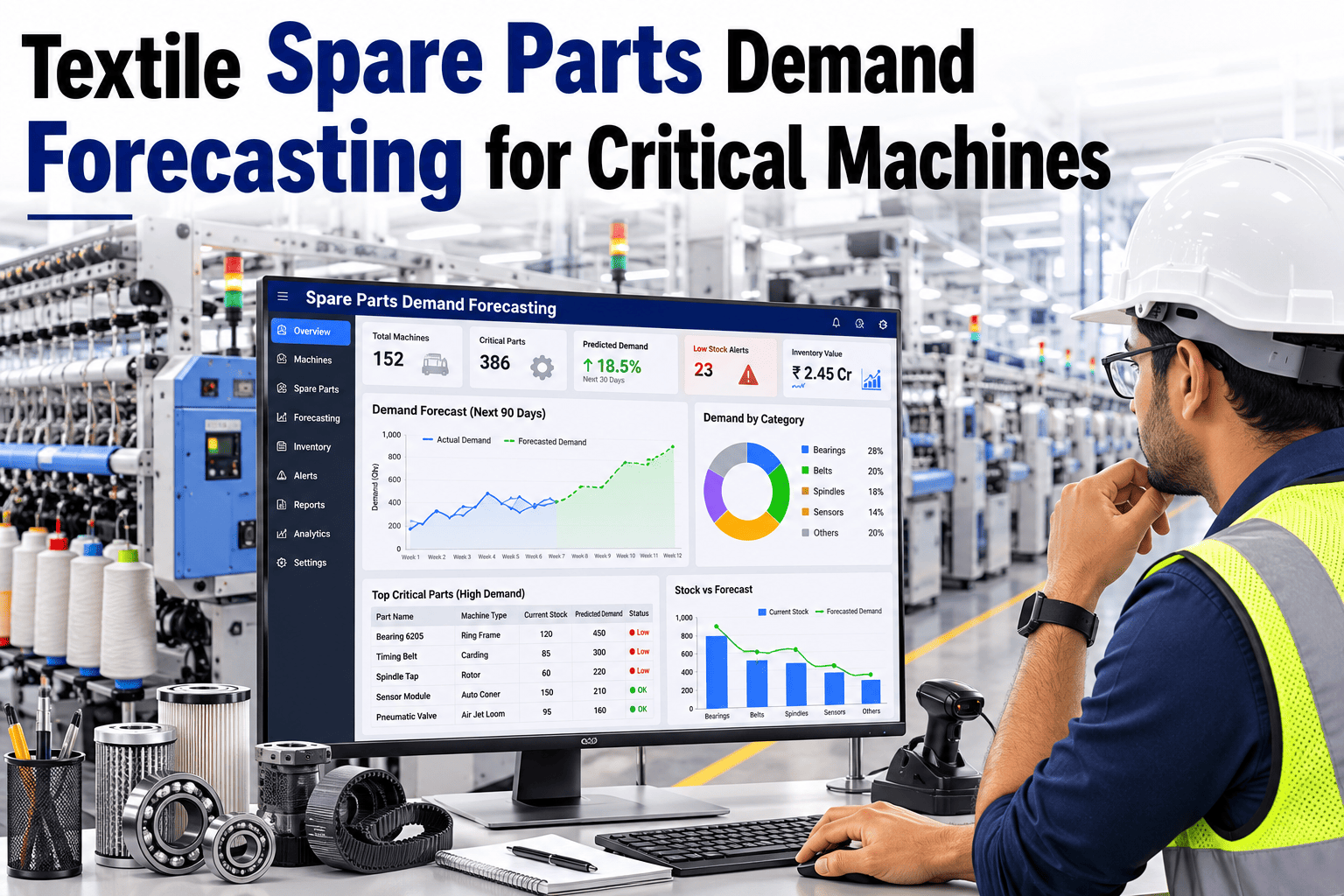
Spare parts inventory at most textile plants exists in a permanent, uncomfortable balance between two costly mistakes — carrying too much slow-moving stock that ties up working capital and clutters the storeroom, or carrying too little of a critical part and losing production for days while an urgent order is placed and shipped. Both outcomes usually trace back to the same root cause: spare parts are stocked based on rough rules of thumb or whatever was ordered last time, rather than on the actual failure risk and consumption pattern of the specific equipment each part serves. iFactory's AI spare parts optimization platform analyzes equipment criticality, historical failure patterns, and consumption data together to recommend exactly what to stock, how much, and when to reorder, for every part in the storeroom. Book a Demo to see how much working capital is currently sitting in parts your plant does not actually need this much of.
Your Storeroom Is Either Carrying Too Much of the Wrong Parts or Too Little of the Right Ones — Rarely the Perfect Balance
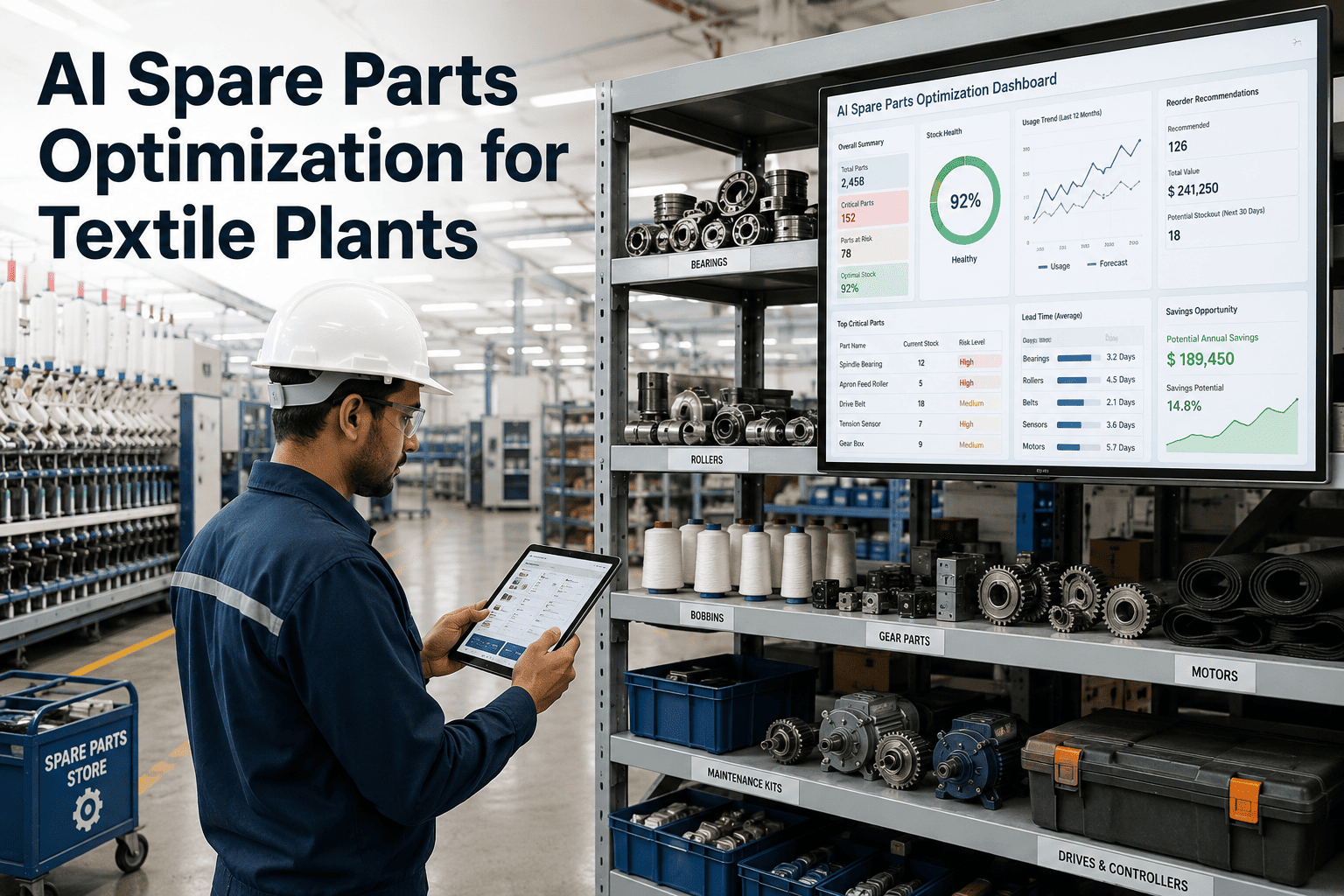
iFactory's AI platform analyzes equipment risk, failure history, and consumption patterns together to recommend exactly which spare parts to stock, in what quantity, and when to reorder them.
How Much Capital and Production Time Poor Spare Parts Planning Actually Costs
Spare parts inventory decisions are often made once, when a machine is first commissioned, and rarely revisited as equipment ages, usage patterns shift, and new failure history accumulates. The figures below show the scale of the imbalance this creates.
How iFactory's AI Classifies Every Spare Part in Your Storeroom
Not every part carries the same risk, and treating a critical, single-source bearing the same way as a common, easily available fastener is exactly how inventory ends up misallocated. The AI classifies every part into one of the categories below based on equipment criticality and supply risk.
Parts serving high-criticality equipment with long lead times or single-source suppliers, where a stockout would directly cause extended production downtime. These are maintained with a safety stock buffer regardless of carrying cost, because the downtime cost of a shortage far exceeds the inventory holding cost.
Parts with moderate criticality and moderate lead time, where consumption patterns and equipment condition data are used to trigger reorders ahead of an approaching need rather than relying on a fixed minimum stock level.
Commonly used parts with short lead times and multiple available suppliers, where the AI calculates the lowest safe stock level that avoids excess carrying cost without meaningfully increasing stockout risk.
Slow-moving or obsolete parts tied to retired equipment or over-ordered in the past, flagged for reduction, reallocation to another site, or disposal to free up storeroom space and working capital.
A Storeroom Full of Parts Is Not the Same as a Storeroom Full of the Right Parts
iFactory's AI platform tells you exactly which parts matter most, which are quietly tying up capital, and when to reorder before a shortage becomes a shutdown. See it running on your own parts data.
How AI-Driven Stocking Compares to Traditional Min-Max Inventory Rules
Scroll the table sideways on smaller screens to compare how traditional fixed min-max inventory rules handle spare parts decisions against iFactory's AI-driven approach.
| Factor | Fixed Min-Max Rules | iFactory AI Optimization |
|---|---|---|
| Basis for Stock Level | Historical usage average | Equipment risk plus consumption pattern |
| Reorder Timing | Fixed threshold trigger | Predictive, condition-aware trigger |
| Criticality Awareness | Treated uniformly | Ranked by downtime risk |
| Slow-Moving Stock Detection | Rarely reviewed | Continuously flagged |
| Working Capital Efficiency | Often excess or short | Balanced to actual risk |
Outcomes From AI Spare Parts Optimization at Textile Plants
The figures below reflect sustained improvements measured over a minimum six month period following deployment of AI-driven spare parts inventory optimization.
Questions Plants Ask About AI Spare Parts Optimization
Somewhere in Your Storeroom Right Now Is the Working Capital You Need and the Stockout Risk You Cannot See
iFactory's AI spare parts optimization platform finds both, and tells your team exactly what to do about each one. Book a demo and see your own parts inventory analyzed.