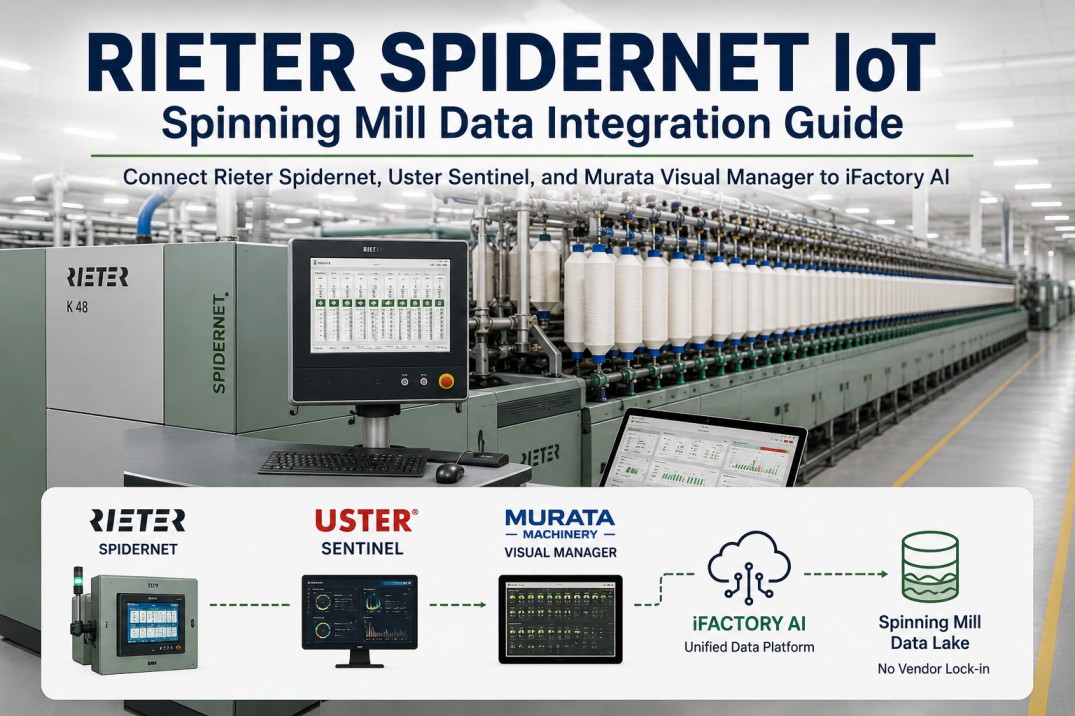
Most spinning mills running mixed-vendor machine parks operate three or more vendor-specific monitoring systems simultaneously. Rieter Spidernet monitors ring spinning frames, draw frames, and combers with spindle-level granularity — tracking spindle speed, ends down, doff events, and production hanks for every individual spindle on every machine. Uster Sentinel provides continuous quality monitoring across the mill, measuring evenness CV%, hairiness, IPI (imperfection index), and tensile strength at multiple points in the spinning process, typically at the draw frame, roving frame, and ring spinning delivery. Murata Visual Manager oversees the winding process, capturing winding speed, knot frequency, package weight, clearing stops, and yarn clearer data from each Murata Link Coner or Process Coner winder head. Each system maintains its own database, its own UI, its own alerting rules, and its own data retention policy — creating data silos that prevent mill management from seeing the full production picture. iFactory AI connects to all three vendor systems simultaneously through native APIs and OPC UA interfaces, ingesting data from Spidernet, Sentinel, and Visual Manager into a unified spinning mill data lake that spans the entire process from draw frame to finished package, with cross-vendor correlation, unified dashboards, and AI-powered analytics that no single vendor system can provide.
Connect Every Vendor System to One Unified Platform
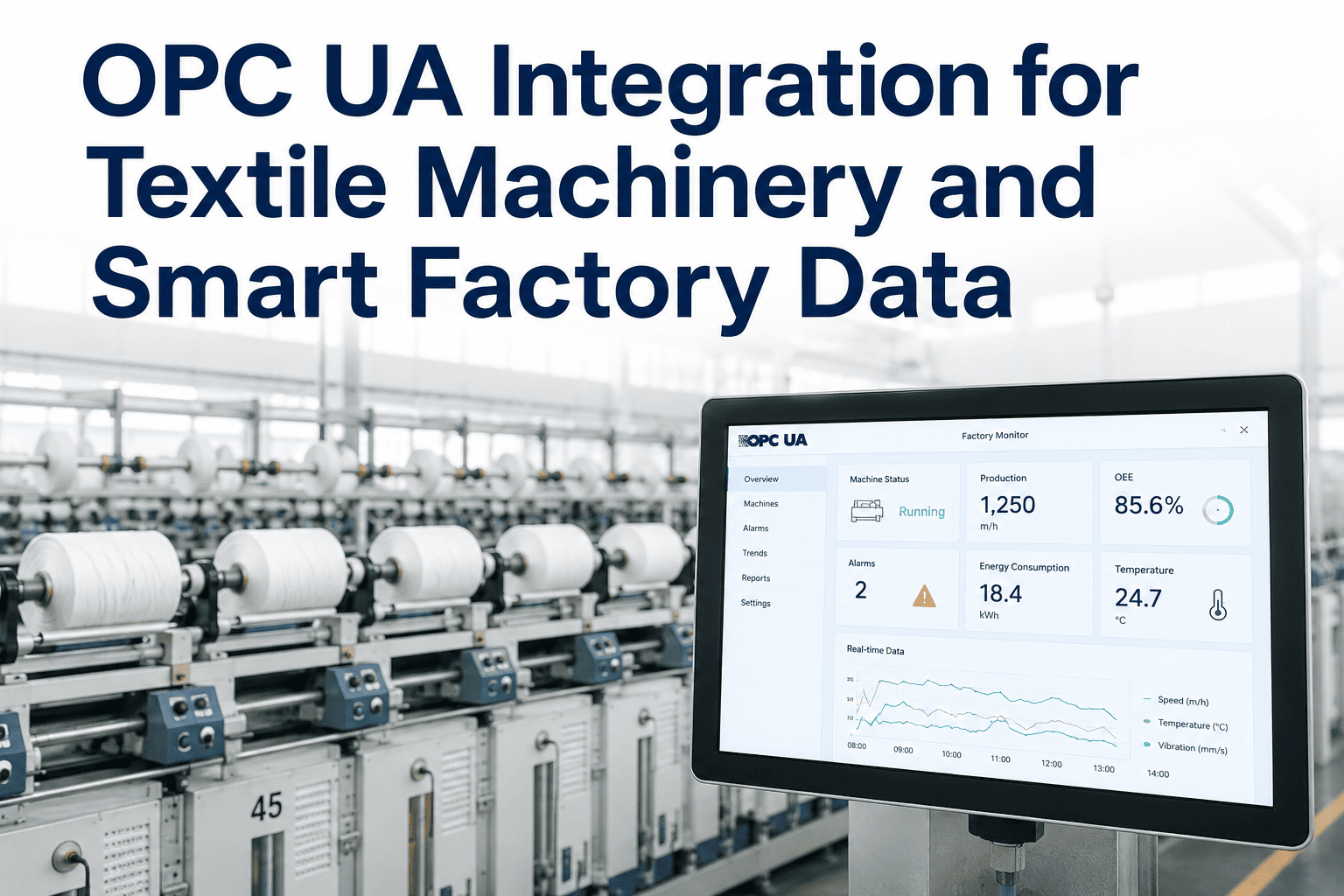
iFactory connects to Rieter Spidernet, Uster Sentinel, Murata Visual Manager, and 40+ other textile systems via native APIs and OPC UA.
Spinning Mill Vendor Systems — Three Data Silos That Need to Connect
Each vendor system excels in its domain but operates as a closed data island. iFactory bridges these islands through vendor-supported APIs and OPC UA, enabling cross-vendor analytics that are impossible within any single vendor's ecosystem.
Unified Data Pipeline — From Machine Sensors to Actionable Intelligence
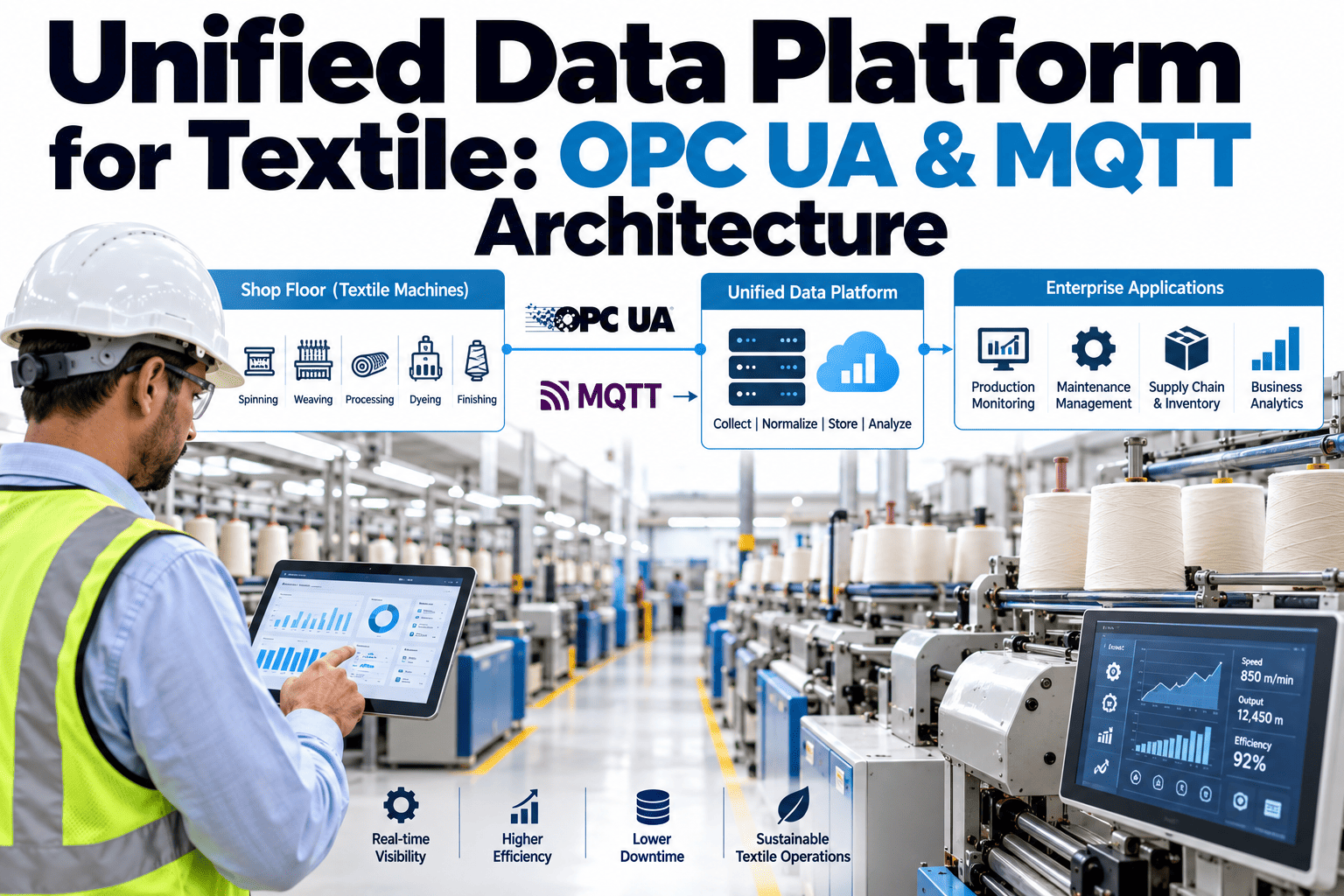
The iFactory data pipeline ingests raw data from all three vendor systems, normalizes it into a common spinning data model, enriches it with cross-vendor context, and serves it through unified dashboards and AI analytics that no single vendor platform can provide.
Spinning Mill Data Catalog — Every Data Point Across Every Process Stage
The unified data catalog organizes all available data points from Spidernet, Sentinel, and Visual Manager into four categories spanning the complete spinning process from draw frame to finished package.
Unify All Your Spinning Mill Data — Spidernet, Sentinel, Visual Manager
iFactory ingests, normalizes, and correlates data from every vendor system into one unified analytics platform with no data silos and no vendor lock-in.
Concentric Integration Architecture — iFactory at the Center of Your Spinning Mill Data
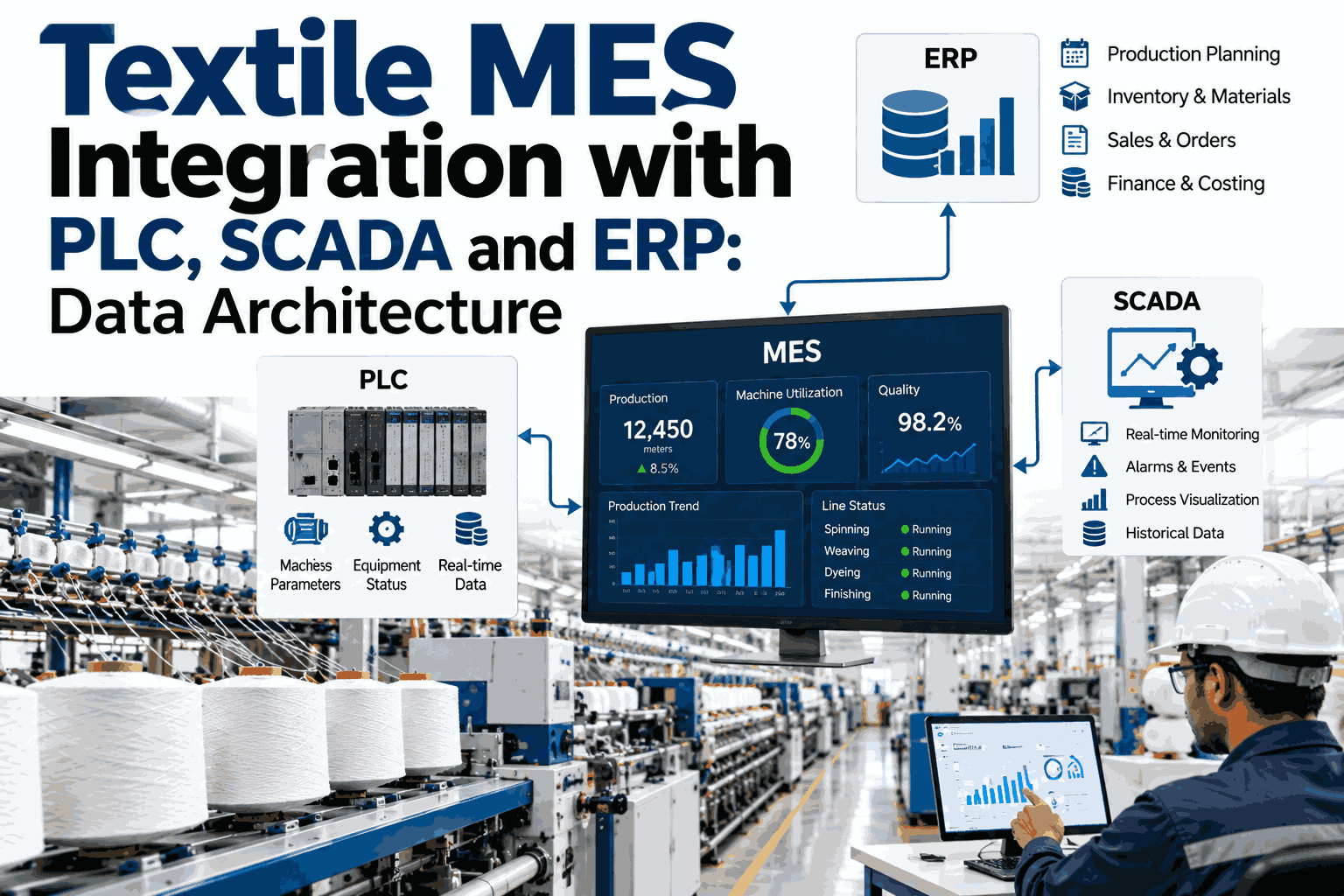
The integration architecture places iFactory at the center, connected to all vendor systems through their native APIs and OPC UA interfaces, creating a unified data fabric that spans the entire spinning mill without replacing any existing vendor system.
Frequently Asked Questions
Does iFactory replace Rieter Spidernet, Uster Sentinel, or Murata Visual Manager?
No — iFactory layers on top of existing vendor systems without replacing them. Rieter Spidernet continues to collect spindle-level data from Rieter machines, Uster Sentinel continues to monitor quality at every process stage, and Murata Visual Manager continues to track winding head performance. iFactory connects to each system through their native APIs (Spidernet API, Sentinel API, Visual Manager API) and ingests the data into a unified data lake. The vendor systems remain the primary interface for machine configuration, firmware updates, and vendor-specific maintenance diagnostics. iFactory consumes the data they already collect and adds cross-vendor correlation, unified dashboards, AI analytics, and long-term data retention that the individual vendor systems cannot provide. This "layered" approach means mills keep their existing vendor investments and trained operator workflows while gaining the benefits of a unified data platform. The iFactory connector for each vendor system is a read-only integration that does not write back to the vendor database or modify any vendor configuration, so there is no risk of disrupting the vendor systems' operation.
What data latency can we expect from each vendor system's API?
Data latency varies by vendor system and API endpoint. Rieter Spidernet's REST API typically exposes data with 30–60 second latency from spindle event to API response, which is sufficient for shift-level OEE tracking and production reporting but not for real-time machine control. Uster Sentinel's API provides quality test results with 2–5 minute latency from the testing station to the API endpoint, because the testing cycle itself takes 1–3 minutes per sample depending on the test type and count. Murata Visual Manager's API exposes winding data with 15–30 second latency for most endpoints, with some detailed clearing data available only after package completion. For applications that require sub-second data — such as real-time speed monitoring or instantaneous stop detection — iFactory also connects directly to machine PLCs via OPC UA, bypassing the vendor system APIs entirely. This hybrid approach gives mills the best of both worlds: the rich contextual data from vendor APIs (product recipes, operator assignments, quality test results) combined with real-time machine signals from direct PLC connections. The iFactory data pipeline automatically merges the two data streams using machine ID, timestamp, and shift context as correlation keys.
How does iFactory normalize data from three different vendor data models?
Each vendor system uses a proprietary data model with different naming conventions, unit systems, and granularity. Rieter Spidernet identifies machines by a combination of mill code, department, and machine number (e.g., "Mill01-RS12" for ring spinning frame 12), while Uster Sentinel uses testing station IDs mapped to process stages (e.g., "DF-03-Q" for draw frame 3 quality station), and Murata Visual Manager uses winder group and head numbers (e.g., "WG02-H34" for winder group 2 head 34). iFactory's normalization layer maps all vendor-specific machine identifiers to a common equipment hierarchy (Site → Department → Machine → Position) using a configurable mapping table that is set up during the initial integration. Data point names are mapped to iFactory's spinning mill data dictionary — for example, Spidernet's "ends_down_count" and Sentinel's "end_breaks_100sp_h" and Visual Manager's "yarn_breaks_100km" are all mapped to the common metric "EndsDownPer100Units" with a conversion factor applied. Units are normalized to standard textile units (RPM, Ne, TPI, CV%, g/tex, m/min) automatically. This normalization enables cross-vendor queries that are impossible within any single vendor system — for example, correlating Spidernet ends-down rates with Uster CV% and Murata clearing stops to identify whether a spinning lot with high ends-down is also producing yarn with quality issues that cause winding stops.
What happens if one vendor system goes offline or has an API change?
The iFactory integration is designed with fault isolation — each vendor connector runs independently in a separate data pipeline thread with its own connection pool, retry logic, and error handling. If Rieter Spidernet's API is unavailable due to network issues or server maintenance, iFactory continues ingesting data from Uster Sentinel and Murata Visual Manager without interruption, and the Spidernet connector retries with exponential backoff (30s, 60s, 120s, 300s, then every 300s) until the connection is restored. When the Spidernet API comes back online, the connector automatically backfills the missed data window based on the API's timestamp filters. For API version changes, vendors typically maintain backward compatibility for 12–24 months. iFactory validates API responses against the expected data model on every poll and raises an alert if the response structure deviates, giving the integration team advance notice of any API changes. iFactory's connector framework has a configuration-driven mapping layer, so most API changes can be handled by updating a mapping configuration without code changes. In the rare case that a vendor deprecates an API version entirely, iFactory provides an OPC UA fallback path for the same machine data, ensuring continuity of data collection through the transition period.
How long does the integration take and what resources are needed from the mill?
A full integration connecting Rieter Spidernet, Uster Sentinel, and Murata Visual Manager to iFactory typically takes 4–6 weeks from kickoff to go-live, assuming the vendor systems are already operational in the mill. The integration process follows a structured five-phase approach: discovery and scoping (week 1, 2–3 days on-site to document the mill's machine park, network topology, vendor system versions, and API endpoint details), connector configuration and deployment (week 2, iFactory team configures the vendor-specific connectors with machine mapping tables and data point selection), data validation and normalization tuning (weeks 3–4, iFactory and mill QA team validate data accuracy by comparing iFactory dashboards against the vendor system UIs for a representative set of 10–15 machines), customization and dashboard build (weeks 4–5, iFactory builds mill-specific dashboards, alerting rules, and report templates based on the mill's KPIs), and go-live and training (week 6, user training for operators, supervisors, and management). The mill needs to provide API access credentials for each vendor system, network connectivity from the iFactory server to the vendor system servers (typically on the same plant-floor network segment), and a mill-side integration lead who can answer questions about machine naming conventions, shift calendars, and KPI definitions. No hardware changes or machine modifications are required because all data is collected through existing vendor system APIs and OPC UA interfaces.
One Unified Platform for Every Vendor System in Your Mill
iFactory connects Rieter Spidernet, Uster Sentinel, Murata Visual Manager, and any OPC UA machine into a single spinning mill data lake with no vendor lock-in and no rip-and-replace.