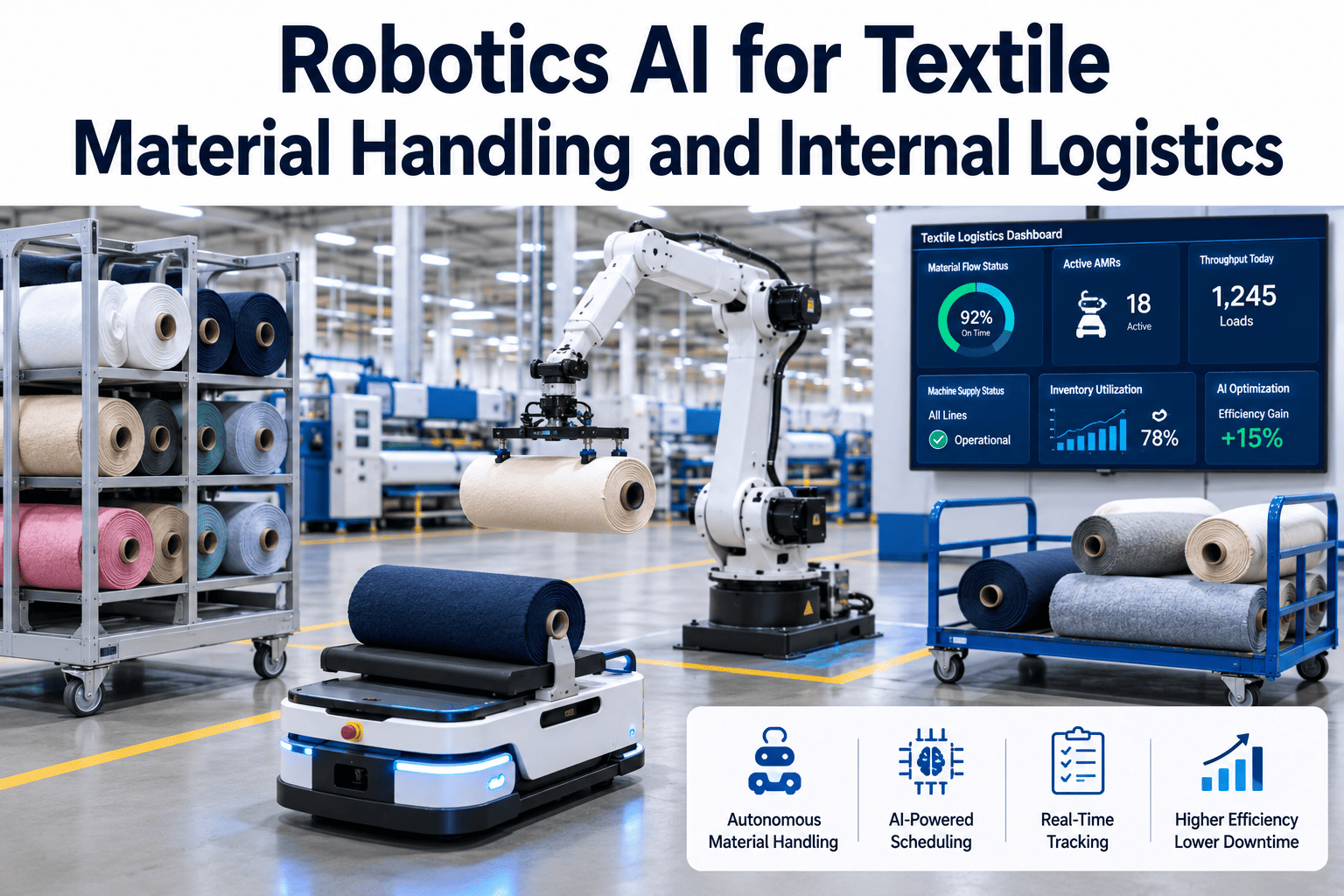
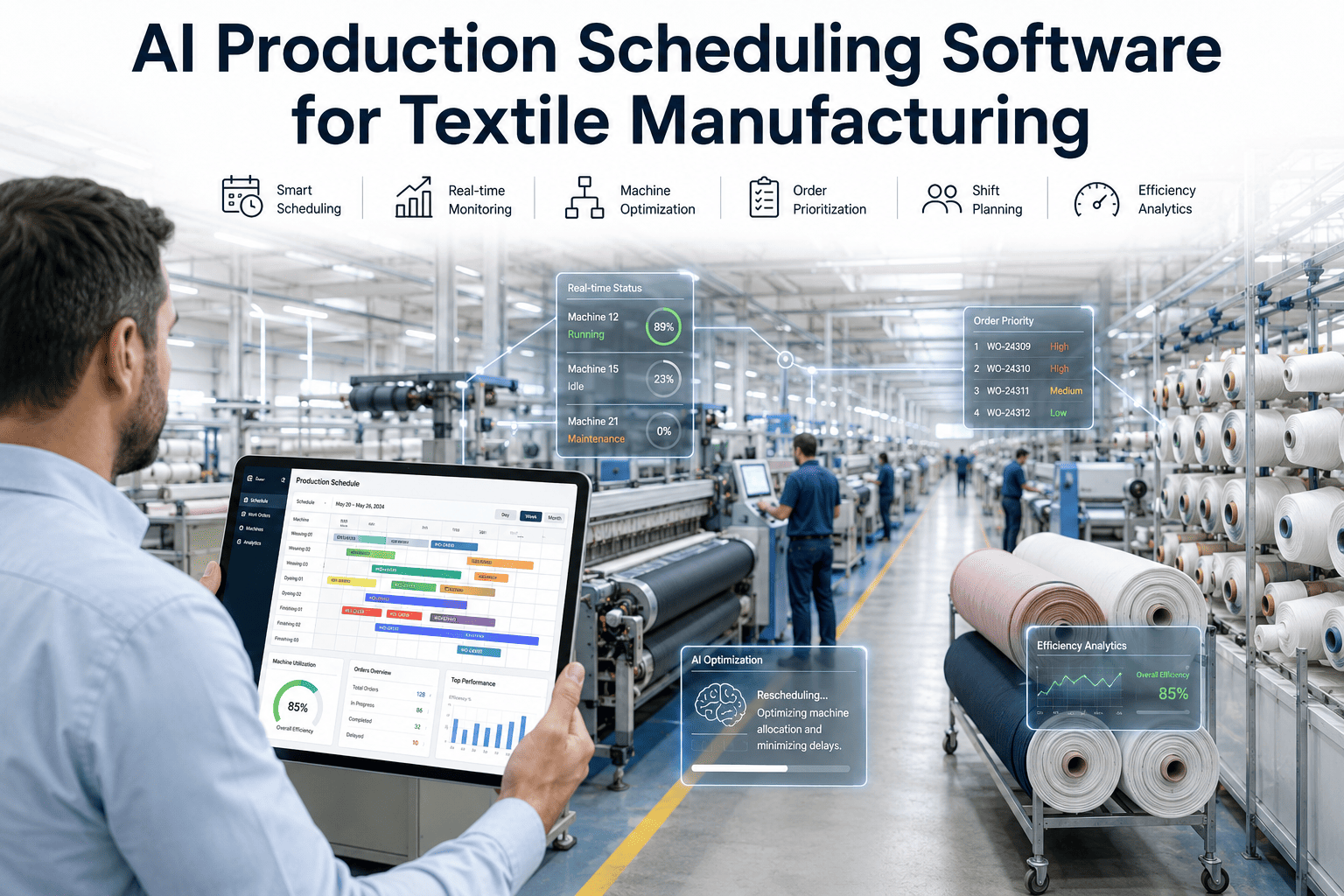
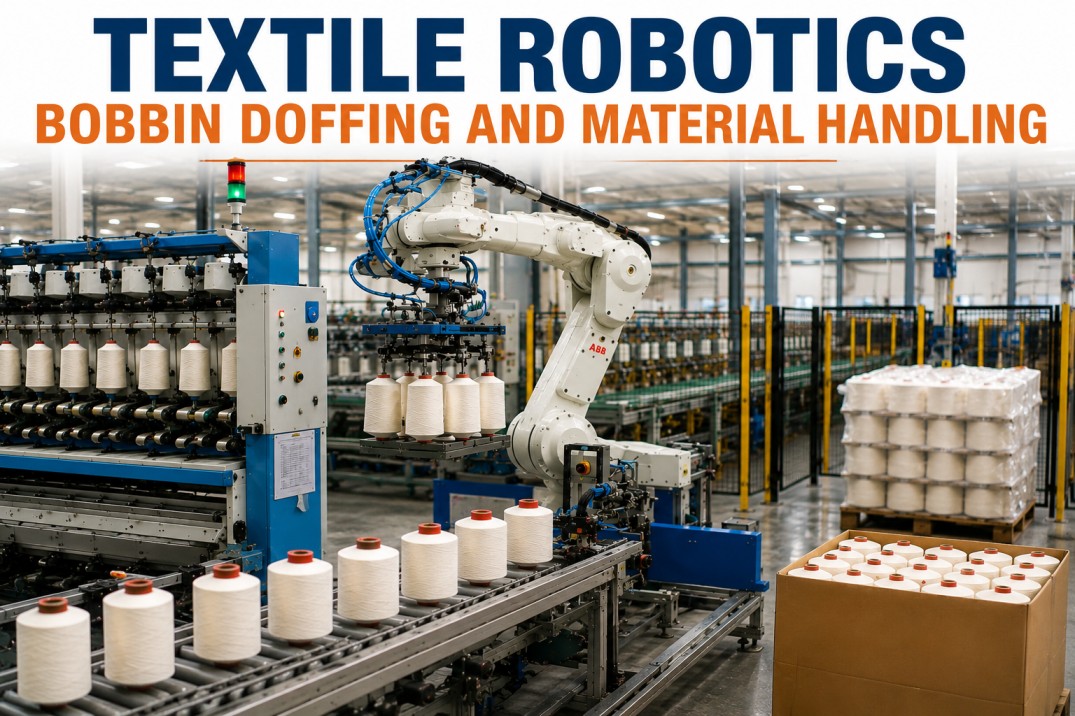
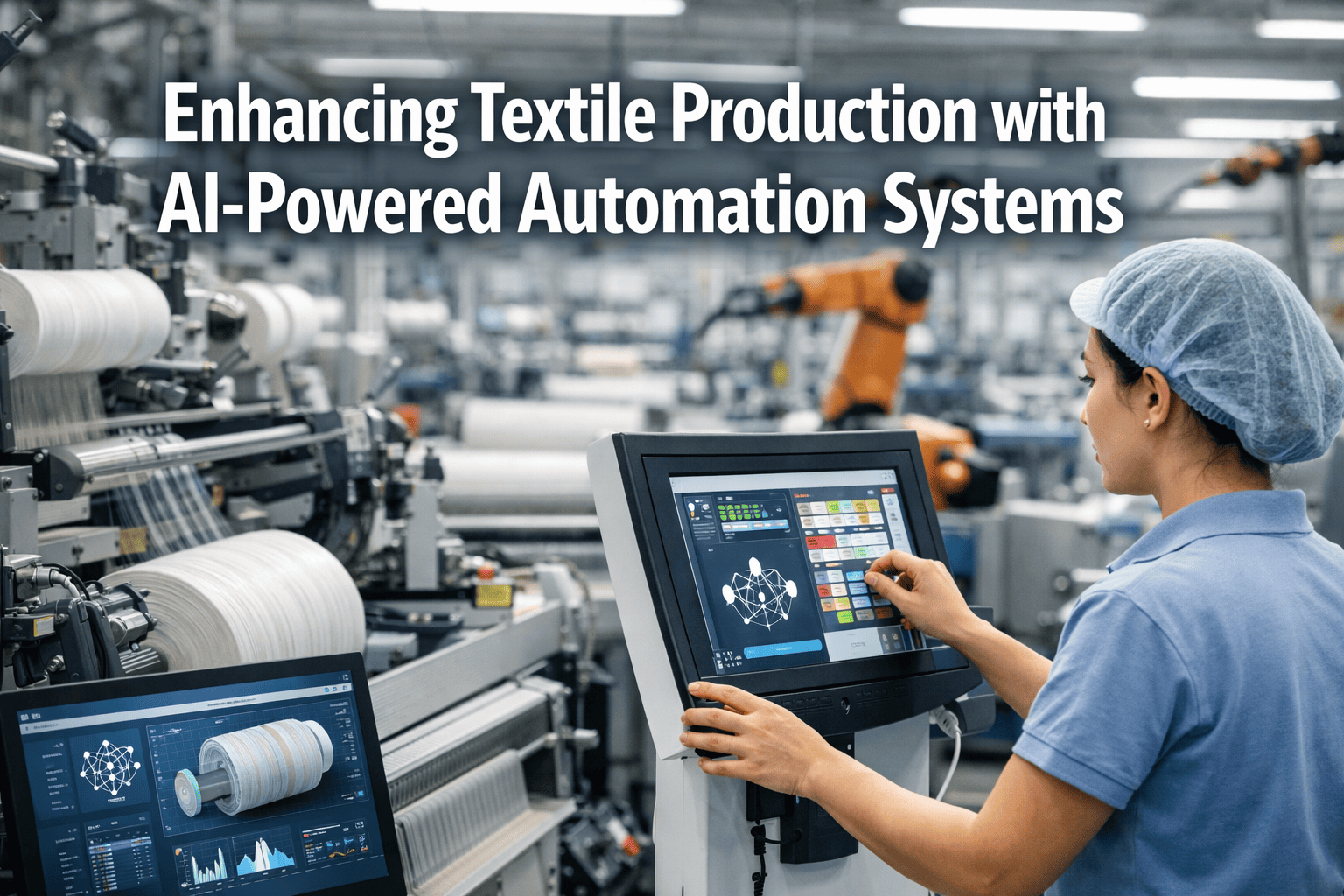
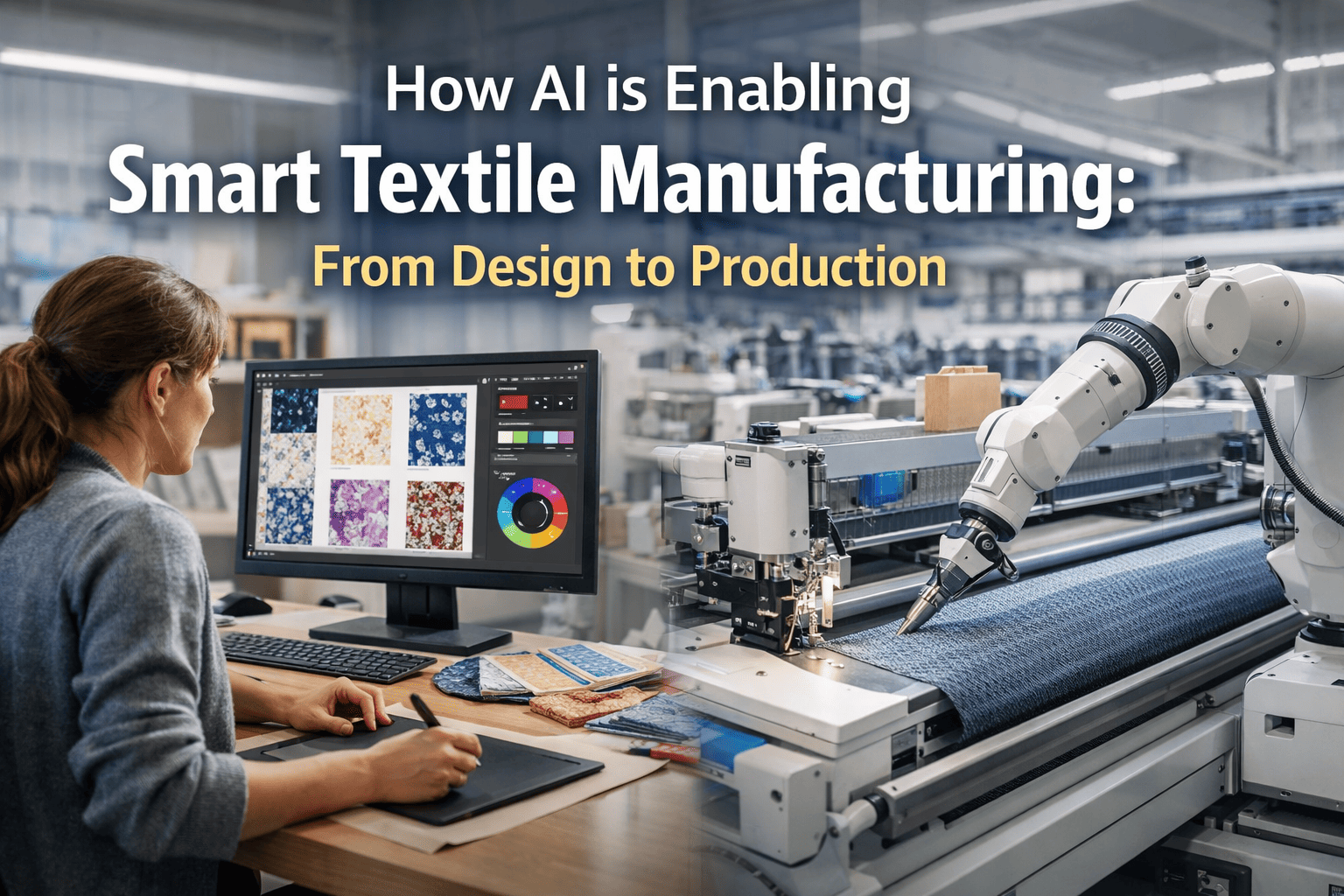
For over a century, textile manufacturing relied on human hands for nearly every stage of production — from feeding yarn into looms to folding finished garments. That era is ending. Industrial robotics has entered the textile factory floor with precision, speed, and consistency that no human workforce can match at scale. From automated fabric handling and robotic sewing arms to vision-guided quality inspection, the machines are no longer just assisting workers — they are redefining what a textile factory can produce, at what cost, and with what reliability. Book a free demo with iFactory and see how robotic automation integrates with AI-driven production intelligence on a live factory floor.
The Factory Floor Is Being Rebuilt by Robots
Speed, precision, and zero fatigue — how robotics is removing the biggest bottlenecks in textile production and giving manufacturers a competitive edge that manual processes simply cannot match.
Why Textile Manufacturing Needed Robotics Now
The pressure on textile manufacturers has never been greater. Labour costs are rising across Asia and South Asia. Lead times demanded by global buyers keep shrinking. And the margin for error on quality — driven by sustainability regulations and buyer audits — is near zero. Robotics addresses all three simultaneously: it reduces dependence on manual labour for repetitive tasks, compresses cycle times, and delivers consistent output quality that human fatigue cannot guarantee across three-shift operations.
Average garment worker wages in India and Bangladesh have risen 38% since 2019, making labour-intensive production stages economically unsustainable at scale.
Fast fashion and on-demand sourcing models have compressed buyer lead times from 90 days to under 30 — a timeline that manual production alone cannot consistently meet.
International buyers now require defect rates below 1.5%. In shift-based manual operations, maintaining that standard across 10,000+ metres per day is nearly impossible without automation.
Repetitive strain injuries in cutting, sewing, and packing departments increase absenteeism by up to 22%. Robotics removes the most physically demanding and hazardous tasks from the human workload.
Where Robots Are Working on the Textile Factory Floor
Robotics in textiles is not a single technology — it is a range of specialised systems deployed at different production stages. Each addresses a specific bottleneck where human-only processes create cost, quality, or speed limitations.
Robotic spreading machines lay fabric plies at consistent tension and alignment across cutting tables — eliminating distortion errors that cause up to 8% material waste in manual spreading. CNC cutting arms then execute precision patterns with sub-millimetre accuracy, reducing fabric consumption per unit by 12 to 18%.
Collaborative robotic arms equipped with vision systems now handle straight-seam operations, pocket attachment, and label sewing at 3 to 4 times human speed. These systems work alongside human sewers — taking the high-volume, repetitive seam tasks while workers handle complex shaping and finishing operations.
Robotic dispensing systems deliver precise chemical volumes to dye baths — eliminating human dosing error that causes up to 34% of shade inconsistencies. Robotic arms handle hot liquor transfer and bath preparation, removing workers from high-temperature and chemical exposure environments entirely.
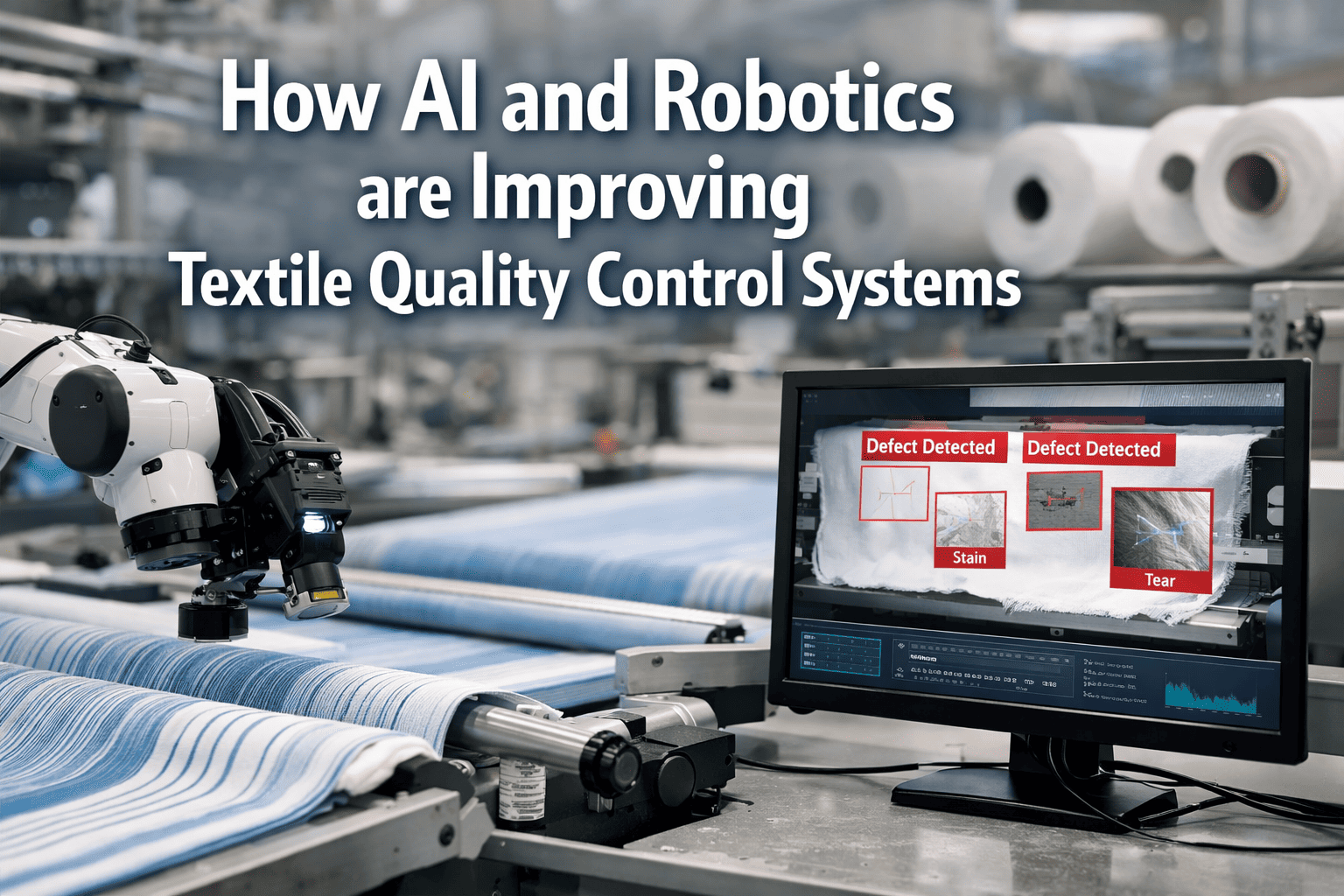
High-speed camera arrays combined with AI defect recognition detect weaving faults, shade variations, GSM deviations, and surface defects at line speed — inspecting 100% of fabric output rather than the 5 to 10% statistical sampling that manual QC allows. Defect coordinates are logged, mapped, and linked to production data automatically.
End-of-line robotics handle garment folding to exact buyer specifications, polybag insertion, carton packing, and pallet building — tasks that represent 15 to 20% of total factory labour hours. These systems operate 24 hours without fatigue, maintaining packing consistency that directly reduces buyer complaints on presentation quality.
iFactory's production intelligence platform connects with robotic systems across all five stages — giving you live visibility into robot performance, output rates, and quality data from one dashboard.
Book a DemoThe Real Numbers: Robotics Impact Across Factory KPIs
The business case for textile robotics is measurable — not projected. Manufacturers who have deployed robotic systems in one or more production stages are reporting consistent improvements across cost, quality, and throughput metrics within the first six months.
Robotic sewing and handling systems increase units produced per shift without increasing floor space or headcount requirements.
Vision-guided inspection catches surface and structural defects at speeds and consistency no human QC team can match across full production volume.
Automating repetitive high-volume tasks reduces the direct labour cost embedded in each produced unit — improving margin without raising prices.
Removing repetitive strain tasks and hot chemical handling from human roles directly reduces musculoskeletal injuries and heat-related incidents in dyeing and finishing departments.
Consistent robotic execution eliminates the process variability that generates rework — each unit is produced to the same standard regardless of shift, operator, or time of day.
Predictable robotic cycle times make production scheduling far more accurate — enabling delivery commitments that manual operations, subject to absenteeism and fatigue, cannot reliably make.
Robotics and AI: Better Together
Robotics alone increases speed and reduces human error. But robotics connected to AI production intelligence does something more powerful — it creates a closed-loop manufacturing system where machines act, data is captured, patterns are identified, and performance improves continuously. This is the difference between a robotic factory and a smart factory.
Robotic systems perform cutting, sewing, dosing, inspection, and packing tasks at consistent speed and precision across every shift.
iFactory's AI layer records every robot action — cycle time, output count, error flag, and quality reading — in real time against the active production order.
Machine learning identifies correlations between robot parameters — speed, pressure, temperature — and quality outcomes, flagging combinations that increase defect risk.
Supervisors receive actionable alerts. Robot settings are adjusted. Each production cycle produces better output than the last — without manual analysis or trial and error.
What Buyers Are Asking For — And Why Robotics Delivers It
Global textile buyers are not just looking for lower prices — they are looking for suppliers who can guarantee consistency, prove compliance, and hit tighter timelines. Robotic automation with AI traceability answers all three buyer requirements with data, not promises.
We deployed robotic spreading and AI-linked QC in our weaving and cutting departments in early 2025. Within the first quarter, our buyer audit score went from 74 to 91 out of 100. The buyer's comment was straightforward: your consistency has improved dramatically. That is what happens when you remove human fatigue from the equation and replace it with data you can actually trust.
— Production Director, Integrated Weaving Mill, Coimbatore | Q2 2025 Operations ReviewIs Your Factory Ready for Robotics? A Quick Self-Assessment
Robotics adoption does not require a complete factory overhaul. Many manufacturers start with one or two high-impact stages and expand over 12 to 24 months. Use these indicators to identify where robotic automation will deliver the fastest return for your operation.
If any department runs the same physical motion thousands of times per shift — spreading, seaming, folding — robotic automation will deliver immediate throughput and consistency gains.
A defect rate above 3% almost always has a process consistency root cause — the kind that robotic precision and AI-linked inspection eliminates at the source rather than catches at final QC.
If delivery speed is a barrier to winning or retaining buyer accounts, robotic throughput in cutting, sewing, or packing stages can compress your lead time by 30 to 40% in those departments.
If absenteeism in physically demanding roles creates daily production uncertainty, replacing those roles with robotic automation removes a critical vulnerability from your capacity planning.
Frequently Asked Questions
See How iFactory Connects Robotics with AI Intelligence
Textile manufacturers across India, Bangladesh, and Vietnam are using iFactory to connect robotic production data with AI quality monitoring — building factories that are faster, leaner, and audit-ready from every angle.