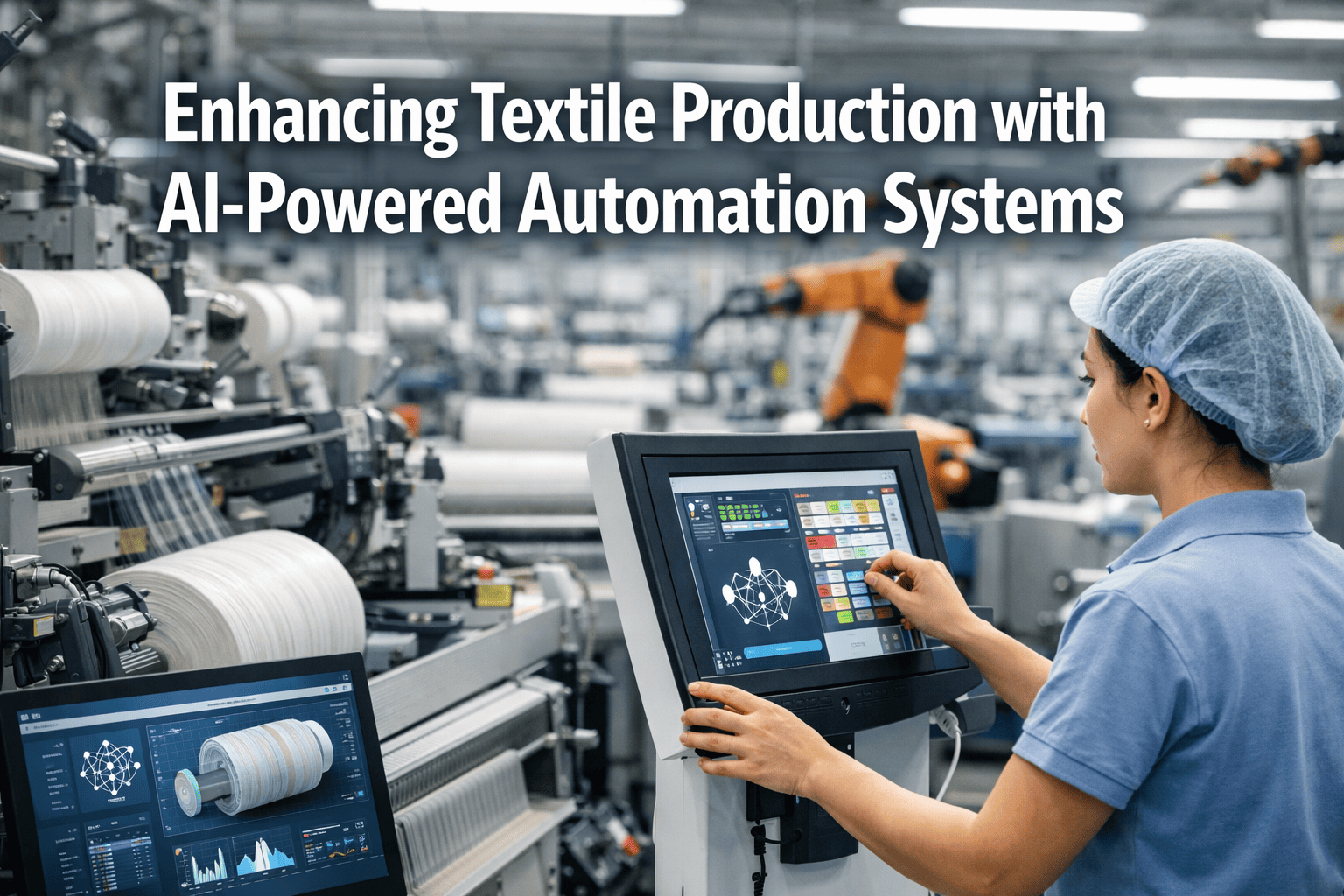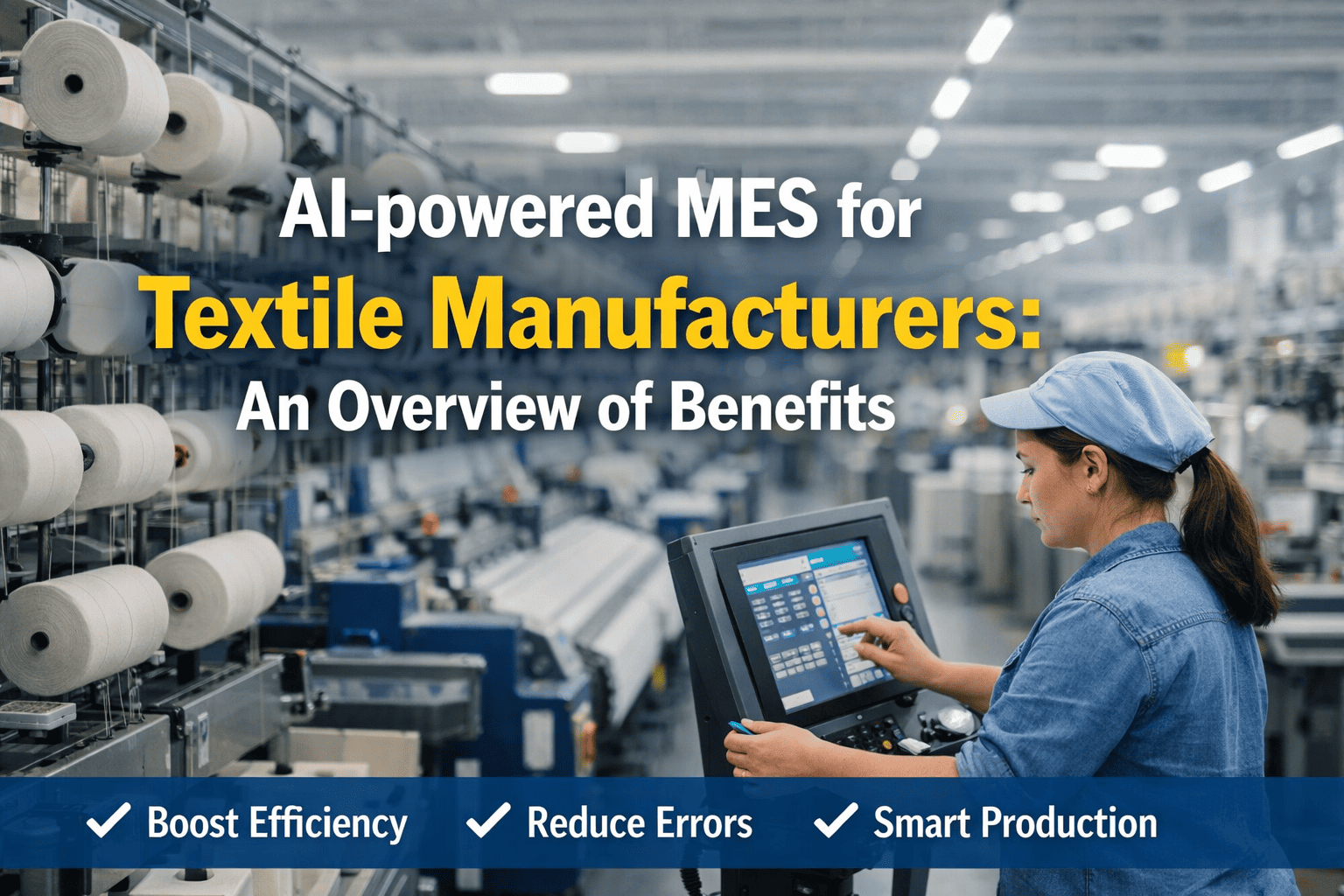
Textile manufacturing is entering a new era—one where gut decisions and paper-based tracking are being replaced by real-time intelligence. AI-powered Manufacturing Execution Systems (MES) are giving mills, spinning units, and garment factories the kind of visibility and control that was once reserved for trillion-dollar tech companies. If you're still running production on spreadsheets or disconnected systems, you're leaving money on the floor. Book a free demo with iFactory to see exactly what AI-driven MES looks like for your plant.
AI-Powered MES for Textile Manufacturers
From yarn to finished fabric — total visibility, zero guesswork.
What Exactly Is an AI-Powered MES?
A Manufacturing Execution System (MES) is the digital backbone of your factory floor. It connects machines, people, materials, and processes into one live, intelligent system. Add AI to the mix and it doesn't just record what's happening — it predicts, optimizes, and acts.
- Data entered manually — hours after the fact
- Problems found at end-of-shift or end-of-day
- Reports built in Excel, prone to errors
- Each department operates in its own silo
- Decisions based on yesterday's data
- Real-time data from machines and IoT sensors
- Issues flagged the moment they emerge
- Live dashboards with zero manual input
- Full factory connected in one platform
- AI decisions based on current, live data
6 Ways AI-MES Transforms Textile Operations
These aren't marginal improvements. Factories adopting AI-powered MES are seeing structural shifts in how they operate — and compete.
Real-Time Production Visibility
Know exactly what's happening on every machine, every shift — live. No delays, no guesses. Supervisors get a live floor map on any device.
AI-Driven Quality Control
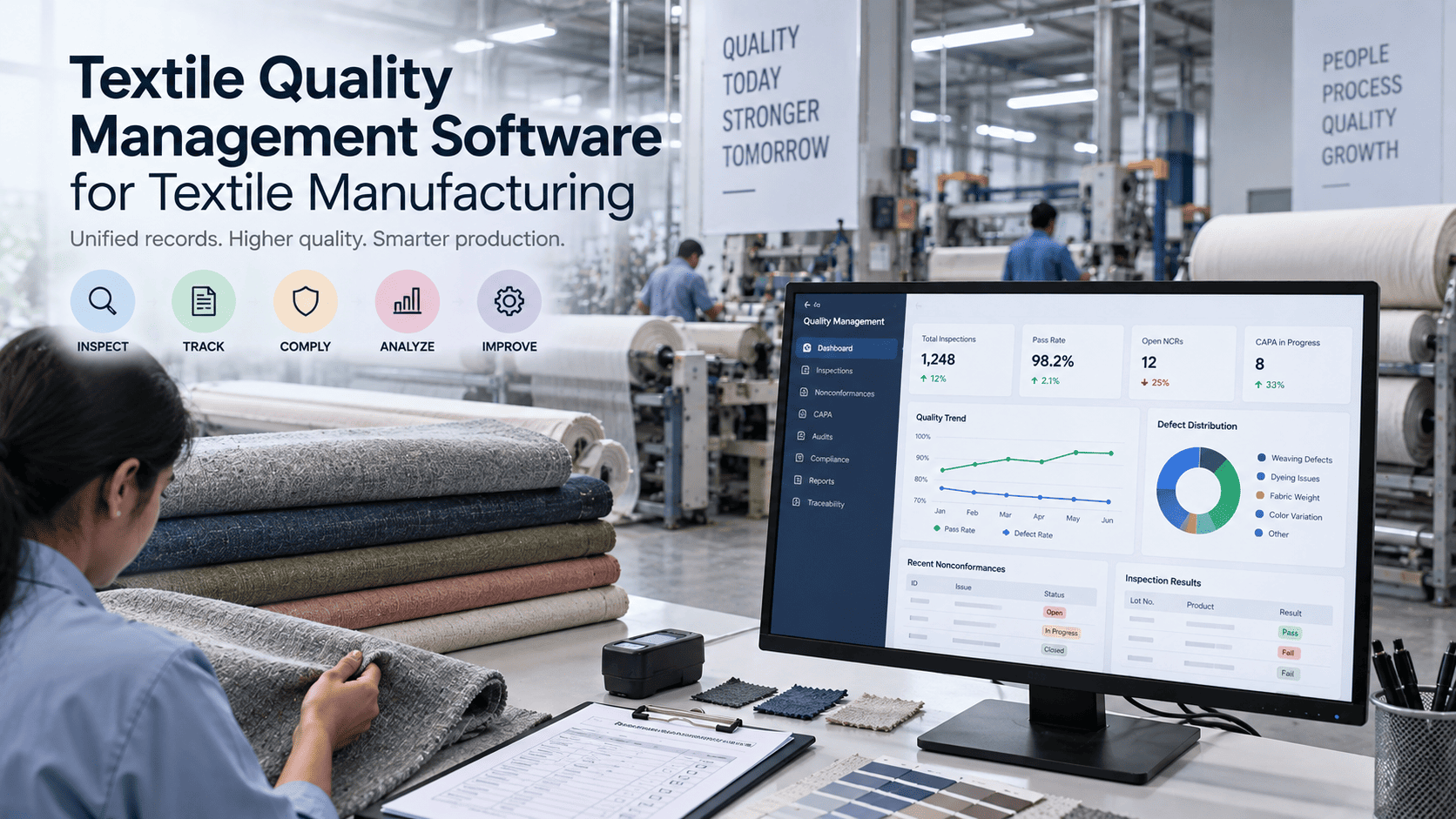
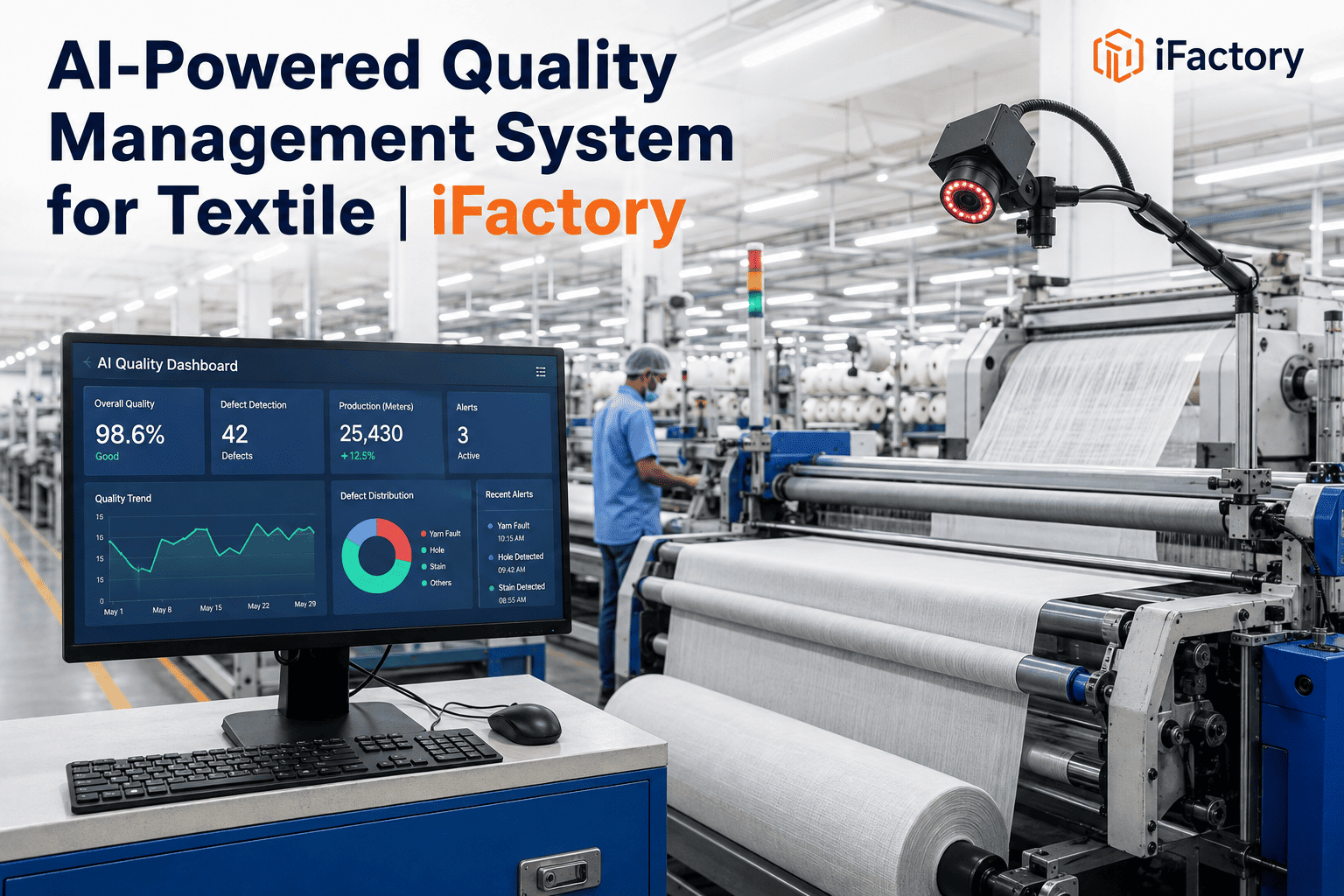
AI monitors yarn tension, loom speed, dye ratios, and hundreds of parameters simultaneously — catching quality drift before it becomes a defect batch.
Smarter Production Scheduling
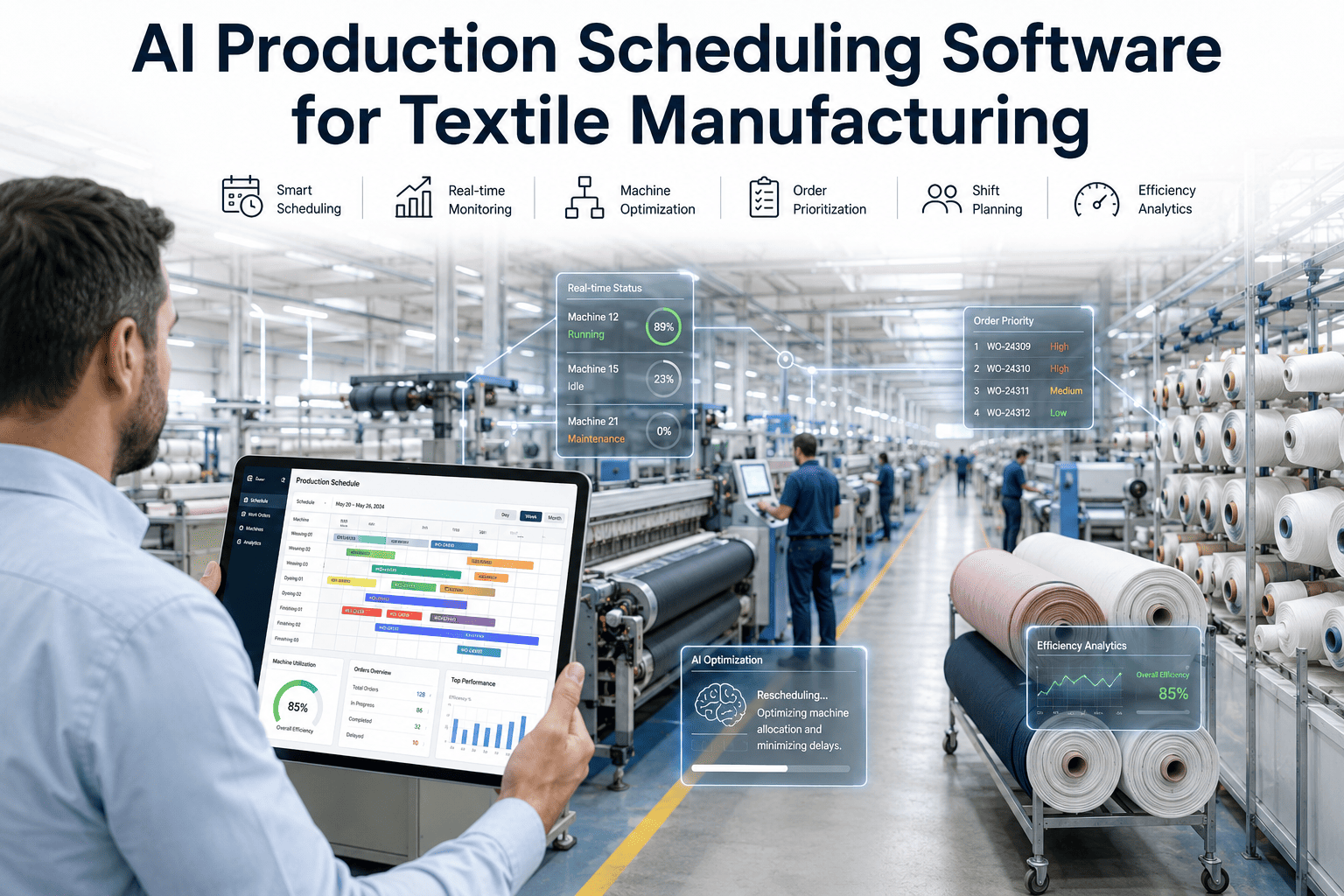
AI auto-schedules jobs based on machine availability, workforce, order priority, and deadlines — eliminating bottlenecks before they even form.
Inventory & Material Optimization
AI tracks raw material consumption in real-time and auto-triggers replenishment. Say goodbye to production stops due to yarn or dye shortages.
Predictive Equipment Maintenance
Sensors detect bearing wear, motor heat, belt tension anomalies — and alert your team weeks before a breakdown, not hours after.
Workforce Productivity Tracking
Track operator efficiency, shift-wise output, and skill utilization. Identify training gaps and high performers — all with live data, not assumptions.
Seeing the potential? Book a live walkthrough — our textile specialists will map these benefits to your specific factory floor.
How iFactory's AI-MES Works on Your Floor
Implementation is simpler than you'd expect. iFactory connects to your existing machines and processes — no ripping-and-replacing required.
Connect
IoT sensors and API connectors link your spinning frames, looms, dyeing machines, and ERP in days — not months.
Analyze
AI processes thousands of data points per minute — learning your factory's patterns, baselines, and anomalies in real-time.
Alert
Quality drift, machine anomaly, or schedule deviation? The right person gets the right alert on their phone — instantly.
Optimize
AI recommendations improve shift by shift. Your factory gets smarter every day — automatically, continuously.
The Industry Is Already Shifting
Global textile manufacturers are rapidly adopting AI-MES. The gap between early adopters and laggards is widening — here's what the data says.
Ready to See AI-MES in Action?
Watch iFactory work live on real textile factory data — spinning, weaving, dyeing, finishing. No slides, just a real demo.
Why iFactory — Not a Generic MES
Most MES platforms are built for automotive or electronics. iFactory is designed ground-up for textile — which means it understands your machines, your workflows, and your language.
Textile factories that embrace AI-driven MES aren't just improving efficiency — they're redefining what's possible in terms of delivery reliability, product consistency, and customer trust. In today's market, that's the real competitive moat.
Frequently Asked Questions
Transform Your Textile Factory with AI-Powered MES
Join the next generation of textile manufacturers using iFactory to make faster decisions, catch quality issues early, and run a factory that runs itself.