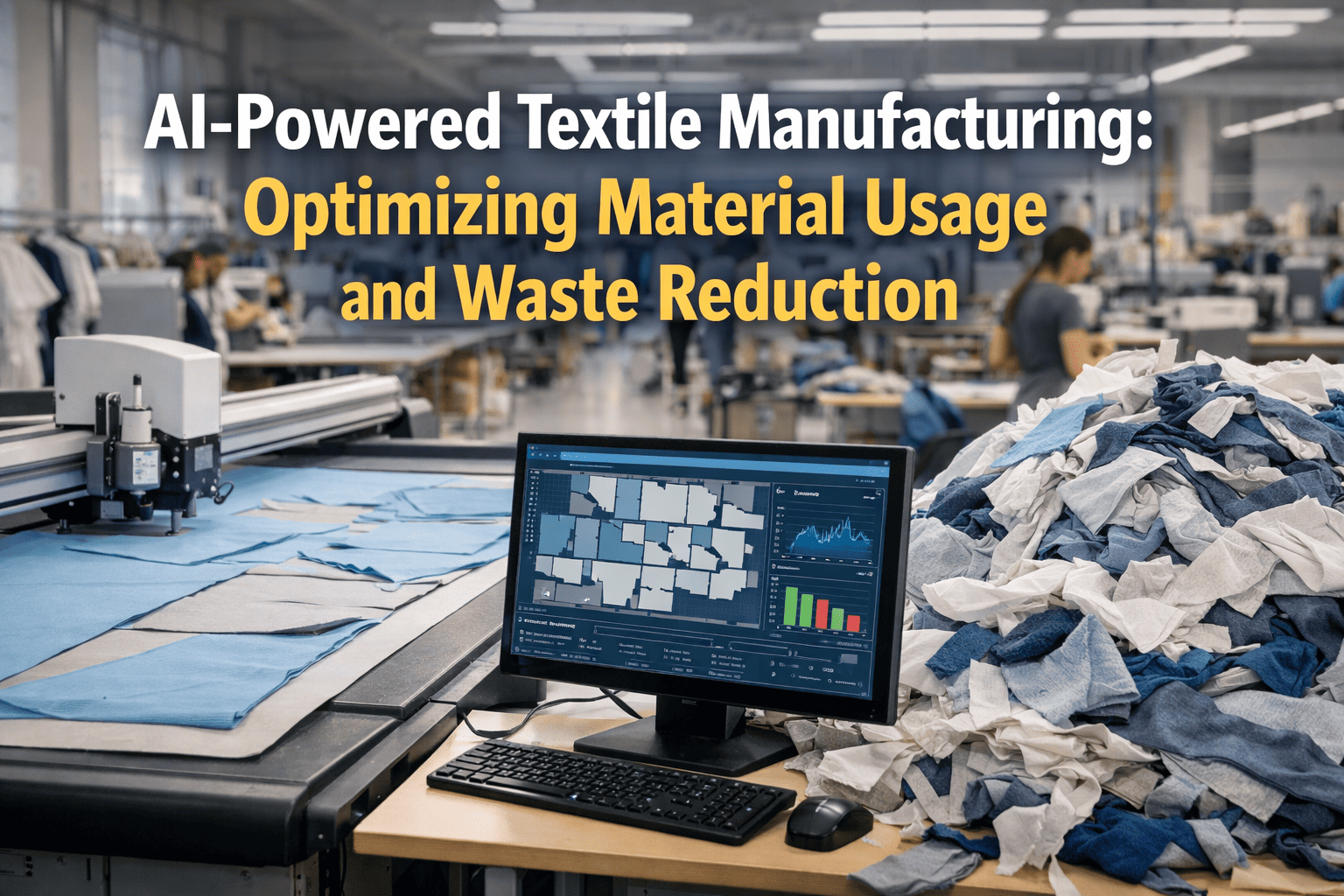
Textile manufacturing generates over 92 million tonnes of waste every year — much of it preventable. The root cause isn't poor craftsmanship; it's imprecise planning. AI is changing that calculus entirely, enabling mills and garment factories to cut material waste by 20–35%, reduce energy consumption, and meet tightening environmental compliance benchmarks — without slowing production. Book a free demo with iFactory and see how AI material optimization works on your actual production data.
Textile Manufacturing Has a Waste Problem That Numbers Make Undeniable
Where Waste Actually Happens in a Textile Factory
Waste isn't random — it concentrates in four predictable points across the production chain. AI targets each one with precision.
How AI Optimizes Every Stage to Cut Waste
iFactory's AI doesn't apply a single fix — it builds a connected intelligence layer across your production workflow so waste is caught before it's created.
AI-Driven Marker Planning
AI computes thousands of marker layout combinations in seconds to find the arrangement that maximises fabric utilisation — routinely achieving 97–99% fabric efficiency versus the industry average of 83–87%. The system adapts in real time to roll width, fabric type, and order size.
Predictive Dye Formula Optimisation
Machine learning models trained on thousands of dye batches predict the exact chemical recipe required for each fabric type, colour target, and water quality condition. This eliminates trial batches, reduces re-dyeing rates, and cuts chemical usage by 18–24%.
Real-Time Defect Detection
Computer vision cameras installed at loom outputs and inspection frames detect weave defects, pilling, shade variations, and width inconsistencies the moment they occur — triggering machine adjustments before an entire roll is compromised. Manual inspection catches defects after 30–60 metres; AI catches them within 2–5 metres.
Demand-Aligned Production Scheduling
By integrating with iFactory's demand forecasting engine, the waste reduction module ensures production quantities are tied to actual buyer signals — not buffer guesses. This eliminates overproduction-driven waste at the root, reducing unsold or scrapped fabric by up to 40%.
The Numbers Factories Are Seeing After AI Adoption
Across spinning, weaving, and garment units using iFactory's waste optimisation module, these are the benchmark improvements recorded within the first two production cycles.
Environmental Compliance: Why AI Waste Reduction Is Now a Business Requirement
Sustainability in textiles is no longer just an ethical position — it's a buyer mandate, a regulatory obligation, and an export market access condition.
EU Green Deal & EUDR
European buyers now require documented proof of sustainable production practices including material waste ratios and chemical discharge levels. Factories without AI-tracked compliance data risk losing EU export access by 2026.
Global Brand ESG Audits
H&M, Zara, and Marks & Spencer have published supply chain ESG scorecards that rank vendors on material efficiency. Low-scoring factories are already being delisted from preferred supplier lists in favour of AI-equipped competitors.
India BIS & CPCB Norms
The Central Pollution Control Board is tightening effluent discharge standards for textile units. AI-controlled dye dosing and water recycling modules help factories stay below threshold limits without slowing production.
Carbon Credits & Green Financing
Factories demonstrating verified reductions in textile waste and chemical usage qualify for carbon credit trading under voluntary frameworks, plus preferential interest rates on green trade finance instruments from SIDBI and SBI.
iFactory generates automatic waste audit reports aligned to EU and CPCB compliance formats — no manual data collection required.
What AI-Powered Waste Reduction Delivers: The Full ROI Picture
Material savings, compliance readiness, and buyer relationship improvements combine into a return that most factories achieve within their first full season of AI operation.
The AI textile sector is projected to grow at 17.3% CAGR through 2030. Factories adopting material intelligence tools in the next 18 months will establish sustainable cost structures that become virtually impossible for late movers to match. The window for competitive advantage is open — but it will not stay open indefinitely.
Frequently Asked Questions
See How Much Your Factory Is Losing to Preventable Waste
Our specialists will run a live waste audit on your production data and show you the exact material and financial savings iFactory can deliver — before you commit to anything.