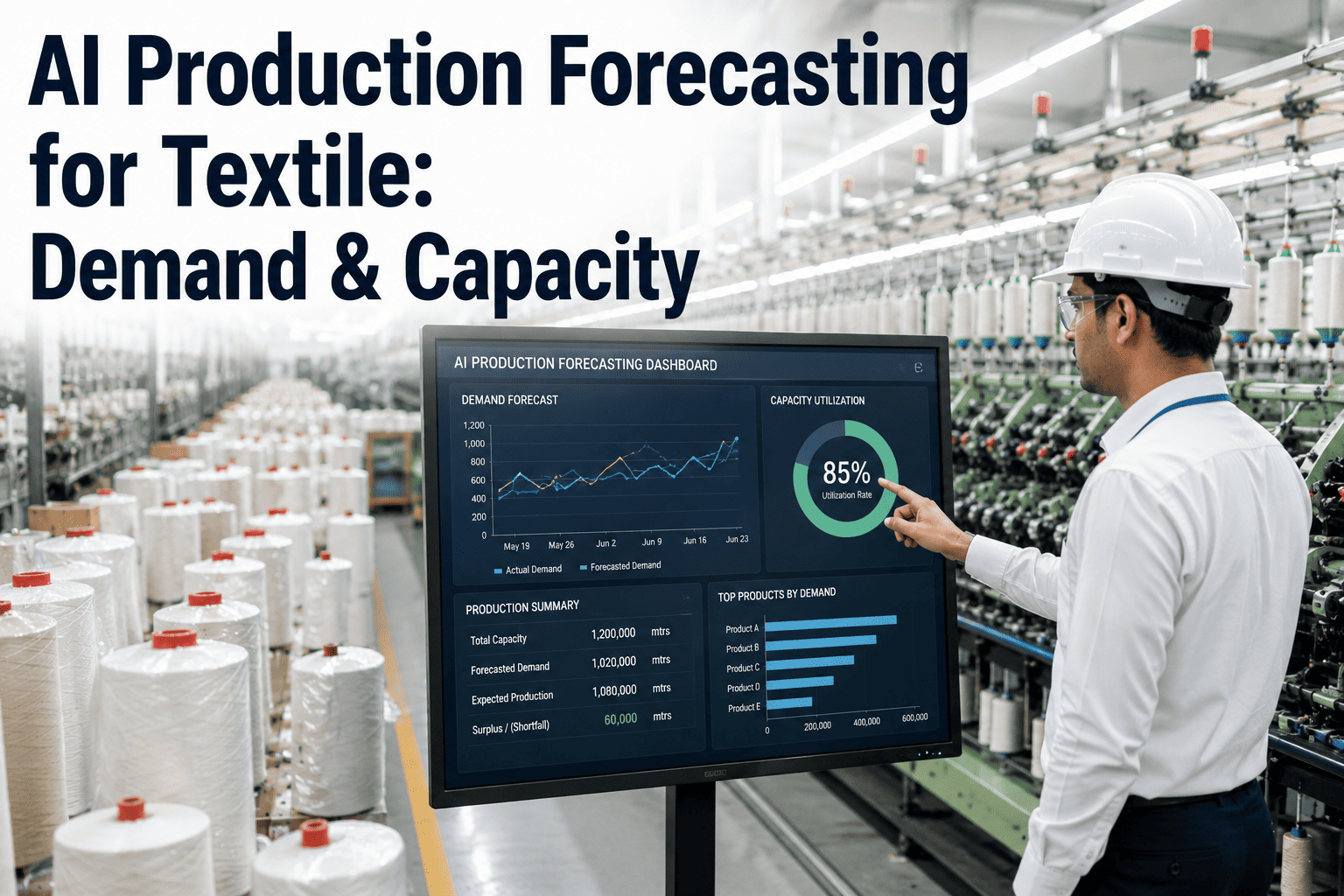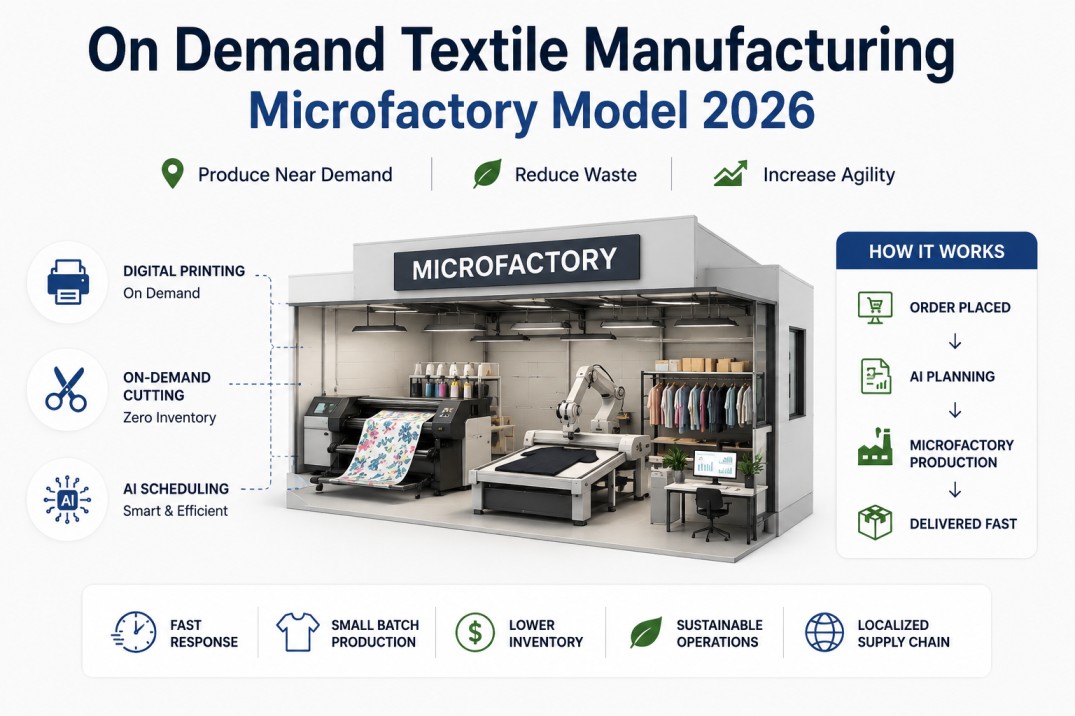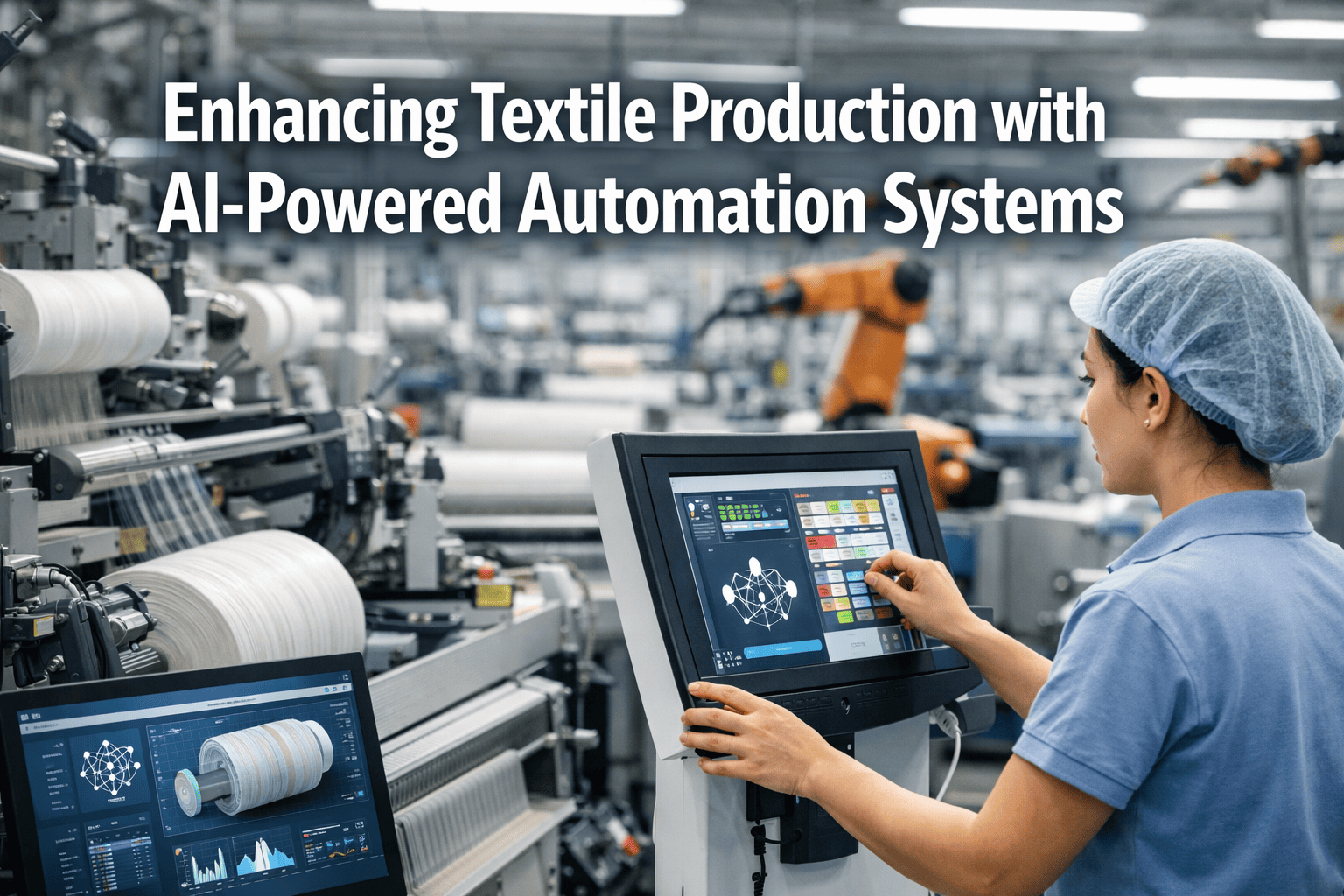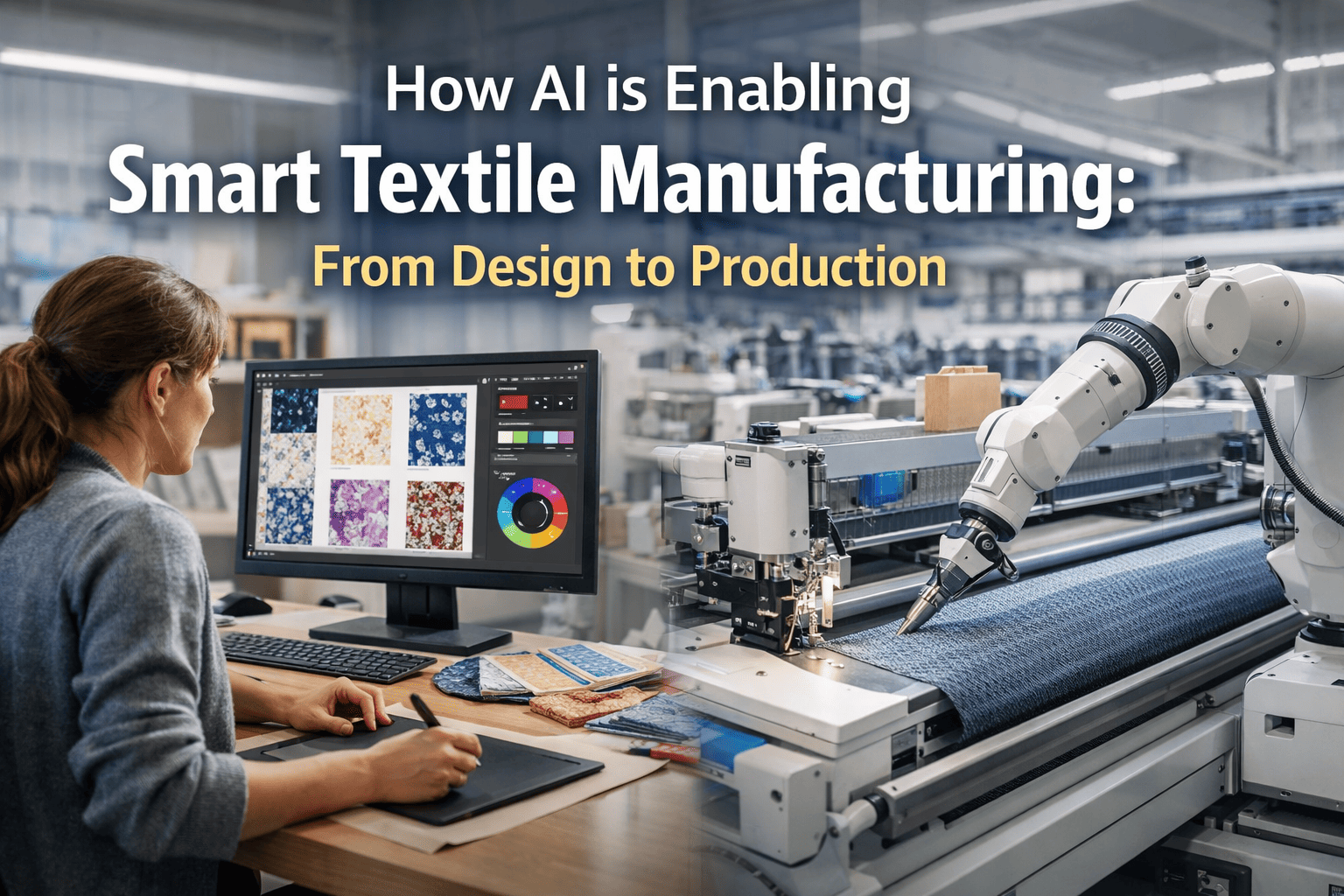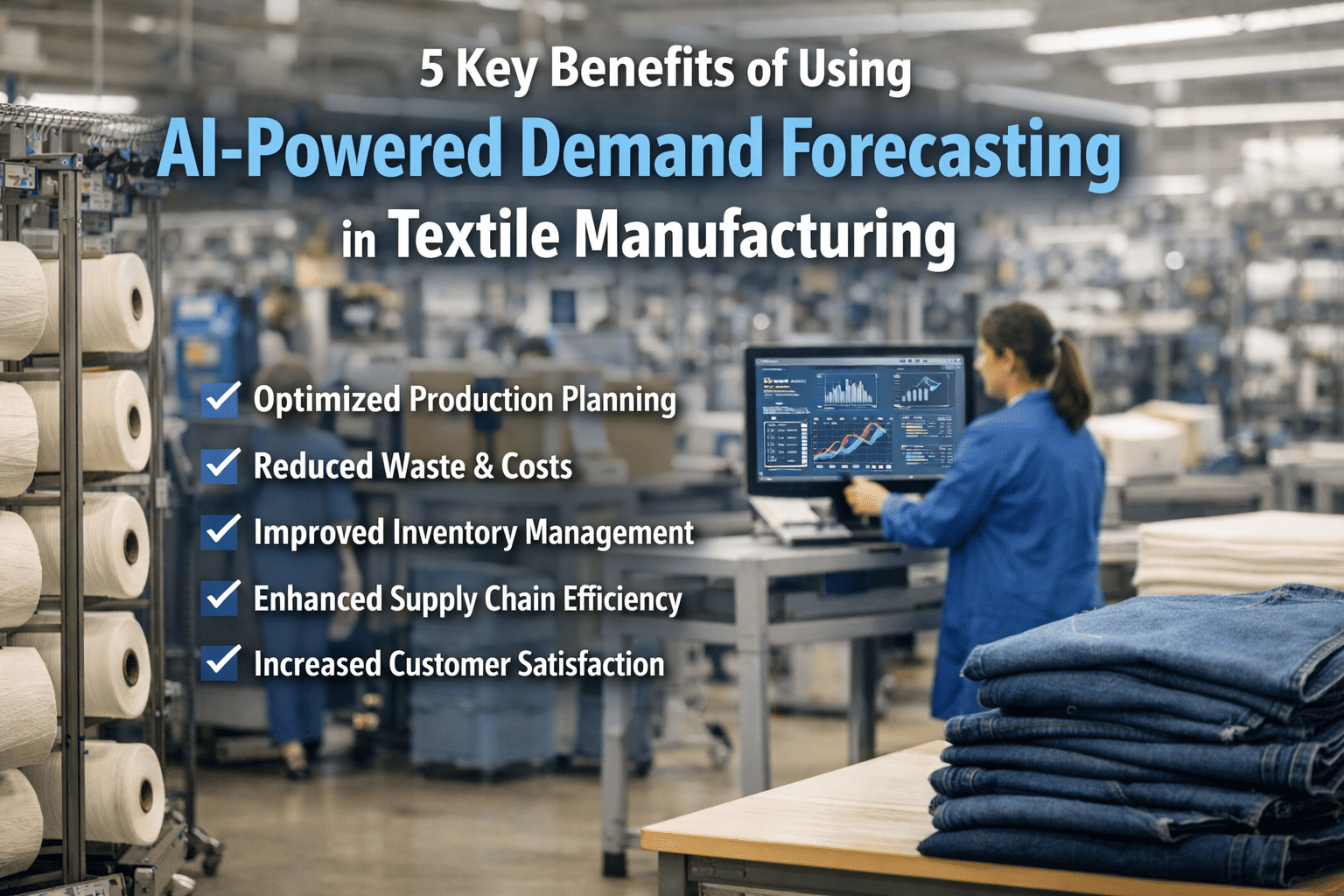
Textile manufacturers who rely on last season's sales data and gut instinct to plan production are leaving significant money on the table — and creating unnecessary risk across their supply chain. When demand signals shift faster than your planning cycle can respond, the result is overstock in slow-moving styles, stockouts on winning products, and a factory floor that runs at the wrong capacity. AI-powered demand forecasting changes the entire equation — using real-time market signals, buyer behaviour, and production history to predict what will sell, when, and in what volume — before a single metre is woven. Book a free demo with iFactory and see how AI forecasting transforms production planning in live textile factories.
5 Key Benefits of AI-Powered Demand Forecasting
How machine learning is replacing guesswork in textile production planning — reducing overstock, eliminating stockouts, and aligning every metre produced with real market demand.
The Problem with How Textile Mills Forecast Today
Most textile manufacturers still forecast demand using a combination of last year's order history, buyer conversations, and intuition. These inputs are incomplete, slow, and heavily biased by recent events. The result is a planning process that is always slightly behind the market — producing too much of what buyers no longer want, and not enough of what they urgently need.
Historical sales data tells you what sold last season — not what will sell next. By the time the signal is clear, the production window has passed.
Sales, production, and procurement teams work from different numbers. Misalignment creates buffer stock at every stage — multiplying the cost of inaccuracy.
Consumer trend shifts, buyer order pattern changes, and global supply disruptions are invisible to spreadsheet-based forecasts until it is too late to adjust production.
Manual forecasting consistently oscillates between excess inventory and missed orders — each cycle eroding margin and damaging buyer relationships.
How AI Demand Forecasting Works in Textile Manufacturing
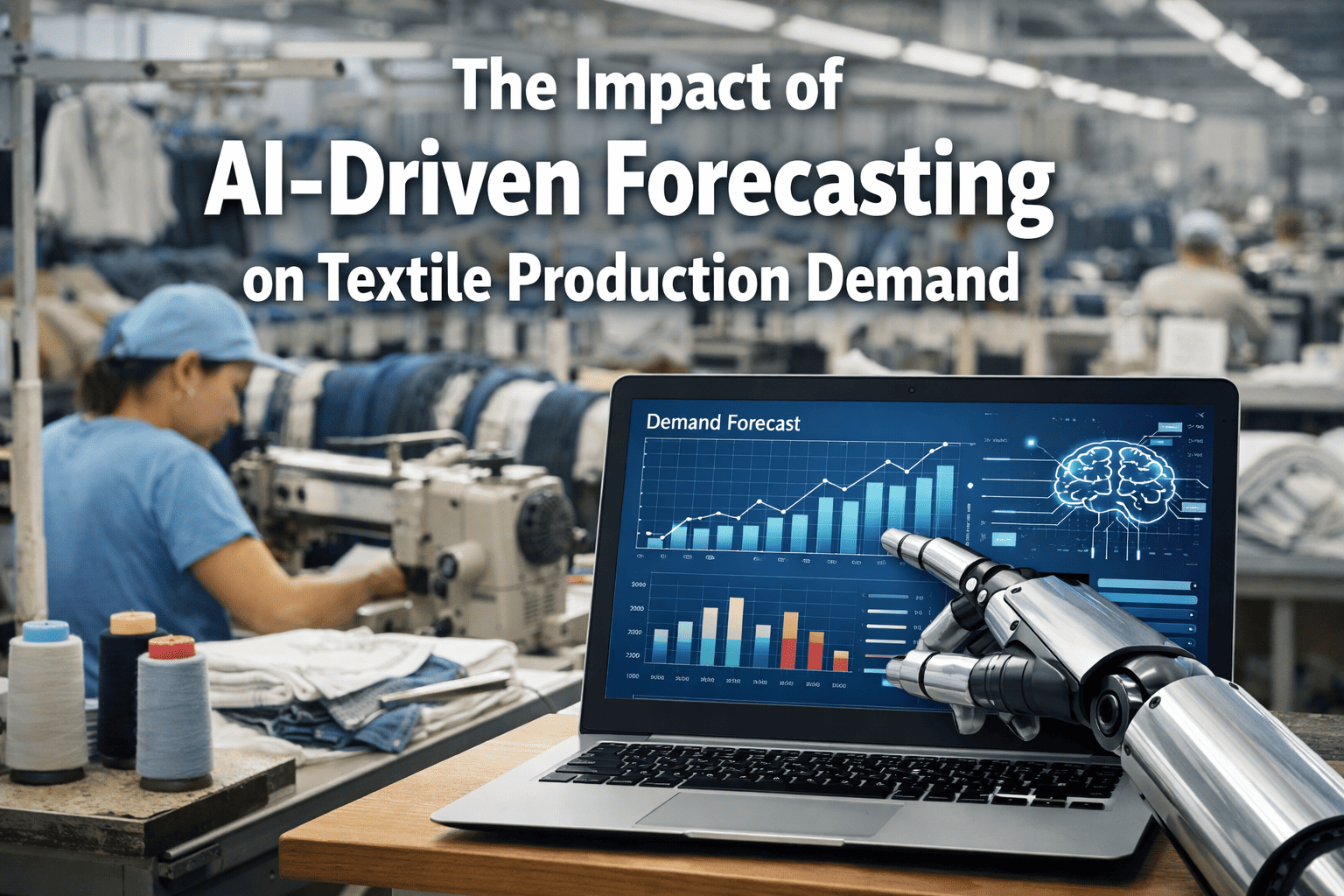
AI demand forecasting is not a smarter spreadsheet. It is a continuously learning system that ingests dozens of data signals simultaneously — from buyer order patterns and retail sell-through rates to yarn prices and seasonal consumption trends — and uses machine learning models to produce forward-looking demand predictions with far greater precision than any human planning process.
5 Key Benefits — Explained with Data
Each of the five benefits below represents a measurable, documented improvement that textile manufacturers are achieving after deploying AI demand forecasting — not projections, but outcomes from live factory data.
AI forecasting connects production scheduling directly to predicted demand — eliminating the gap between what buyers will order and what the factory is producing. Factories report a 28 to 35% improvement in production schedule adherence after AI integration, with fewer emergency changeovers and no-value-add rework cycles.
Overproduction is one of the most expensive habits in textile manufacturing. AI forecasting identifies low-demand risk products weeks before production, allowing mills to redirect capacity to higher-probability orders. Excess inventory levels drop by 30 to 40% in the first two seasons after deployment.
When demand forecasting is accurate, raw material buying becomes precise. AI systems recommend procurement timing, quantities, and supplier allocation based on predicted demand — reducing emergency spot-buying, lowering material costs by 12 to 20%, and eliminating excess yarn and grey fabric sitting in warehouses.
AI models update demand predictions continuously as new signals arrive — whether a buyer increases their order frequency, a raw material price spikes, or a trend category accelerates. Factories respond 2.8 times faster to these changes than those using monthly planning reviews, protecting both delivery performance and margin.
When production is matched to real demand, delivery performance improves dramatically. Factories using AI demand forecasting report on-time delivery rates rising from an industry average of 72% to above 91% — directly translating into stronger buyer retention, fewer penalty clauses, and more repeat orders from international buyers.
See all five benefits working together in a live iFactory deployment — on a real textile production floor.
Book Your Free DemoWhat AI Forecasting Means for Every Department
AI demand forecasting is not just a tool for the planning team. Its impact flows through every function in the factory — changing how decisions are made, how resources are allocated, and how each department connects to buyer outcomes.
Enters buyer conversations with accurate production capacity windows and realistic delivery dates — backed by AI predictions rather than optimistic estimates. Reduces order rejection rate and improves buyer confidence.
Receives SKU-level demand predictions 8 to 12 weeks ahead — enabling advance machine scheduling, operator rostering, and raw material booking without last-minute reshuffling.
Buys yarn, chemicals, and accessories at the right time and in the right quantity — eliminating both overbuying and emergency spot procurement that drains margin unpredictably.
Views a demand-to-capacity alignment dashboard that shows whether the factory is correctly loaded 30, 60, and 90 days out — making strategic investment and hiring decisions with confidence.
AI Forecasting and the Competitive Shift in Global Textiles
The global textile market is becoming sharply divided between factories that can respond to demand in near-real-time and those that cannot. Buyers in Europe, the US, and Southeast Asia are actively consolidating their supplier base — favouring mills that combine reliable quality with accurate delivery forecasting and short lead times.
of international apparel buyers in a 2024 survey said they prioritise suppliers with AI-backed production and delivery forecasting capability
brands now require supplier lead times under 30 days for reorder quantities — impossible to achieve without AI demand signal integration at the factory level
higher buyer retention rate reported by AI-enabled mills compared to mills relying on traditional annual order forecasting cycles
textile export leaders investing in AI forecasting are winning contracts previously held by factories with lower base costs but slower response capability
We used to confirm buyer delivery dates by working backwards from gut feel on production capacity. After deploying AI demand forecasting, we now commit dates based on live capacity data and a 90-day demand model. Our on-time delivery rate went from 68% to 93% in one season. Two of our largest buyers doubled their order volumes within six months.
— General Manager, Export-Oriented Woven Fabrics Mill, Tirupur | iFactory Customer, Q3 2025Frequently Asked Questions
Start Forecasting with AI Today
Join textile manufacturers across India, Bangladesh, and Vietnam who are using iFactory's AI demand forecasting to eliminate overstock, accelerate response to market shifts, and build the delivery reliability that wins long-term buyer contracts.