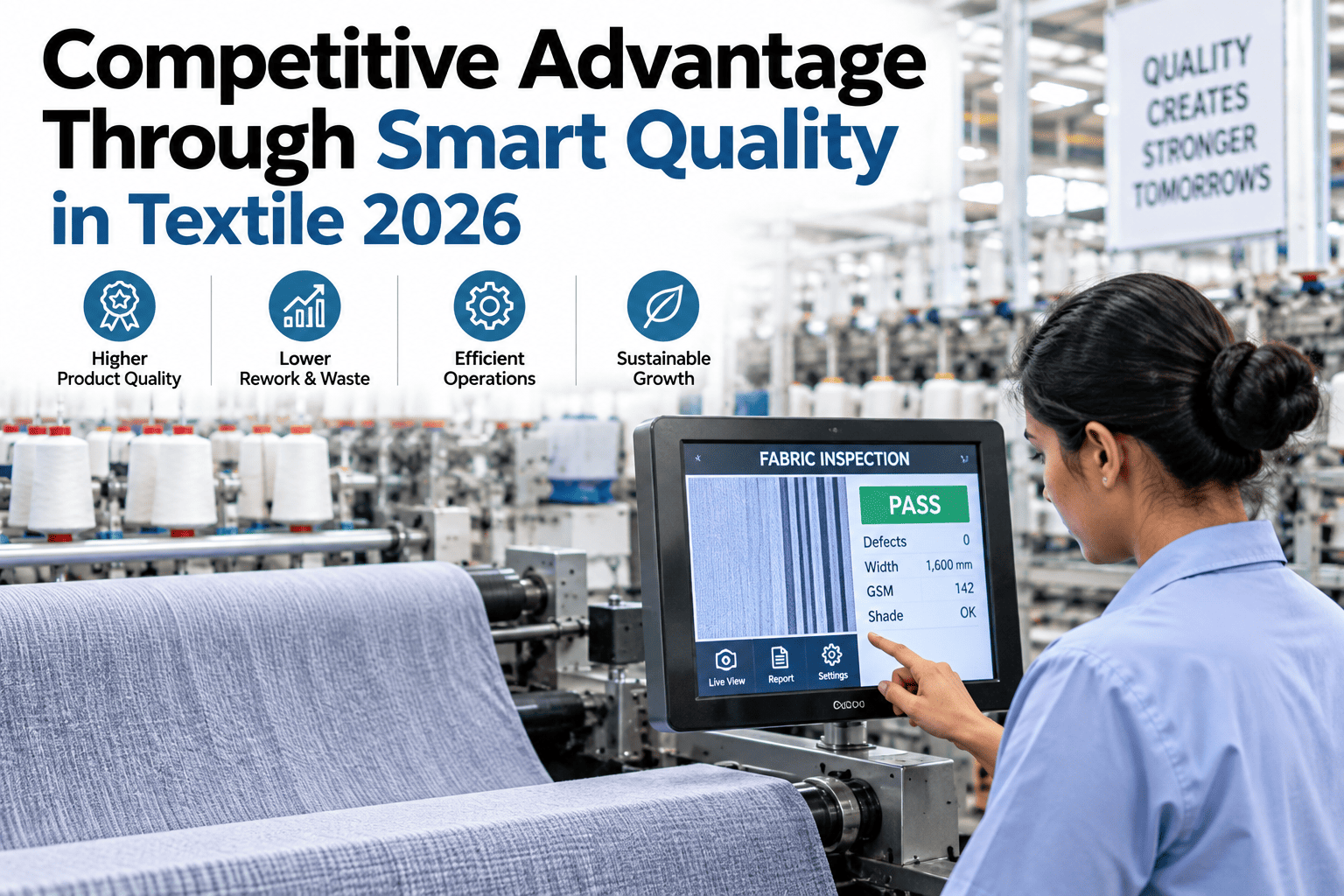
Global textile competition has never been more intense. China controls 32% of all textile exports. Bangladesh, Vietnam, and India are scaling automation at record speed. And buyers are giving preferred status only to factories that can prove efficiency, quality, and delivery reliability — consistently. The factories winning contracts in 2026 aren't the cheapest — they are the smartest. Book a free demo with iFactory and discover how AI-driven manufacturing can position your factory at the top of the global supply chain.
The Global Race Is On. AI Is How You Win It.
The AI in textile market is growing at 32.45% CAGR — from $4.12B in 2025 to $68.44B by 2035. The manufacturers adopting it now are pulling so far ahead, catching up later may not be possible.
The Global Competitive Landscape Your Factory Is Up Against
Understanding who you're competing with — and exactly how they're winning — is the first step to closing the gap. These are the regions setting the global pace in 2026.
5 Ways AI Is Rewriting the Rules of Global Competitiveness
It is not just about having new technology. It is about what that technology specifically enables you to do — faster, cheaper, and more reliably than competitors who don't have it.
Deliver Faster Than the Market
AI-driven production scheduling eliminates idle time between orders, compresses changeover periods, and ensures machines are always running at optimal capacity. Factories using AI report up to 40% faster order fulfilment cycles — letting you promise tighter lead times and win time-sensitive contracts competitors cannot fulfil.
Cut Costs Without Cutting Corners
Automation reduces production costs by 15–20% through optimized machine utilisation, reduced waste, lower energy consumption, and smarter maintenance scheduling. Unlike manual cost-cutting that compromises quality, AI lowers costs while maintaining or improving output standards — preserving your margins without sacrificing your reputation.
Deliver Consistent Quality at Scale
Computer vision inspection achieves 95%+ defect detection accuracy — something no human inspection team can match across high-speed, multi-shift operations. Consistent quality builds the buyer trust that converts one-time orders into long-term preferred supplier agreements with volume commitments and better pricing.
Run Longer Without Unexpected Stops
Predictive maintenance — the single largest AI application in textile manufacturing with 32% market share — catches machine failures 2–6 weeks before they happen. Planned repairs during scheduled windows replace emergency shutdowns during production runs. The result: 50% less unplanned downtime, higher machine availability, and commitments your buyers can count on.
Forecast Demand and Beat the Market
AI analyses sales history, fashion trend data, and seasonal patterns to predict demand 4–8 weeks out. Manufacturers using predictive demand models have reduced inventory holding costs by up to 30% and improved sell-through rates by nearly 40%. You produce what the market actually wants — not what you guessed it might want three months ago.
Win the Buyers Who Pay More
Global brands mandate supplier sustainability credentials, traceability data, and verified quality metrics before awarding contracts. iFactory generates all of this automatically — from water consumption logs to batch-level quality records to carbon footprint data. Factories with verified digital credentials consistently win premium-paying buyers over those without them.
What Winning Factories Look Like Versus Struggling Ones
The performance gap between AI-enabled factories and traditional operations is widening every quarter. Here is what that gap looks like across the metrics that buyers and managers track most closely.
Close the Gap in 90 Days
iFactory's implementation timeline takes your factory from assessment to full AI deployment in under 90 days — without disrupting existing operations or replacing any working machinery.
How iFactory Delivers Global Competitiveness — Feature by Feature
Every competitive advantage requires a specific capability behind it. Here is exactly how iFactory's platform delivers each one inside your factory walls.
AI Vision Inspection — 24/7, at Machine Speed
Computer vision cameras scan fabric continuously across every production line. Defects including weave errors, colour deviations, stains, and misalignments are caught instantly — before they progress to downstream processes or reach your customer. Rejection rates consistently fall below 1%, and every inspection result is logged with full traceability by batch, machine, and shift.
Stop Breakdowns Before They Stop Your Orders
IoT sensors monitor vibration, temperature, current draw, and acoustic signatures across every critical machine — spinning frames, looms, dyeing machines, stenters. AI detects early failure patterns 2–6 weeks before breakdown, automatically generating work orders, ordering parts at standard pricing, and scheduling repairs during planned downtime windows. No emergency shutdowns, no missed delivery dates.
AI Scheduling That Leaves No Capacity Wasted
iFactory's production planning engine analyses order backlogs, machine availability, material stocks, and labour schedules simultaneously — generating optimised production plans that maximise output within every available hour. Changeover times are minimised. Bottlenecks are identified before they develop. And when priorities shift, the plan re-optimises automatically in real time.
Know What to Produce Before Your Buyer Asks
Machine learning models analyse historical order data, seasonal demand patterns, buyer purchase cycles, and market trend signals to predict what fabric types, volumes, and specifications will be needed 4–8 weeks ahead. Manufacturers using AI demand forecasting have reduced raw material waste by up to 30% and improved on-time delivery rates significantly — leading directly to preferred supplier status with major brands.
Total Factory Visibility From One Screen
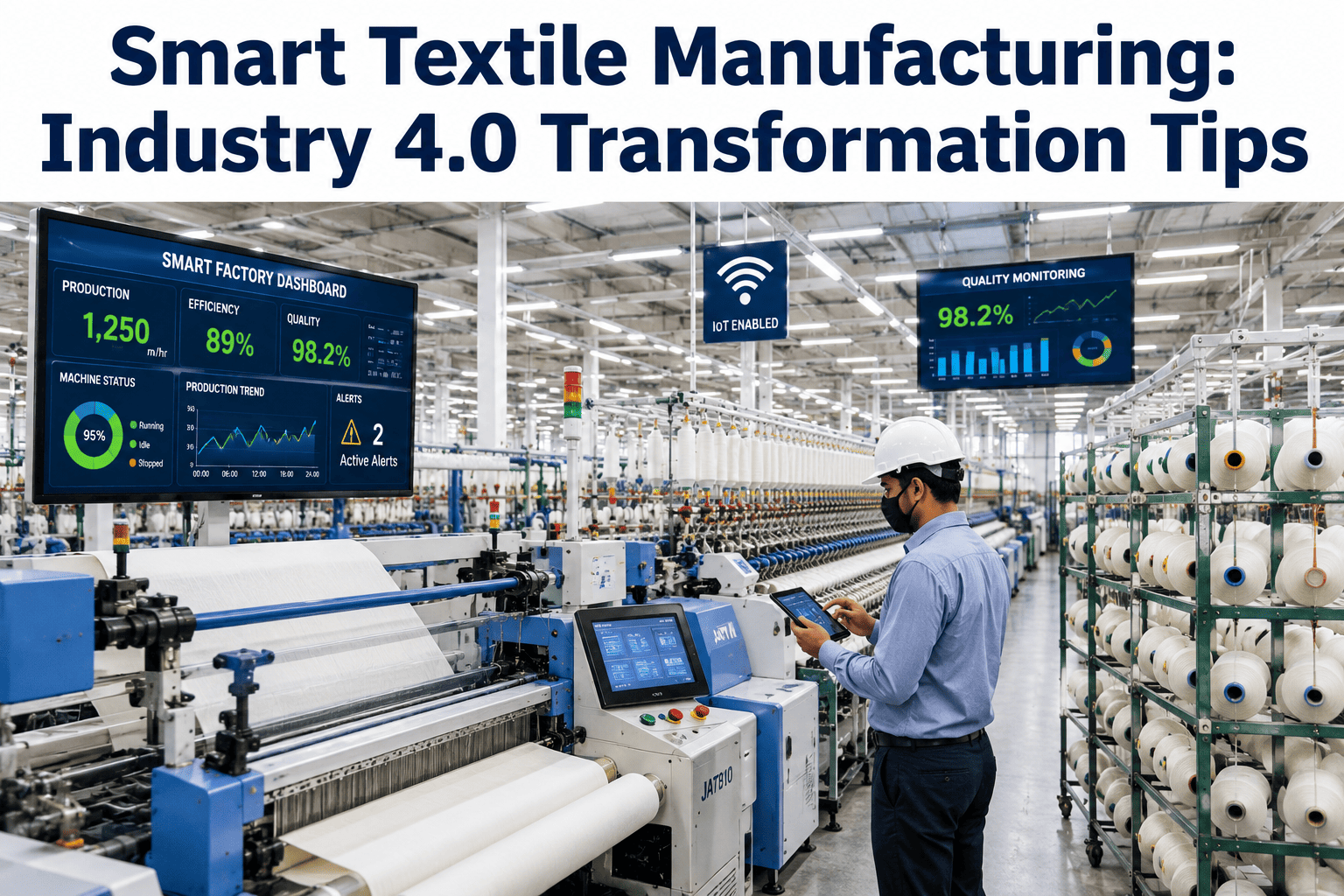
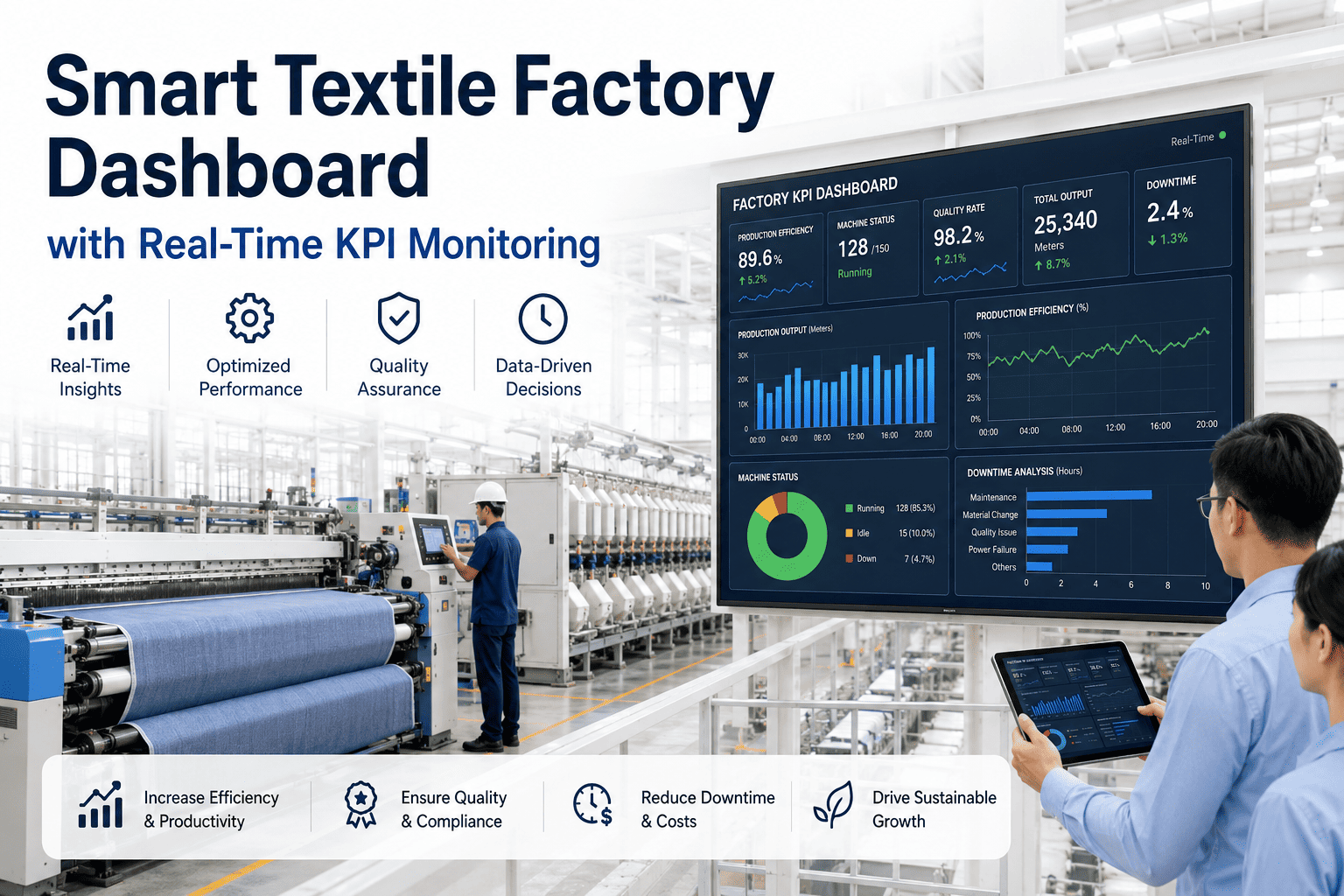
Every machine, every production line, every shift — visible on a single real-time dashboard accessible from desktop and mobile. Factory managers make decisions with current data, not yesterday's reports. Buyers receive live production updates. And when something goes wrong, the right person is notified immediately — not discovered during the next morning's shift handover.
The ROI Timeline — From Deployment to Competitive Advantage
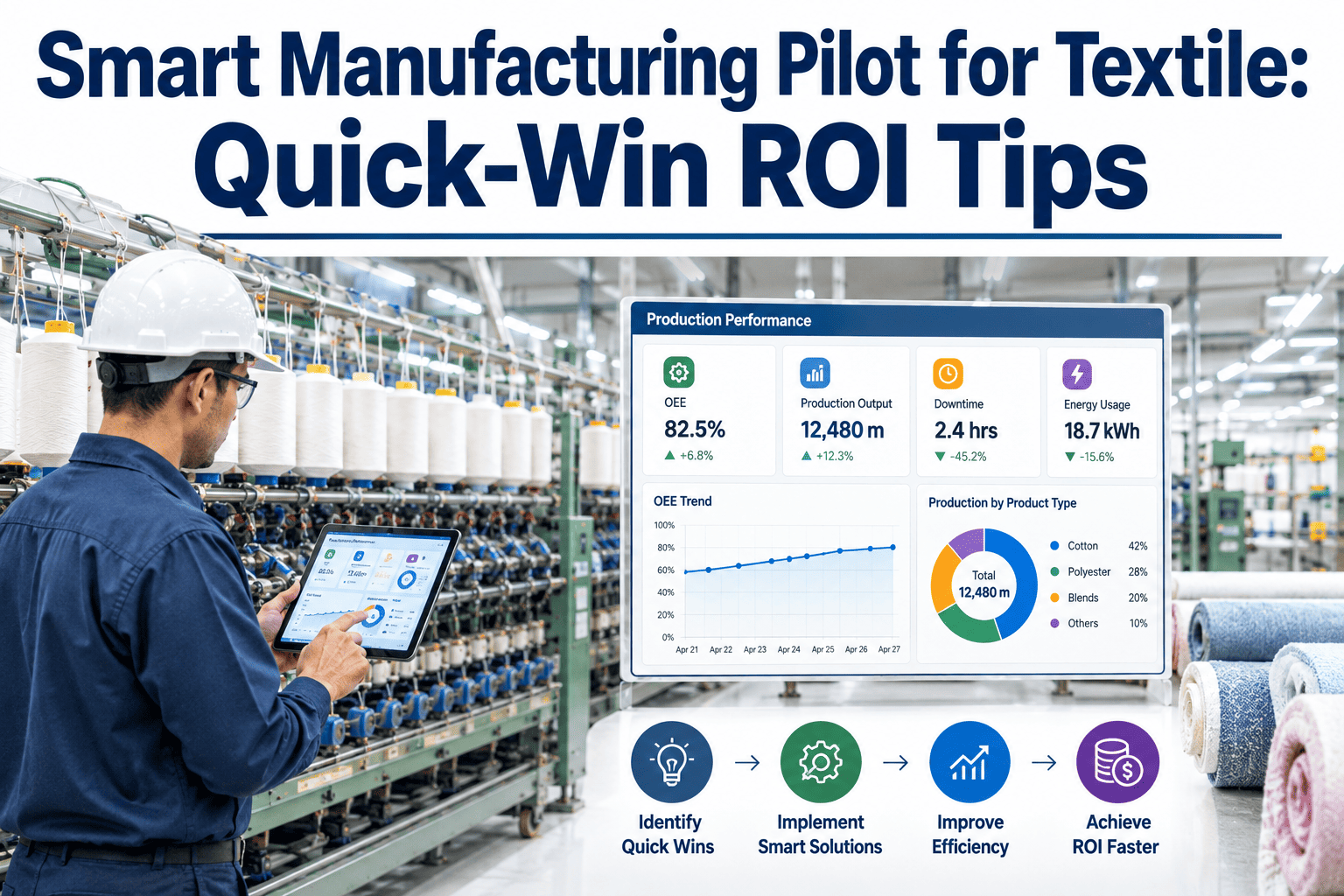
iFactory is not a multi-year transformation project. The competitive advantages of AI start appearing within weeks of deployment and compound over time as the AI learns your specific production environment.
Assessment & Setup
Critical machines audited. Sensors installed. Platform configured. Baseline metrics captured. Your team onboarded via the mobile app.
Pilot Goes Live
5–10 priority machines connected. AI quality inspection running. First predictive maintenance alerts generated. Production scheduling active.
AI Learns Your Factory
Models fine-tuned to your specific machines and products. False alerts minimised. Demand forecasting kicks in. First measurable ROI documented.
Scale & Compete
Full factory rollout. Auto parts ordering. Full buyer compliance data. Competitive advantages compound across every metric buyers measure.
Why iFactory — Not a Generic Platform
Generic manufacturing software is built for generic factories. iFactory is built specifically for textile manufacturing — with AI models, alert thresholds, and workflows designed around the real challenges of spinning, weaving, dyeing, and finishing operations.
Textile-Specific AI from Day One
Pre-trained on data from spinning frames, air-jet looms, jet dyeing machines, and stenters. Faster time-to-insight, fewer false alerts, and predictions that understand textile-specific failure modes — not adapted from automotive or semiconductor models.
Retrofit to Any Machine, Any Age
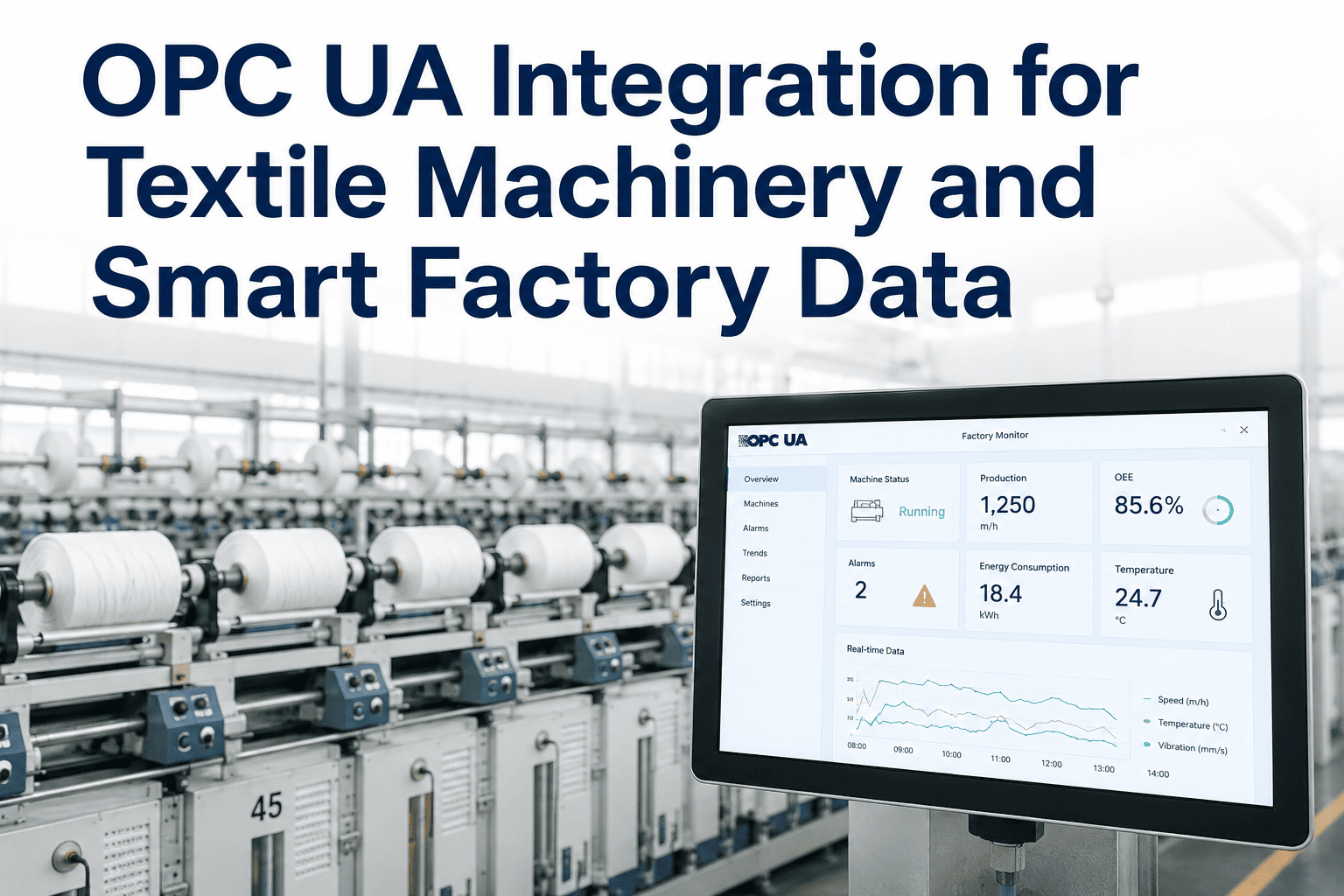
External IoT sensors attach to any existing machinery without modifications. Legacy PLCs and modern controllers integrated on the same platform. Deployment begins within days — not months of infrastructure overhaul.
Mobile-First for Real Factory Teams
Your technicians carry the full platform in their pocket. Maintenance alerts, work orders, machine status, and production reports — all on a mobile app that requires hours of training, not weeks of classroom instruction.
Integrated End-to-End Intelligence
Quality control, predictive maintenance, production planning, inventory management, and sustainability reporting all connected in one platform. No fragmented systems, no data silos, no manual reconciliation between tools.
Frequently Asked Questions
Make Your Factory the One Global Buyers Call First
Join the textile manufacturers using iFactory to cut costs, guarantee quality, and win the contracts that define long-term growth. The factories acting now are the ones setting the global standard — the ones waiting are losing ground every single week.
Book a free 30-minute demo. See iFactory running on real textile factory data. Walk away with a clear picture of your competitive ROI.
Book Free Demo Talk to Our Team