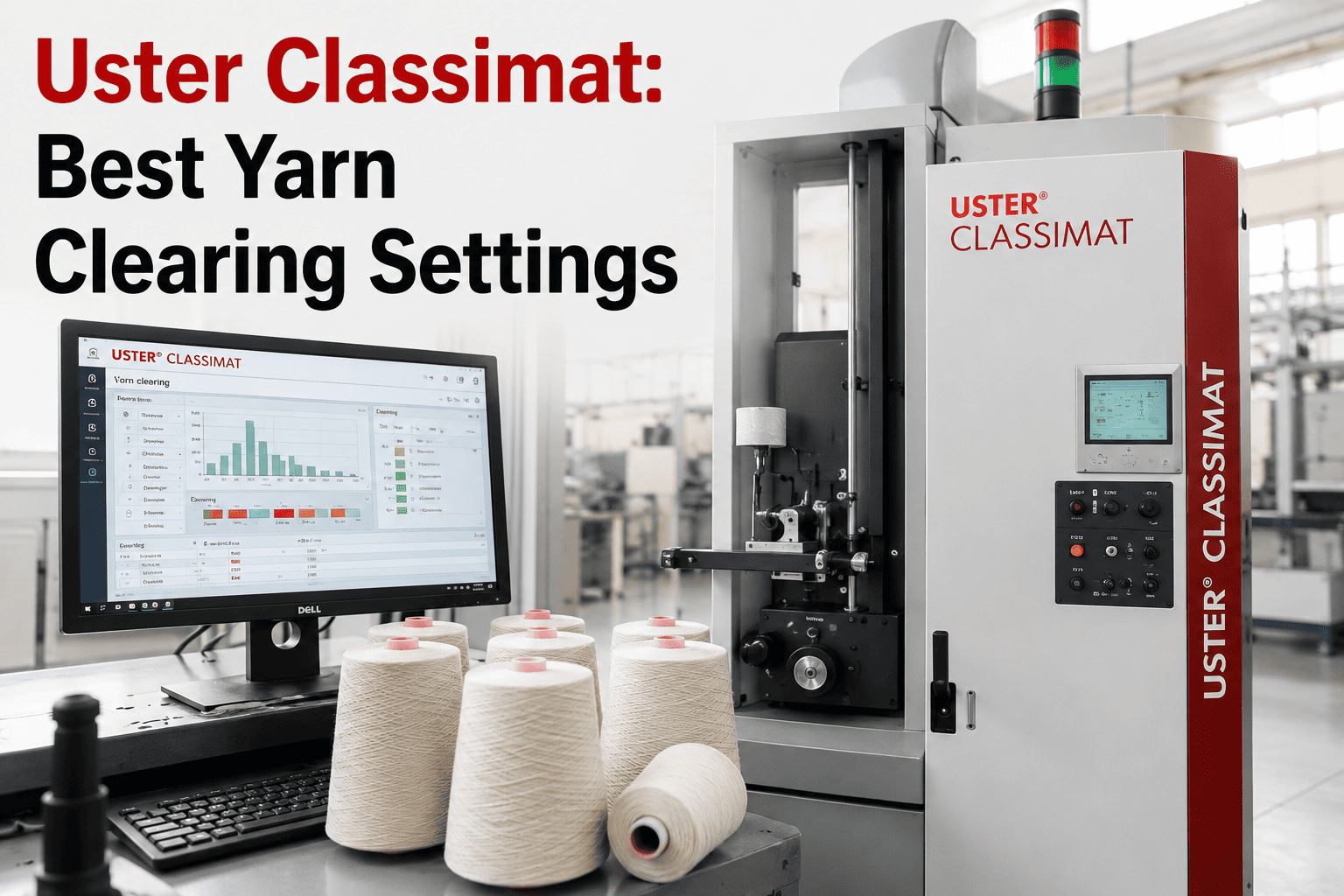
Uster Classimat has been the global benchmark for yarn defect classification since 1968, categorizing faults across 23 standard classes based on cross-sectional area and length. The limitation has always been the same: the data lands in a lab report while the yarn clearer on the winding floor runs on static thresholds set weeks or months earlier. AI-powered classification changes that equation. By connecting Classimat lab results directly to clearer tuning in real time, mills can balance clearing intensity against knot frequency and fabric quality across every machine, not just the average. Book a demo to see how iFactory bridges the lab-to-winder gap.
From Lab Report to Machine Setting in Minutes, Not Weeks
AI-powered Classimat analysis that converts laboratory fault data into optimized clearer parameters across every winding spindle, reducing objectionable defects while minimizing unnecessary cuts that cost throughput and efficiency.
What Classimat Actually Measures and Why It Matters
Uster Classimat classifies yarn faults by two physical dimensions: cross-sectional increase or decrease relative to the mean yarn diameter, and the length of the fault along the yarn axis. These two parameters define 23 standard defect classes. The severity of each class depends on end-use — a Class A short thick place that disappears in denim may cause a stop in fine-gauge knitting.
Turn Classimat Data Into Smarter Clearing Decisions Across Every Machine
iFactory connects Uster Classimat lab results directly to winding floor clearer settings. No more static limits. No more average-based tuning. Real-time classification data drives per-spindle optimization that cuts objectionable defects while preserving throughput.
How AI Changes the Yarn Clearing Decision Pipeline
Traditional clearing relies on static limit curves set during a production campaign and left unchanged until the next lab report. AI-driven classification ingests Classimat data continuously, detects drift patterns across spindles, and adjusts clearing thresholds dynamically. The difference is not marginal — it restructures how clearing decisions are made.
The AI Classification Workflow
Connecting Classimat data to actionable clearer settings follows a repeatable sequence. Each step builds on the previous, and the entire loop cycles in minutes rather than shifts.
Ingest Classimat Data
AI ingests raw fault counts per class (A through I, NSLT, foreign matter) from Uster Classimat 5 lab reports or Quantum 3 inline data streams.
Classify by Severity
ML models rank each defect class by impact on the target fabric — denim, shirting, knit, or technical textile — using historical correlation data.
Optimize Clearing Limits
AI computes spindle-level clearing curves that balance defect removal against knot frequency, targeting the maximum defect reduction per cut.
Push to Winders
Updated clearing parameters deploy automatically to compatible yarn clearers (Uster Quantum, Loepfe, Keisokki) without operator intervention.
Monitor & Adjust
Fabric defect feedback and winding efficiency data flow back into the model, closing the loop for continuous optimization across production runs.
Bridge the Gap Between Your Lab and Your Winding Floor
Stop relying on shift-old lab reports and one-size-fits-all clearing curves. iFactory ingests Classimat data, classifies defects by fabric impact, and pushes optimized settings per spindle — all within a single operational platform purpose-built for spinning mills.
What AI Classification Delivers in Hard Numbers
The return on AI-driven Classimat optimization is measurable across four dimensions. These figures are drawn from mill deployments and validated against baseline data.
Frequently Asked Questions
How does AI improve on standard Classimat analysis?
Standard Classimat reports classify defects into 23 categories and provide aggregate counts per batch. AI adds three capabilities: correlation of each class with actual fabric defect outcomes for your specific end-use, pattern detection that identifies drift across spindles before it triggers a customer complaint, and dynamic clearing limit optimization that adjusts thresholds per spindle based on real-time data rather than campaign averages.
What defect classes cause the most fabric issues in US textile mills?
Class B and C short thick places (above 250% cross-section) account for the majority of objectionable fabric defects in woven goods. Long thin places (Class I) are the primary cause of weak spots and breaks in knitting. Foreign matter — particularly polypropylene and colored fibers — has become the leading source of dyeing defects in cotton and cotton-blend fabrics. AI classification prioritizes clearing intensity toward these high-impact classes while relaxing limits on less critical ones.
Can AI clearing work with existing Uster Quantum or Loepfe clearers?
Yes. iFactory's AI optimization layer integrates with Uster Quantum 3 and Quantum 4 yarn clearers, Loepfe YarnMaster series, and Keisokoki clearers through their respective API and data export interfaces. The system reads Classimat classification data, computes optimal limits, and pushes parameter updates without replacing existing clearer hardware. No additional sensors are required.
How long does it take to see ROI from AI Classimat optimization?
Mills typically see measurable improvement within the first production week. The AI model begins correlating Classimat data to fabric outcomes immediately, and the first optimized clearing limits are deployed within 48 hours of data ingestion. Full ROI — including reduced fabric claims, higher winding efficiency, and lower knot frequency — is typically realized within 60 to 90 days depending on mill size and product mix.
Does AI classification work differently for ring-spun vs open-end yarns?
Yes. Ring-spun and open-end yarns have fundamentally different defect profiles. Ring-spun yarns tend to produce more long thick places (Classes D through G) from drafting issues, while open-end yarns generate more short thick places and foreign matter defects. AI models are trained per spinning system and per yarn count, so the classification priority and clearing optimization reflect the actual defect distribution of each production line independently.
Classify Smarter. Clear Exactly. Cut Less.
Move beyond static clearing curves that trade defects against throughput by averaging across all spindles. iFactory brings AI-powered Classimat optimization to every machine in your winding department — lab-grade classification intelligence delivered as an operational tool your floor team can act on immediately.