The textile industry generates over 92 million tonnes of waste every year — and most of it is preventable. From excess fabric cut-offs to rejected dye lots and energy-intensive rework cycles, waste in textile manufacturing is not just an environmental problem. It is a profit problem. Artificial intelligence is now giving manufacturers the tools to catch waste before it happens — optimising material use, controlling water consumption, and predicting defects before entire batches are lost. Book a free demo with iFactory and see how AI waste reduction works on a live production floor.
Where Textile Waste Actually Comes From
Most textile factories lose material, water, chemicals, and energy at multiple invisible points throughout production. Without real-time monitoring, these losses compound across every shift. AI traceability systems make every loss visible — and stoppable.
Fabric offcuts, misaligned patterns, and incorrect GSM batches account for the largest share of waste by volume. Most goes untracked until end-of-month inventory checks.
Over-dosing of dyes, incorrect pH levels, and bath ratio errors result in rejected lots and excessive effluent — both costly and environmentally harmful.
Unoptimised stenter temperatures, idle machine time, and repeated heating cycles consume far more energy than necessary — directly inflating production cost per metre.
Excessive rinsing cycles in dyeing and finishing, combined with poor bath reuse rates, make water one of the most wasteful inputs in a traditional textile factory.
How AI Targets Each Type of Waste
AI does not reduce waste through a single feature. It works across four dimensions simultaneously — monitoring parameters, predicting failures, optimising inputs, and flagging deviations the moment they occur.
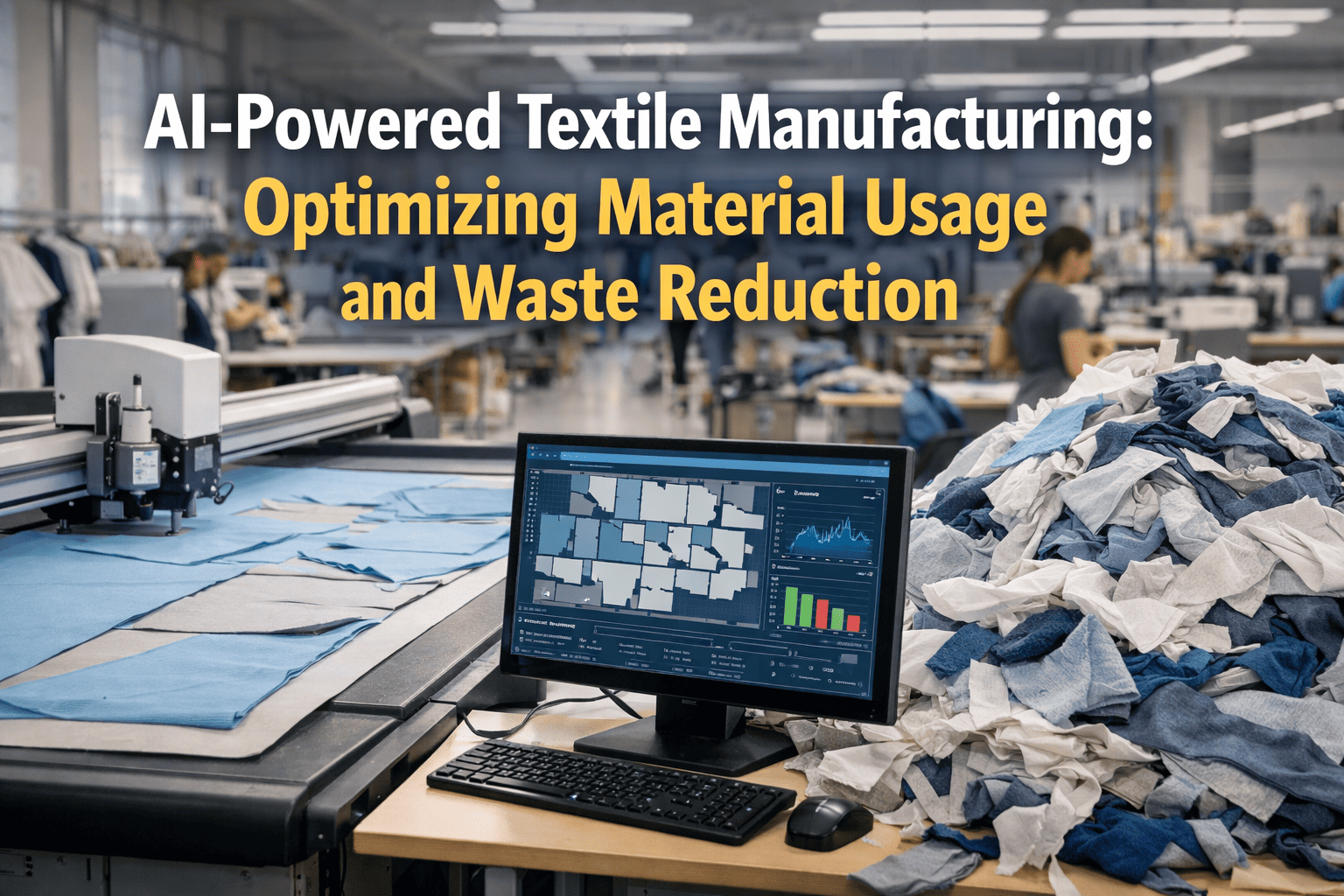
AI analyses order combinations and fabric widths to suggest optimal cutting plans — reducing offcut waste by up to 22% per production run without operator recalculation.
Machine learning models track temperature curves, pH drift, and bath exhaustion in real time. Deviations from recipe targets trigger instant correction alerts — before shade failure occurs.
AI maps machine utilisation patterns and recommends scheduling changes that reduce idle heating cycles — cutting energy cost per metre by 15 to 25% in finishing and dyeing departments.
AI monitors bath exhaustion levels and recommends reuse windows — reducing fresh water intake per batch by up to 40% while maintaining colour consistency and process standards.
iFactory's AI platform monitors material, dye, energy, and water efficiency from a single dashboard — in real time.
The Before and After: A Real Production Comparison
Factories that implement AI waste reduction see measurable shifts across key sustainability and cost metrics within the first quarter of deployment. Here is what the data shows.
Sustainability Compliance Is Now a Buyer Requirement
The sustainability pressure on textile manufacturers is no longer coming only from inside the factory. Global buyers, certification bodies, and regulators are demanding proof — and factories without AI-generated data trails are losing contracts.
of global fashion brands require verified sustainability data from Tier 1 suppliers as a condition of new contracts in 2024–25
requires full production chain sustainability traceability for all textiles sold in European markets, mandatory from 2025
faster buyer audit clearance reported by mills using AI sustainability dashboards versus manual documentation
certification preparation time reduced from weeks to hours when production data is captured and structured by AI systems
We used to write off nearly 11% of every dye batch as unavoidable loss. After deploying AI process monitoring in our dyeing department, that number dropped to under 2.5% within eight weeks. The system flagged deviations we had no idea were happening — small temperature drifts that were silently ruining consistency across our export lots.
— Dyeing Department Head, Mid-size Export Mill, Surat | Q4 2025 Operations ReviewFrequently Asked Questions
Start Reducing Waste from Day One
Join textile manufacturers across India, Bangladesh, and Vietnam who are using iFactory's AI platform to cut material waste, control chemical usage, and prove sustainability to global buyers — all from one dashboard.