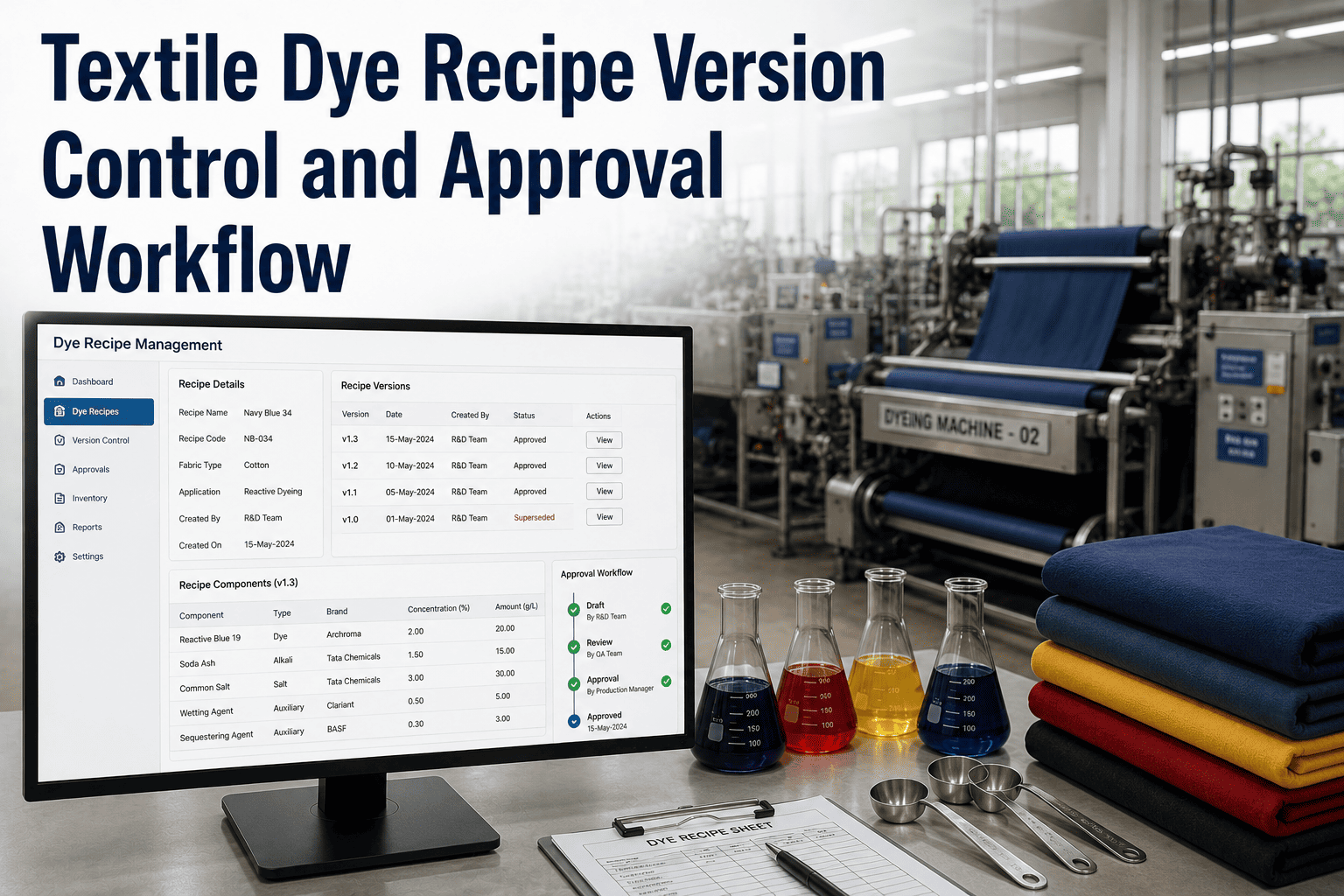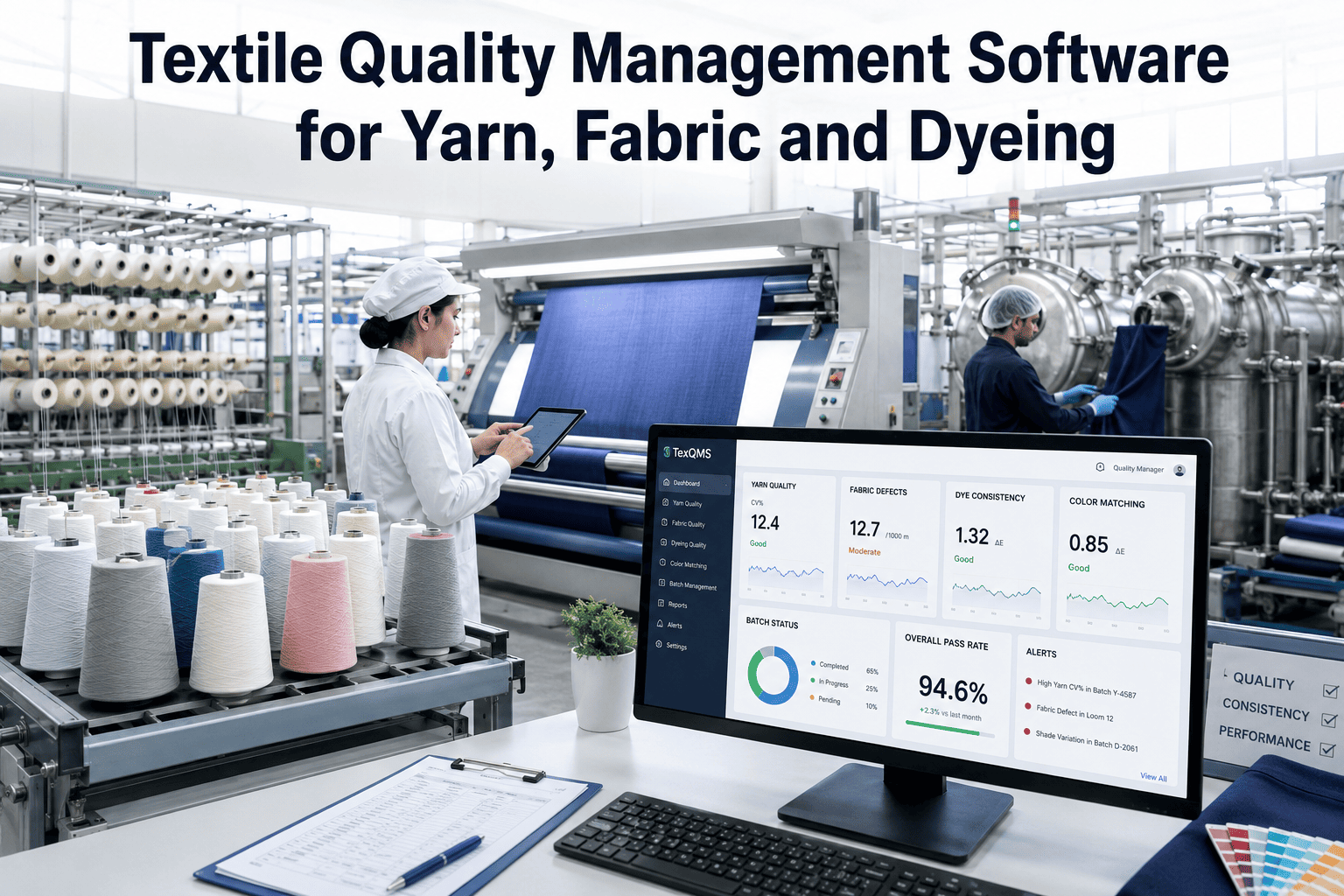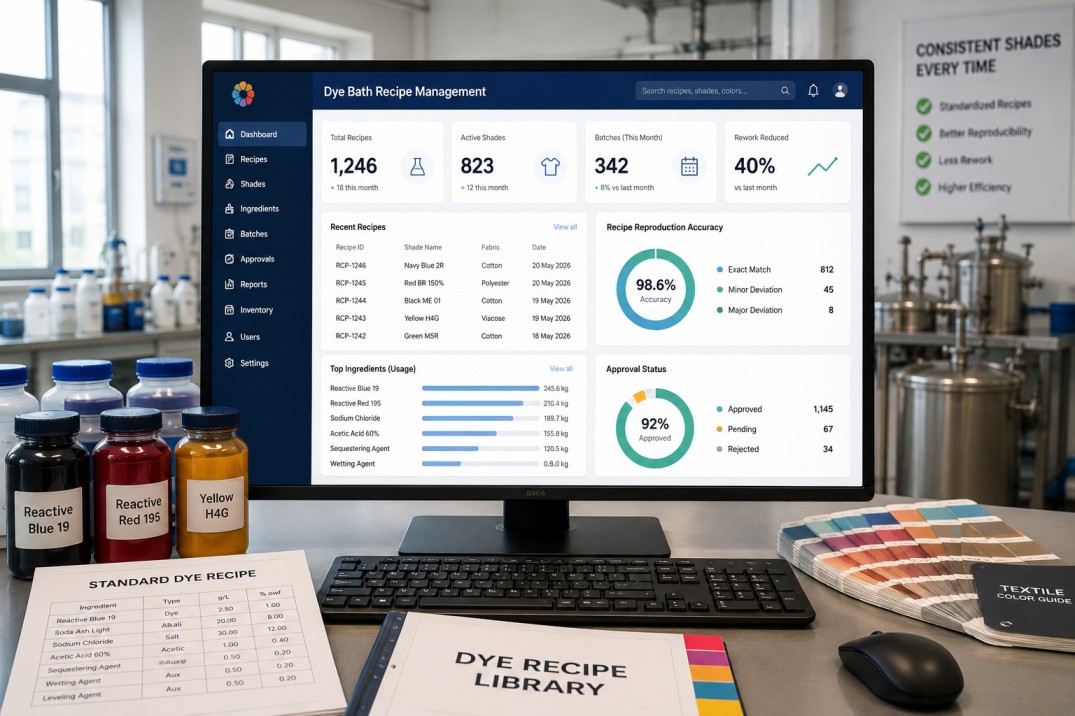
Every dye house has experienced the same costly cycle: a shade that matched perfectly in the lab fails at production scale, the production batch requires shading additions that consume machine time and chemicals, and the corrected recipe is stored in an operator's notebook rather than in a system that ensures the next run starts from the right formula. For a dye house processing 500,000 kilograms per month, each percentage point of first-time-right below 95 percent represents measurable waste in water, energy, chemicals, and machine capacity. Yet most facilities operate below 75 percent right-first-time, accepting rework as an unavoidable cost of doing business. iFactory Dye Recipe Management Platform centralizes every recipe, substrate specification, and machine profile into a single database that calculates the optimal formula for every combination of shade, fabric, and machine — cutting rework by 40 percent, reducing chemical consumption by 28 percent, and ensuring that every shade produced this year can be reproduced exactly five years from now.
Stop Losing Money to Bad Recipes
iFactory Dye Recipe Management connects your lab dispenser, production machines, and quality control instruments into a single platform that stores every recipe with full substrate, machine, and process parameters. The system learns which recipe-substrate-machine combinations produce the highest right-first-time rates and automatically recommends the optimal formula for every new shade. Dye houses using the platform report 40 percent reduction in rework, 28 percent lower chemical consumption, and 100 percent recipe traceability from first lab dip to final production batch. Book a 30-minute demonstration to see your recipes running on the platform with your actual substrates and machine profiles.
Three Pillars of Recipe Management Excellence
Effective dye recipe management rests on three interconnected capabilities. Weakness in any one pillar creates a ceiling on the others, limiting the overall right-first-time performance the dye house can achieve.
From Lab Dip to Production Batch: The Recipe Lifecycle
A successful recipe passes through four stages from creation to production. Each stage generates data that feeds back into the system, making every subsequent recipe more accurate than the last. iFactory connects these stages into a continuous improvement loop.
Formulation & Lab Dip
The platform calculates the initial recipe based on the target shade, substrate type, and available dyes. The lab dispenses and dyes a sample, and the spectrophotometer reading is compared against the target. The system automatically adjusts the formula until the lab dip passes.
Recipe Approval & Release
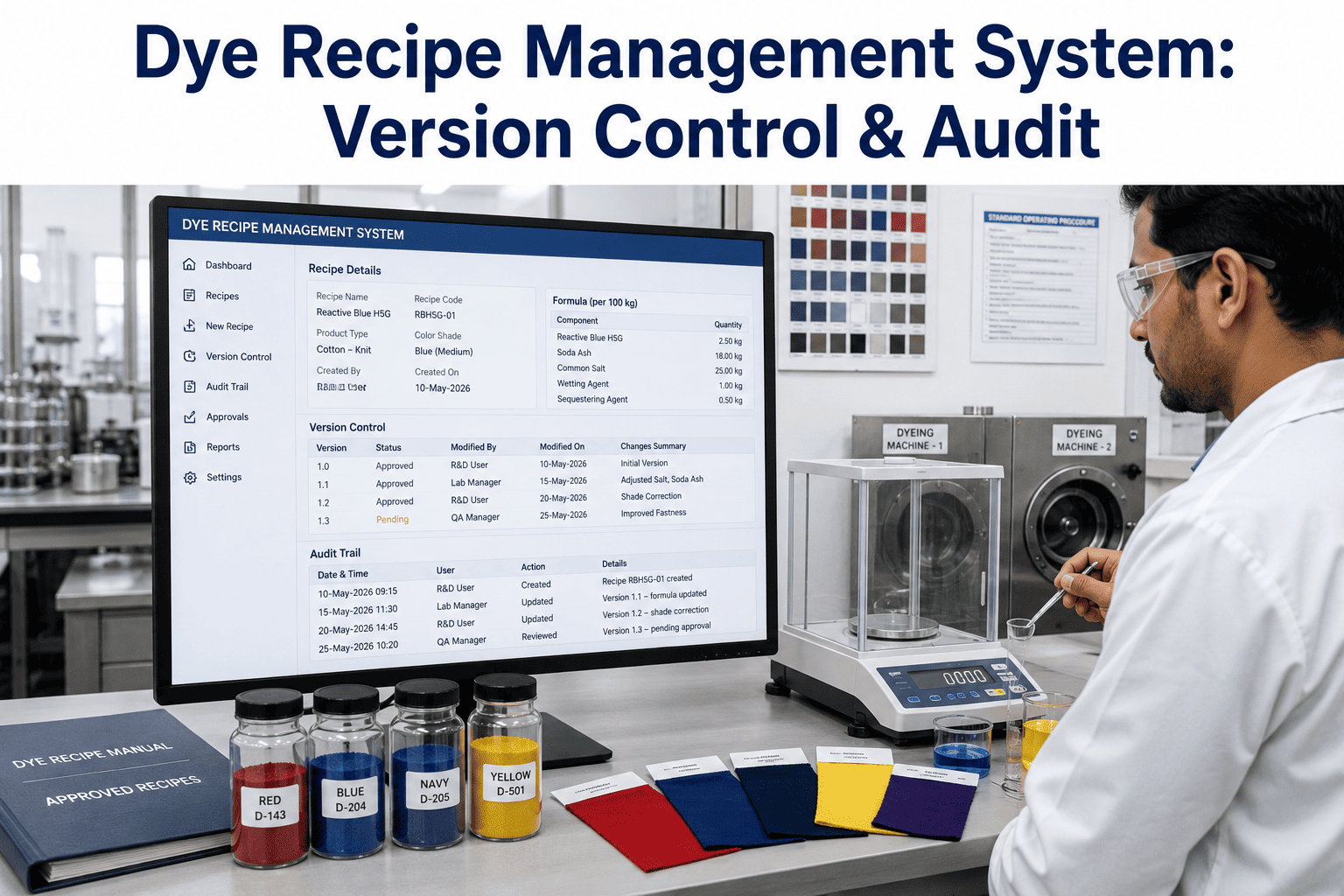
The approved recipe is locked in the database with a version number, effective date, and authorized signatory. The system prevents production from using an outdated or unapproved recipe version. Substrate and machine assignments are recorded for correlation.
Production & Monitoring
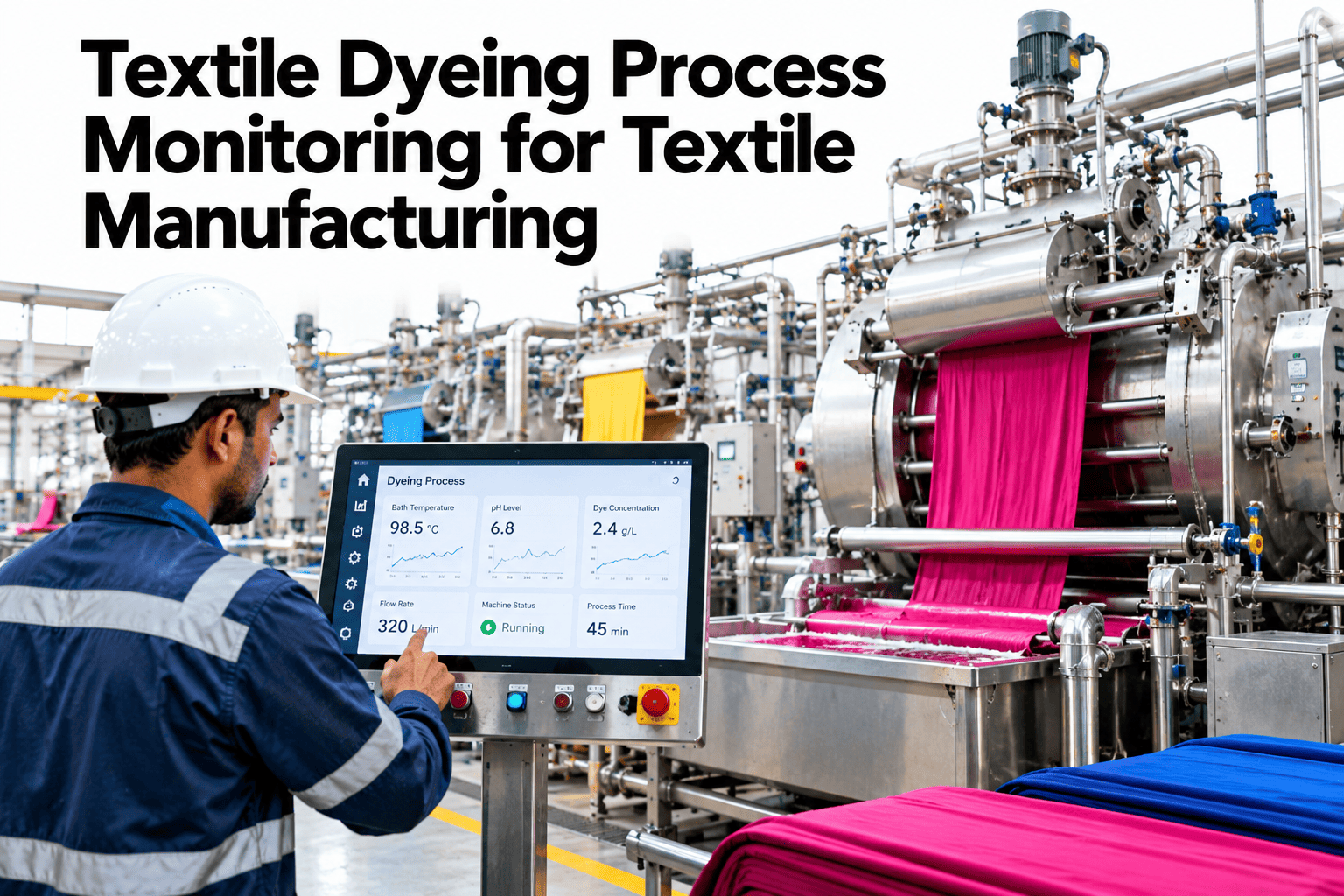
The recipe is pushed to the production dispenser and machine control system. Real-time monitoring tracks process parameters against the recipe specification. Any deviation alerts the operator before the shade is affected. Batch outcome is recorded automatically.
Feedback & Learning
The batch outcome — pass, shade addition, or reject — is recorded against the recipe version, substrate roll, and machine. The AI model uses this data to refine its predictions. The next time a similar shade is requested on a similar substrate, the starting recipe is more accurate.
Turn Every Batch Into a Smarter Recipe for the Next One
iFactory Dye Recipe Management captures the outcome of every batch — pass, shade addition, or reject — and uses that data to continuously improve the accuracy of every future recipe. The system learns which dye lots produce the strongest color yield, which machines deliver the best reproducibility for specific substrate types, and which recipe adjustments compensate for seasonal fabric absorbency variations. Dye houses using the platform see their right-first-time rate improve by 2 to 3 percentage points per month during the first six months as the AI models accumulate production data and refine their predictions. The result is a self-improving recipe system that requires less operator intervention with every passing month.
What a Recipe Management Deployment Covers
Deploying a centralized recipe management system involves four workstreams, each delivering specific capabilities that build on the previous one. The phased approach ensures the dye house sees value from week one while the full system comes online over 8 to 10 weeks.
- Extract all existing recipes from spreadsheets, notebooks, and legacy systems
- Standardize recipe format with dye concentrations, substrate codes, and machine profiles
- Validate each recipe against historical batch outcome data
- Import approved recipes into the centralized database with version control
- Connect spectrophotometer for automated lab dip pass-fail evaluation
- Integrate lab dispenser for recipe-driven dispensing without manual entry
- Link production machine controllers for real-time parameter monitoring
- Configure batch outcome recording from production floor terminals
- Train initial AI models on historical recipe and batch outcome data
- Calibrate machine-specific correction factors for each production unit
- Set up substrate absorbency compensation models per fabric type
- Enable auto-learning from batch outcomes with continuous model updates
- Configure role-based access for lab technicians, dyers, and managers
- Set up recipe approval workflow with electronic signatures
- Deploy production floor terminals for recipe viewing and batch recording
- Train staff on recipe retrieval, batch logging, and deviation reporting
What Centralized Recipe Management Delivers
Dye houses that implement a centralized recipe management platform with AI optimization report consistent improvements across five key performance indicators. The metrics below represent averages across iFactory deployments in textile wet processing facilities.
Frequently Asked Questions
How does the platform handle dye lot strength variation between batches?
The platform tracks the actual strength of every dye lot received and stores it in the inventory database. When a recipe is created or retrieved, the system calculates the precise dosage adjustment required to compensate for the difference between the current dye lot strength and the reference strength used in the original recipe. If a dye lot is 5 percent stronger than the reference, the platform automatically reduces the recipe dosage by 5 percent. This compensation happens at the individual dye component level, not as a blanket adjustment, so the color balance across the recipe is preserved. Operators see the adjusted dosage on the recipe card alongside the original formula, with a clear annotation showing the strength compensation applied.
Can the platform integrate with existing lab dispensers and production dyeing machines?
Yes, iFactory Dye Recipe Management integrates with lab dispensers from Datacolor, X-Rite, Mathis, and AHBA, and with production dyeing machines from Thies, Then, Fong's, Loris Bellini, and all major OEMs. The platform supports direct recipe transfer to the dispenser control system, eliminating manual entry errors at the lab stage. For production machines, the platform reads machine parameters during the dye cycle and records the actual process conditions against the recipe version. This integration ensures that every batch outcome is linked to the exact machine settings, dye lots, and substrate used, creating a complete digital record for traceability and AI model training.
How does the AI model improve recipe accuracy over time?
The AI model is trained on historical batch data that includes the recipe used, the actual process parameters recorded, the substrate characteristics, and the batch outcome measured by spectrophotometer. Each new batch adds a data point to the training set. The model identifies patterns such as which machine-substrate combinations consistently require different correction factors, which dye lots produce stronger or weaker yield than their labeled strength, and how seasonal fabric absorbency variations affect shade outcome. As the data set grows, the model's predictions become more precise, reducing the number of lab dip iterations needed and increasing the first-time pass rate in production. The model retrains automatically on a configurable schedule, typically weekly during the first three months and monthly thereafter.
What happens to existing recipes stored in spreadsheets or paper records?
The platform includes a data migration service that extracts recipes from spreadsheets, legacy systems, and paper records and imports them into the centralized database. Each recipe is validated during import — the system checks for missing fields, inconsistent units, and duplicate shade codes. Recipes that pass validation are assigned version 1.0 with a timestamp and source annotation. Recipes that require clarification are flagged for review by a designated dye house staff member. The migration process also cross-references imported recipes against historical batch outcome data when available, assigning a confidence score to each recipe based on its historical pass rate. Low-confidence recipes are prioritized for AI model refinement during the initial training period.
How does the platform ensure that production always uses the correct recipe version?
Recipe version control is enforced at every stage of the workflow. When a recipe is created or modified in the lab, it enters a pending state that requires electronic approval from an authorized dyer or manager. Only approved recipes are visible to production floor terminals. When a production batch is created, the operator selects the shade code and substrate, and the system presents only the latest approved recipe version. If a newer version exists but the operator attempts to use an older one, the system blocks the batch and displays the new version with a change log. Expired or superseded recipes are archived but remain accessible for audit and complaint investigation. Every batch record stores the exact recipe version used, creating a complete and tamper-proof audit trail.
See Your Recipes Running on the Platform
Schedule a 30-minute demonstration to see iFactory Dye Recipe Management working with your actual shade codes, substrates, and machine profiles. The demo shows recipe creation, lab dip evaluation, AI-optimized dosage calculation, and production batch tracking — all using your data. No commitment, no pressure — just a clear view of how centralized recipe management cuts rework, reduces chemical consumption, and ensures every shade can be reproduced years later. Dye houses that move forward after the demo typically go live with their own recipes within 8 weeks.