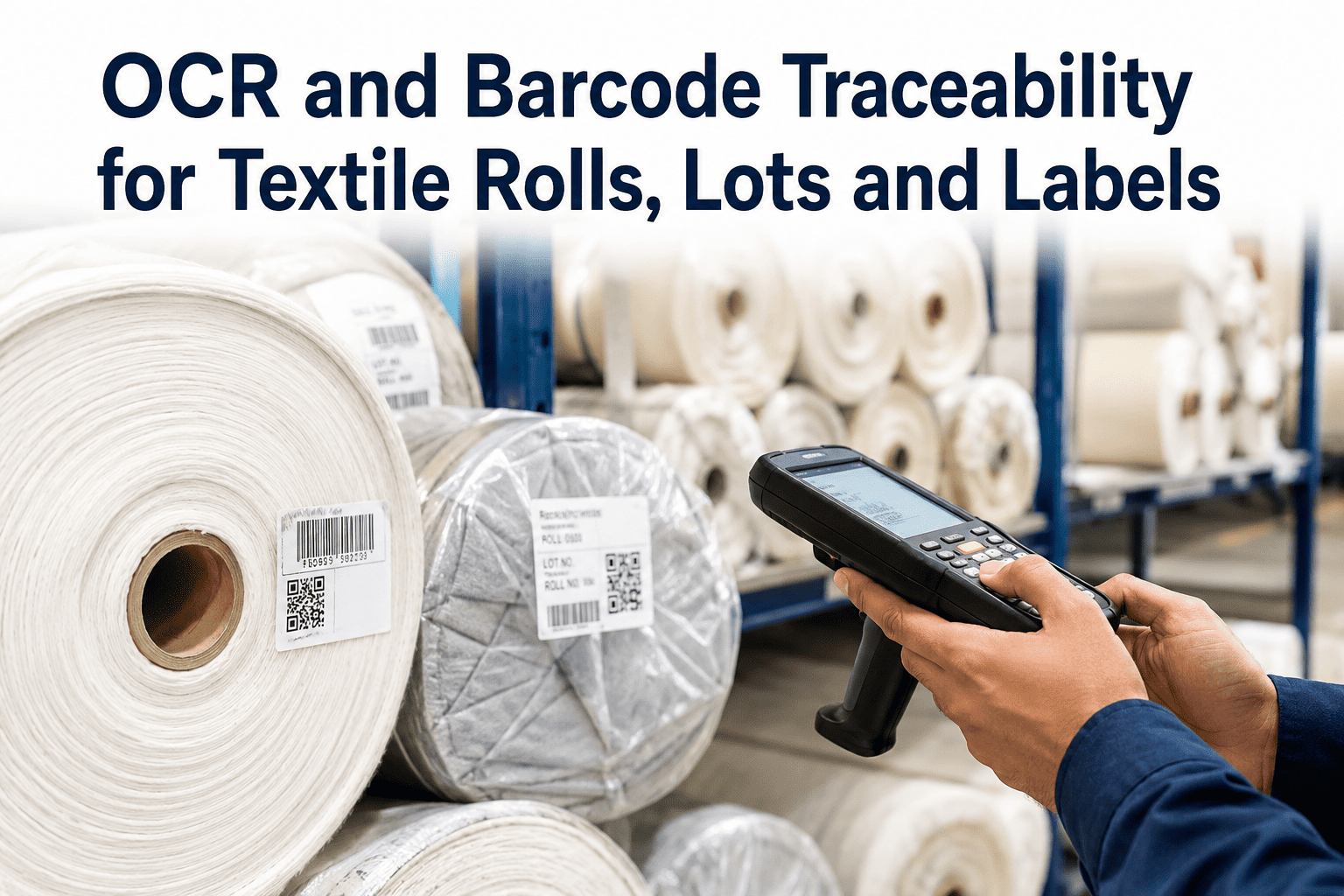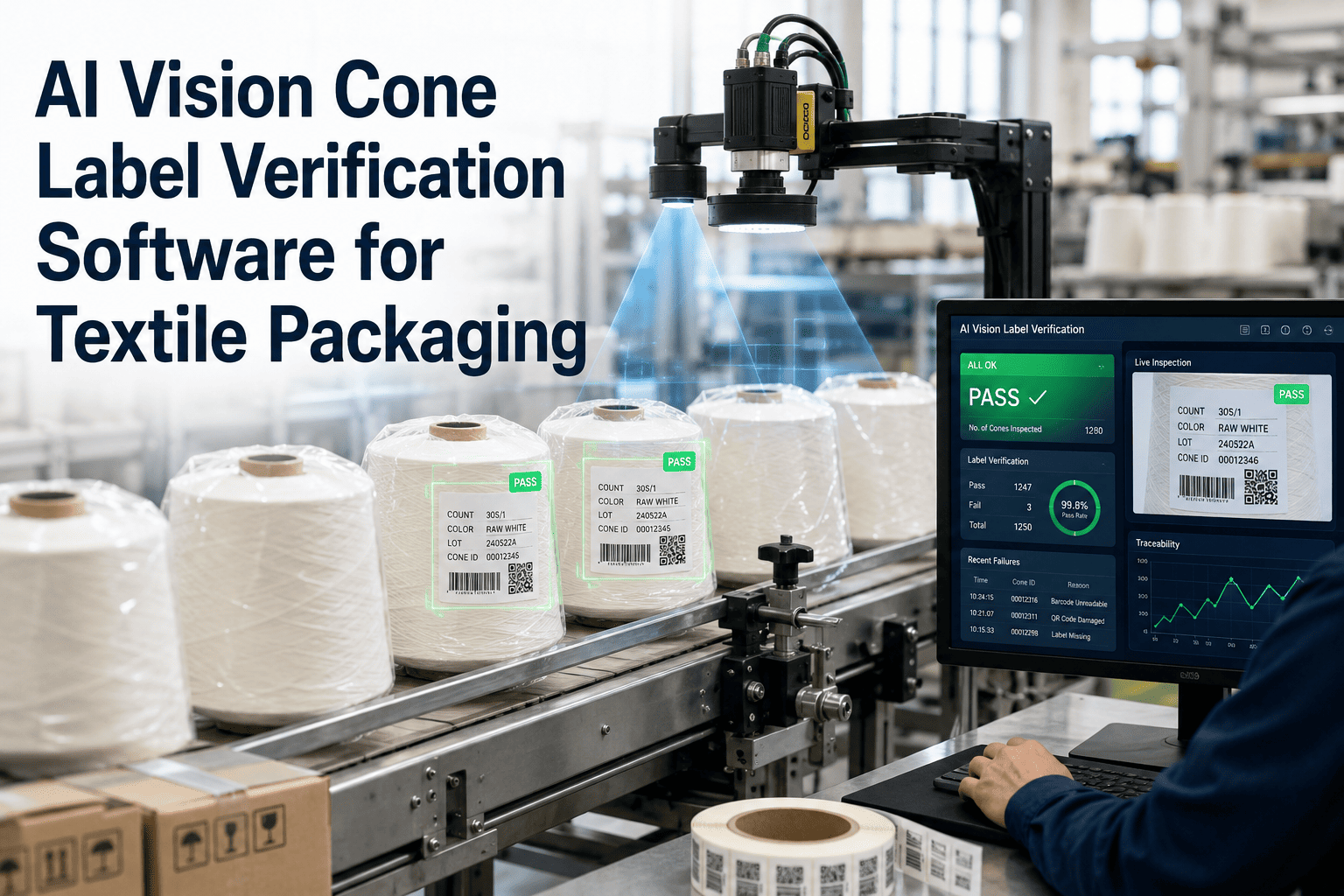
A wrong label on a yarn cone doesn't announce itself until a customer receives the wrong count, the wrong lot, or a barcode that won't scan at their receiving dock, and by then it's a shipment dispute rather than a quick catch on the floor. Manual label checks at dispatch rely on someone glancing at a barcode and a printed count and trusting it matches the order, which works until volume climbs and glances get faster. AI vision with OCR reads every label, verifies the barcode, and cross-checks the count against the order before the cone is packed, closing the gap between what's on the label and what's actually in the box. Dispatch and packaging teams can book a demo to see label verification running against real order data.
AI VISION · CONE LABEL VERIFICATION
Make Sure Every Label Matches Every Order, Every Time
AI vision with OCR reads labels, verifies barcodes, and cross-checks counts against the order before dispatch, catching mismatches your team would otherwise find out about from a customer.
Label Text
Barcode
Count Match
Order Reference
Why Label Errors Slip Through Manual Checks
Checking a label manually means glancing at a barcode, reading a product code, and trusting a count, all in a few seconds per unit at dispatch speed. That works fine when everything is correct, but it's not designed to catch the rare mismatch, since a barcode that's slightly smudged or a count that's off by a small margin doesn't stand out at a glance the way a completely wrong label would. Those small errors are exactly the ones that turn into a customer-side discovery instead of a floor-side catch.
Every Cone
Label, barcode, and count get verified on every unit, not a sample
85%+
Real-time detection accuracy achievable with trained AI vision and OCR systems
Before Dispatch
Mismatches are flagged before the box is sealed, not after it ships
SEE VERIFICATION RUN LIVE
Watch Label and Barcode Checks Happen in Real Time
A working session using your own label formats and order data.
Manual Label Checks vs AI Vision Verification
| Manual Label Check | AI Vision Verification |
|---|---|
| Relies on a quick glance at dispatch speed | Reads and cross-checks every label automatically |
| Smudged or partial barcodes often pass unnoticed | Barcode legibility is verified before packing |
| Count mismatches are hard to catch visually | Counts are cross-checked directly against the order |
| Errors are usually discovered by the customer | Errors are flagged on the floor before shipment |
What a Dispatch Manager Told Us
We had a recurring issue with barcode scans failing at a customer's receiving dock, and it took us months to realize a batch of our labels were printing slightly off-spec. The verification system caught the same issue on our own line within the first week of running.
Dispatch Manager, Yarn Export Unit
Getting Ready for Label Verification
Label Format Samples
Sample labels across product lines help the OCR model learn your specific formats and fonts.
Order Data Connection
Connecting order data lets the system cross-check counts and references automatically at the line.
Barcode Standard Documented
Knowing your barcode symbology and print specification speeds up initial calibration.
Frequently Asked Questions
Can it read labels in multiple languages or formats?
Yes, the OCR model is trained on your actual label formats and languages, since export-focused mills often print labels in more than one language depending on the destination market. Adding a new label format typically requires a short calibration pass with sample labels before it reaches full reading accuracy. Teams can book a demo to see multi-format reading in action.
What happens when a barcode won't scan clearly?
A barcode that fails legibility verification gets flagged for reprinting before the cone is packed, rather than shipping with a barcode that might fail again at the customer's receiving dock. This catches print quality issues at the source instead of leaving them to surface as a customer complaint weeks later.
Does this need a connection to our ERP or order system?
Count and order reference cross-checking works best with a connection to your order or ERP system, since that's what lets the system confirm a label's count actually matches what was ordered rather than just confirming the label is readable. Integration options for your current systems can be discussed through support.
Can this run alongside the cone package inspection system?
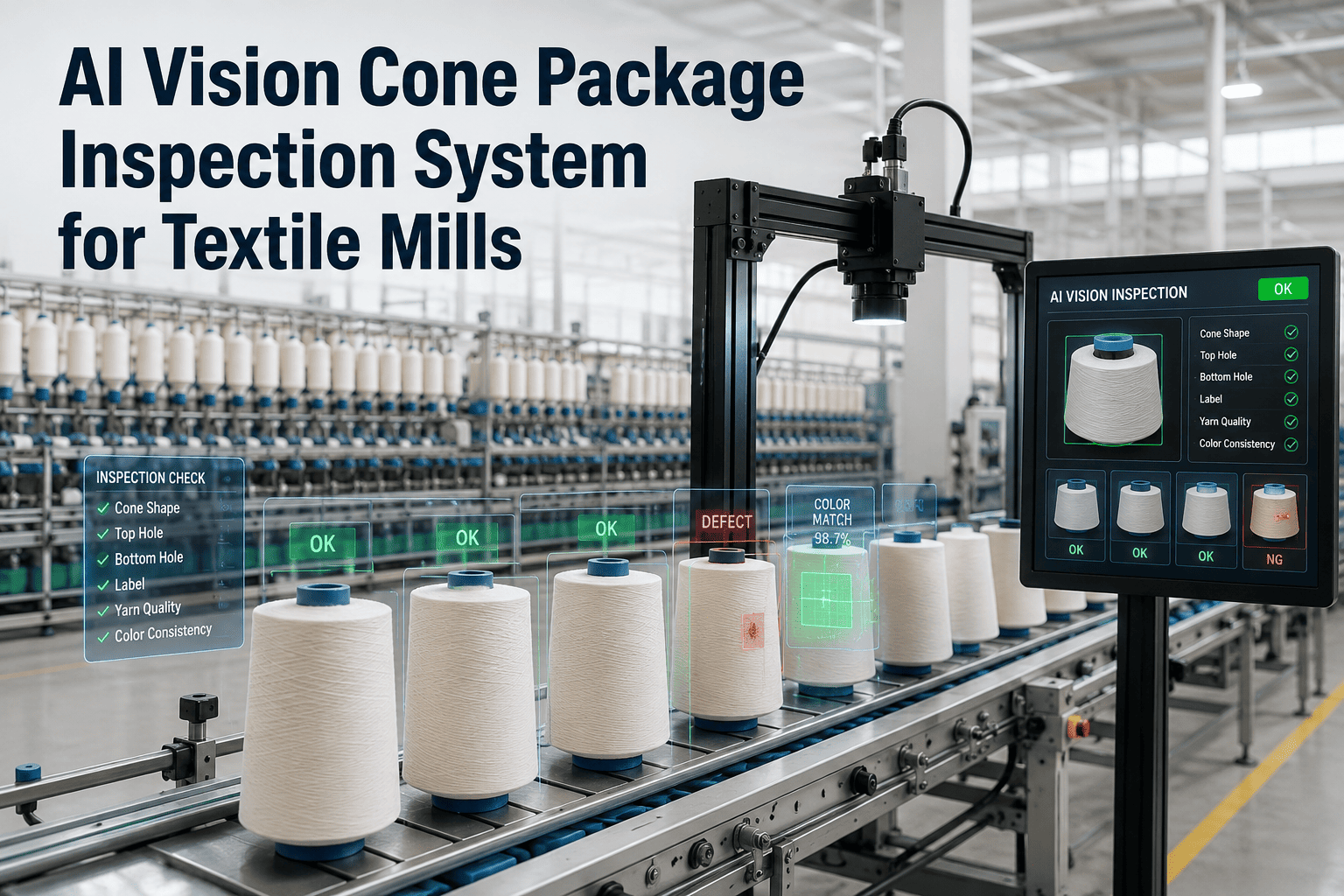
Yes, label verification and package inspection are commonly deployed together at the same dispatch point, since both use the same camera infrastructure and feed into the same pre-shipment quality check. Running them together typically means a single inspection stop handles both label and package quality before a cone is boxed.
How long before the system reaches reliable accuracy?
Most deployments reach usable reading and verification accuracy within two to four weeks once label samples and order data connections are in place, with a shadow mode period recommended before verification decisions are handed over fully. Accuracy typically improves further over the following months as the system sees more real label variation.
CLOSE THE LABEL ERROR GAP
Verify Every Label Before It Leaves the Floor
See how verification accuracy compares to your current dispatch process.