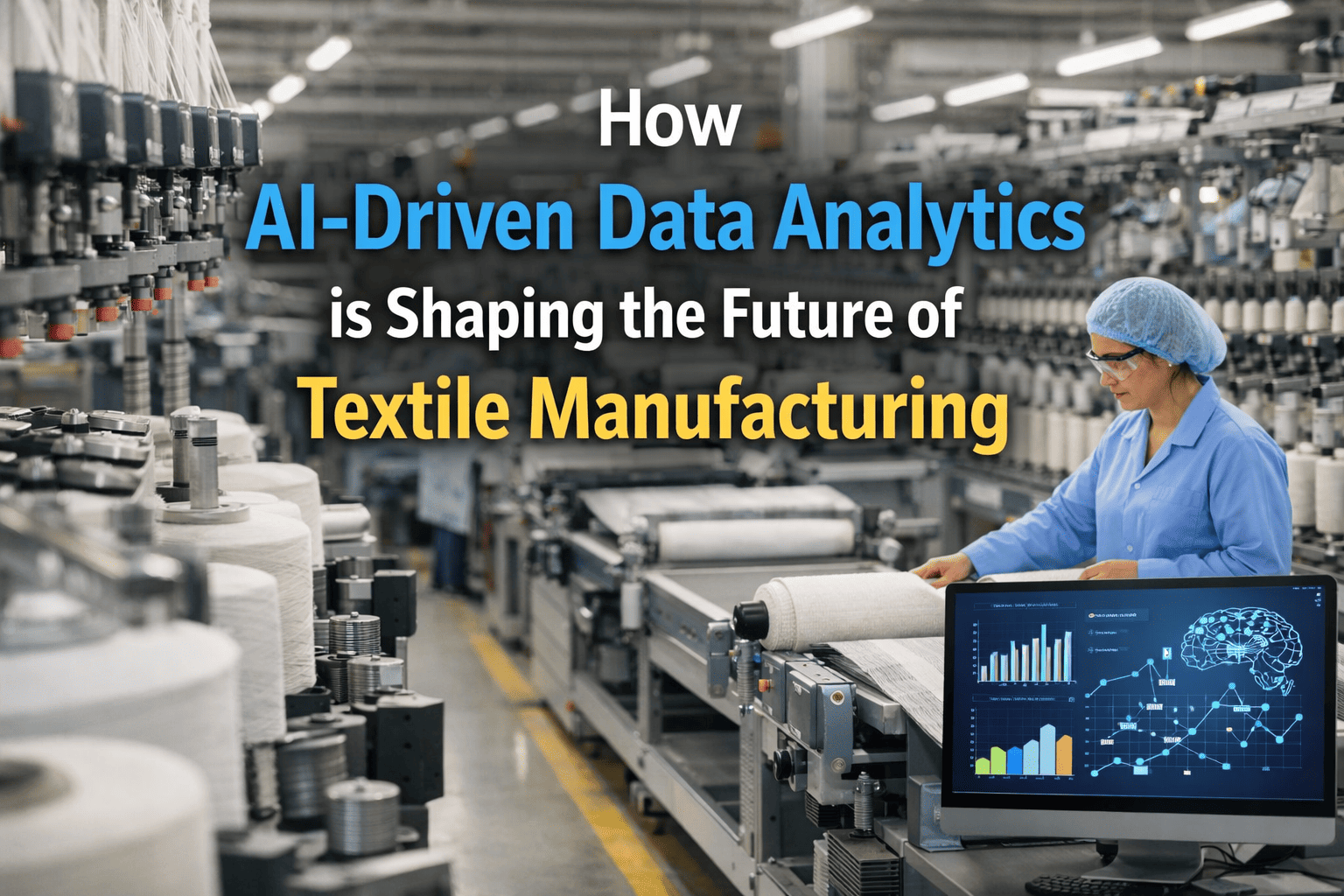
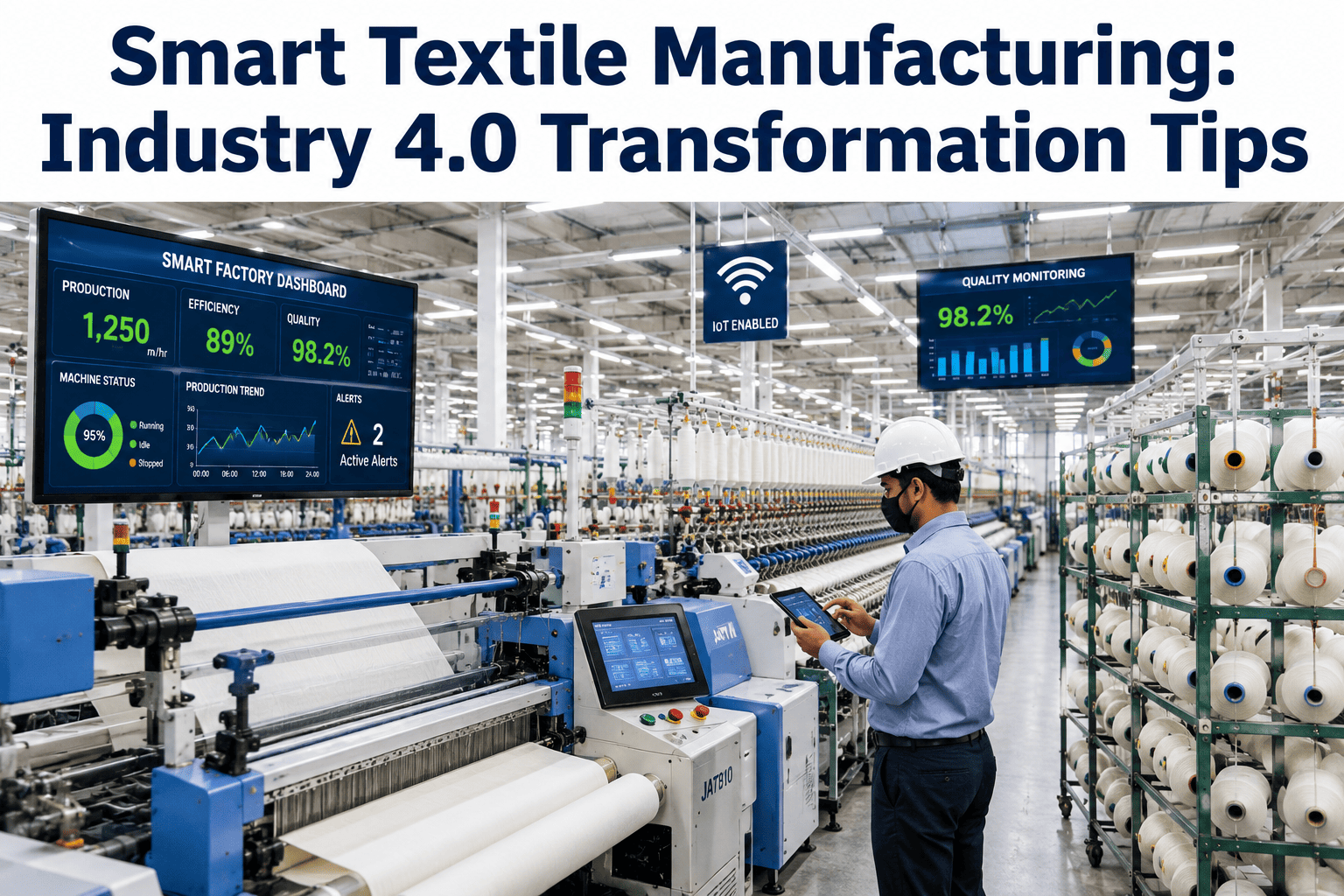
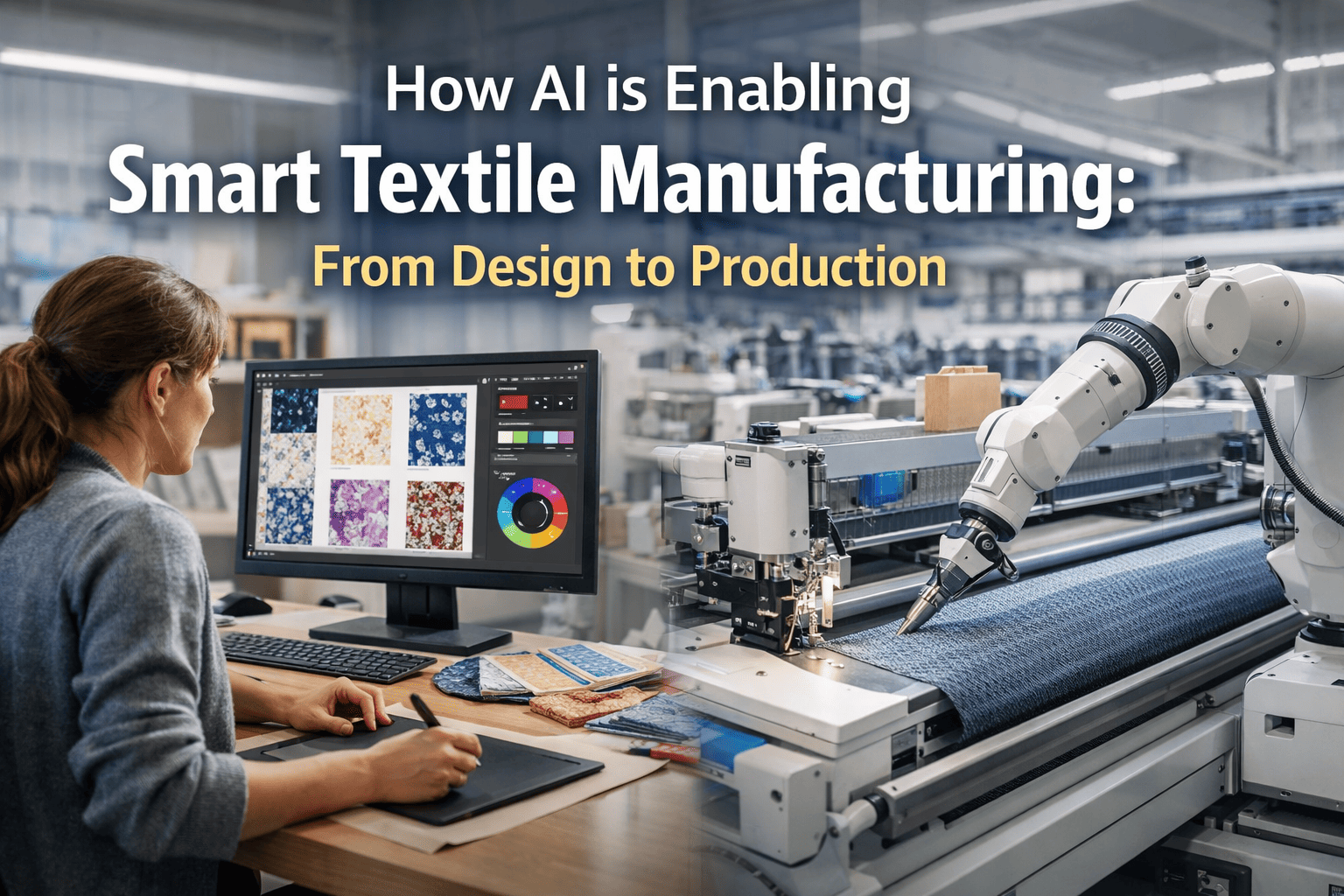
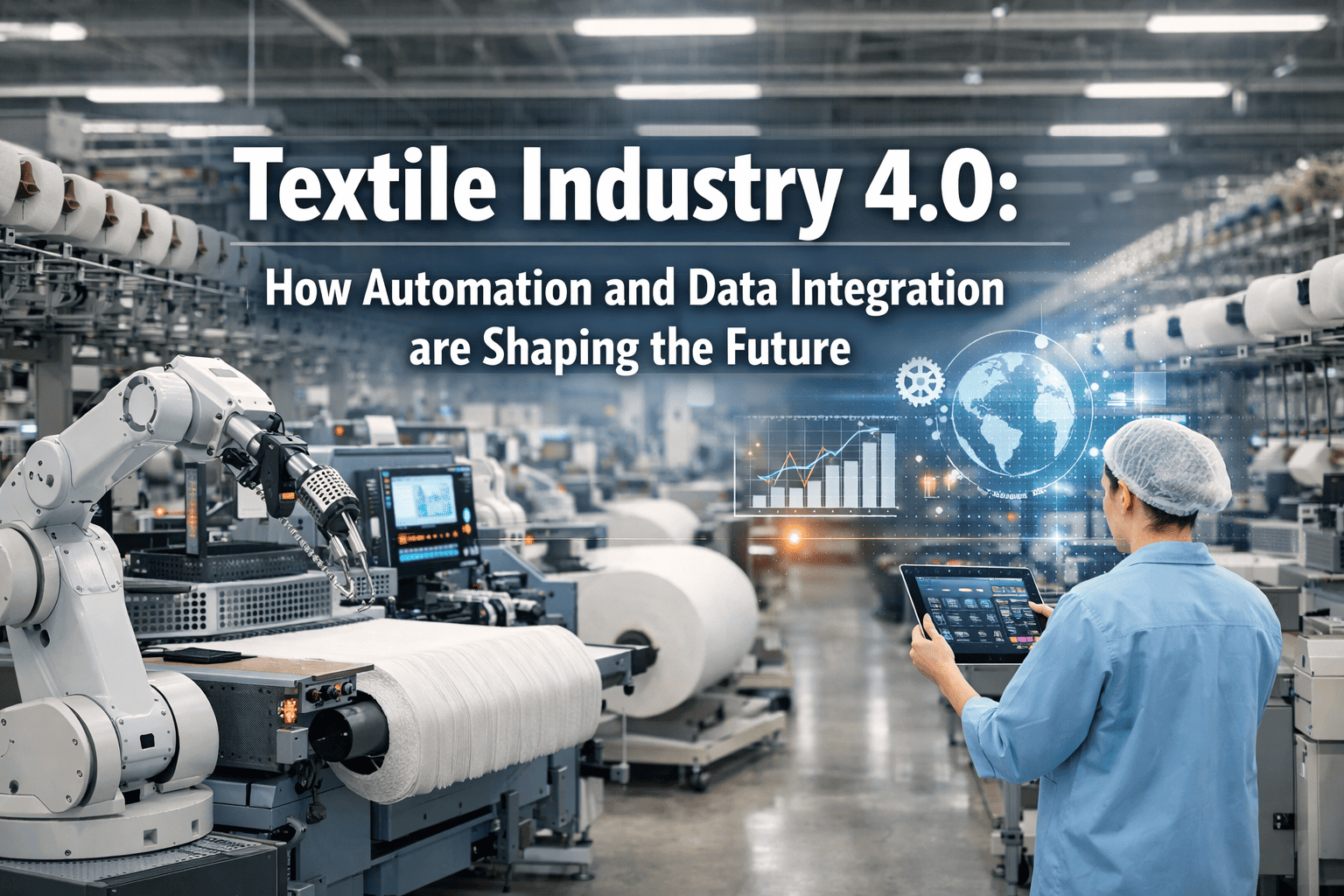
The textile industry has always run on decisions — which materials to stock, when to schedule maintenance, how much to produce. But for most manufacturers, those decisions have been driven by gut instinct, outdated spreadsheets, and reactive firefighting. AI-driven data analytics is changing that entirely: turning live production data into actionable intelligence that cuts waste, eliminates defects, and keeps machines running before they fail. This guide breaks down exactly how AI analytics works on the factory floor — and why manufacturers who adopt it now are building a competitive edge that's very hard to close. If your team is ready to explore where to start, our support team is available to help you map the right analytics approach for your facility.
Industry Intelligence · Textile Manufacturing
AI-Driven Data Analytics in Textile Manufacturing
From reactive guesswork to predictive precision — how smart data is reshaping quality, efficiency, and profitability across the textile factory floor.
Book a Demo
$68.4B
Projected global AI in textile market by 2035 (CAGR 32.45%)
40%
Reduction in unexpected equipment failures after AI predictive maintenance
99%
Defect detection accuracy with AI-powered computer vision inspection
30%
Reduction in inventory carrying costs using AI demand forecasting
Why Traditional Textile Manufacturing Is Flying Blind
Most textile facilities generate enormous volumes of data every single day — machine sensor readings, loom cycle times, yarn tension values, dye bath temperatures, inventory movements — yet almost none of it is analyzed in real time. The result is a production environment that reacts to problems rather than preventing them.
Defects Caught Too Late
Fabric defects discovered at the end of a production run mean entire batches are written off. Manual inspection misses subtle inconsistencies — color deviations, fiber faults, weave gaps — that AI vision catches at the source.
Unplanned Machine Downtime
Looms, spinning frames, and dyeing machines fail without warning. A single unplanned stoppage disrupts the entire production schedule. Reactive maintenance costs 3–5x more than predictive intervention before failure.
Inventory Imbalances
Overproduction ties up capital in unsold stock. Underproduction means missed orders. Without demand forecasting analytics, most manufacturers either overshoot or undershoot — rarely hitting the optimal target.
Excessive Resource Waste
Dyeing, finishing, and washing processes consume water, chemicals, and energy at rates that vary widely across production runs. Without AI optimization, manufacturers routinely use 15–25% more resources than necessary.
What AI Analytics Actually Does on the Factory Floor
AI-driven analytics doesn't replace your operations team — it gives them visibility and lead time they've never had before. Here's how it works across five critical areas of textile manufacturing.
Quality Control
Up to 99% defect detection accuracy
01
AI-Powered Quality Inspection
Computer vision systems mounted on production lines scan every meter of fabric in real time — detecting color inconsistencies, fiber defects, weave gaps, and pattern errors that human inspectors routinely miss. Detection accuracy reaches 90–99%, compared to 60–70% with manual inspection. Defective segments are flagged immediately, stopping bad output before it becomes a rejected batch.
Computer VisionReal-time ScanningDefect Flagging
Predictive Maintenance
40% fewer unexpected breakdowns
02
Predictive Maintenance Analytics
Vibration sensors, thermal monitors, and weft sensors on spinning frames, looms, and dyeing machines feed continuous data into an AI analytics engine. Machine learning models identify anomaly patterns that precede failure — giving maintenance teams a 24–72 hour window to intervene before a breakdown occurs. The result: a 40% reduction in unplanned downtime, and maintenance costs that shift from emergency to scheduled.
IoT SensorsAnomaly DetectionScheduled Maintenance
Demand Forecasting
20–30% less inventory waste
03
Demand Forecasting & Production Planning
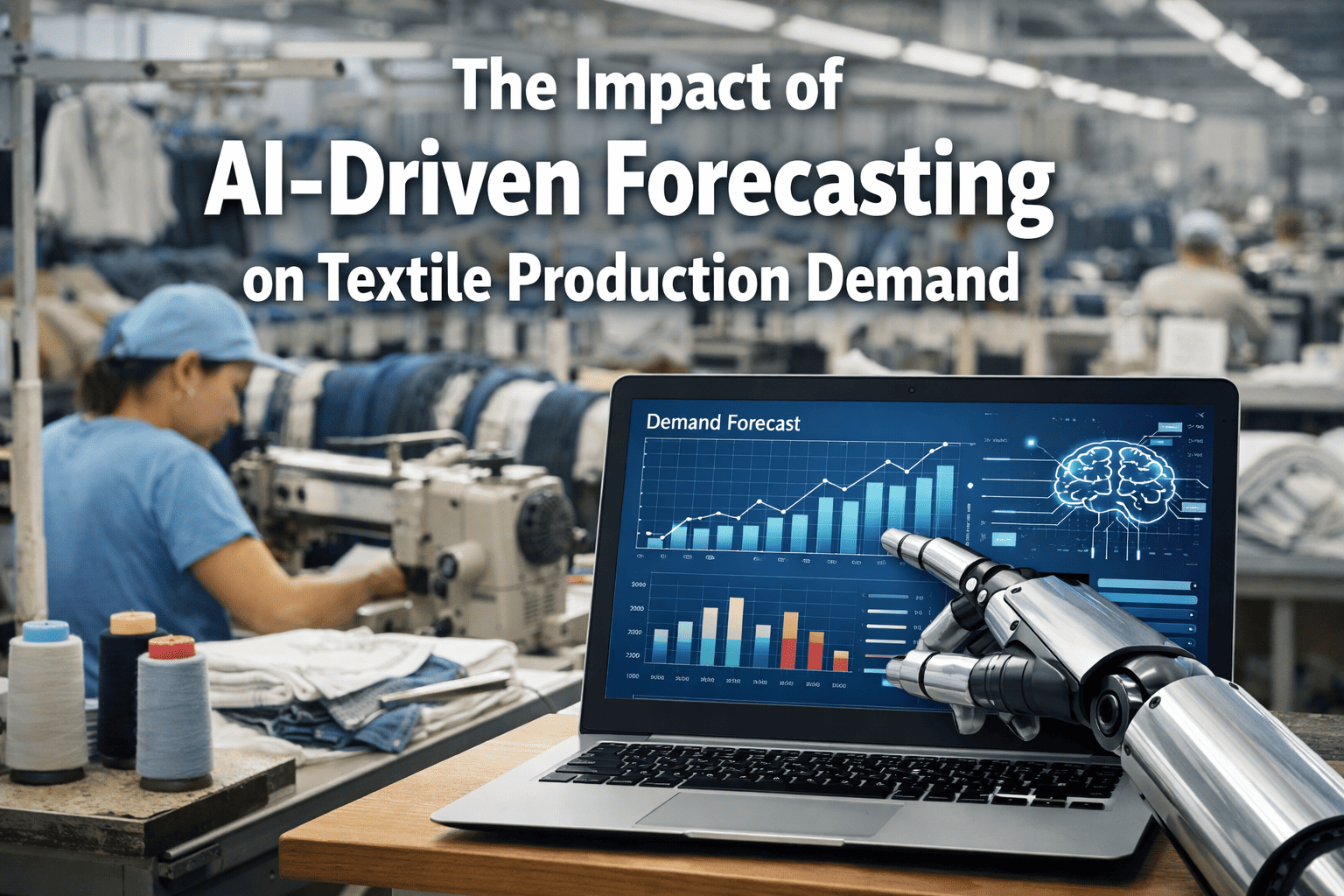
AI models analyse historical order data, seasonal patterns, raw material pricing, and real-time market signals to forecast demand with significantly greater accuracy than manual planning. Companies using AI forecasting reduce inventory waste by 20–30% while simultaneously reducing the risk of missed orders. Production schedules become dynamic rather than fixed — adjusting as input signals change.
ML ForecastingDynamic SchedulingInventory Optimisation
Resource Optimisation
Up to 20% water use reduction
04
Dyeing & Resource Optimisation
AI-guided fine-tuning of dyeing and finishing operations reduces water consumption by up to 20%, minimises chemical inputs, and cuts energy use per unit output. Machine learning algorithms adjust parameters — dye bath temperature, wash cycle duration, chemical concentration — dynamically based on fabric type, batch size, and target colour. What once required a master dyer's intuition now runs on data.
Process OptimisationEnergy EfficiencySustainability
Supply Chain
Faster, leaner fulfilment
05
Supply Chain & Logistics Intelligence
From raw material procurement to finished goods delivery, AI analytics identify bottlenecks, model supplier risk, and optimise inventory movement. Companies that apply AI to supply chain management report significantly reduced lead times and lower carrying costs — with the added benefit of real-time visibility into every stage of the chain, replacing end-of-month reporting with live operational dashboards.
Supply VisibilitySupplier RiskLive Dashboards
Ready to see what AI analytics looks like inside a real textile facility? Book a Demo and we'll walk you through iFactory's manufacturing analytics platform live.
The ROI of Getting Smarter With Data
The business case for AI analytics in textile manufacturing is no longer theoretical. Here's what manufacturers are measuring after deployment.
40%
Reduction in Unplanned Downtime
Predictive maintenance analytics — scheduling repairs before breakdown instead of after
30%
Faster Time to Market
AI-enabled prototyping and production scheduling compress product development cycles
20%
Less Textile Waste Per Run
Smart cutting systems and process optimisation reduce fabric offcuts and batch rejections
30%
Lower Inventory Carrying Costs
AI demand forecasting aligns production output to actual market demand signals
Traditional vs. AI-Driven Manufacturing — Side by Side
Defect Detection
Manual visual inspection · 60–70% accuracy
Computer vision · 90–99% accuracy · real-time
Maintenance Scheduling
Breakdown-triggered · high emergency cost
Predictive alerts · 24–72 hr advance warning
Production Planning
Monthly spreadsheet · static schedule
Live AI model · dynamic adjustment
Resource Usage
Fixed process parameters · excess consumption
ML-optimised inputs · 15–20% waste reduction
Supply Chain Visibility
End-of-period reports · lag decisions
Real-time dashboards · instant action
Inventory Management
Overstocking or shortages · reactive ordering
Demand-matched production · 30% lower costs
The Market Has Already Made Its Decision
AI adoption in textile manufacturing is not a future trend — it's a present reality that is reshaping competitive dynamics globally. The manufacturers who move now are the ones setting the benchmarks that laggards will be measured against.
$4.1B
Global AI in textile market value in 2025
32.45%
Annual growth rate through 2035
50%
Asia-Pacific share of global AI textile adoption
38%
Market share held by ML and deep learning technologies
Asia-Pacific
China, India, Bangladesh leading with government-backed smart factory initiatives
North America
Vanguard of AI conceptualisation — predictive analytics and e-commerce integration
Europe
Germany, Italy, France — AI embedded in sustainable fashion and production quality
LATAM & MENA
Early-stage but fastest emerging — Brazil, Mexico, UAE investing in AI infrastructure
Your Competitors Are Already Using This Data. Are You?
iFactory brings AI-driven analytics to textile manufacturers of every size — real-time production dashboards, predictive maintenance alerts, quality control workflows, and supply chain visibility, all in one platform. Deployed in 7–14 days.
Book a Demo
Common Questions from Manufacturing Teams