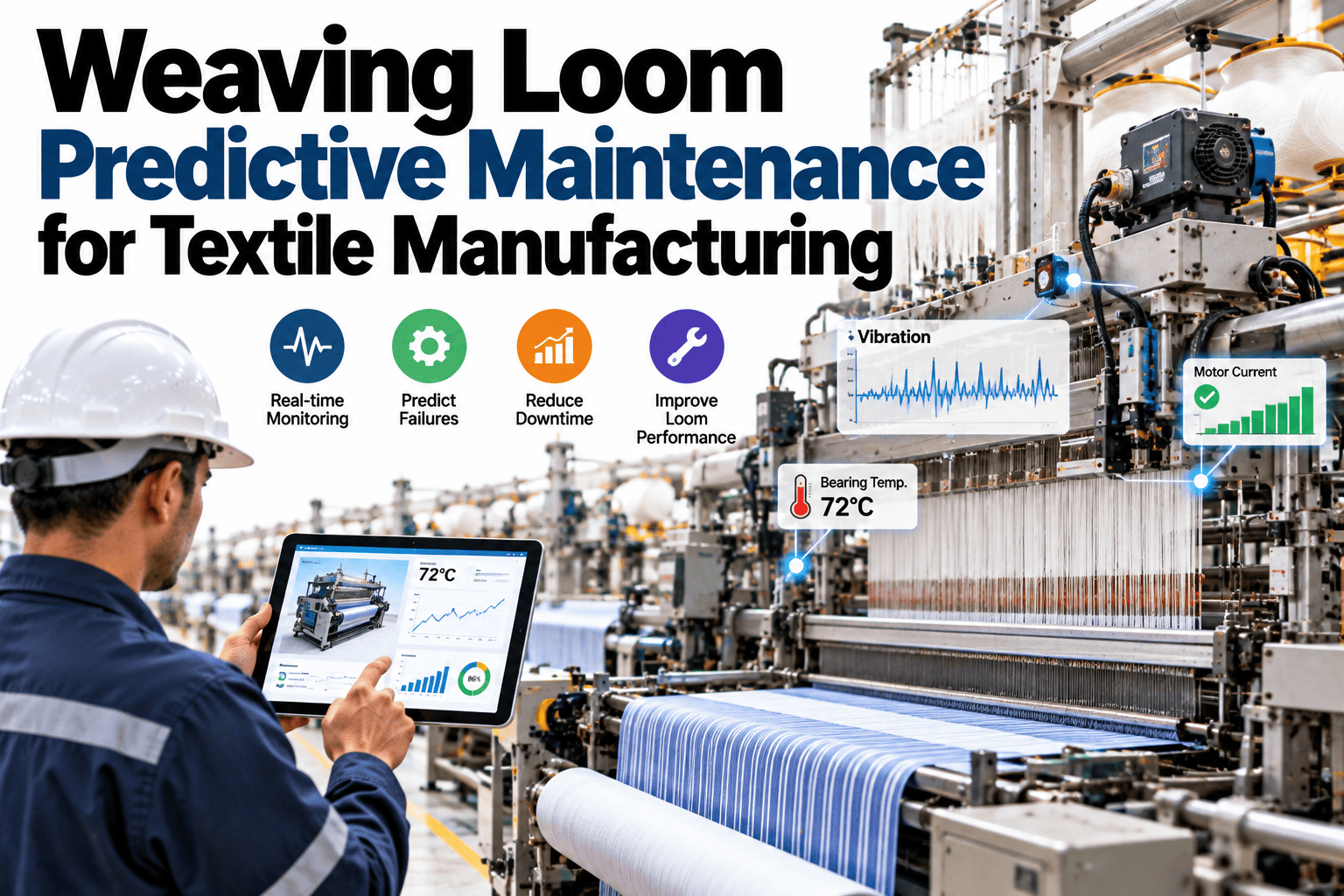
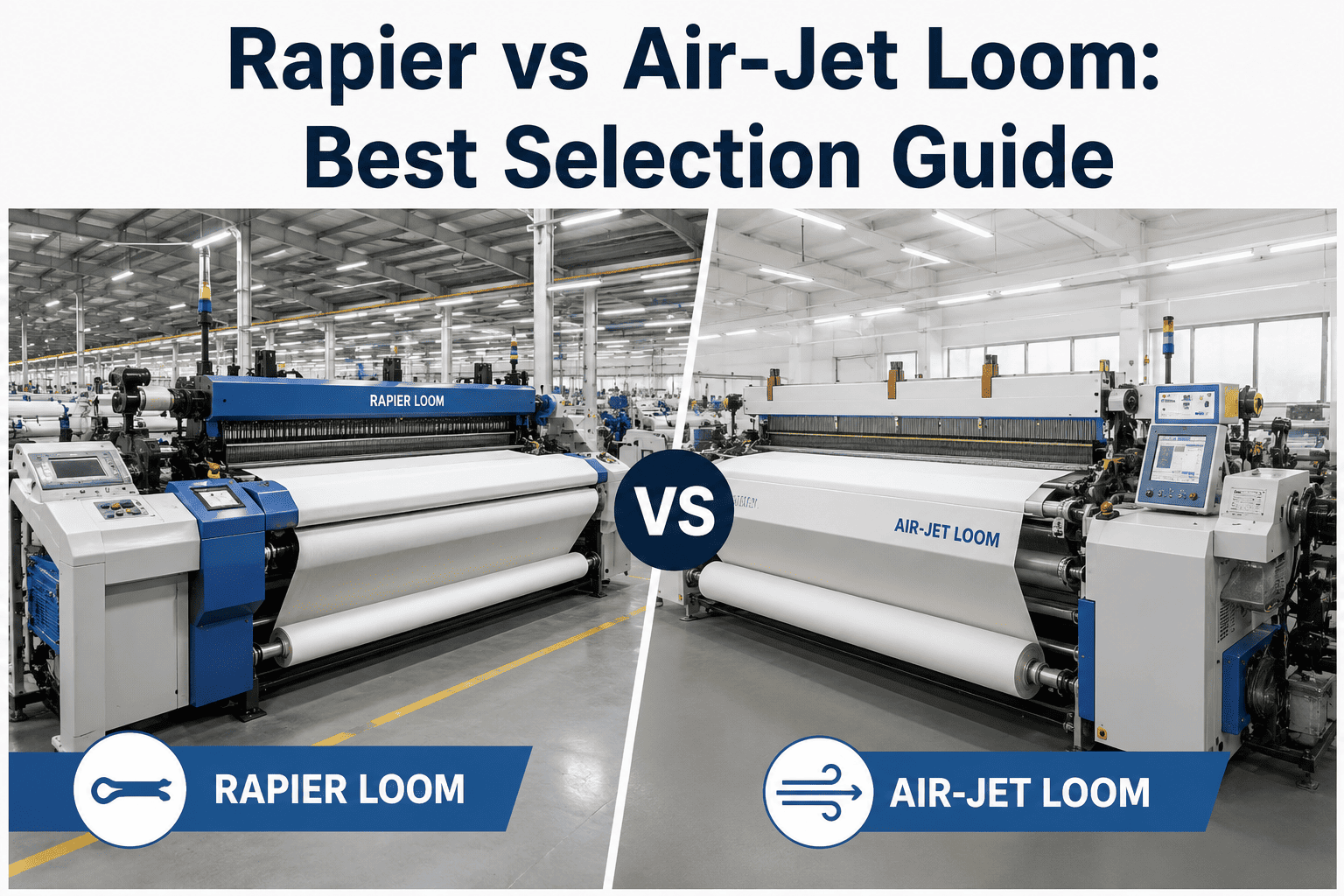
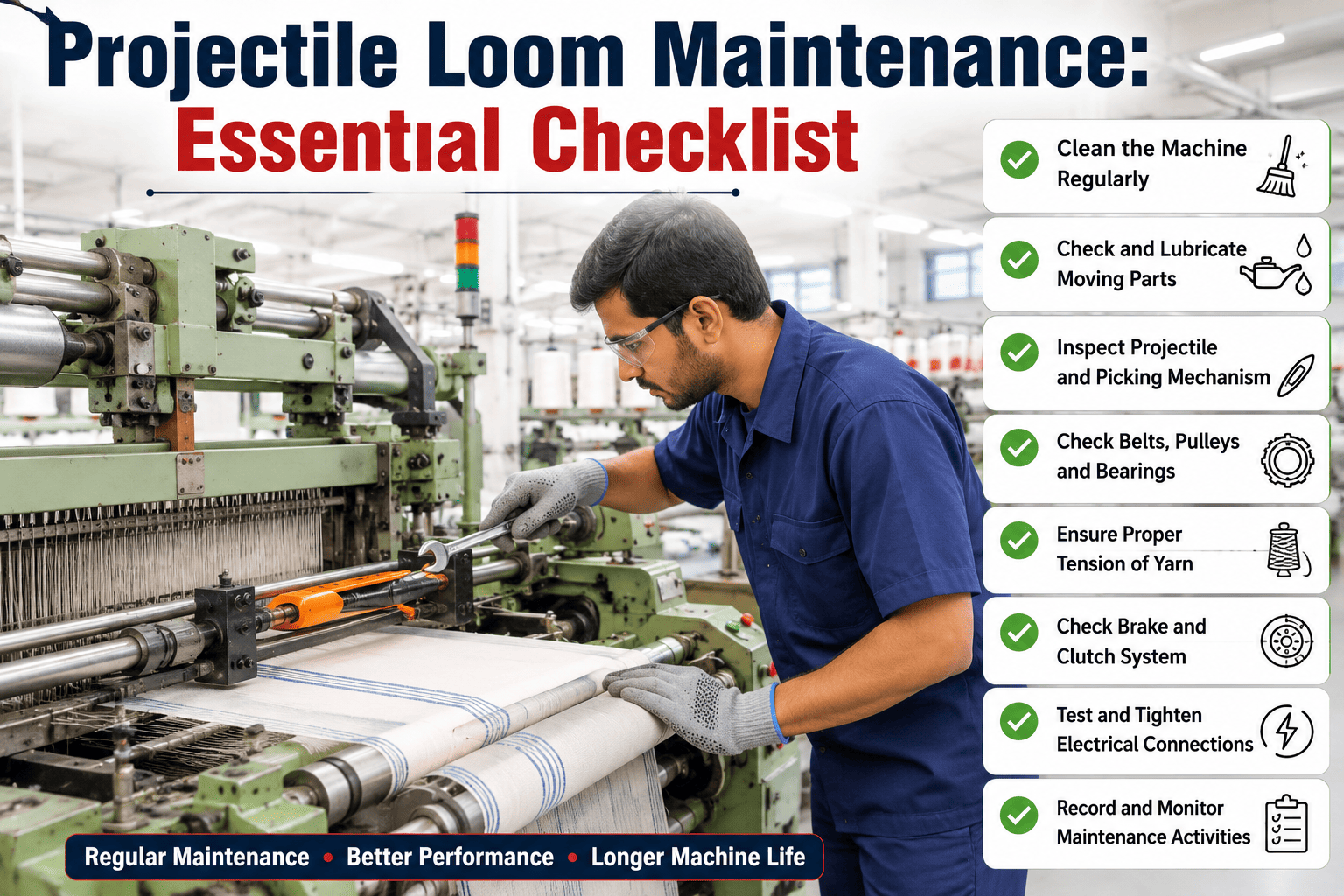
Choosing between air-jet, rapier, and projectile looms is not a speed decision — it is a fabric-portfolio decision. Air-jet looms hit 800–1,200 rpm on plain cotton sheeting but demand uniform yarn quality and consume 30–40% more energy per meter than rapier looms. Rapier looms run at 180–550 rpm across the widest fabric range — from filament to heavy denim — with the lowest energy per pick. Projectile looms occupy the heavy-duty middle at 250–500 rpm, excelling on multi-width technical fabrics and terry. Each loom type optimizes a different point on the speed-versus-flexibility curve, and the wrong selection costs $40,000–$120,000 per year in lost efficiency per 48-loom shed. iFactory Loom Performance Analytics ingests real-time rpm, pick density, stop-causes, and energy consumption across all three loom types to benchmark actual vs. theoretical efficiency and surface the highest-ROI loom allocation for every fabric order. Book a demo to see how mills using data-driven loom selection improve overall weaving efficiency by 8–12% within 90 days.
Benchmark Your Shed''s Actual vs. Theoretical Loom Performance
In a 30-minute walkthrough, our team shows how iFactory''s Loom Performance Analytics benchmarks every loom in your shed against its manufacturer spec and peer-group benchmarks — and identifies which fabric orders should move to a different loom type for 8–12% efficiency improvement.
Air-Jet vs. Rapier vs. Projectile: Side by Side
Each loom type occupies a distinct position in the speed-flexibility-cost triangle. This table compares the parameters that determine which loom fits which fabric portfolio.
| Parameter | Air-Jet Loom | Rapier Loom | Projectile Loom |
|---|---|---|---|
| Weft Insertion Method | Compressed air jet | Rigid or flexible rapier gripper | Metal projectile gripper |
| Typical Speed Range | 800–1,200 rpm | 180–550 rpm | 250–500 rpm |
| Reed Width Range | 150–360 cm | 140–360 cm (up to 540 cm special) | 190–390 cm (up to 540 cm) |
| Yarn Count Range (Ne) | 20–80 (best at 30–60) | 3–80 (full range) | 4–60 (medium to coarse) |
| Weft Color Capacity | Up to 4 colors | Up to 16 colors | Up to 6 colors |
| Energy Consumption | 45–65 kWh/1000 m (highest, compressed air) | 28–40 kWh/1000 m (lowest per pick) | 35–50 kWh/1000 m (moderate) |
| Fabric Weight Range | 30–250 g/m² (light to medium) | 30–600 g/m² (light to heavy) | 80–500 g/m² (medium to heavy) |
| Best Fabric Types | Cotton sheeting, poplin, plain, twill, fine count | Denim, yarn-dyed, terry, technical, decorative, multi-color | Terry, blankets, paper dryer fabrics, heavy technical, multi-width |
| Machine Cost (48-loom shed) | $18K–$35K per loom | $22K–$45K per loom | $30K–$55K per loom |
| Maintenance Cost per Year | $2,800–$4,500 per loom | $2,000–$3,200 per loom | $2,500–$4,000 per loom |
| Labor per Loom | 1 operator per 10–14 looms | 1 operator per 6–10 looms | 1 operator per 8–12 looms |
| Noise Level | 88–95 dB(A) | 84–90 dB(A) | 86–92 dB(A) |
Which Loom for Which Fabric?
The optimal loom type changes with fabric construction, order volume, and yarn quality. Use this decision matrix as a first-pass guide before making capital allocation decisions.
- Fabric weight below 200 g/m²
- Order volume above 50,000 m per style
- Yarn quality consistent (Uster 5% or better)
- Single or 2-color weft only
- Lowest cost per meter required
- Heavy denim or coarse count yarns (
- Multi-color weft patterns (>4 colors)
- Short runs with frequent style changes
- Fabric weight 30–600 g/m² (widest range)
- Multi-color weft (up to 16 colors)
- Yarn-dyed or fancy yarn fabrics
- Technical textiles requiring precise weft control
- Short to medium runs (>5,000 m)
- Ultra-high volume plain fabrics only
- Extremely high-speed production needed (>800 rpm)
- Heavy technical fabrics (>250 g/m²)
- Multi-width weaving on same loom
- Terry toweling and blanket fabrics
- Paper dryer fabrics and industrial textiles
- Medium to long runs with moderate speed
- Fine count yarns (>Ne 60)
- Lightweight sheeting or apparel fabrics
- Quick-change frequent style rotation
Your Shed Has Untapped Efficiency — We Can Show You Where
iFactory benchmarks every loom''s actual speed, stop frequency, energy consumption, and efficiency against manufacturer specs and peer-group data. The result is a prioritized list of looms to reallocate, re-time, or replace.
Five-Year TCO Breakdown per Loom Type
Purchase price accounts for less than 40% of five-year loom cost. Energy, maintenance, labor, and downtime each contribute significantly — and the proportions shift dramatically by loom type. This TCO model assumes a 48-loom shed operating 6,000 hours per year on typical cotton-rich fabric mix.
How iFactory Optimizes Multi-Loom Shed Performance
Mills running mixed-loom sheds face a complexity problem: which loom should run which fabric order for maximum efficiency? iFactory''s Loom Performance Analytics solves it with real-time benchmarking and allocation recommendations.
Real-Time Speed & Efficiency Dashboard
Every loom''s actual rpm, pick density, and efficiency displayed against its manufacturer-rated speed and mill-specific target. Alerts trigger when any loom drops more than 8% below its 7-day average.
Stop-Cause Classification
Automated classification of every stop into warp break, weft break, mechanical, or scheduled. Root cause distribution by loom type reveals which machine category needs preventive intervention.
Fabric-to-Loom Optimizer
Given fabric specifications, the system recommends the optimal loom type and specific loom within the shed. Updates dynamically as fabric orders change and loom conditions shift.
Energy Benchmarking
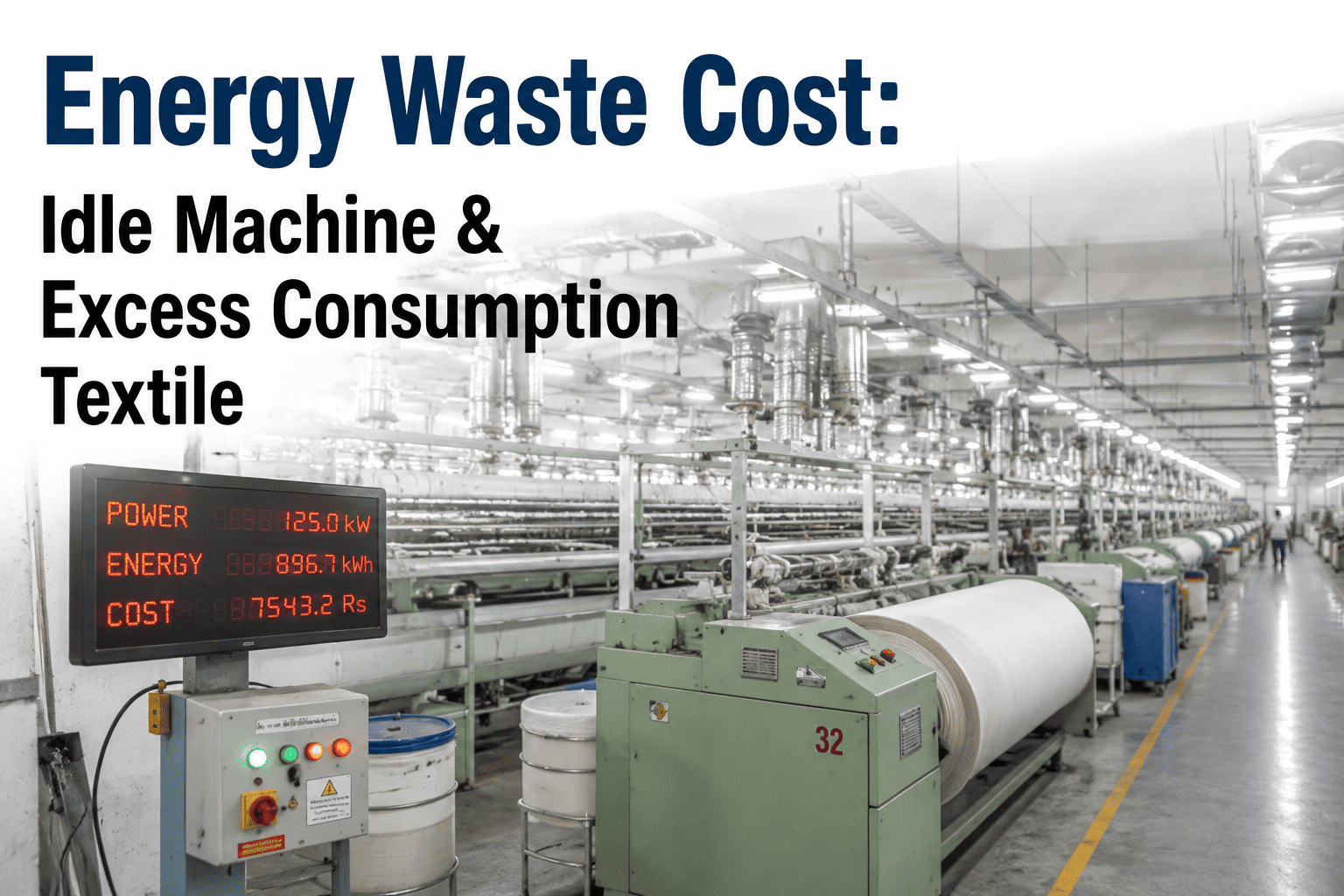
kWh per 1,000 meters tracked per loom and per loom type. Identifies looms consuming more than 15% above peer-group median — often the first sign of air leakage, mechanical drag, or improper timing.
Frequently Asked Questions
Which loom type has the lowest cost per meter of fabric?
Air-jet looms have the lowest cost per meter on long runs of plain cotton sheeting above 50,000 meters per style. The high speed spreads the fixed costs over more output. However, rapier looms often have lower cost per meter on medium runs of 5,000–30,000 meters because they achieve higher effective efficiency (fewer stops) and consume less energy. The crossover point depends on yarn quality, fabric construction, and local electricity price.
Can rapier looms match air-jet speed on plain fabrics?
No. Modern rapier looms operate at 180–550 rpm depending on width and fabric weight, while air-jet looms reach 800–1,200 rpm. The mechanical weft insertion of the rapier limits its maximum speed. However, effective efficiency — actual running speed after deducting stops — often closes the gap because rapier looms stop less frequently on medium-quality yarns. The question is not whether rapier can match air-jet rpm, but whether the effective speed differential justifies the air-jet premium for your specific fabric mix.
What is the optimal loom mix for a mill weaving denim, sheeting, and technical fabrics?
For a diversified mill producing across these categories, a typical optimal split is 40–50% air-jet for sheeting and bulk plains, 30–40% rapier for denim and specialty, and 10–20% projectile for technical fabrics and terry. The exact ratio depends on the volume proportion of each category. iFactory''s fabric-to-loom optimizer can calculate the optimal mix for any mill given its historical order book and loom performance data.
How does energy cost differ between loom types in practice?
Air-jet looms consume 45–65 kWh per 1,000 meters woven — 30–60% more than rapier looms at 28–40 kWh. The compressed air generation accounts for 70–80% of air-jet energy use. In a 48-loom air-jet shed operating 6,000 hours per year, the energy premium over rapier looms exceeds $48,000 annually. However, the higher air-jet output per loom-hour offsets this energy cost if the fabric mix is appropriate. The key is matching loom energy profile to fabric requirements.
Is it worth retrofitting older rapier or projectile looms with monitoring technology?
Yes. Retrofitting sensors and connectivity to existing looms typically costs $800–$1,800 per loom and delivers a 12–18-month payback through reduced downtime, optimized speed settings, and predictive maintenance. Many mills find that monitored older rapier or projectile looms achieve higher effective efficiency than unmonitored newer air-jet looms, because the data enables operators to address issues before they cause stops. iFactory''s retrofit kit installs on any loom make and model.
Stop Guessing Which Loom Should Run Which Fabric.
iFactory''s Loom Performance Analytics benchmarks every loom, classifies every stop, and recommends the optimal fabric-to-loom allocation. The result: 8–12% efficiency improvement across your entire shed without a single capital purchase.