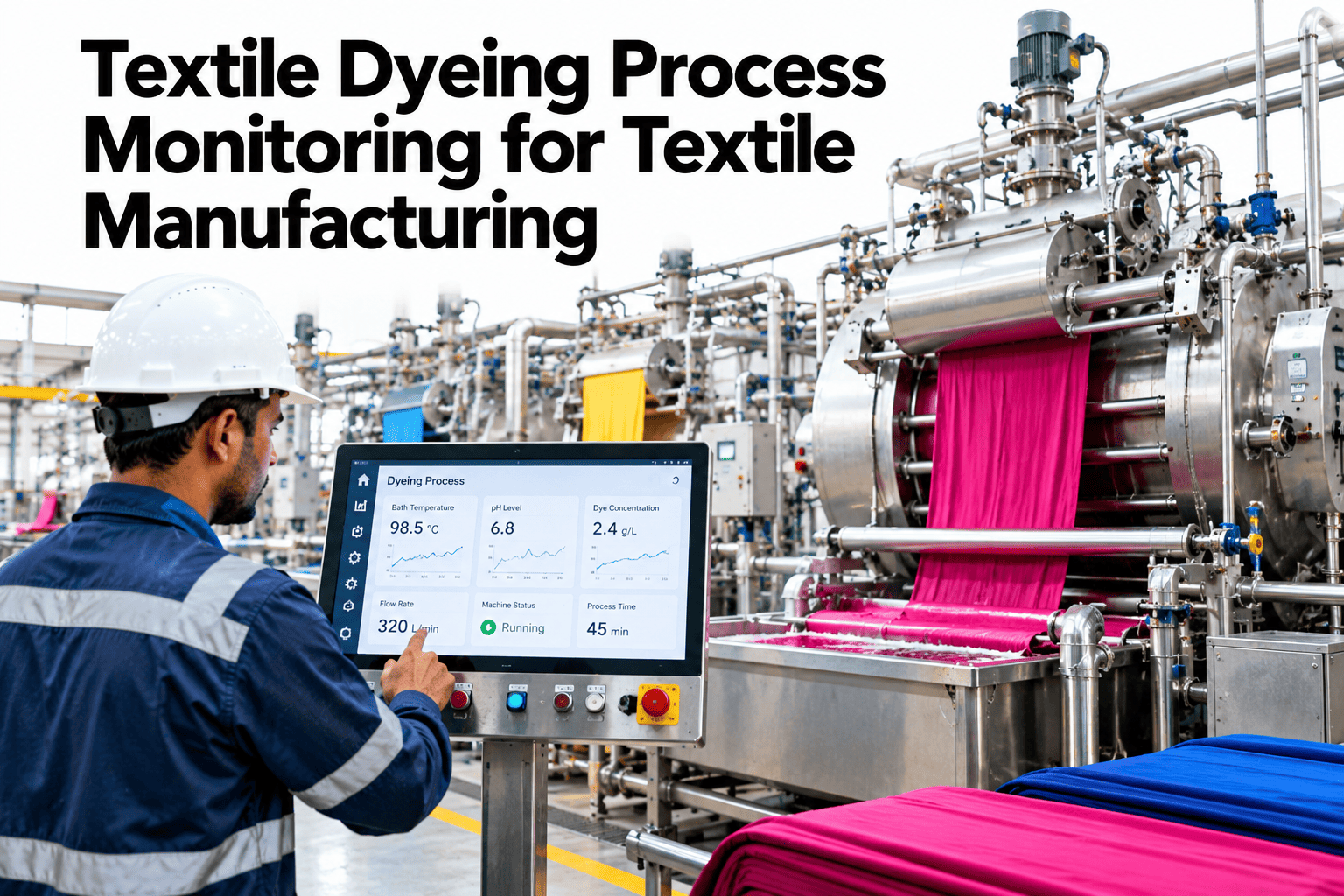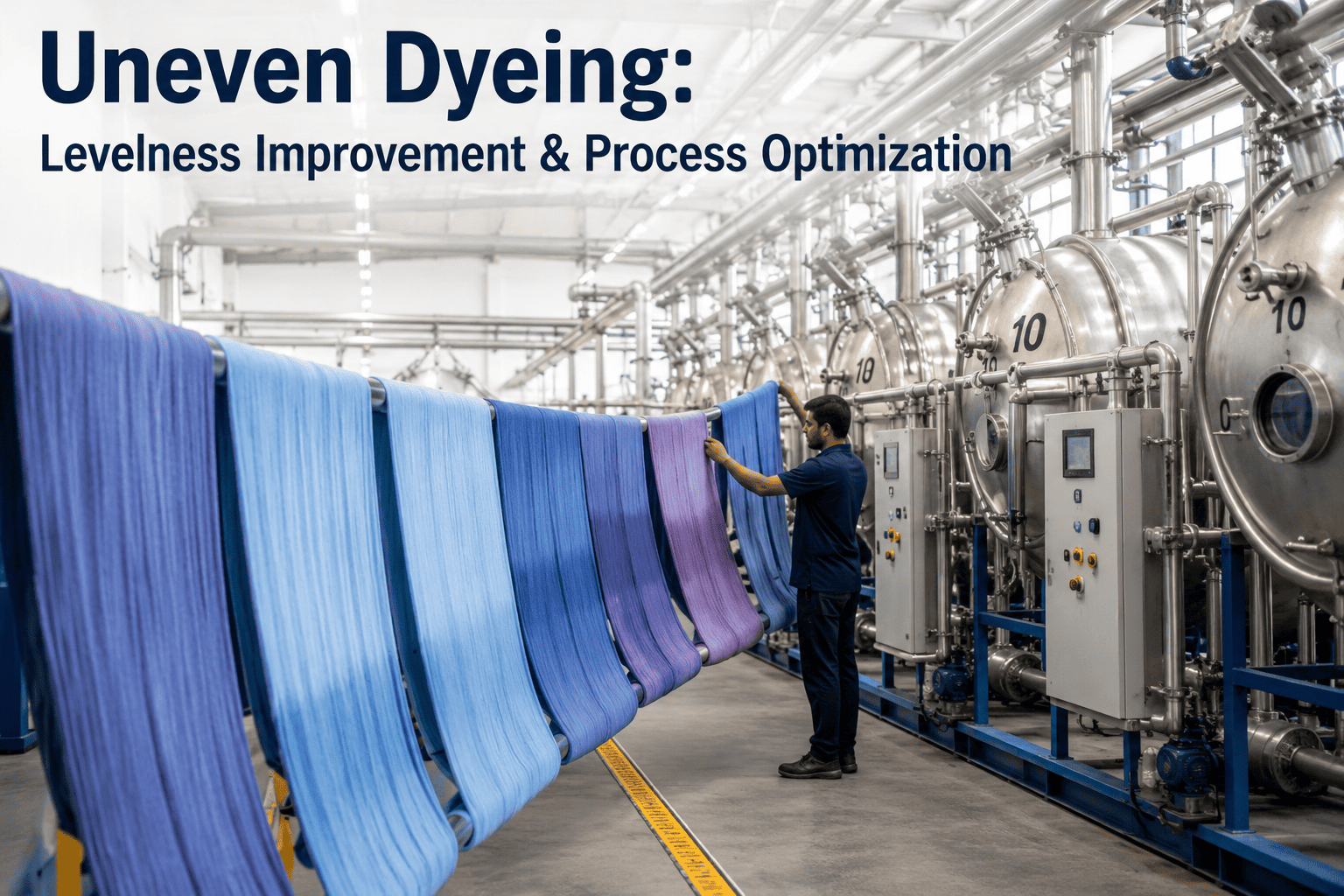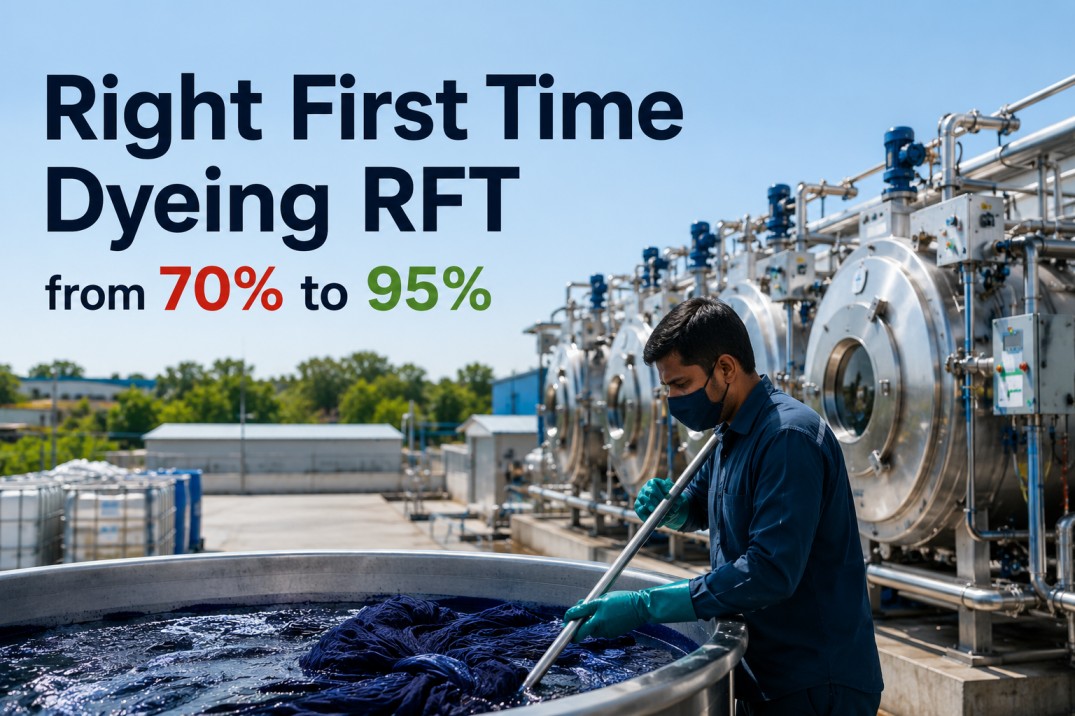
Every percentage point of right-first-time dyeing improvement directly reduces water, chemical, energy, and labor costs in your dye house. Moving from 70% to 95% RFT cuts total production costs by 44%, eliminates rework loops that consume 30% of machine capacity, and reduces dye chemical consumption by a third. Yet most dye houses operate below 75% RFT, accepting rework as inevitable rather than preventable. This framework maps the systematic path from reactive shading corrections to predictive recipe management that delivers 95% first-pass yield.
Transform Your Dye House From 70% to 95% Right-First-Time
A structured RFT improvement program evaluates your current recipe management, dye bath monitoring, and shade approval workflow to identify the highest-leverage interventions. Dye houses that complete this assessment typically identify 15 to 25 percentage points of RFT improvement potential with a payback period under six months on automation investments.
The True Cost of Every Percentage Point Below 95% RFT
Rework in dyeing is not just additional material cost. Each non-first-time batch consumes machine time that could otherwise produce revenue, generates effluent that must be treated, and delays downstream cutting and sewing operations.
The Five Pillars of RFT Excellence
High RFT performance is not achieved through a single intervention. It requires systematic control across five interdependent domains. Weakness in any one pillar limits the ceiling of the others.
Recipe Management
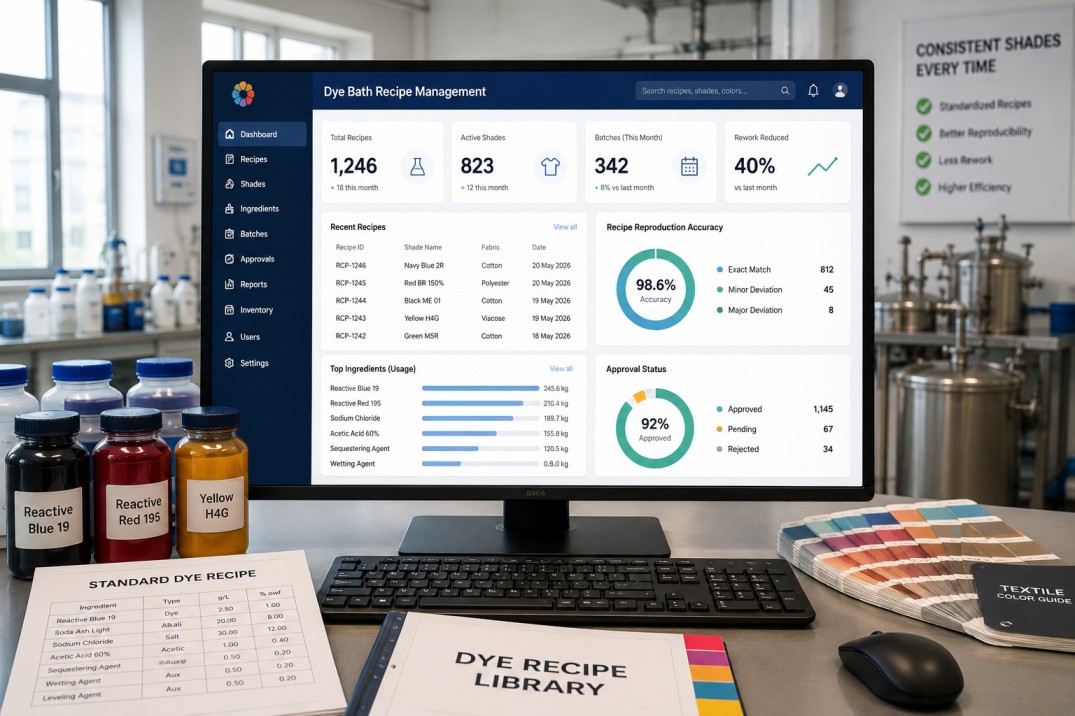
Computer color matching with spectral analysis replaces visual assessment. Recipes are stored digitally with substrate-specific corrections. Automated dispensing eliminates weighing errors that cause 40% of shade mismatches.
Dye Bath Monitoring
Real-time pH, temperature, and conductivity sensors feed process control loops that maintain optimal dyeing conditions throughout the cycle. Deviations trigger automated adjustments within seconds.
Substrate Consistency
Fabric preparation uniformity including absorbency, pH, and moisture content is verified before dyeing begins. Batch-to-batch substrate variation is the leading cause of recipe failure above 85% RFT.
Machine Calibration
PLC-controlled dyeing machines with validated temperature profiles and liquor ratio accuracy. Thermal management systems prevent the drift that causes shade variation between otherwise identical batches.
Feedback Analytics
AI-driven analysis of every batch outcome correlates process parameters with shade results. The system learns which recipe-substrate-machine combinations produce the highest RFT and prescribes optimal settings.
Stop Correcting Shades After the Batch. Start Getting It Right the First Time.
Our dye house analytics platform connects recipe management, real-time dye bath monitoring, and AI feedback loops into a single system that pushes RFT from 70% to 95% within 12 weeks. Every batch automatically records process parameters against shade outcome, building a knowledge base that makes each subsequent batch more predictable than the last. Dye houses using the system report 30% lower water consumption and 28% reduction in chemical costs alongside the RFT improvement.
The RFT Improvement Journey: From 70% to 95% in 12 Weeks
Achieving 95% RFT follows a predictable progression. Each phase builds on the previous one, with measurable milestones that validate the approach before proceeding to the next level of investment.
Baseline Assessment
Audit current RFT by machine, substrate, and dye class. Identify top root causes of rework. Measure lab-to-bulk reproducibility. Establish baseline cost per kg and capacity utilization.
Recipe Standardization
Digitize all recipes with spectral data. Implement automated dispensing for top 80% of dye volume. Establish substrate acceptance criteria. Train operators on digital workflow.
Process Control Integration
Connect dye machines to centralized monitoring. Install pH and conductivity sensors. Implement automated hold-and-correct logic for out-of-range parameters. Calibrate all machines.
AI Feedback Loop
Deploy analytics engine that correlates batch parameters with shade outcomes. System automatically adjusts recipe recommendations based on machine-specific performance data. Continuous learning improves RFT weekly.
What 95% RFT Looks Like in Operational Metrics
The impact of RFT improvement extends beyond the dye house. These metrics show how first-pass yield improvement transforms overall manufacturing performance.
Frequently Asked Questions
What is a realistic RFT improvement timeline for a typical dye house?
Most dye houses can move from 70% to 85% RFT within four to six weeks through recipe digitization and automated dispensing alone. Reaching 95% typically requires an additional four to six weeks to integrate process control monitoring and AI feedback loops, putting full transformation at 10 to 12 weeks. Facilities starting below 60% RFT may require up to 16 weeks due to foundational equipment and workflow issues that must be addressed first.
What is the single highest-impact intervention for improving RFT?
Automated dye dispensing consistently delivers the largest single improvement, typically adding 8 to 12 percentage points of RFT. Manual weighing errors account for approximately 40% of shade mismatches in conventional dye houses. Replacing manual weighing with automated dispensing eliminates this error source entirely and provides the data foundation for recipe optimization. The second highest impact is real-time pH and temperature monitoring during the dye cycle.
How does RFT improvement affect sustainability and compliance?
Every rework batch consumes roughly 3,200 liters of additional water and generates equivalent effluent load. Moving from 70% to 95% RFT reduces water consumption per kg by approximately 30% and chemical consumption by a similar margin. This positions the dye house for compliance with tightening ZLD regulations and reduces effluent treatment cost proportionally. For brands with published sustainability targets, documented RFT improvement directly supports Scope 3 emissions reduction claims.
Can high RFT be achieved without replacing existing dyeing machines?
Yes. The majority of RFT gains come from recipe management, substrate preparation, and process monitoring rather than machine replacement. Retrofitting existing machines with pH and temperature sensors, connecting them to a central monitoring system, and implementing automated dispensing covers approximately 80% of the improvement opportunity. Only when pursuing RFT above 95% does machine-specific variability from older equipment become a limiting factor.
How does RFT affect lab-to-bulk reproducibility?
Lab-to-bulk reproducibility is the foundation of high RFT. When lab recipes are developed using the same substrate preparation, water quality, and dye chemistry as production, and when production machines replicate lab conditions through validated process control, lab-to-bulk match rates exceed 90%. Without these controls, lab-to-bulk match typically runs below 60%, forcing a strike-off and correction loop that adds three to seven days to every new shade development.
Get Every Batch Right the First Time. Start Your RFT Transformation Today.
Stop accepting rework as a cost of doing business. Our platform connects recipe management, dye bath monitoring, and AI analytics into a single system that pushes RFT from 70% to 95% in 12 weeks. The first batch of savings pays for the program within six months. After that, every percentage point above 95% RFT drops directly to your bottom line while reducing water and chemical consumption by 30%.