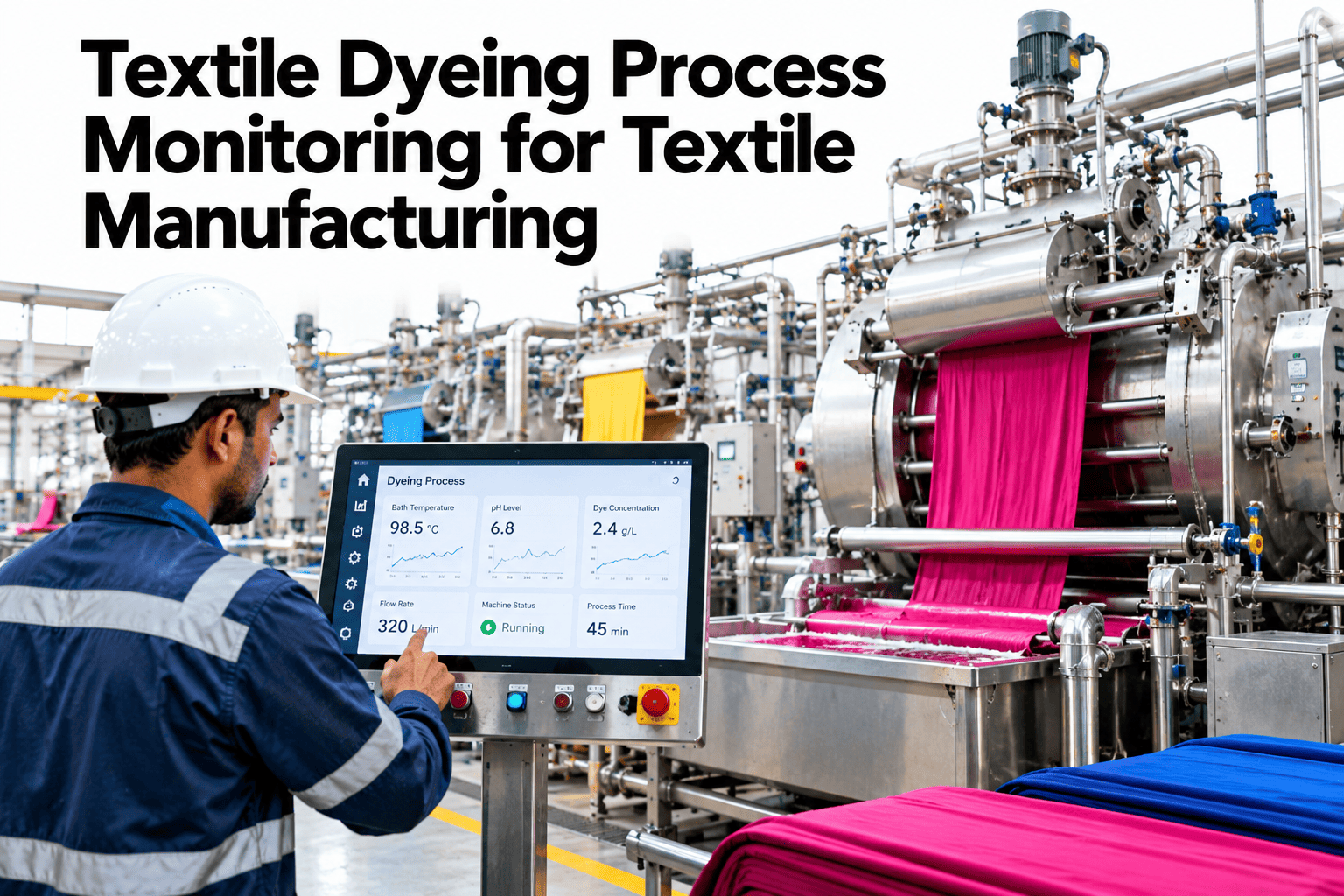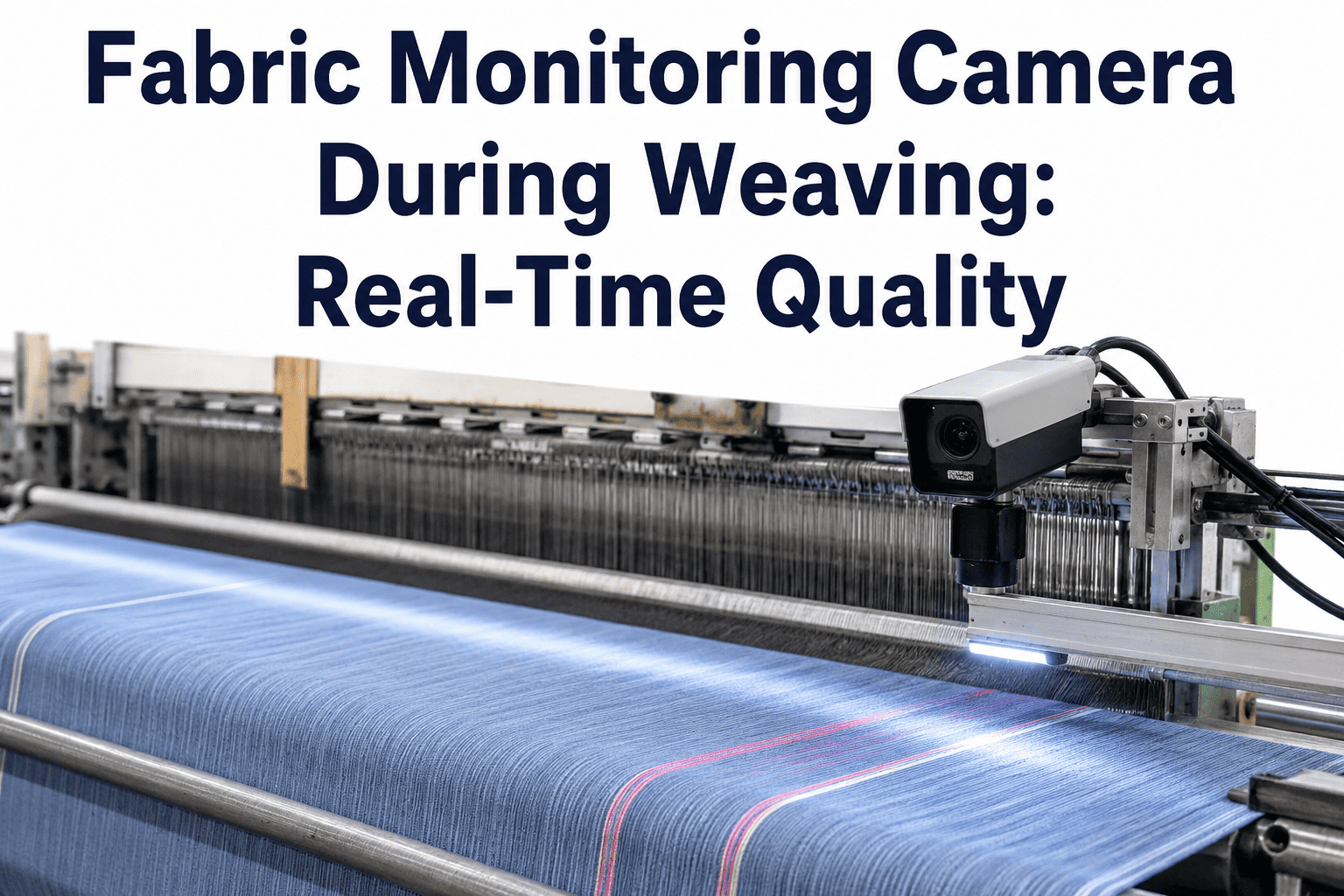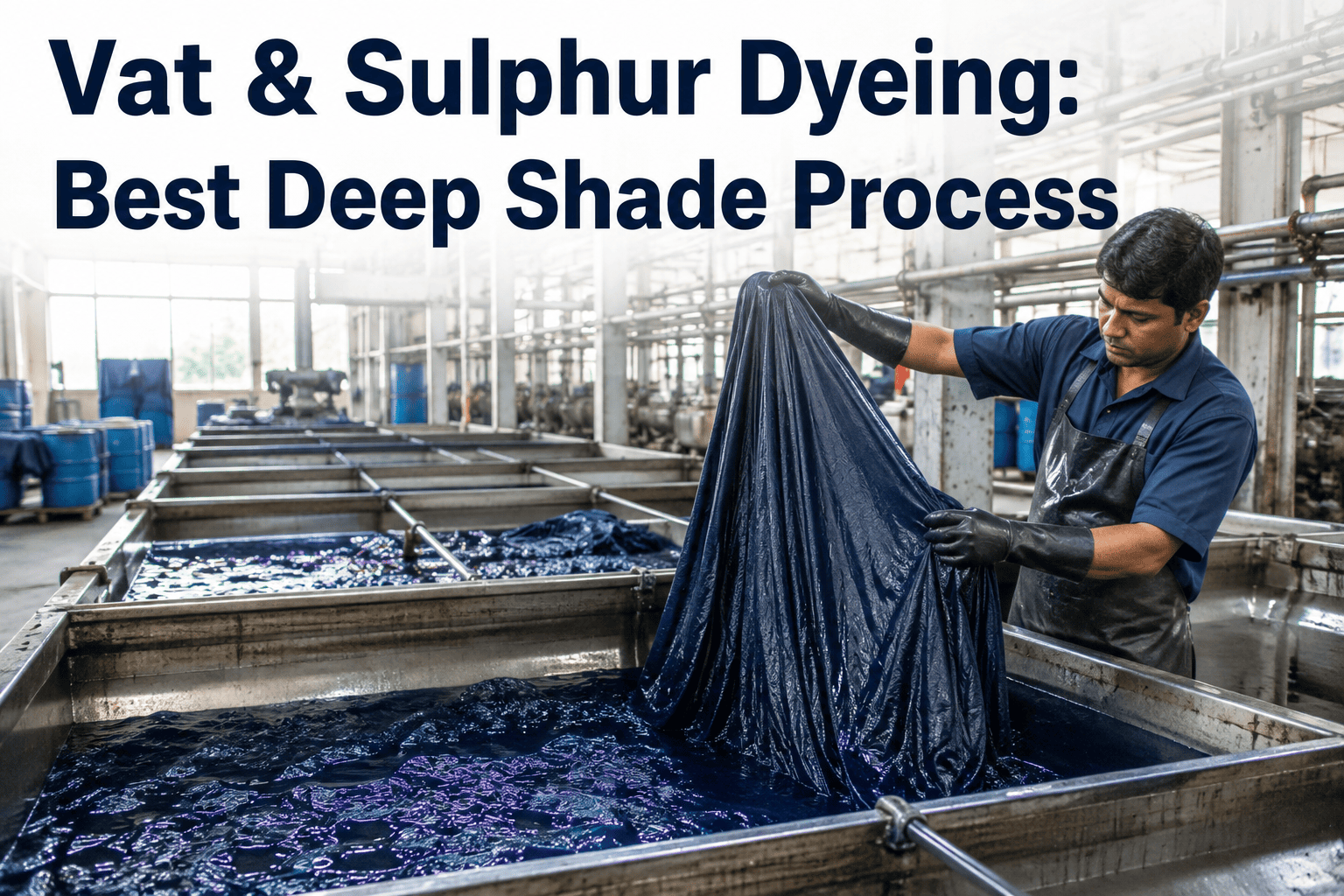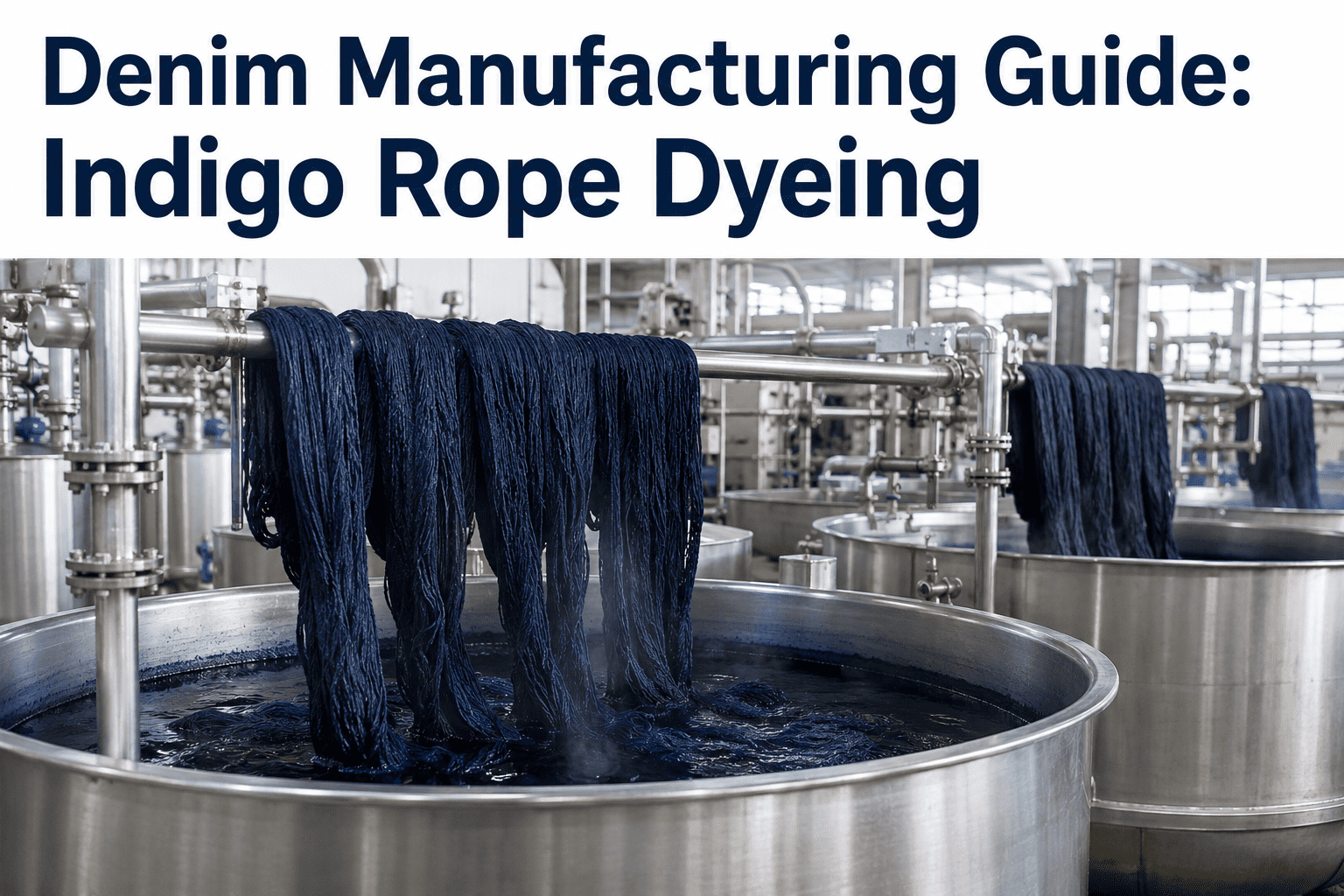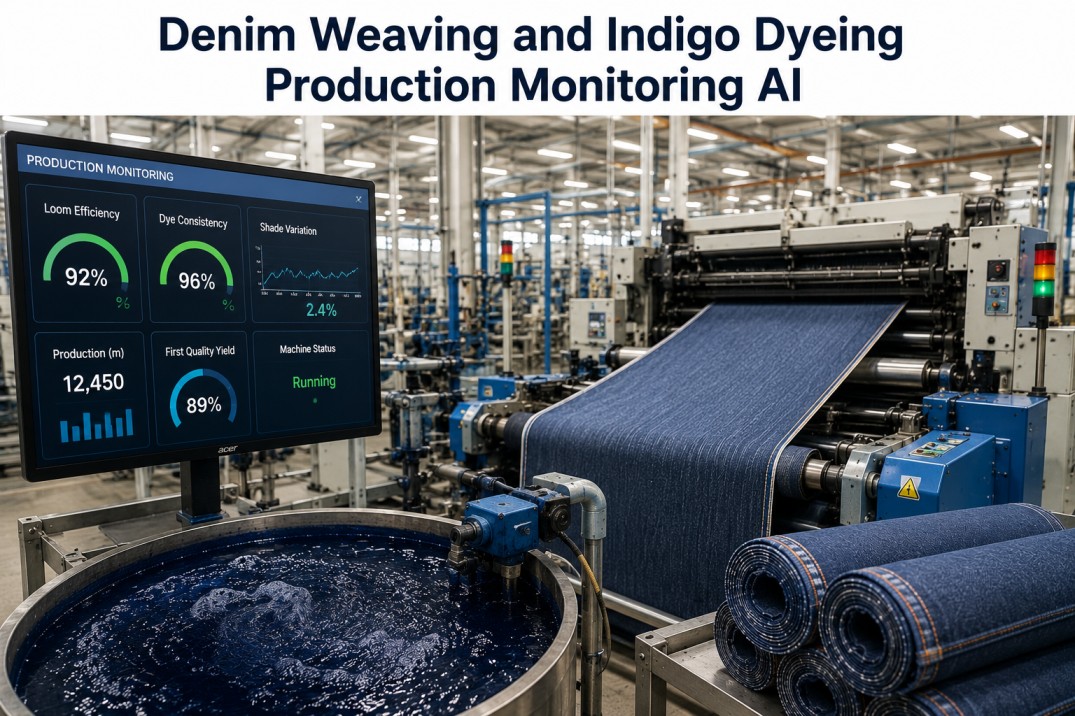
In denim manufacturing, a shade drift that goes undetected for thirty minutes does not correct itself — it propagates across thousands of meters of warp sheet, and by the time it surfaces at final inspection, the fabric has lost 45 to 65 percent of its market value. Indigo dyeing involves 6 to 10 sequential dip-and-oxidize cycles where pH, hydro concentration, immersion time, and oxidation duration interact within each bath — and a shift in any one produces measurable shade drift. Yet the majority of mills still inspect for defects after weaving is complete. iFactory Denim Production Intelligence Platform closes that gap by analyzing every meter in real time, from the indigo bath through the slasher range to the loom — lifting first-quality yield by 18 percent and cutting shade variation by half. Book a demo to see how AI-powered denim production monitoring reduces shade-related downgrades from 4.8 percent to under 0.8 percent of production value.
Shade Drift That Propagates for 30 Minutes Costs You 45% of Fabric Value.
AI Catches It at the Dye Bath — Not at the Inspection Frame.
Real-time shade monitoring from the first dip to the finished roll — drift caught within seconds, not shifts.
What Shade Drift Costs in a Single Production Shift
Indigo dyeing is a multi-dip, multi-oxidation chemical process where dozens of variables interact within each bath. In slasher dyeing, drift manifests as center-to-selvedge variation across the warp sheet. In rope dyeing, it appears as lot-to-lot inconsistency. Either way, fabric that misses the Delta E tolerance window is downgraded or rejected — and the difference between catching drift at the bath versus catching it at inspection is measured in thousands of meters of affected fabric.
Inspect at the Frame
Monitor Every Meter
Five Stages AI Monitors Across the Denim Production Line
A single AI inference engine spans the entire denim production chain, from yarn preparation through weaving. Each stage generates distinct quality signals that the model captures and correlates — creating a closed loop from dye bath to finished roll.
Pretreatment & Scouring
Caustic concentration and wetting uniformity affect subsequent dye uptake. AI detects uneven scouring that produces streaks in the finished fabric — before the yarn ever enters the first indigo dip tank.
Indigo Dye Bath Exit
Cameras at each of 6 to 10 dye boxes capture CIELAB values per pass. The model flags oxidation time drift, hydro depletion, or pH excursion before shade accumulates across multiple dips — typically within 8 seconds of onset.
After-Wash & Pre-Dry
Unfixed dye removal is verified at the wash boxes. Residual dye on the yarn surface predicts poor rub fastness and wash-down inconsistency in the finished garment — catching issues that would otherwise appear only after garment laundering.
Sizing Application
Size pick-up percentage and uniformity are measured across the full warp sheet. Inconsistent sizing causes warp breaks at the loom and stop-mark defects in the fabric — two of the largest OEE loss categories in denim weaving.
Loom Output & Roll Grading
Final fabric inspection integrates 4-point defect scoring, shade mapping per roll, and Delta E comparison against the approved standard. Results feed back to dye range setup for the next lot, closing the quality control loop.
AI Detection Rates by Denim Defect Class — Measured Across Production Deployments
Benchmark results from CNN-based inspection on denim weaving lines show a consistent accuracy gap between manual and AI-driven detection across the most common defect categories. The table below aggregates data from 14 production deployments.
| Defect Type | Manual Detection Rate | AI Detection Rate | Improvement |
|---|---|---|---|
| Shade Variation (ΔE > 1.0) | 62% | 94% | +32 points |
| Oil Stains & Dye Stains | 71% | 96% | +25 points |
| Broken Yarns & Slubs | 68% | 91% | +23 points |
| Holes & Tears | 83% | 98% | +15 points |
| Creases & Snags | 58% | 87% | +29 points |
| Color Bleeding | 55% | 89% | +34 points |
From the First Dip Tank to the Finished Roll — Every Meter Inspected, Every Shade Tracked.
iFactory connects dye bath monitoring, beam inspection, and loom fabric AI into a single platform — giving denim mills real-time visibility into shade consistency, defect rates, and first-quality yield from slasher through weaving.
What an 18-Point Yield Improvement Means for a Mid-Size Denim Mill
A single slasher dyeing range producing 12 million meters per year at a 72 percent first-quality rate leaves roughly 3.4 million meters to be sold at discount or as seconds. Raising first-quality yield to 90 percent — consistent with AI-monitored production — shifts the economics dramatically across every cost category.
Frequently Asked Questions
How does AI detect shade variation when indigo changes appearance under different lighting?
Production systems use multi-spectrum imaging in a controlled lighting enclosure at each inspection station. Chromaticity is measured in the CIELAB color space, which is device-independent and correlates with human visual perception. The model is trained on fabric samples under standardized D65 illumination, so lighting variation across shifts or between mills does not affect the measurement. Delta E values are reported against the approved shade standard per article, with configurable tolerance windows per buyer specification.
Can AI monitoring be retrofitted to existing slasher and rope dyeing ranges?
Yes. The camera array and edge inference hardware mount onto existing machine frames without modifying the dyeing process. Installation requires a single scheduled maintenance window per slasher range — typically 2 to 3 days. The system connects to the mill LAN for dashboard reporting and alert routing. Retrofitting costs roughly 15 percent of replacing a dye range and delivers comparable quality improvement, making it accessible for mills that cannot justify a full capital equipment replacement.
What is the measurable ROI for a mid-size denim mill with 30 to 40 looms?
Based on deployments across mills producing 8 to 20 million meters annually, the median payback period is 4.2 months. ROI is driven by three primary factors: first-quality yield lift of 15 to 22 percent (recovering $380,000 to $520,000 per year in upgraded fabric value for a 30-loom mill), inspection labor reduction of 60 percent (fewer operator hours on the inspection frame), and liability claim reduction from documented shade consistency per roll — shade-related claims drop from 4.8 percent to under 0.8 percent of production value. Combined annual savings average $380,000 for a 30-loom operation with 2 slasher ranges.
How does the system handle transitions between dye lots of different target shades?
The model supports recipe-based profiling. When the dye range operator enters a new shade target, the AI loads the corresponding CIELAB specification and tolerance window. The first meters of the new lot are validated before full production ramp-up, and any deviation from the target triggers an alert within the first dye bath pass. The system also maintains a historical shade profile per article, enabling the operator to match previous runs within 0.5 ΔE — critical for mills producing repeat orders where the current lot must match a lot shipped six months earlier.
Can the platform distinguish between intentional visual characteristics of denim — slub patterns, ring-spun texture, cross-hatch — and genuine defects?
Yes. The CNN model is trained on denim fabric images spanning the full range of intentional visual characteristics, including slub yarn patterns, ring-spun vs. open-end textures, and cross-hatch weaves. During article setup, the operator loads the approved shade standard and fabric specification — including acceptable slub frequency, yarn count variation, and intentional shade characteristics. The model distinguishes intentional design features from genuine defects based on periodicity, amplitude, and across-machine consistency. The false positive rate for denim-specific classification is 2.1 percent, lower than for many other fabric types because denim defects have distinctive structural signatures that the model learns during training.
Catch Shade Drift at the Dye Bath Before It Costs You Thousands of Meters.
iFactory monitors every meter from the first indigo dip through the slasher range to the finished roll. 18-point yield improvement. 65 percent fewer liability claims. 4.2 month payback.