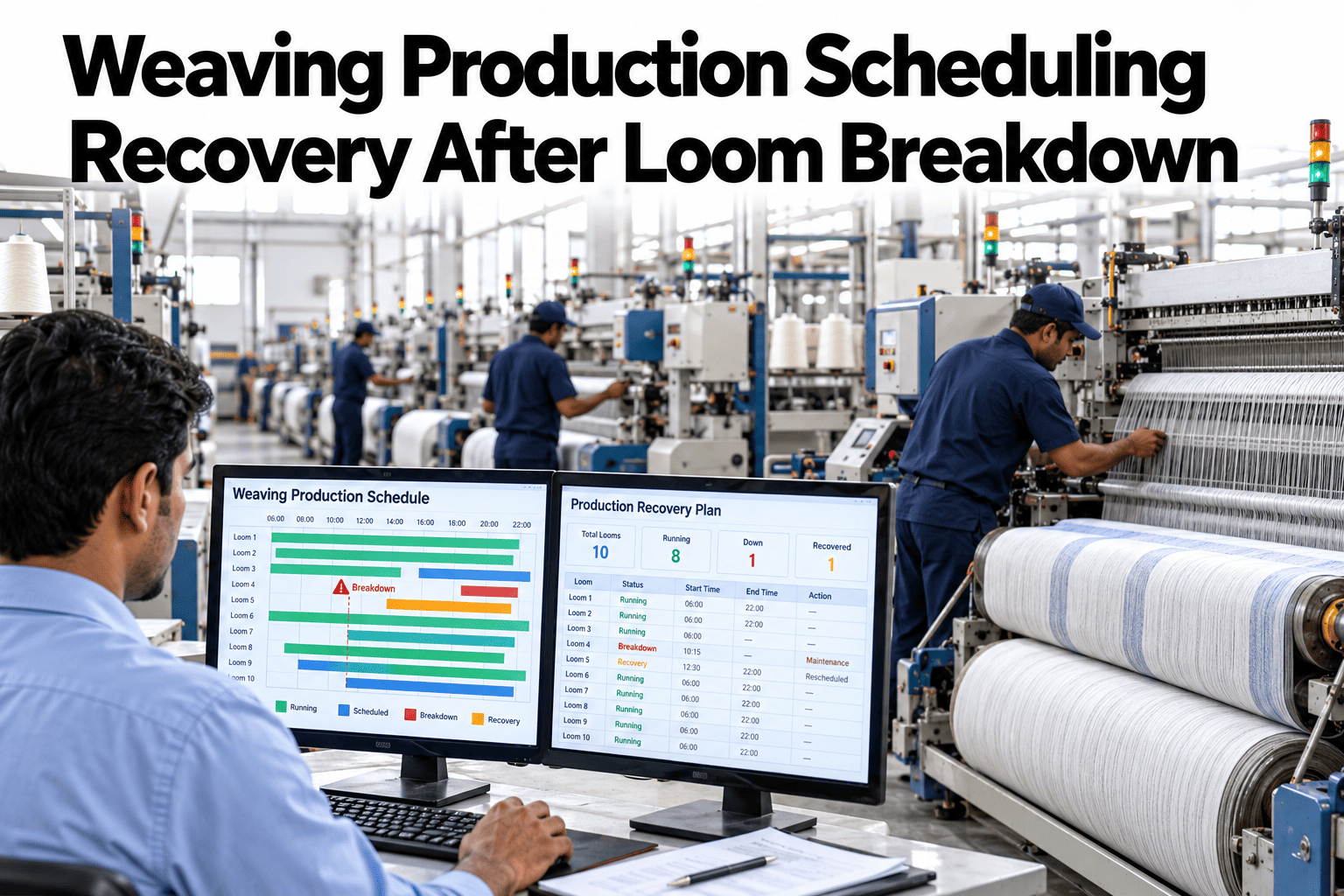
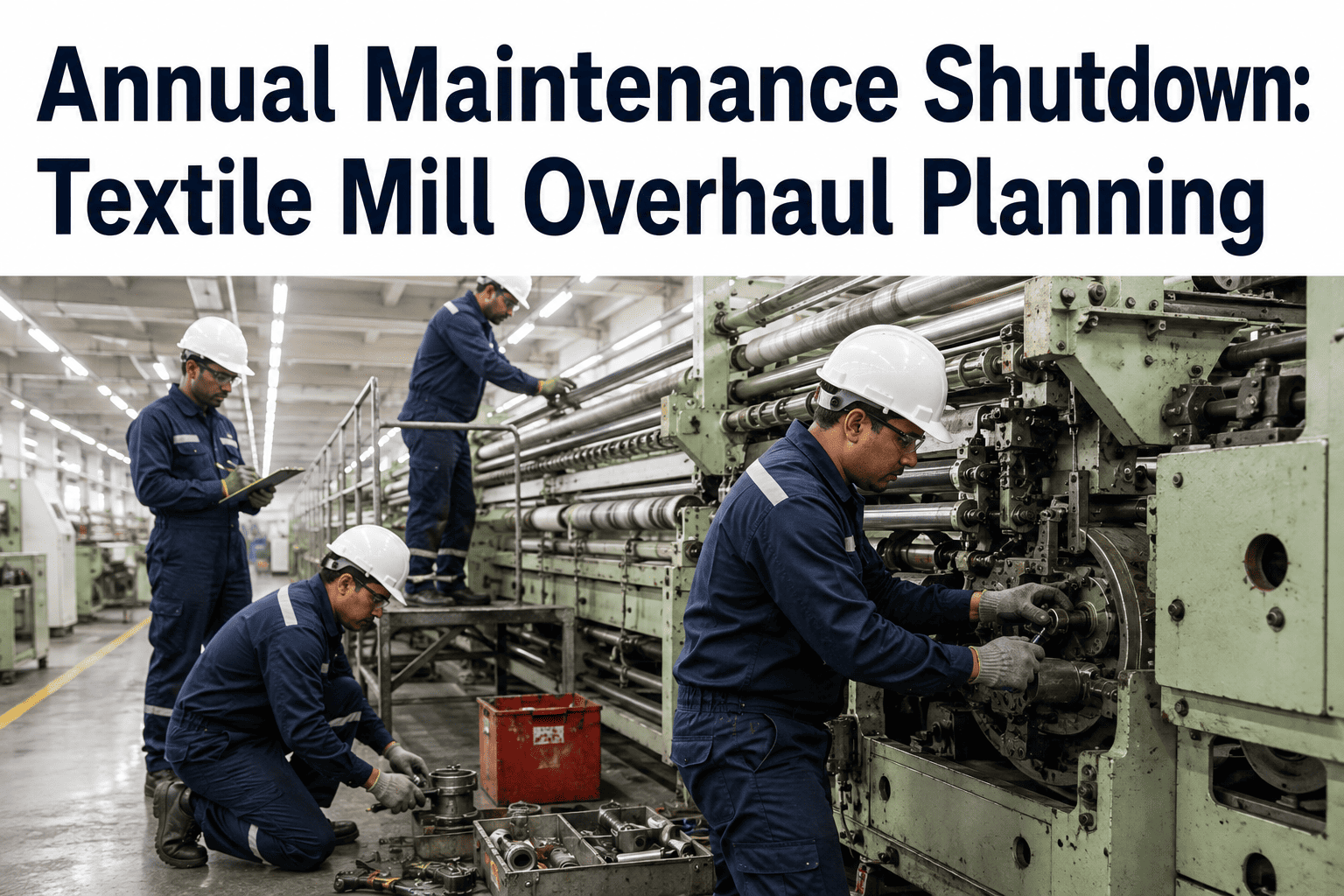
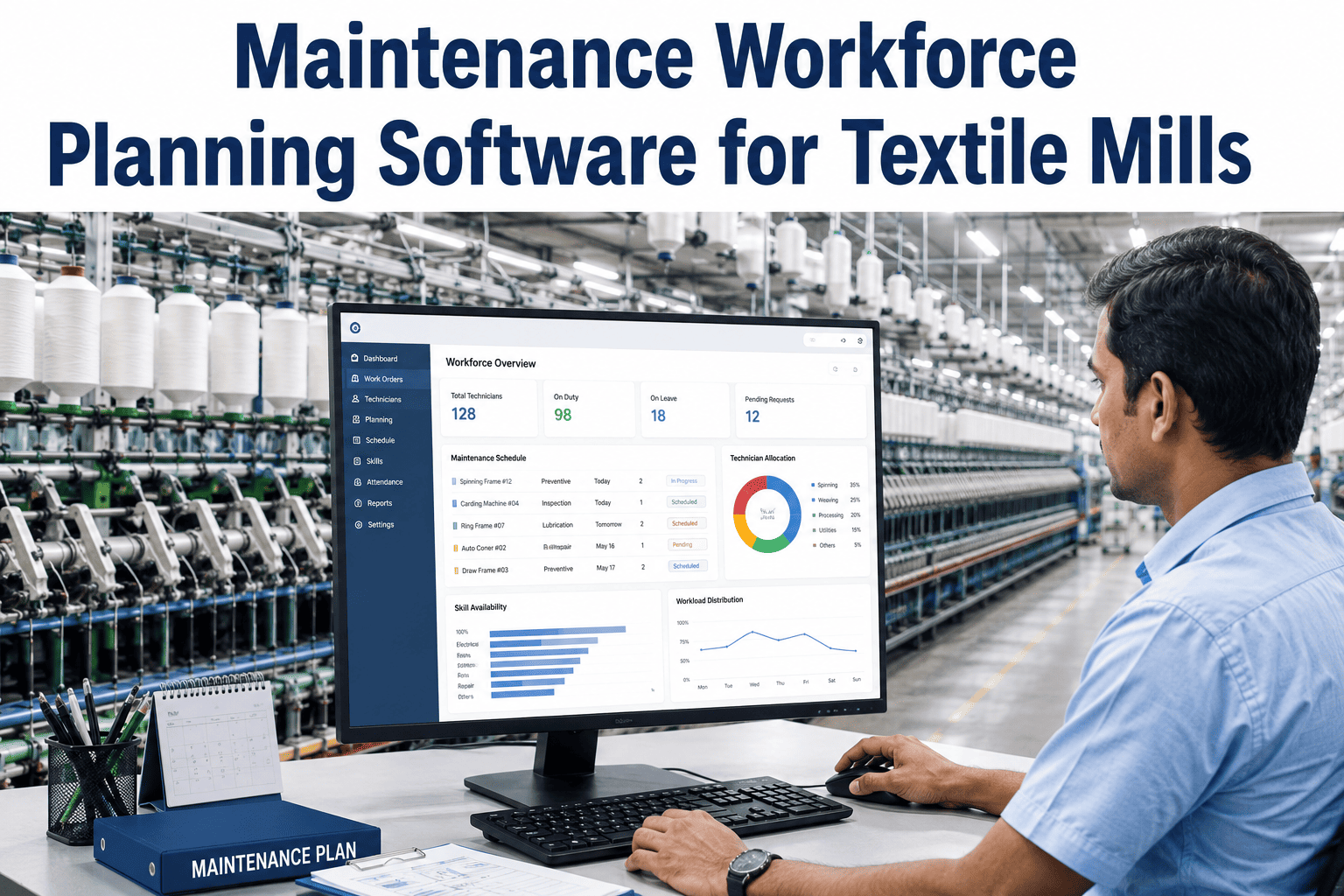
Managing a weaving shed with 200 or more looms is fundamentally different from running a 40-loom plant. At 40 looms the maintenance supervisor can walk the floor in 15 minutes, know every machine’s personality, and assign fixers based on intuition. At 200 looms, intuition breaks. Fixers develop favorite machines and neglect others. Breakdowns cascade because the priority system is based on who shouts loudest rather than which loom has the highest impact on OEE. Root causes go unaddressed because the same failures cycle through different shifts without anyone connecting the data. A loom shed operating at 78 percent OEE with 200 looms is losing 44 looms worth of production every day to avoidable stops. Mills that have adopted structured maintenance management systems for large loom sheds consistently push OEE past 90 percent within 12 to 18 months through fixer zone assignments, data-driven RCA processes, and AI-powered priority queuing that ensures the right loom gets the right fixer at the right time.
Get the Complete Large Loom Shed Management Playbook
iFactory provides a complete maintenance management platform for large weaving facilities with automated fixer zone assignment, AI breakdown priority queuing, RCA tracking, and real-time OEE dashboards. Deployed in 7 to 14 days.
OEE Improvement Roadmap for Large Loom Sheds
The roadmap below shows the typical OEE progression for a 200-plus loom shed adopting structured maintenance management. Each rung represents a specific intervention that builds on the previous one.
Current state
Informal fixer assignments, reactive breakdown response, no RCA process, OEE tracked manually if at all.
Zone-based fixer assignments
Divide 200 looms into 4 to 5 geographic zones with dedicated fixer teams. Establish accountability and response time targets.
Structured RCA and PDCA
Implement root cause analysis for every breakdown. Track failure patterns by loom type, shift, and yarn count. Close the loop with corrective actions.
AI priority queue
AI assigns priority based on loom speed, fabric value, downstream impact, and time since last breakdown. Fixers dispatched to highest-impact stops first.
Predictive and preventive convergence
PM schedule data and breakdown history feed machine learning models that predict failures 48 hours in advance, enabling proactive intervention.
Fixer Zone Assignment Model
Dividing a 200-loom shed into geographic zones with dedicated fixer teams creates accountability and reduces response time. Each zone operates as a semi-autonomous unit with defined performance targets.
Zone A
40 air-jet looms, high-speed fabric, premium count range
Zone B
40 air-jet looms, standard construction fabrics
Zone C
50 rapier looms, upholstery and home textiles
Zone D
40 rapier looms, technical textiles, high-value yarns
Zone E
30 projectile looms, heavy-duty and industrial fabrics
Breakdown Response Workflow
Standardizing the breakdown response process ensures every machine stop is handled with the same discipline regardless of shift, time of day, or fixer availability. The workflow below shows the five stages from alert to closure.
Alert
Loom stop detected by iFactory sensor or operator report. System logs loom ID, stop time, and initial fault code.
0 minTriage
AI assigns priority score based on loom speed, fabric value, and production schedule. Routes to the correct zone fixer automatically.
1 minDispatch
Fixer receives work order on mobile device with loom location, fault code, and recommended spares. System tracks response time.
2 minRepair
Fixer completes repair, logs fault cause, parts used, and repair time in the mobile app. Photo capture for complex issues.
TBDClose
Supervisor reviews repair data and validates. System triggers RCA workflow for repeat failures and updates AI priority model.
+5 minTransform Your 200-Loom Shed from Reactive to Predictive
iFactory gives large weaving facilities a complete maintenance management platform with fixer zone tracking, AI breakdown priority queuing, automated RCA workflows, and real-time OEE dashboards. Deployed in 7 to 14 days.
Breakdown Pareto Analysis
A structured RCA program reveals that the top five failure causes typically account for 70 to 80 percent of all unplanned loom stops. Targeting these root causes produces the fastest OEE gains.
AI Priority Queue in Action
When multiple looms are down simultaneously, the AI priority queue ensures fixers are dispatched to the looms with the highest production impact first. The queue below shows how a real-time scenario would be prioritized.
Frequently Asked Questions
Stop Running Your Loom Shed on Intuition. Start Running It on Data.
iFactory gives large weaving facilities a complete maintenance management platform with fixer zone tracking, AI breakdown priority queuing, automated RCA workflows, and real-time OEE dashboards that push performance past 90 percent. Deployed in 7 to 14 days.