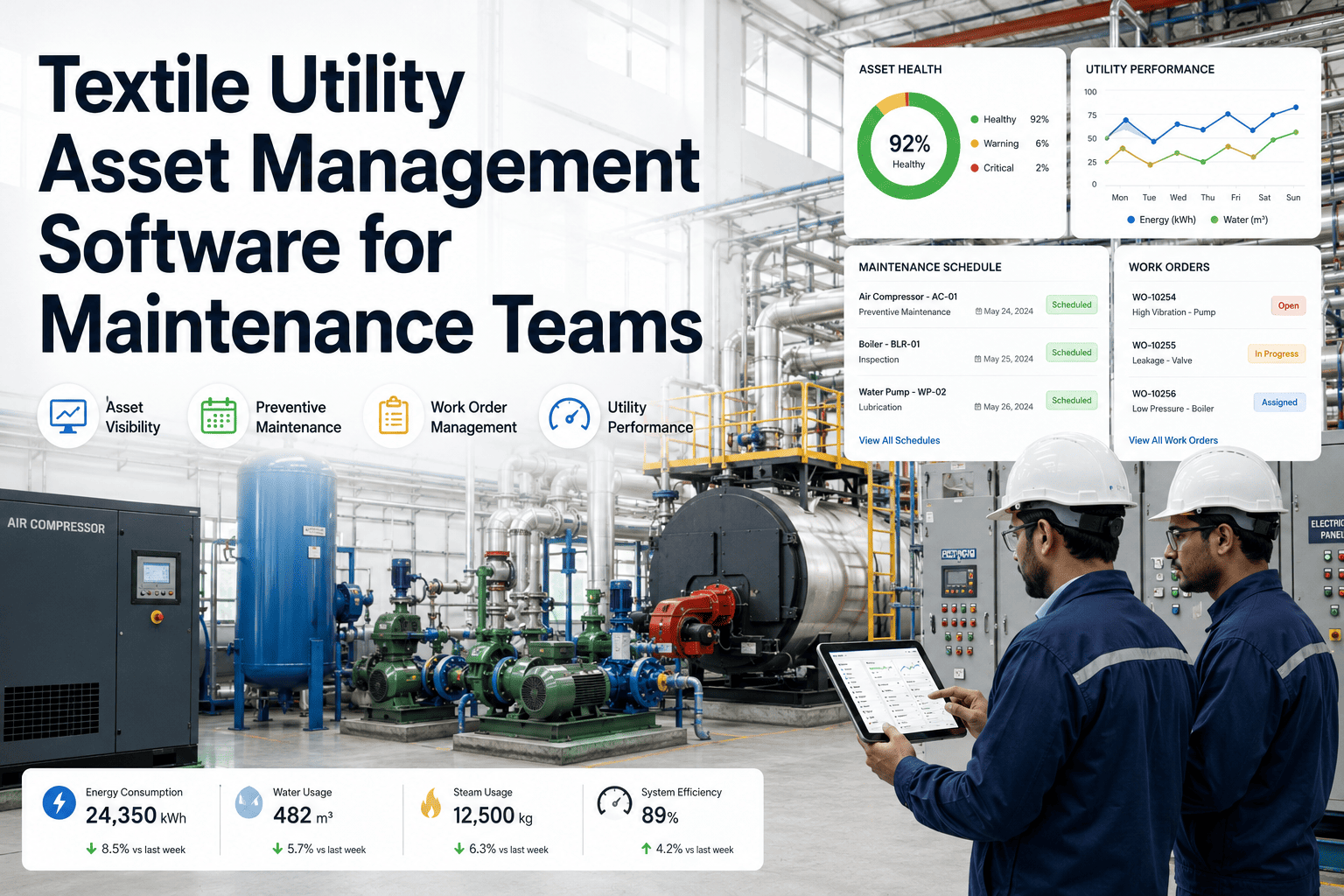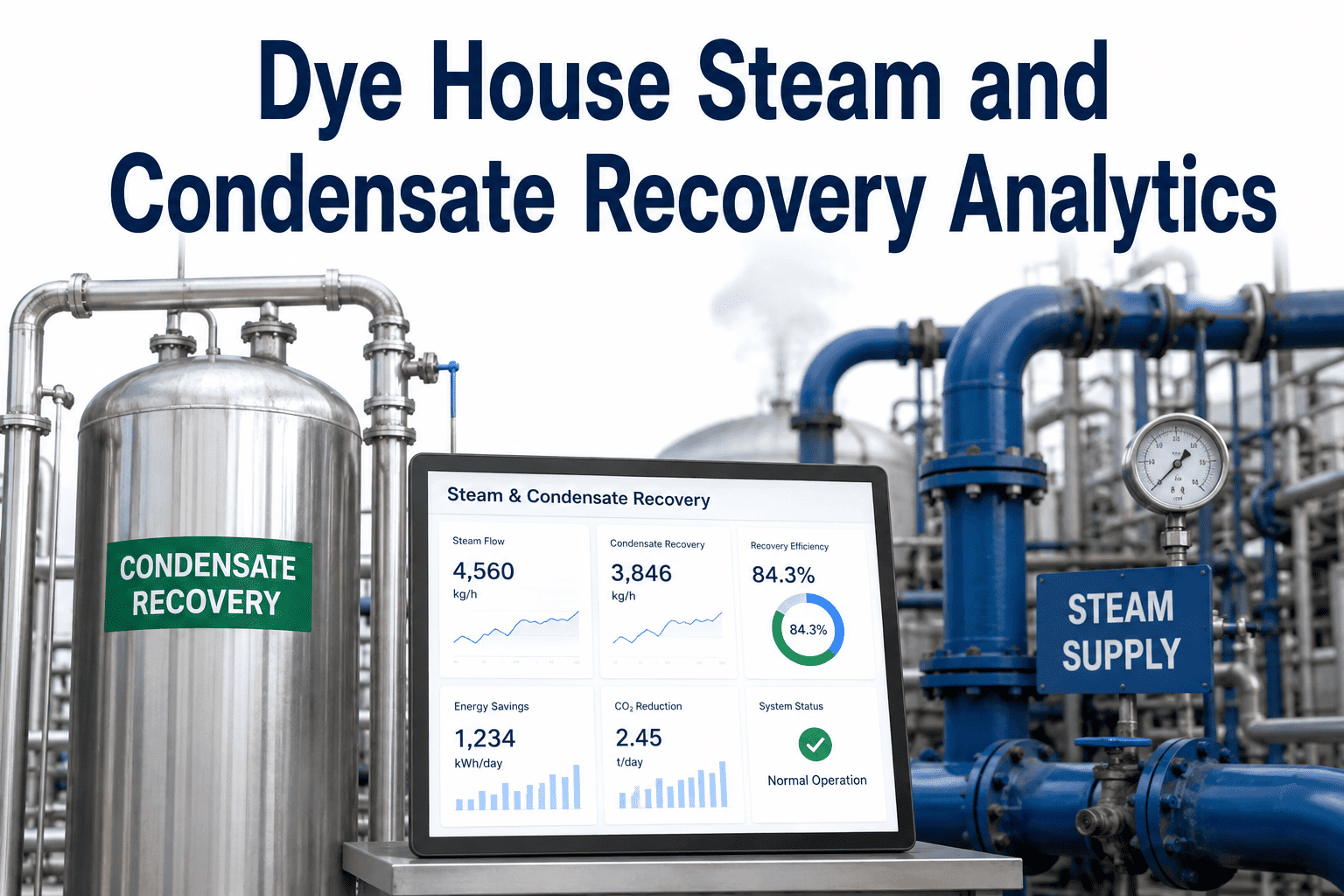
In the high-stakes environment of textile dyeing, steam is the lifeblood of production—yet it remains one of the most elusive and costly utilities to manage. Dye houses often operate with steam systems that leak, return insufficient condensate, and suffer from poor heat recovery, leading to energy waste that directly erodes profit margins. According to industry benchmarks, steam accounts for 30-40% of total energy costs in a typical wet processing facility, and losses from unmonitored condensate can exceed 15% of total steam generation. Without real-time visibility into steam consumption per batch, per machine, and per kilogram of fabric, plant managers are flying blind. iFactory's Dye House Steam and Condensate Recovery Analytics platform changes this paradigm by delivering granular, machine-level data that empowers decision-makers to optimize boiler loads, maximize condensate return, and slash energy intensity. Book a Demo to see how leading textile mills are reducing steam costs by up to 25% within the first quarter of deployment.
Transform Your Dye House Utility Economics
Real-time steam analytics, condensate tracking, and heat recovery optimization—all in one unified dashboard. Reduce energy costs and improve sustainability without capital expenditure.
Real-Time Steam Flow Monitoring
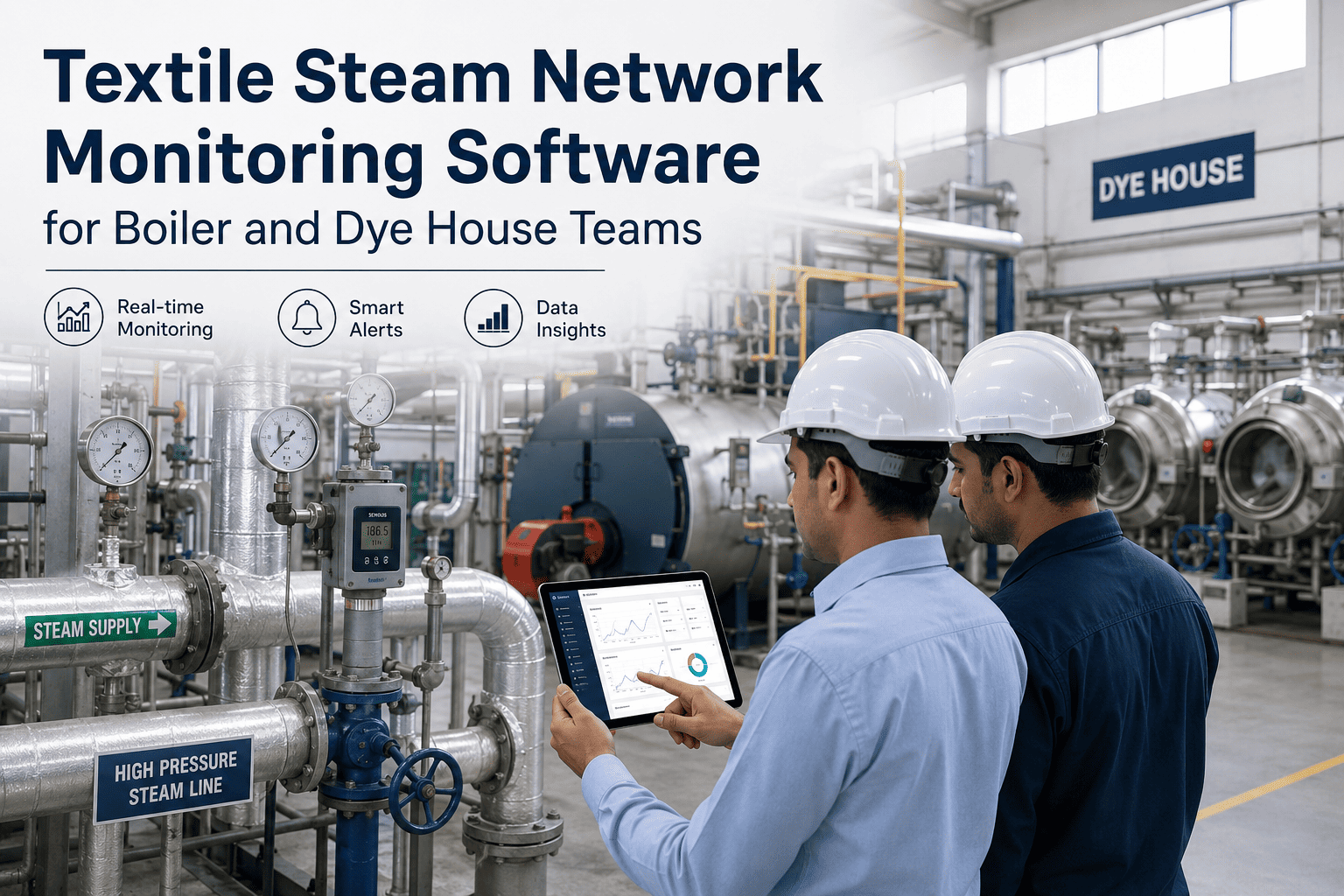
Deploy IoT-enabled flow meters at each dyeing machine and common headers to capture live steam consumption data. Our platform integrates with existing PLCs and SCADA systems, providing a unified view of steam usage across all production lines. Alerts for abnormal flow rates, leaks, or pressure drops are triggered instantly, enabling rapid corrective action.
Condensate Return Tracking
Condensate is high-quality, pre-heated water that should be returned to the boiler to save energy and chemical treatment costs. Our analytics track condensate return percentages per machine and across the plant, identifying underperforming loops and prioritizing maintenance. Typical improvements range from 10-20% increase in return rates.
Heat Recovery Performance
Heat exchangers and economizers are critical for capturing waste heat from hot wastewater and exhaust gases. iFactory monitors heat recovery efficiency in real time, calculating energy savings and payback periods. The platform also correlates heat recovery with production schedules to optimize utilization.
The Hidden Cost of Unmonitored Steam Systems
In many dye houses, steam is generated centrally and distributed through a network of pipes, valves, and traps that are rarely inspected or optimized. The result is a silent drain on profitability: steam leaks, failed traps, and fouled heat exchangers go unnoticed for weeks or months. A single failed steam trap can waste up to 50 kg of steam per hour, costing over $10,000 annually in fuel alone. When multiplied across dozens of traps in a medium-sized plant, the financial impact is staggering. Moreover, low condensate return forces the boiler to work harder, burning more fuel to heat cold make-up water. Chemical treatment costs also rise due to increased water usage. Our analytics bring these hidden losses to light, providing a clear financial case for targeted improvements. By continuously monitoring steam pressure, temperature, and flow at critical nodes, the platform identifies anomalies and correlates them with production data to pinpoint root causes. For example, a sudden drop in condensate return from a specific machine may indicate a failed trap or blocked line, prompting immediate maintenance. The system also tracks energy intensity (steam per kg fabric) over time, enabling managers to set baselines and measure the impact of improvement initiatives.
Implementing Steam Analytics: A Phased Approach
Audit and Sensor Deployment
Conduct a comprehensive audit of the steam system, identifying all distribution points, traps, and heat exchangers. Deploy IoT sensors at key locations: main steam header, each dyeing machine inlet, condensate return lines, and heat recovery units. Our team configures data collection parameters and integrates with existing control systems.
Baseline and Benchmarking
Collect 4-6 weeks of baseline data to establish current performance metrics: average steam consumption per batch, condensate return percentage, heat recovery efficiency, and energy intensity. Compare against industry benchmarks (e.g., 3.5-5.0 kg steam per kg fabric for dyeing) to identify gaps. This baseline becomes the reference for all future improvements.
Real-Time Monitoring and Alerts
Activate the iFactory dashboard with live data streams, customizable alerts for threshold violations, and automated reporting. Plant engineers receive instant notifications on their mobile devices for steam leaks, trap failures, or abnormal energy consumption. The system also generates daily and weekly performance summaries for management review.
Optimization and Continuous Improvement
Using historical data and machine learning models, the platform recommends optimal steam pressure settings, condensate return targets, and heat exchanger cleaning schedules. Track the financial impact of each improvement and adjust strategies dynamically. Over 12 months, typical clients achieve 15-25% reduction in steam costs and 10-15% increase in condensate return.
Key Performance Indicators for Steam Systems
| Metric | Definition | Industry Benchmark | iFactory Target |
|---|---|---|---|
| Steam per kg Fabric | Total steam consumed per kilogram of fabric produced | 3.5 - 5.0 kg | < 3.5 kg |
| Condensate Return Rate | Percentage of condensate returned to the boiler | 60-80% | > 85% |
| Heat Recovery Efficiency | Percentage of waste heat recovered via exchangers | 30-50% | > 50% |
| Steam Trap Failure Rate | Percentage of steam traps found failed during inspection | 10-20% | < 5% |
| Energy Intensity | Total energy (steam + electricity) per kg fabric | 0.8 - 1.2 kWh | < 0.8 kWh |
Ready to Optimize Your Steam System?
Join leading textile mills that have reduced steam costs by 20% and increased condensate return to 90% with iFactory's analytics. Start your transformation today.
Case Study: 22% Steam Reduction at ABC Textiles
ABC Textiles, a mid-sized dye house producing 50 tons of fabric per month, faced escalating energy costs and pressure to meet sustainability targets. They deployed iFactory's steam analytics across 12 dyeing machines, 4 heat recovery units, and the central boiler house. Within the first month, the platform identified 8 failed steam traps and 3 condensate return lines with blockages, which were repaired immediately. Over the next 6 months, the plant achieved a 22% reduction in steam consumption per kg of fabric, from 4.8 kg to 3.7 kg. Condensate return improved from 65% to 88%, and heat recovery efficiency rose from 35% to 52%. The annual cost savings exceeded $180,000, with a payback period of less than 9 months. The plant manager now uses the iFactory dashboard for daily energy reviews and has set a new target of 3.2 kg steam per kg fabric.
Machine-Level Steam Allocation
Allocate steam costs to individual machines or batches with precision, enabling accurate product costing and identification of inefficient processes. The system uses flow meters and production data to attribute consumption automatically.
Predictive Trap Maintenance
Machine learning models analyze steam flow and temperature patterns to predict trap failures before they occur. Schedule maintenance proactively, reducing unplanned downtime and steam waste by up to 30%.
Heat Recovery Optimization
Monitor heat exchanger performance in real time, with alerts for fouling or bypass issues. The platform calculates the optimal cleaning schedule based on energy loss and production demand, maximizing ROI.
Boiler Efficiency Dashboard
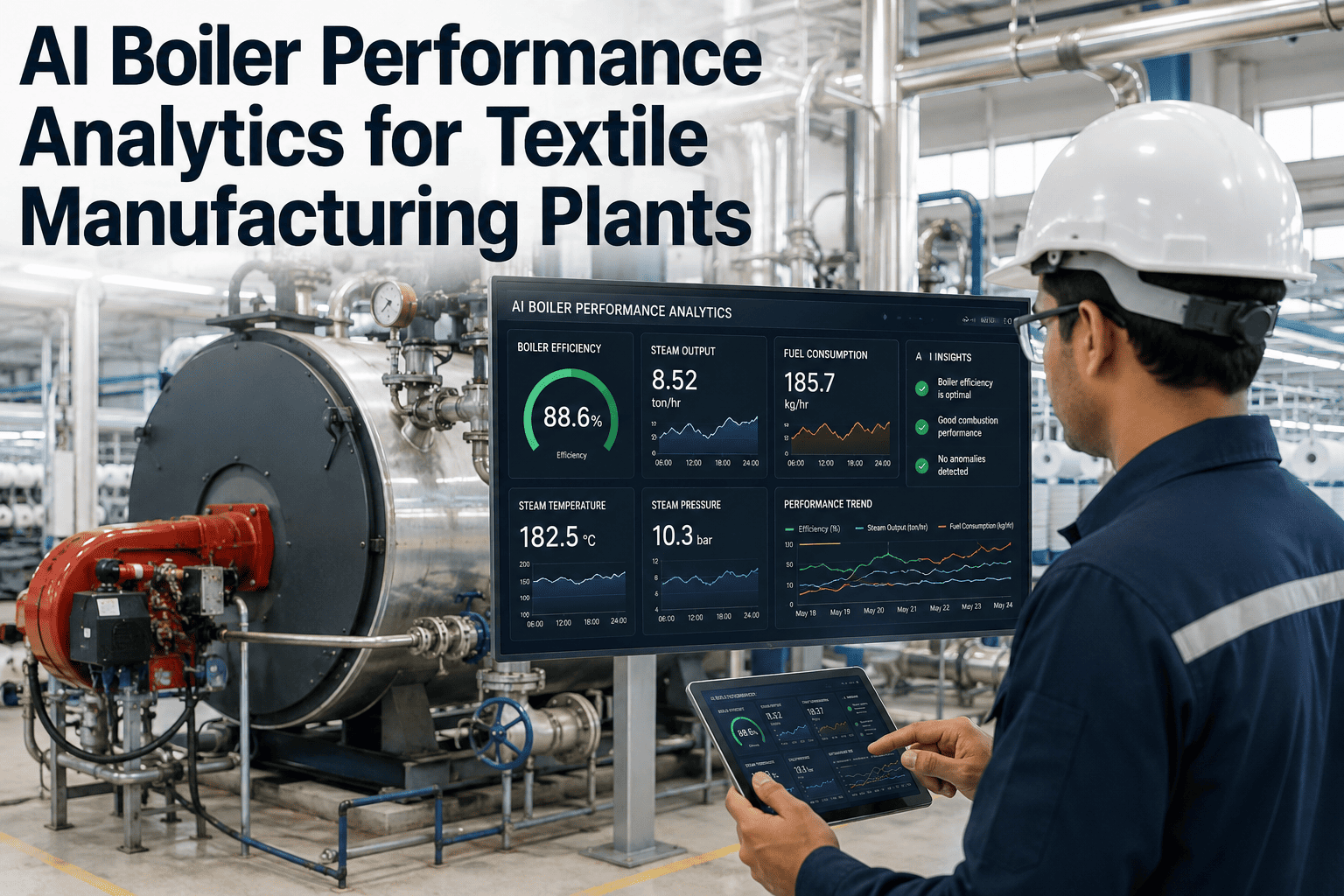
Track boiler efficiency, fuel consumption, and emissions in one view. Correlate boiler performance with steam demand and condensate return to identify opportunities for tuning or upgrade.
Frequently Asked Questions
How does iFactory measure steam consumption per dyeing machine?
We install IoT-enabled vortex or ultrasonic flow meters on the steam supply line to each machine, along with temperature and pressure sensors. Data is transmitted wirelessly to the iFactory cloud platform, where it is integrated with production batch records. This allows us to calculate steam consumption per batch, per machine, and per kilogram of fabric with high accuracy (typically ±1% of reading). The system also accounts for machine idle time and warm-up periods, providing a complete picture of energy usage. Book a Demo to see a live example of machine-level steam tracking.
What is the typical ROI for implementing steam analytics?
Based on our deployments across more than 50 textile mills, the typical payback period ranges from 6 to 12 months. The ROI is driven by three main factors: reduced steam consumption (15-25% average), increased condensate return (10-20% improvement), and lower maintenance costs from predictive trap management. For a medium-sized dye house with annual steam costs of $1 million, a 20% reduction yields $200,000 in savings. Additionally, many clients qualify for government energy efficiency incentives, further improving the financial case. Contact our team for a personalized ROI estimate based on your plant data.
Can iFactory integrate with my existing SCADA or PLC systems?
Yes, our platform is designed for seamless integration with major industrial automation protocols, including Modbus, OPC-UA, Profinet, and Ethernet/IP. We can also connect to common SCADA systems like Siemens WinCC, Rockwell FactoryTalk, and Ignition. For plants with legacy equipment, we offer edge gateways that convert analog signals to digital data. The integration process typically takes 2-4 weeks, with minimal disruption to operations. Book a Demo to discuss your specific integration requirements.
How does the platform handle data security and uptime?
iFactory is built on enterprise-grade cloud infrastructure with SOC 2 compliance, ensuring data encryption at rest and in transit. We use role-based access control, audit logs, and multi-factor authentication. The platform guarantees 99.9% uptime with redundant servers and automatic failover. For plants with strict data residency requirements, we offer on-premise deployment options. All data is anonymized and aggregated for benchmarking purposes, with no sharing of proprietary information. Contact our support team for a detailed security whitepaper.
What is the process for deploying steam analytics in an existing dye house?
The deployment follows a structured 4-phase approach: (1) Site audit and sensor installation – our engineers survey the steam system and install sensors at key points, typically taking 1-2 weeks. (2) Data integration and baseline – we connect sensors to the iFactory platform and collect 4-6 weeks of baseline data. (3) Dashboard customization – we configure alerts, reports, and KPIs based on your specific goals. (4) Optimization and training – we provide on-site training for your team and begin the continuous improvement cycle. The entire process takes 8-12 weeks from kickoff to full operation. Book a Demo to learn more about our deployment methodology.
Take Control of Your Steam Costs Today
iFactory's Dye House Steam and Condensate Recovery Analytics is the most comprehensive solution for reducing utility costs and improving sustainability. Join the leaders in textile manufacturing.