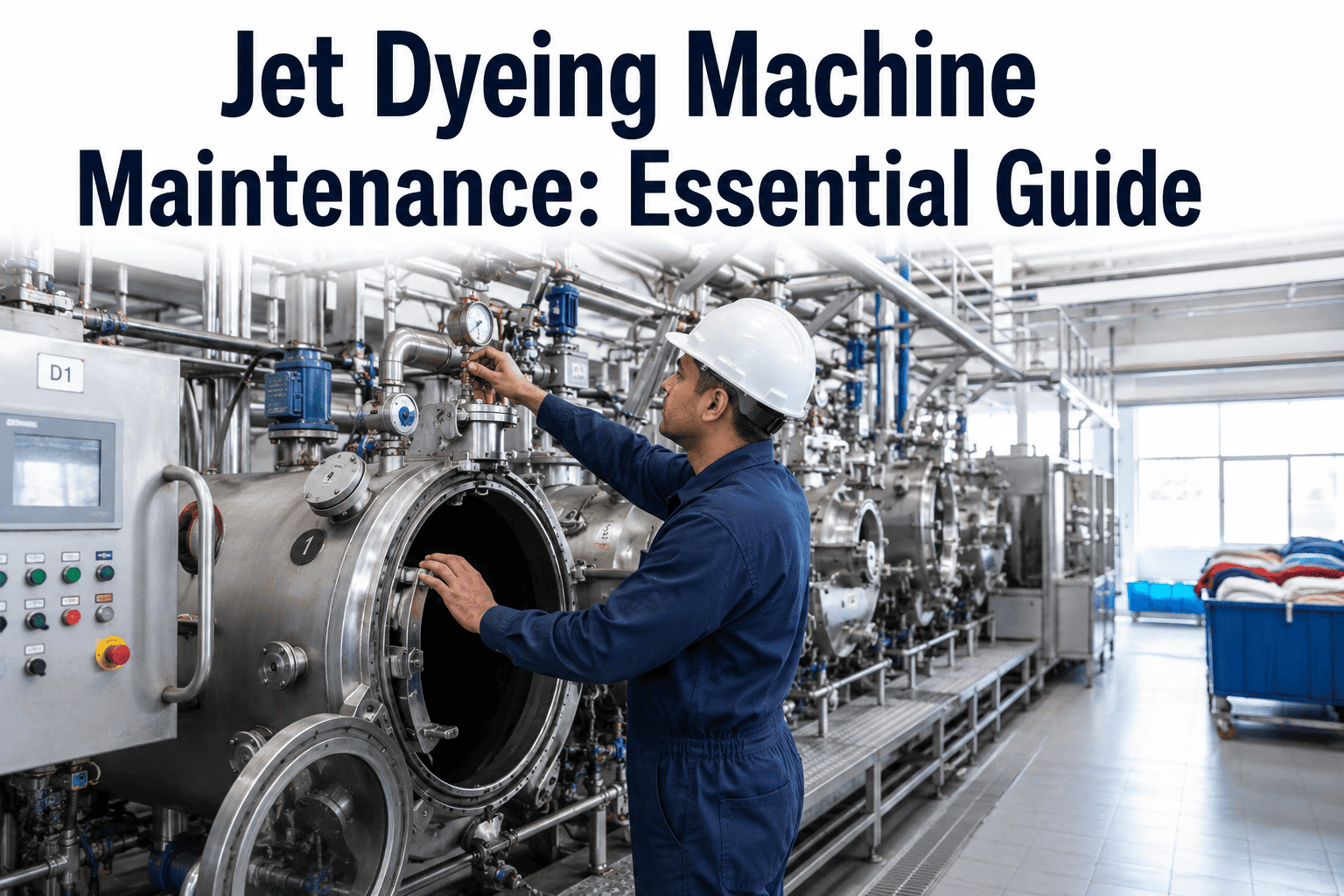
Dyeing machine maintenance determines batch-to-batch consistency more than any other variable in textile wet processing. A jet dyeing machine with a fouled heat exchanger drifts 2 to 4 degrees Celsius from set point over a five-batch cycle, shifting color uptake enough to produce shade variation visible under standard lighting. A jigger with worn guide rollers creates tension variation that produces uneven dye penetration across the fabric width. A soft-flow machine with a failing circulation pump delivers inconsistent liquor ratio, leaving some fabric sections lighter than others. These issues do not appear suddenly. They develop gradually over successive batches as components accumulate wear, deposits build up on heat transfer surfaces, and calibration drifts outside acceptable tolerances. Mills that achieve 98 percent first-pass yield on dyed fabric treat maintenance as a process control function rather than a repair activity. The following playbook covers the maintenance protocols for the three most common dyeing machine types used in textile finishing operations.
Get the Complete Dyeing Machine Maintenance Playbook
iFactory provides a ready-to-deploy maintenance framework for jet, jigger, and soft-flow dyeing machines with configurable checklists, heat exchanger cleaning schedules, pump performance tracking, and real-time batch consistency dashboards. Deployed in 7 to 14 days.
Dyeing Process Stages and Critical Maintenance Points
Every dyeing cycle passes through four stages where component condition directly affects batch quality. Understanding the maintenance requirements at each stage helps prioritize inspection and service activities.
Loading and Liquor Preparation
Fabric loading alignment, liquor ratio verification, chemical dosing system calibration, and water quality check.
Heating and Dye Bath Circulation
Heat exchanger efficiency, circulation pump performance, temperature ramp rate accuracy, and liquor flow distribution.
Dwell and Dye Fixation
Temperature holding accuracy, pressure regulation, fabric speed consistency, and time-at-temperature logging.
Drain, Rinse, and Unload
Drain valve condition, rinse water flow rate, filtration system integrity, and fabric take-off mechanism alignment.
Dyeing Machine Types and Key Maintenance Parameters
Each dyeing machine type operates on different principles and requires a distinct maintenance focus. The parameter cards below show the critical specifications that must be maintained for consistent batch quality.
Jet Dyeing Machine
High temperatureJigger Dyeing Machine
Open widthSoft-Flow Dyeing Machine
Fabric sensitiveCritical Dyeing Parameters and Specification Table
The table below lists the essential parameters that must be maintained within specification for consistent batch results. Each parameter has a defined tolerance and recommended verification frequency.
| Parameter | Machine Type | Specification | Tolerance | Verify |
|---|---|---|---|---|
| Dye bath temperature | Jet | 130 ± 1°C | ±1.0°C | Daily |
| Dye bath temperature | Jigger | 95 ± 2°C | ±2.0°C | Daily |
| Dye bath temperature | Soft-flow | 120 ± 1.5°C | ±1.5°C | Daily |
| Circulation flow rate | Jet | 3,000 ± 200 L/min | ±6.5% | Weekly |
| Circulation flow rate | Soft-flow | 4,500 ± 300 L/min | ±6.5% | Weekly |
| Fabric tension | Jigger | 150 ± 20 N | ±13% | Daily |
| Liquor pH | All | Per dye recipe | ±0.2 pH | Daily |
| Heat exchanger delta-T | All | Below 5°C drop | ±0.5°C | Monthly |
| Pressure vessel integrity | Jet, Soft-flow | ASME certified | Annual test | Quarterly |
Standardize Dyeing Machine Maintenance Across Your Wet Processing Department
iFactory’s maintenance platform configures machine-specific PM schedules, tracks heat exchanger cleaning intervals, monitors pump performance trends, and provides real-time batch consistency dashboards for every dyeing machine in your operation.
Component Maintenance Procedures
The four components below account for over 70 percent of dyeing machine performance issues. Each requires a specific maintenance protocol with defined service intervals and inspection criteria.
Circulation Pump
- Check seal leakage weekly
- Measure impeller wear every 500 hr
- Verify flow rate against spec
- Replace mechanical seal annually
- Align motor coupling quarterly
Heat Exchanger
- Descaling treatment every 40 batches
- Monitor delta-T trend monthly
- Inspect gasket condition quarterly
- Clean tube bundle annually
- Pressure test every 12 months
Valves and Actuators
- Test full stroke actuation weekly
- Inspect valve seat wear monthly
- Replace diaphragm seals as needed
- Calibrate position feedback quarterly
- Check air supply pressure daily
Sensors and Probes
- Calibrate temperature probes weekly
- Clean pH sensor after each batch
- Verify pressure transmitter monthly
- Flow meter calibration quarterly
- Replace conductivity sensor annually
Dyeing Machine Troubleshooting Matrix
When batch quality issues arise, the matrix below helps maintenance teams identify the root cause quickly and apply the correct corrective action based on the observed symptom.
Cause: Temperature drift, uneven liquor circulation, or incorrect pH throughout the dye cycle.
Remedy: Verify heat exchanger delta-T below 5°C. Check circulation pump flow rate. Clean temperature probe and recalibrate.
Cause: Fabric rope tangling in jet nozzle, worn nozzle orifice, or inconsistent fabric speed through the bath.
Remedy: Inspect nozzle for wear and replace if diameter has increased beyond 10 percent of original. Verify fabric speed sensor accuracy.
Cause: Contaminated dye bath, unfiltered water supply, or degraded seals shedding particles into the liquor.
Remedy: Replace inlet water filter cartridge. Inspect pump seal for degradation. Drain and flush system with cleaning cycle.
Cause: Incorrect fabric speed relative to liquor flow, worn lifter roller, or excessive batch length for machine capacity.
Remedy: Adjust fabric speed to match circulation pump output. Inspect lifter roller covering for wear. Reduce batch length if at maximum capacity.
Cause: Dye liquor foaming due to incorrect additive dosing or mechanical agitation from partially clogged circulation nozzle.
Remedy: Check defoamer dosing pump calibration. Inspect and clean circulation nozzles. Verify liquor pH and additive compatibility.
Cause: Drift in temperature sensor calibration, change in water hardness, or degradation of heat exchanger performance between batches.
Remedy: Recalibrate temperature sensors against reference standard. Verify water softener operation. Schedule heat exchanger descaling.
Frequently Asked Questions
Achieve 98 Percent First-Pass Yield on Every Dye Batch.
iFactory gives dyeing mills a complete maintenance platform with machine-type-specific task libraries, heat exchanger monitoring, pump performance tracking, and real-time batch consistency dashboards. Deployed in 7 to 14 days.