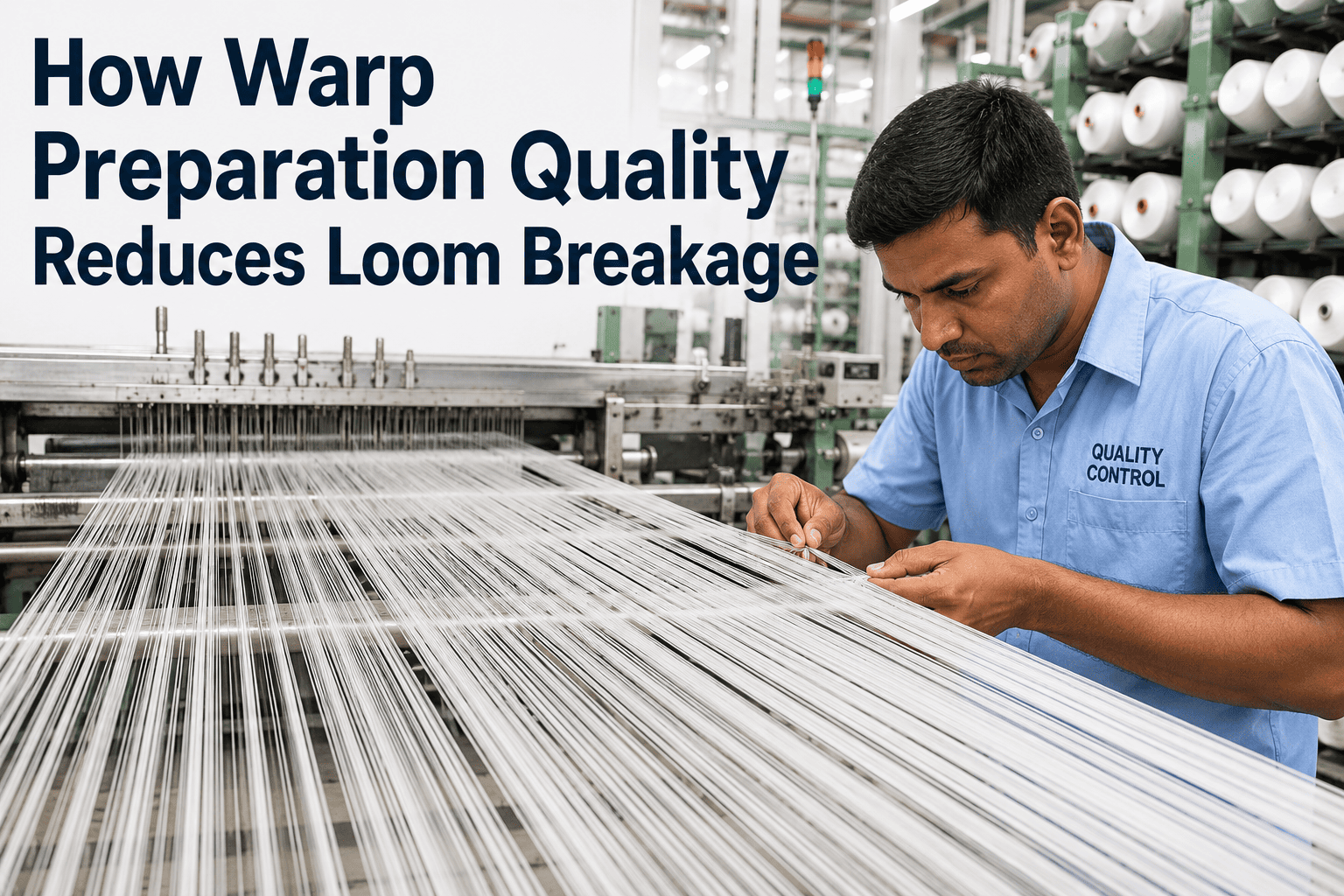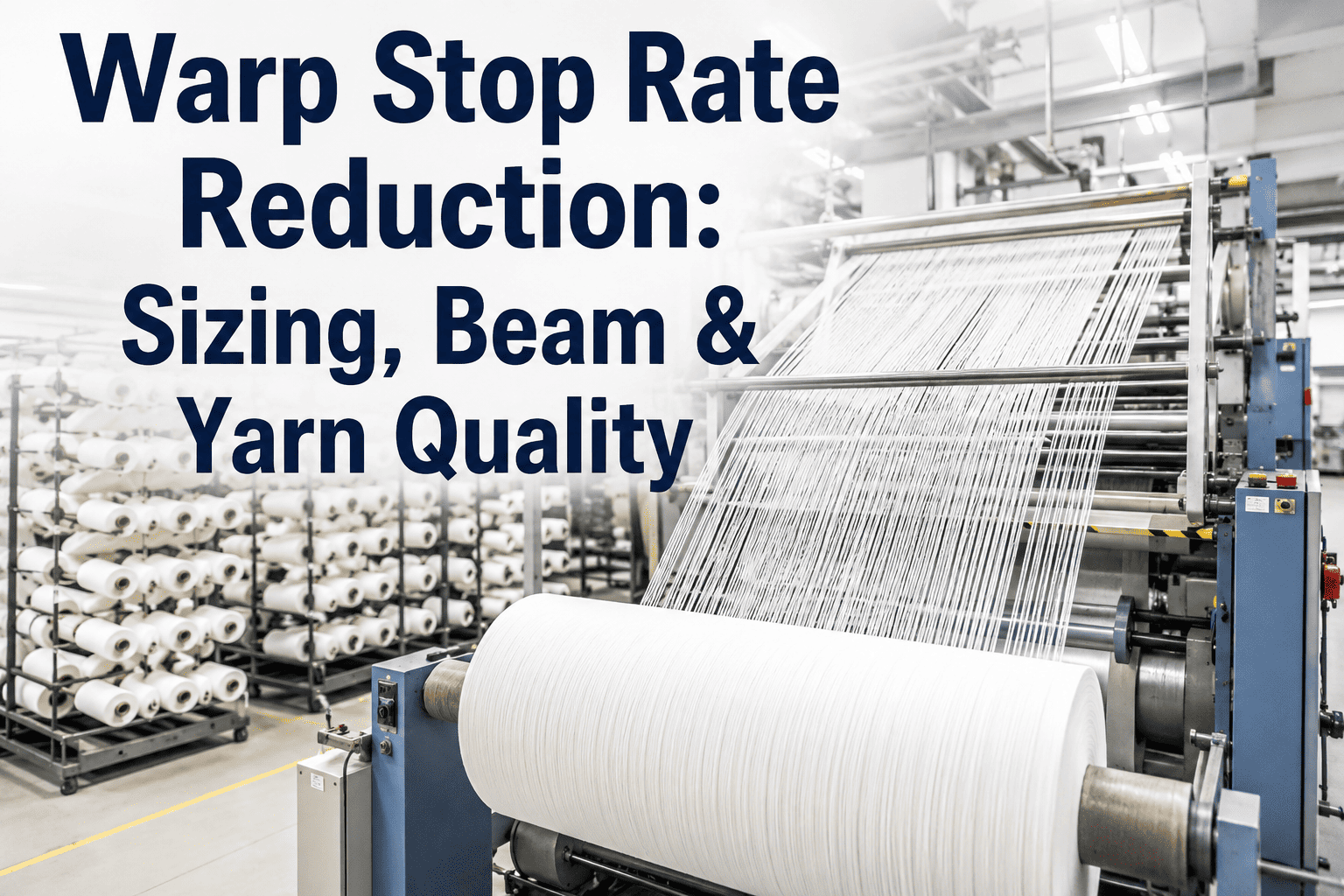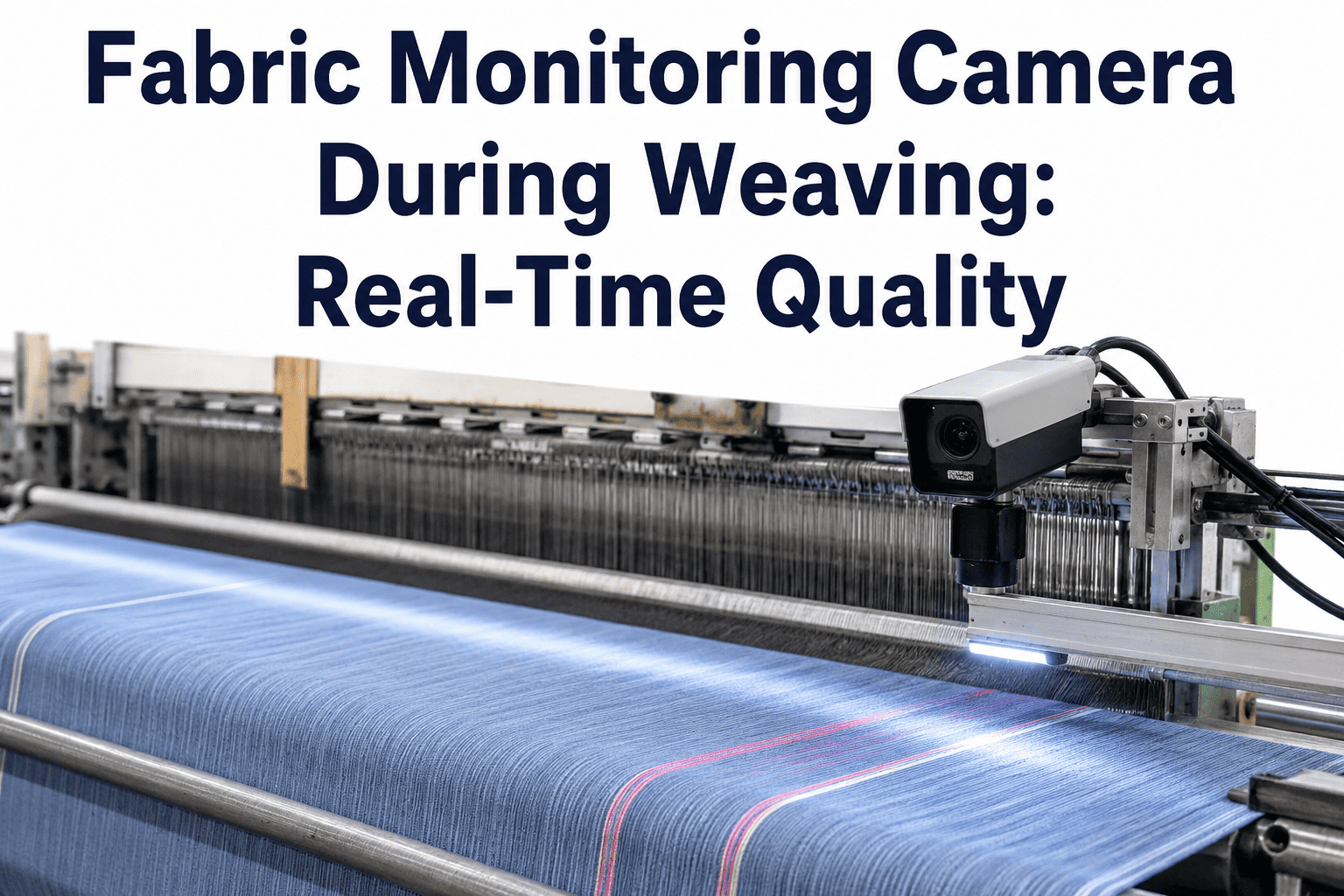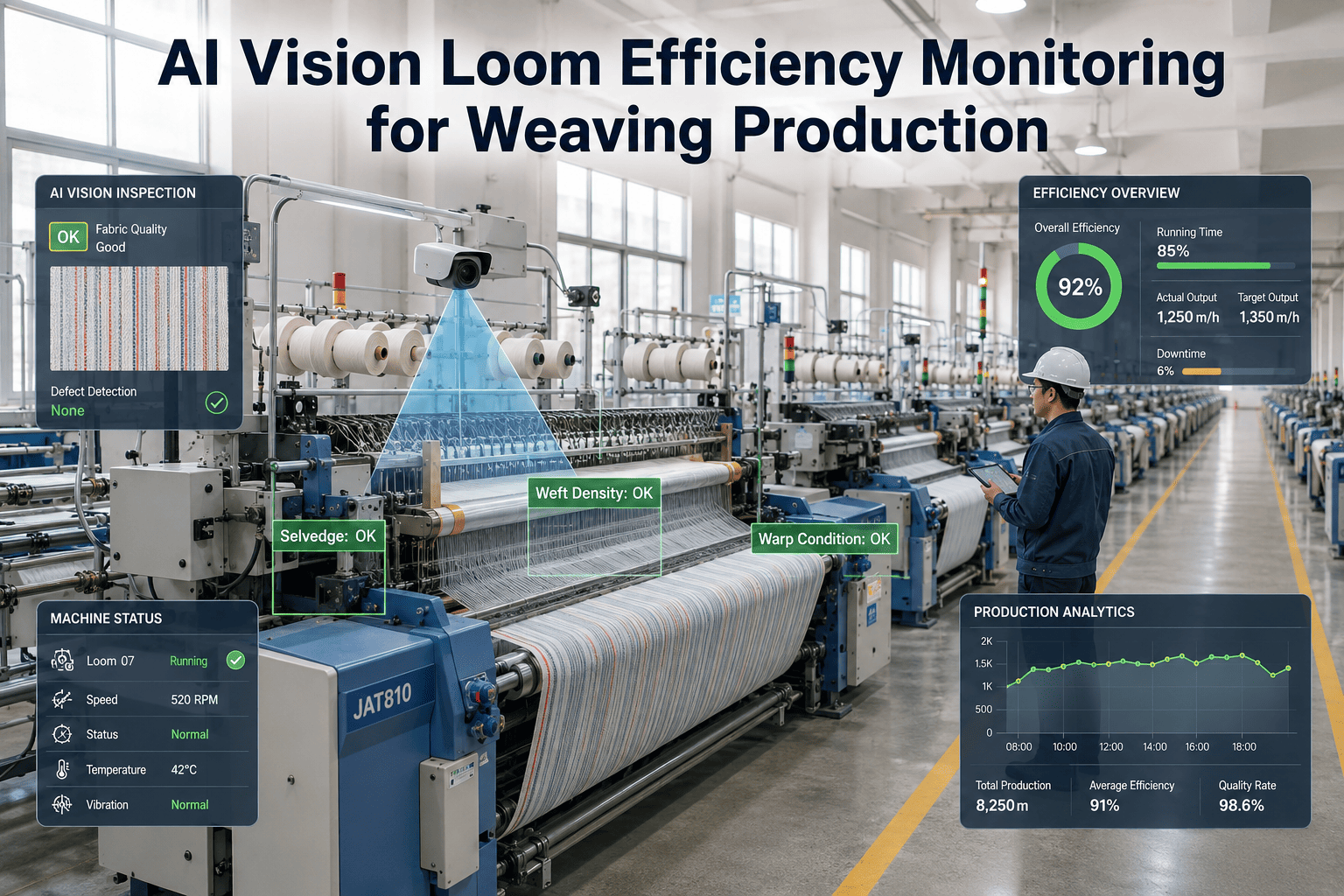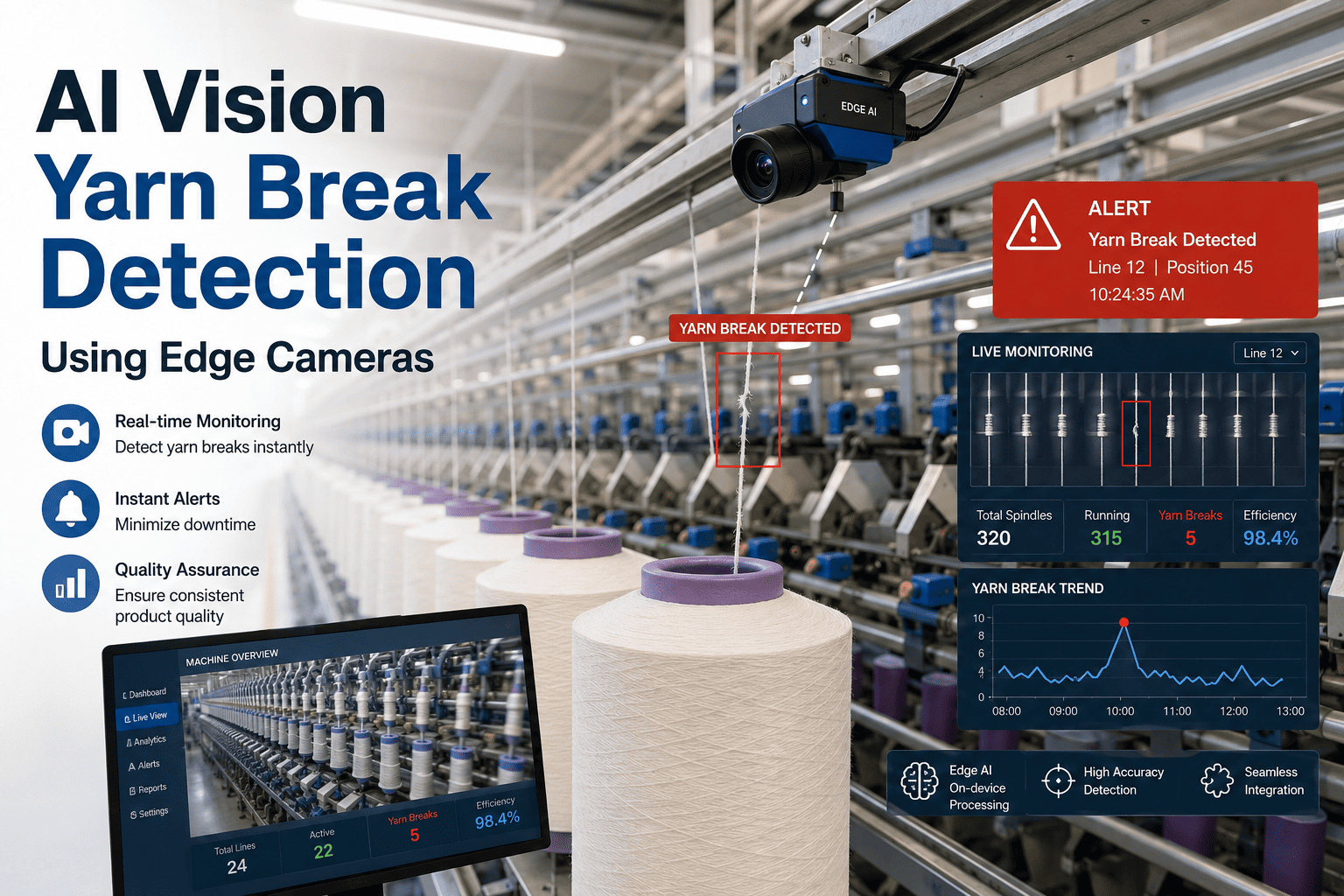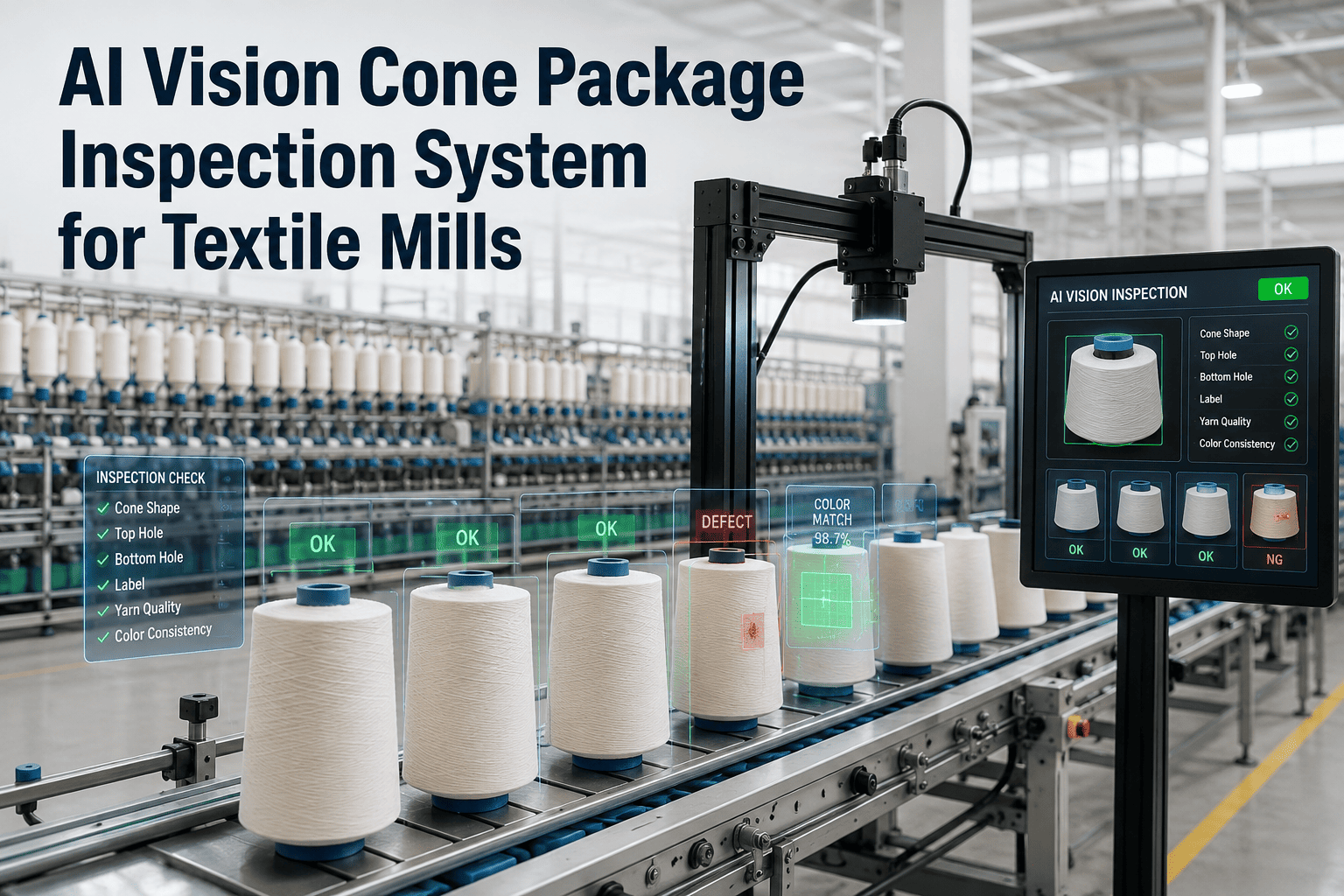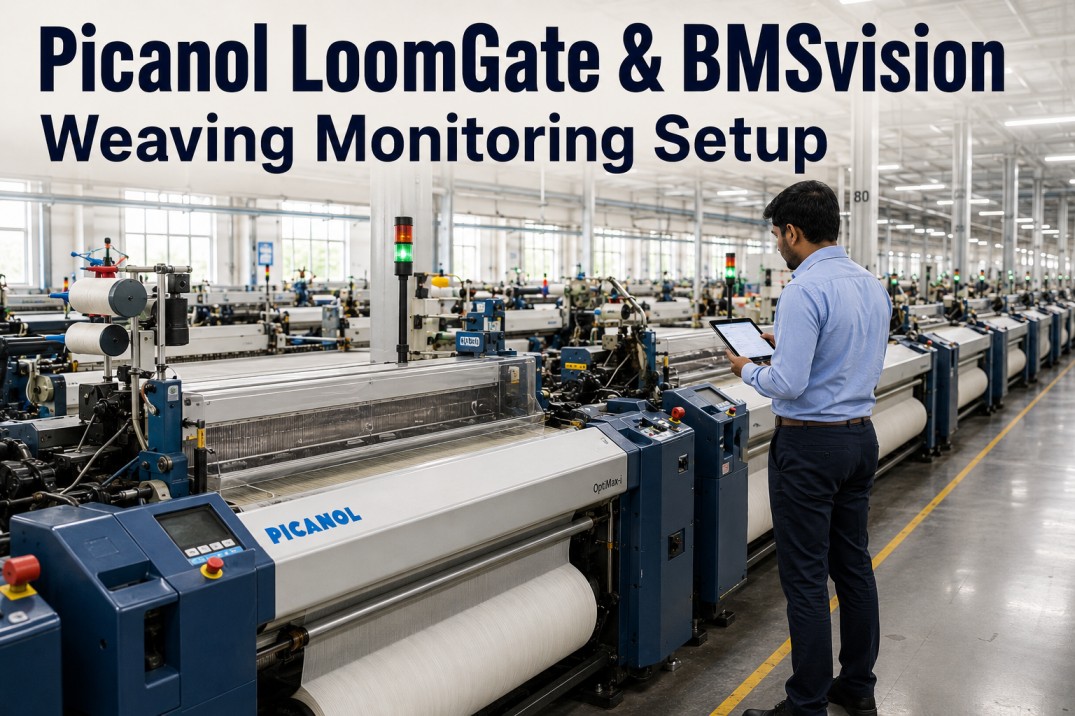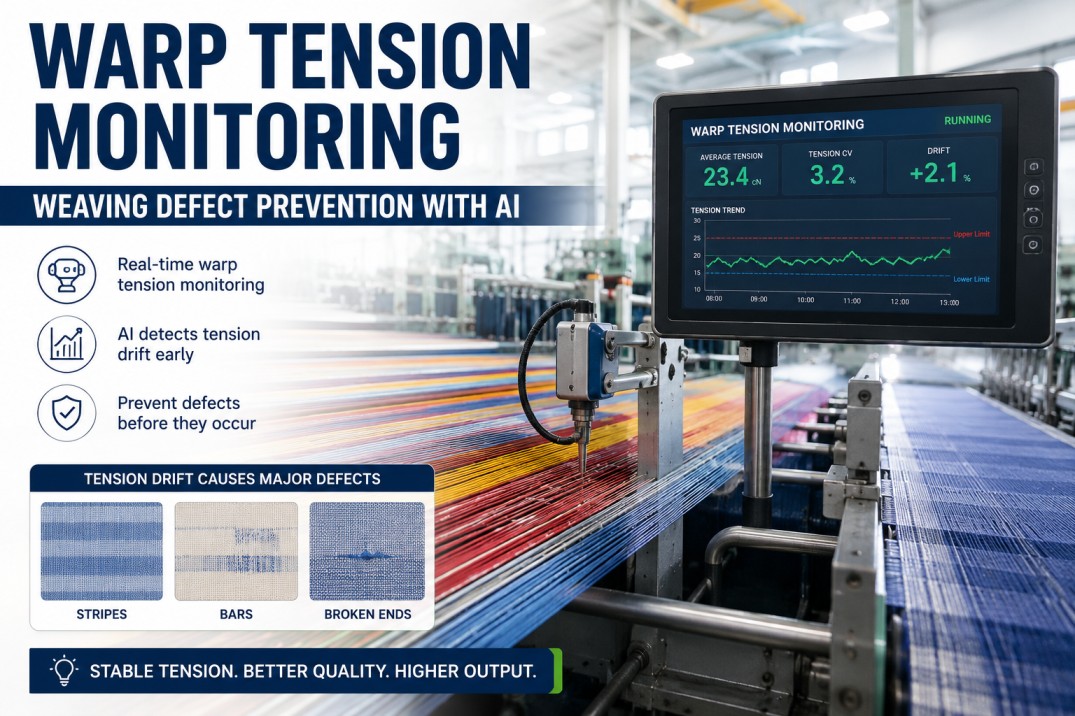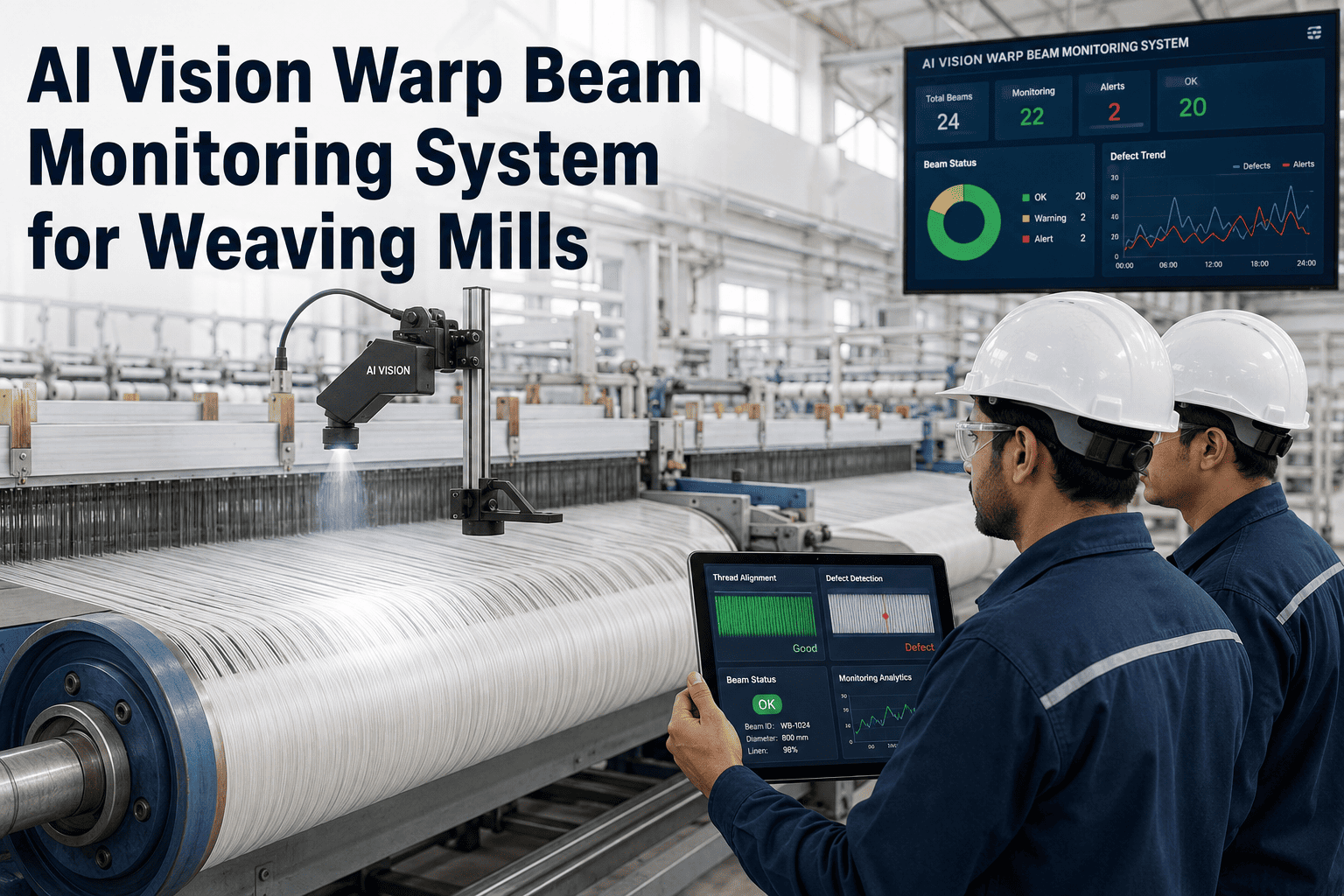
A warp beam carries thousands of individually tensioned yarn ends toward the heald frames, and a single misaligned or under-tensioned end can trigger a break that stops the loom, damages the fell of the cloth, and hands the weaver a repair job measured in minutes rather than seconds. Most mills still rely on a weaver's eyes and a periodic walk-past to catch beam problems, which means alignment drift and tension irregularities are usually found only after they have already caused a stoppage. iFactory's AI vision cameras watch every warp beam continuously and flag alignment, tension, and yarn-break risk before the loom ever stops, and you can book a demo to see it reading a live beam on your own shed floor.
58 Percent of Loom Stoppages Trace Back to Warp Breaks — Most Are Visible Minutes Before They Happen
iFactory's AI vision system watches warp beam alignment, tension bands, and yarn condition in real time, catching the visual warning signs of a break long before the loom stops and the weaver has to walk over.
Warp Breaks Are the Single Largest Cause of Loom Downtime in Weaving Mills
Published studies of air-jet weaving sheds have found that warp breakages account for the majority of loom stoppages, with weft breaks and mechanical causes trailing well behind, and each break typically takes a weaver upward of two minutes to locate and repair. Multiply that across a shed running hundreds of looms and the lost weaving time becomes one of the largest hidden drags on shed output.
Four Warp Beam Signals iFactory's AI Vision Tracks on Every Loom, Continuously
A trained weaver can often sense a beam problem before it becomes a break, but attention is split across every loom assigned to that weaver. iFactory's cameras give every single beam that same trained attention, all day, on every loom at once.
Beam Alignment
Detects lateral shift or skew in the beam as it unwinds, which left uncorrected leads to uneven tension across the width of the warp sheet.
Tension Banding
Reads visual tension bands across the sheet to flag zones running looser or tighter than neighboring ends, the leading precursor to a break.
Yarn Condition
Spots fluffing, slubs, and weak or fraying ends on the beam surface before they reach the heald frame and snap under load.
Break Pattern Clustering
Learns which zones of a beam repeatedly produce breaks, pointing maintenance to sizing or warping issues rather than treating each break as isolated.
Every Warp Break Your Weaver Repairs Today Was Visible on the Beam an Hour Earlier
iFactory's AI vision cameras read alignment, tension, and yarn condition on every beam continuously, giving your team the warning that a walk-past inspection simply cannot provide.
From Camera Install to Beam-Level Risk Alerts in Three Stages
Warp vision monitoring is designed to run alongside your existing looms without altering warping, sizing, or beam-gaiting procedures, so the shed keeps running exactly as it does today while the AI learns what a healthy beam looks like.
Camera Placement and Calibration
Vision cameras are mounted at the beam and heald frame zone on each loom, calibrated against your fabric type, yarn count, and standard tension settings.
Baseline Pattern Learning
The AI observes normal beam behavior across a production run to establish what even tension and proper alignment look like for that specific warp and fabric construction.
Live Risk Alerts to the Floor
Once calibrated, the system flags rising break risk zone by zone, routing alerts to the weaver or shift supervisor before the beam produces a stoppage.
What Mills Report After Deploying AI Vision Warp Monitoring
The figures below reflect outcomes reported by weaving sheds running continuous vision-based warp monitoring, measured against loom stoppage logs before and after deployment.
Frequently Asked Questions From Weaving Shed Managers
Stop Losing Weaving Time to Breaks You Could Have Seen Coming
iFactory's AI vision cameras watch beam alignment, tension, and yarn condition on every loom, all shift, every day. Book a demo and see how much stoppage time is sitting in plain sight on your own beams.