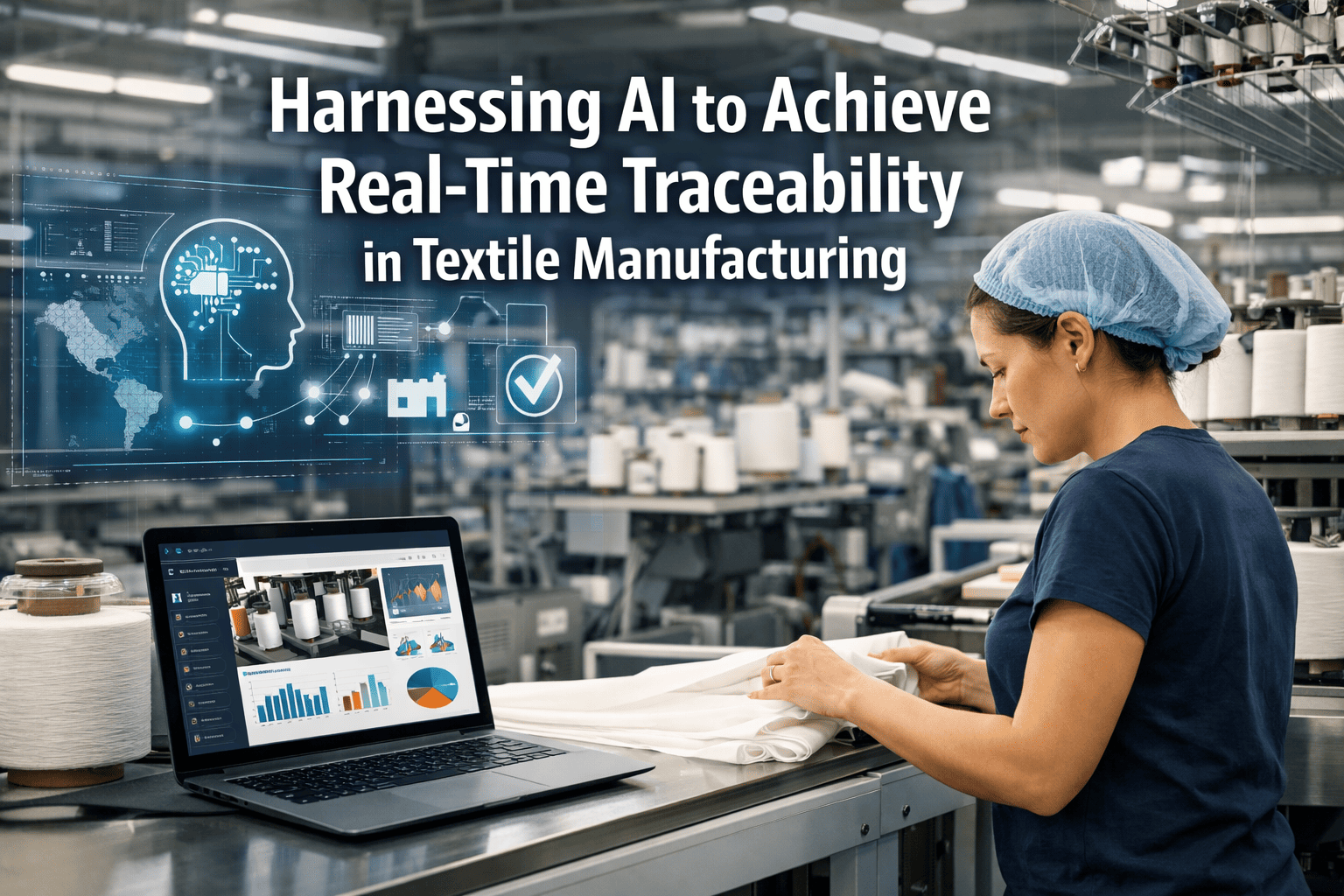
Every metre of fabric that leaves your factory carries a hidden story — of machines, operators, temperatures, dye lots, and decisions made across dozens of shifts. For decades, that story was either incomplete or buried in paper records no one had time to read. Artificial intelligence is changing this completely. Modern AI-driven traceability systems now capture, connect, and analyse every production event in real time, giving textile manufacturers the kind of end-to-end visibility that was once reserved for aerospace or pharmaceuticals. Book a free demo with iFactory and see how AI traceability works live on a textile production floor — from spinning to dispatch.
Real-Time Traceability Powered by AI
How machine learning is ending the era of blind spots, defect surprises, and compliance guesswork in textile factories.
Why Textile Traceability Has Always Been Broken
The textile value chain is one of the most fragmented manufacturing environments in the world. A single buyer order passes through spinning, warping, weaving, dyeing, finishing, and packing — often across different departments, different shifts, and sometimes different factory locations. At every handoff, information gets lost, distorted, or simply never recorded.
The result is a factory that produces consistently without ever truly understanding how it produces. Quality issues are discovered at final inspection, not at the source. Compliance audits become emergency exercises. And when a buyer raises a defect claim, no one can pinpoint where or why it happened.
What AI-Driven Traceability Actually Means
AI traceability is not a scanner at the end of the production line. It is an intelligence layer woven into every stage of manufacturing — capturing data automatically, recognising patterns that humans miss, and surfacing insights the moment they become actionable. It answers questions like: Which machine produced this batch? At what temperature was the dye applied? Which operator signed off on the quality check? What changed between the last good batch and the first defective one?
Machine sensors, operator inputs, QC scan points, and ERP data are collected automatically at every production stage — without manual entry or paperwork.
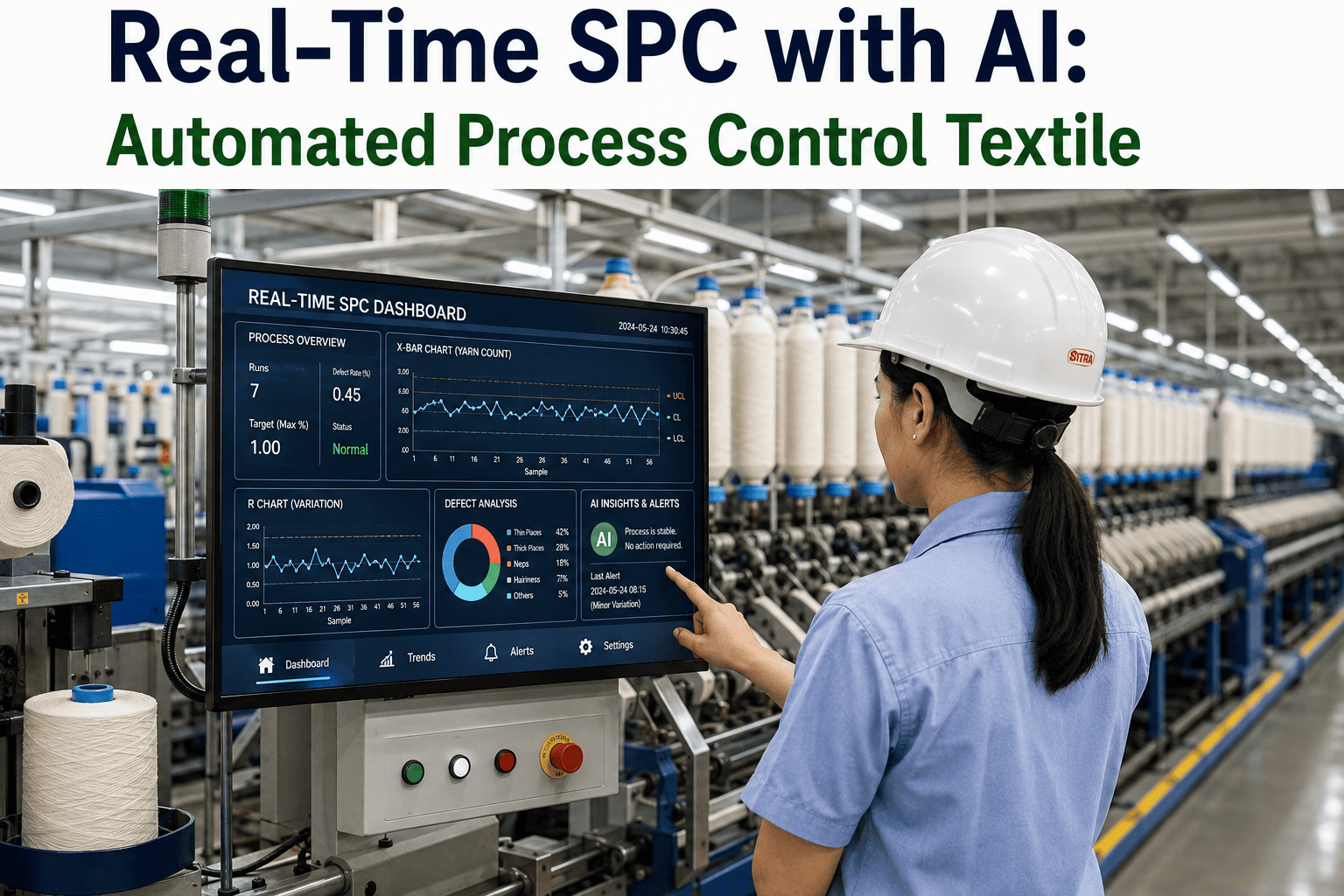
Machine learning models analyse historical production data to identify which combinations of parameters — machine speed, humidity, dye temperature — lead to quality failures.
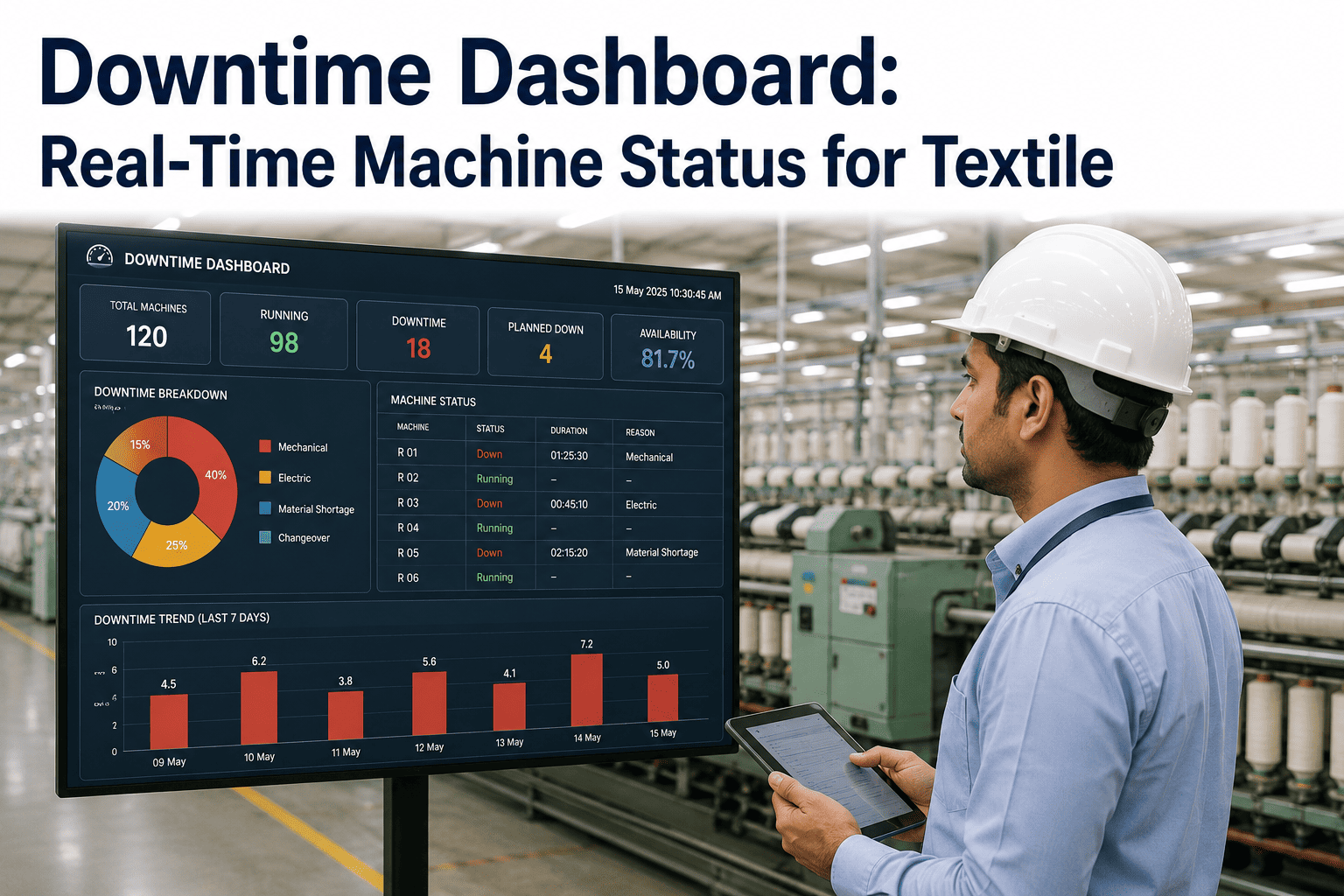
When live production data deviates from established quality parameters, the system triggers instant alerts to supervisors, operators, and managers — before defects propagate.
Every event — machine setting, quality sign-off, batch movement — is timestamped and linked to the originating order, creating an immutable production history available in seconds.
How AI Traces Every Stage of Textile Production
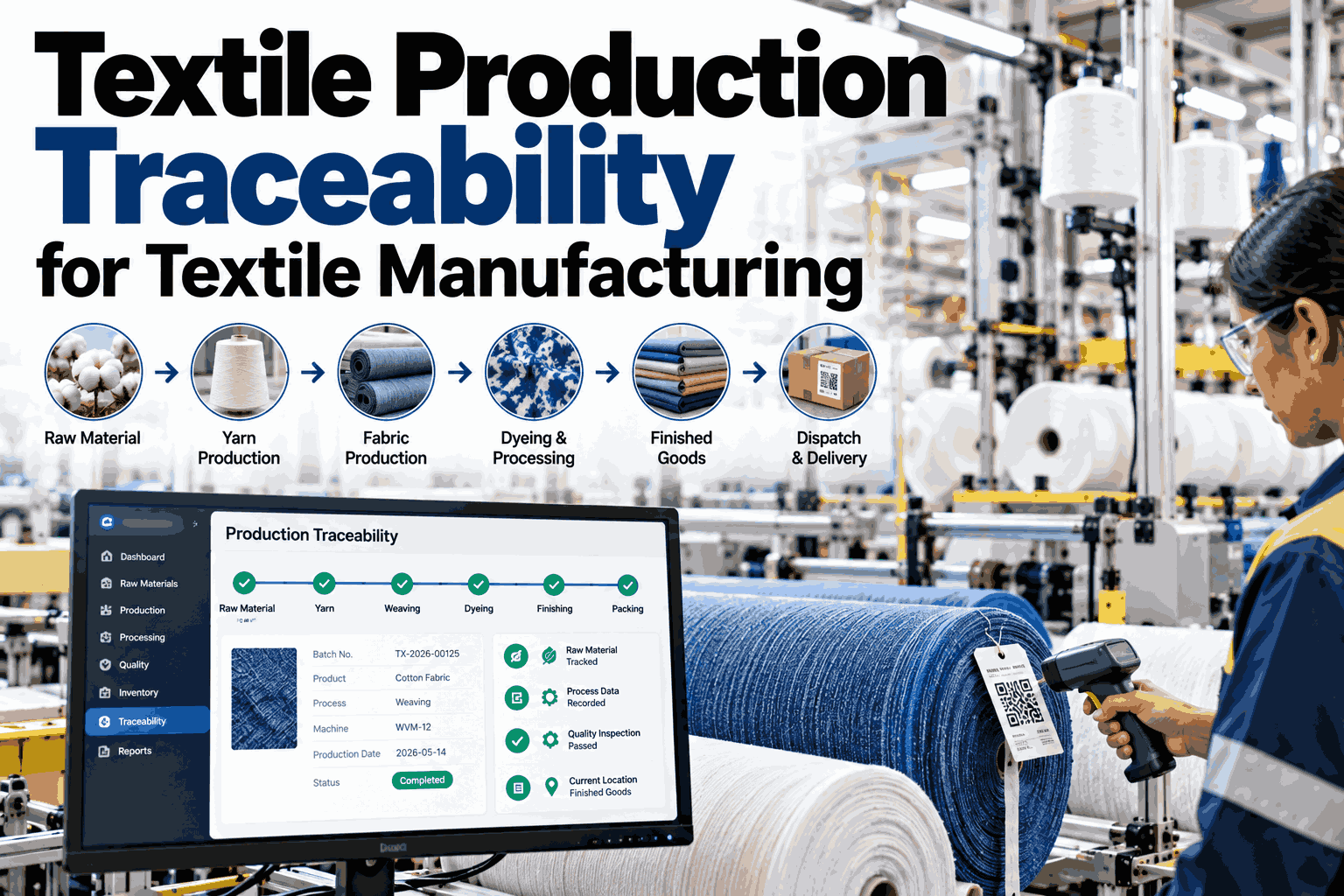
Real-time traceability means every stage of production is monitored, linked, and auditable from a single dashboard. Here is how AI builds that connected chain across a typical textile manufacturing workflow.
AI monitors twist per metre, tension, and speed in real time. Each yarn batch is tagged with a quality score before moving downstream. Deviations trigger reprocessing flags before the batch reaches weaving.
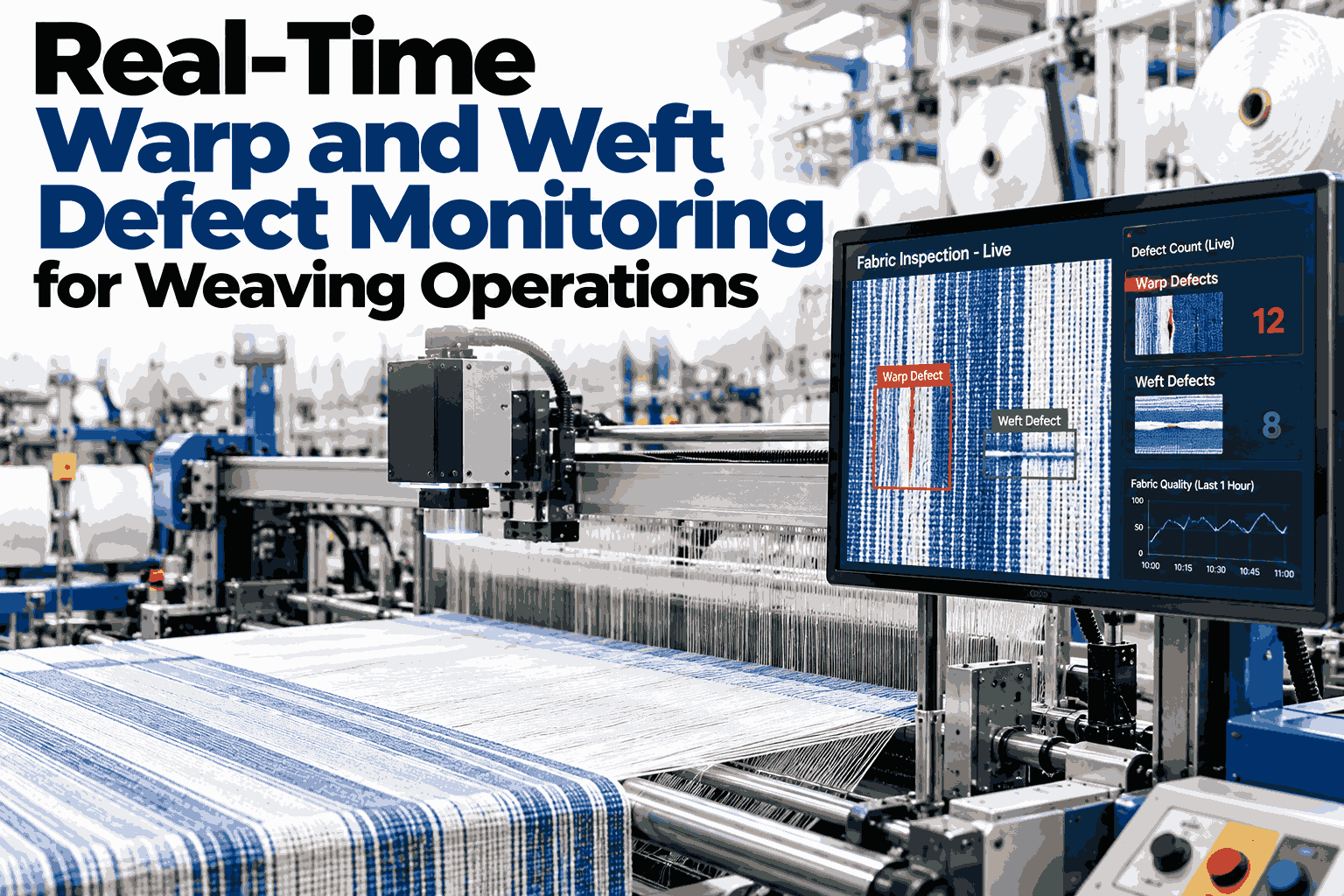
Picks per inch, reed width, warp beam tension, and loom speed are tracked per roll. If a fabric roll shows reed marks or weaving defects, the system identifies the exact loom, time window, and operator instantly.
AI compares actual dye lot parameters — temperature profiles, pH levels, bath ratio — against target recipe in real time. Shade variation between lots is detected mid-batch, not after the dye is fixed.
Stenter temperature, overfeed settings, and chemical application rates are tracked per metre. Each finished roll carries a complete digital birth certificate linking it back through every upstream process.
See how iFactory's AI traceability works across all four stages in a live factory environment.
Book Your Free DemoThe Measurable Business Impact of AI Traceability
The case for AI traceability is not theoretical — textile manufacturers implementing real-time AI monitoring are reporting consistent, measurable improvements across quality, cost, and compliance metrics within the first quarter of deployment.
Who Gains Most — and How
AI traceability does not serve one department — it transforms decision-making across every role in the factory. Here is what real-time visibility means for each team.
Receives mid-process defect alerts, traces each issue to its source machine and operator, and generates compliance-ready quality reports automatically — eliminating end-of-day fire drills.
Views a live production dashboard across all departments, identifies bottlenecks the moment they appear, and makes delivery commitments backed by real data — not yesterday's reports.
Accesses efficiency trends, cost-per-metre analysis, and department-wise performance from any device — enabling strategic decisions based on accurate, current production intelligence.
Produces buyer traceability reports — from fibre source to finished roll — in minutes. Meets GOTS, OEKO-TEX, and buyer-specific audit requirements without weeks of manual document preparation.
AI Traceability and the Regulatory Pressure Driving Adoption
The business case for AI traceability is strengthening rapidly — not just from internal efficiency gains, but from the escalating demands of global buyers and regulatory frameworks. Factories that cannot demonstrate real-time production records are losing orders to those that can.
of global apparel buyers now mandate digital traceability from Tier 1 and Tier 2 suppliers as a condition of continued partnership
The EU's Ecodesign for Sustainable Products Regulation requires full supply chain traceability for textiles sold in European markets from 2025 onwards
of Indian textile exporters surveyed in 2024 cited traceability gaps as a primary barrier to winning new international buyer accounts
faster new buyer onboarding reported by mills with AI-based traceability systems, due to audit-ready documentation always available on demand
What Makes iFactory's AI Traceability Different
Most factory management tools offer reporting. iFactory offers intelligence. The platform was designed specifically for textile manufacturing — which means it understands the difference between a warp beam change and a weft insertion error, and it knows which matters more for a specific buyer's quality standard.
iFactory's AI is trained on textile production data — not generic manufacturing. It understands yarn counts, shade tolerances, GSM variation, and loom efficiencies without requiring months of customisation.
A single trace query links a finished roll back through finishing, dyeing, weaving, and spinning — showing every parameter, every operator, and every quality decision across the full production journey.
The system recognises the early signatures of common textile defects — colour drift, tension inconsistency, count variation — and alerts operators before a full batch is compromised.
Export full traceability reports in formats accepted by global buyers and certification bodies — GOTS, OEKO-TEX, SEDEX — generated automatically from live production data.
Operators in dyeing basements and finishing halls with poor connectivity can still log quality data — synced automatically the moment network access returns, with no data gaps.
When a buyer raised a shade variation claim on a 4,000-metre order, we had the full trace — dye lot number, machine ID, batch temperature log, and operator sign-off — on the manager's screen within 90 seconds. The buyer was more impressed by our response speed than they were upset about the defect. That is what real traceability looks like.
— Textile Operations Benchmark Report, Q1 2026Frequently Asked Questions
Start Tracing Every Metre with AI
Join textile manufacturers across India, Bangladesh, and Vietnam who are using iFactory's AI traceability to eliminate defect surprises, pass buyer audits in minutes, and build the kind of production confidence that wins repeat orders.