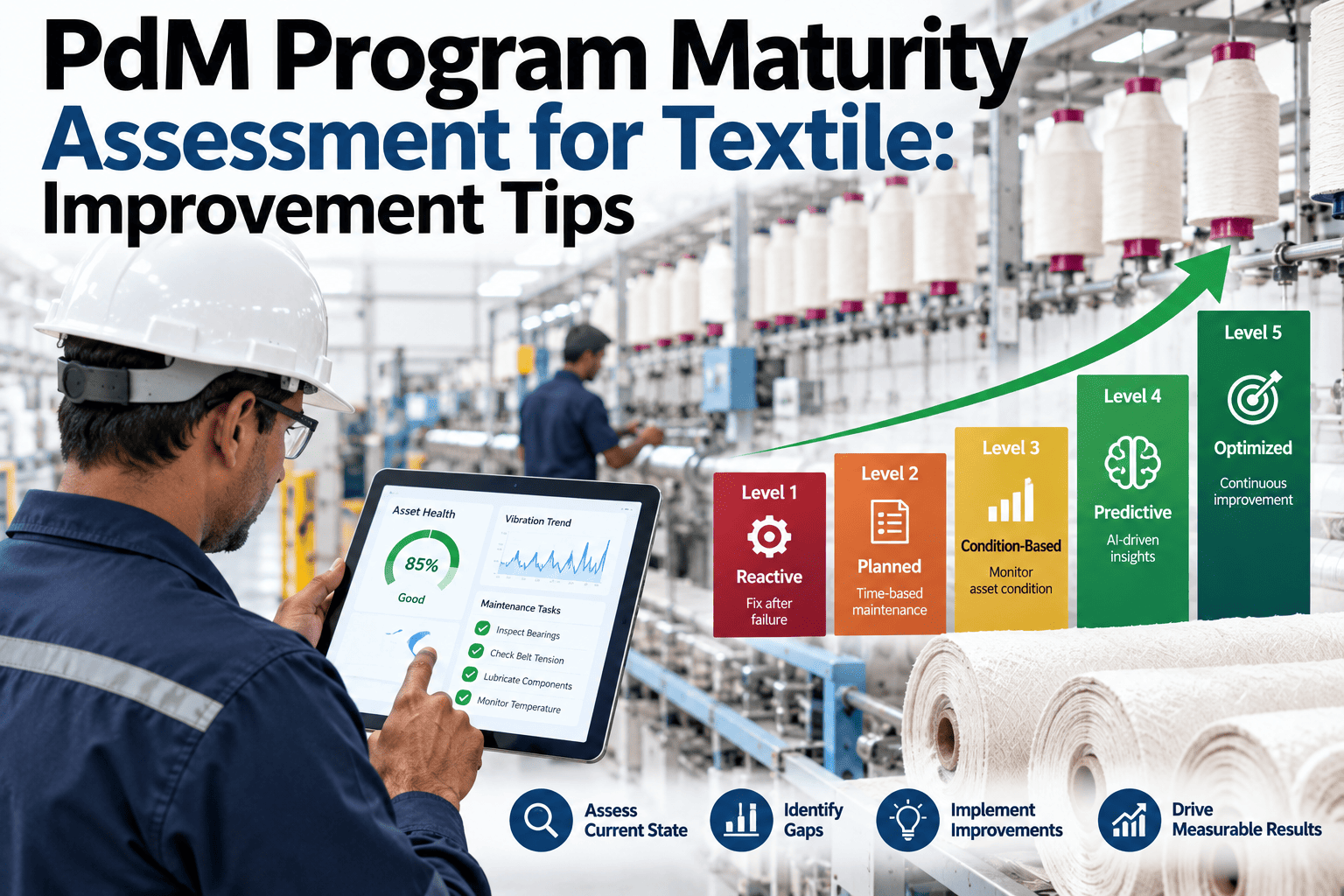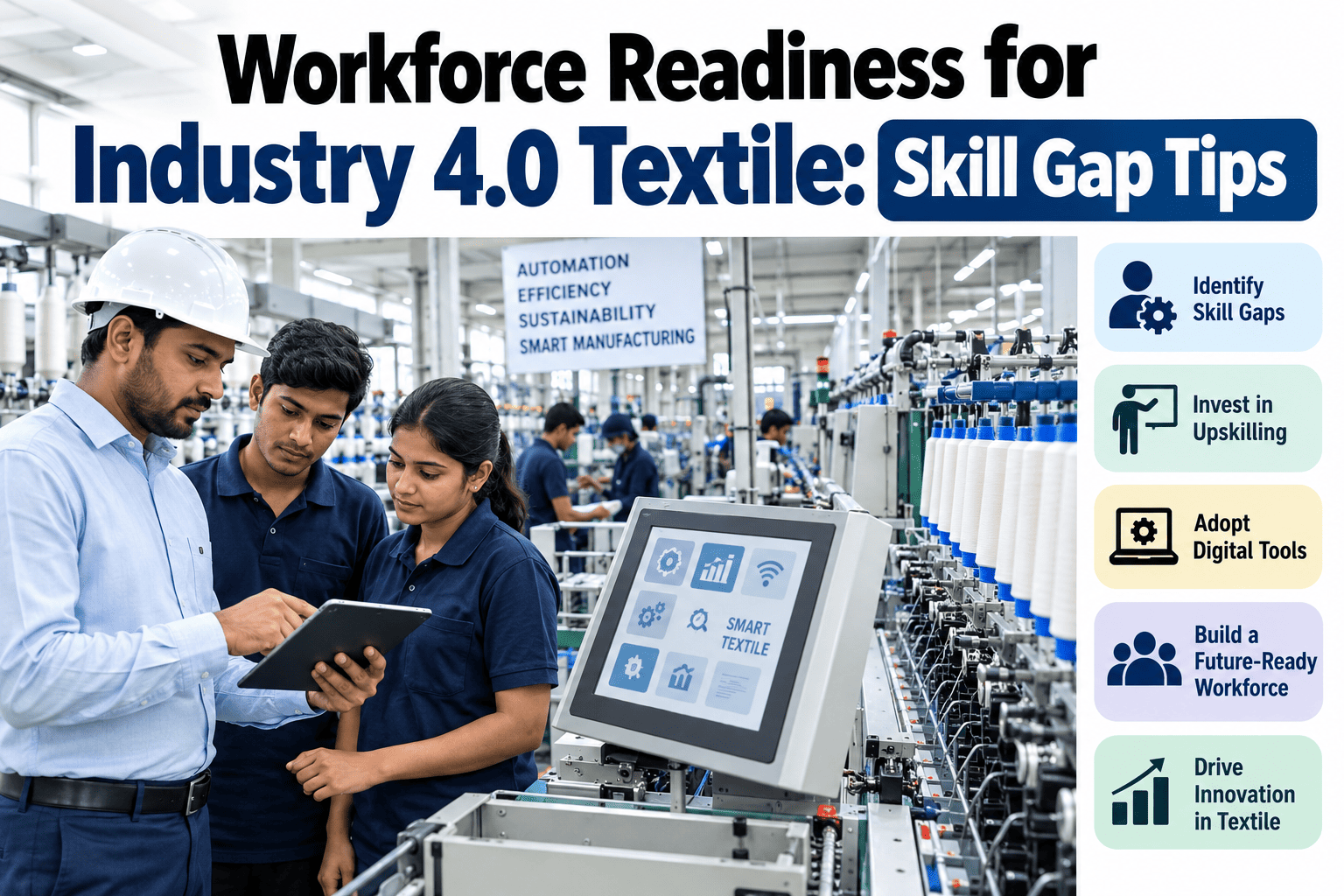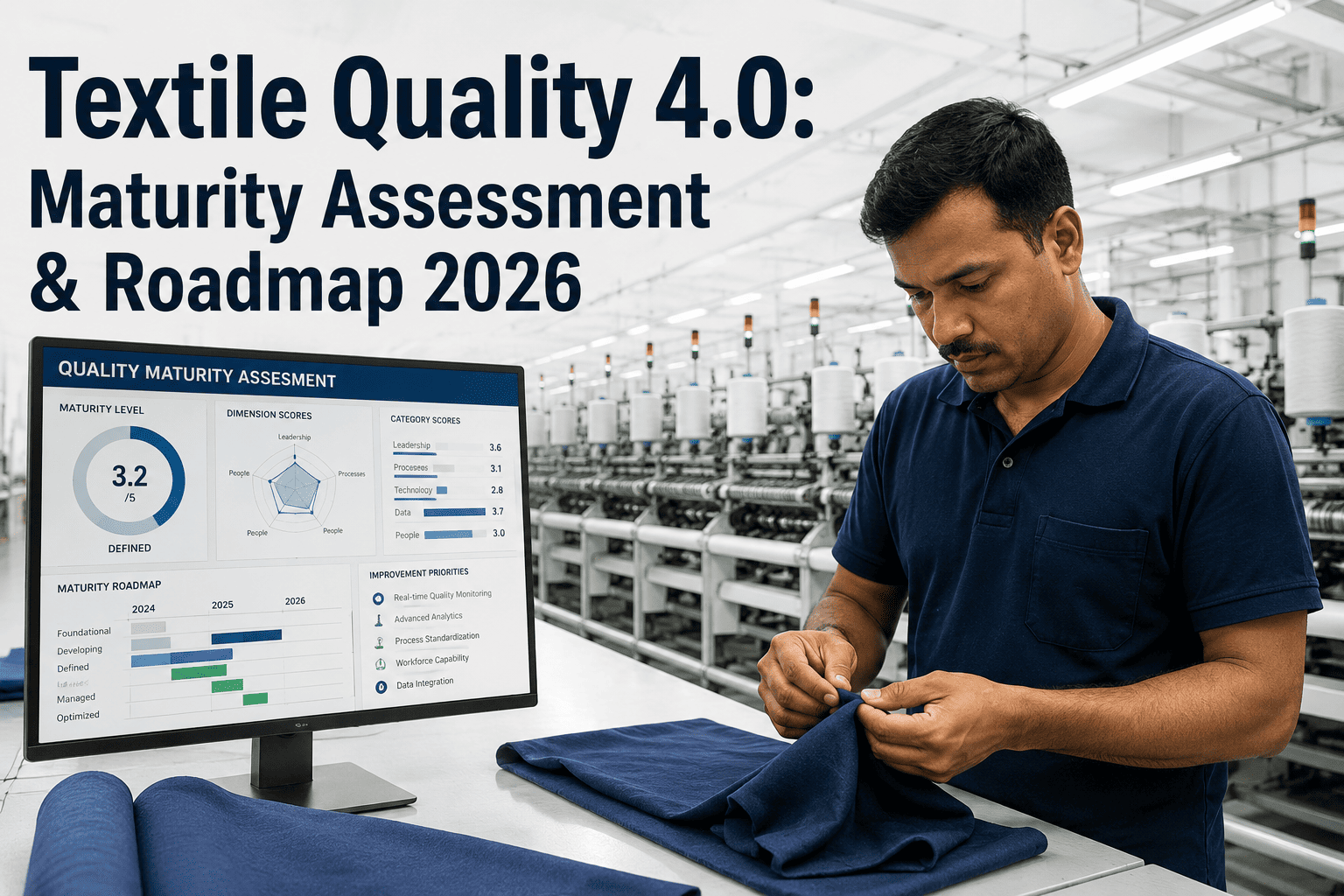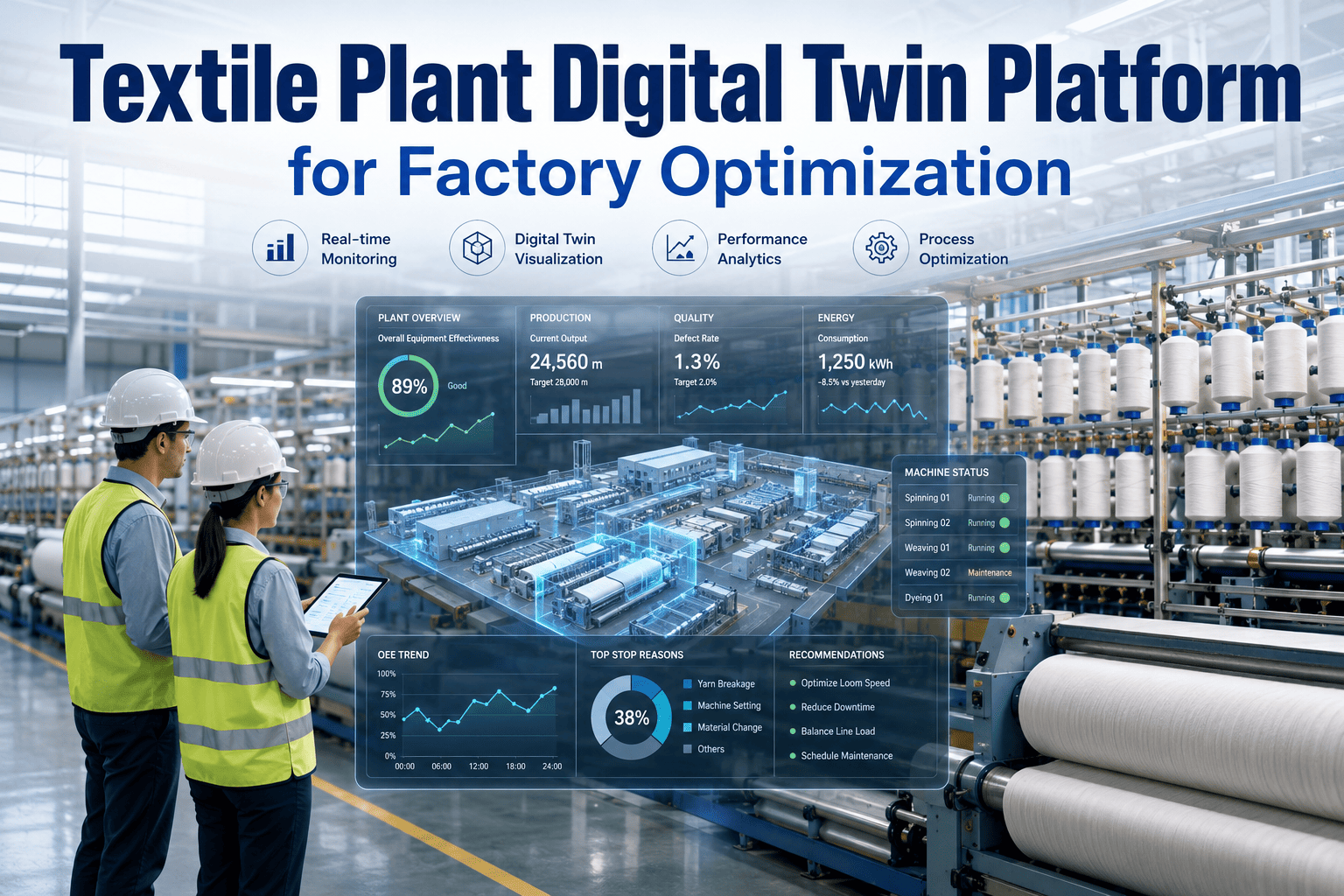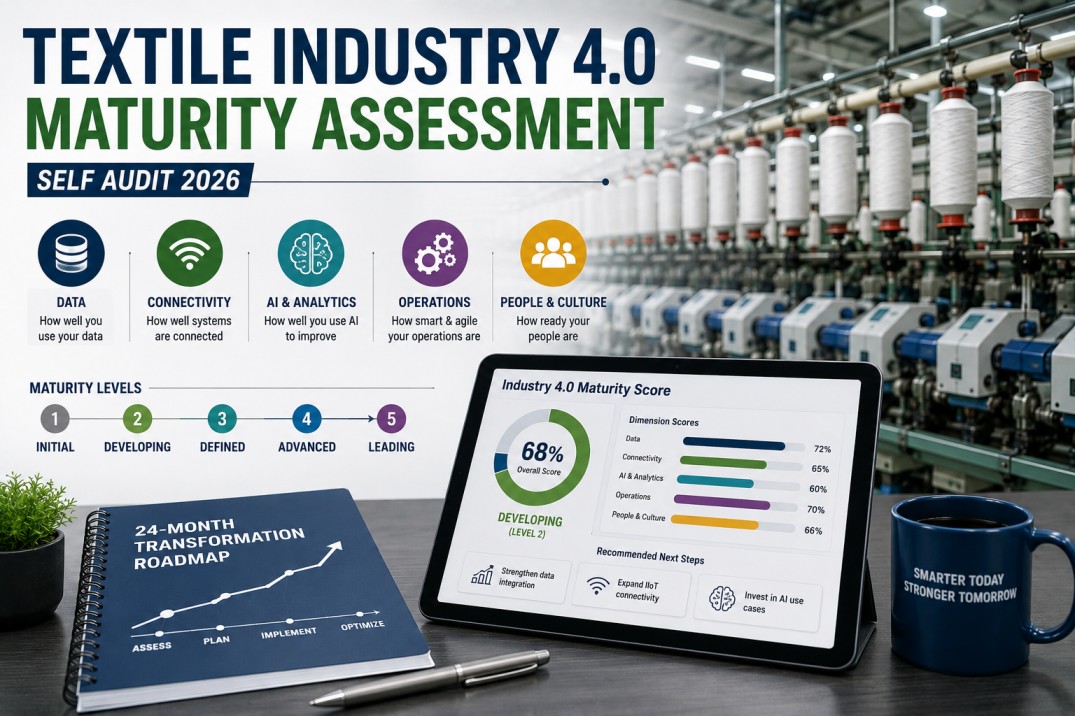
Industry 4.0 transformation in textile manufacturing is not a binary state — mills are not simply Industry 4.0 or not Industry 4.0. Every textile facility exists somewhere on a maturity continuum that spans four dimensions: data infrastructure, connectivity and integration, analytics and AI capability, and organizational readiness. A spinning mill might have world-class machine connectivity through OPC UA from modern ring frames but lack the analytics infrastructure to convert that data into actionable insights. A weaving shed might have advanced AI-based fabric inspection but rely on manual data collection for loom efficiency reporting. A finishing plant might have a mature digital culture with cross-functional data literacy but be held back by legacy machinery that predates digital communication protocols. Understanding where your facility stands on each of these four dimensions is the prerequisite for building a targeted, achievable digital transformation roadmap that allocates investment to the areas of greatest need rather than spreading resources thinly across all fronts. This guide provides a comprehensive Industry 4.0 maturity assessment framework designed specifically for textile mills — a structured self-audit covering 24 assessment criteria across the four pillars, a five-level maturity scoring system, a priority matrix for sequencing transformation initiatives, and a 24-month phased implementation roadmap that has been validated across 50-plus textile mill assessments conducted by iFactory's digital transformation team.
Assess Your Mill's Industry 4.0 Readiness — Book a 30-Minute Maturity Evaluation
iFactory's digital transformation team has conducted Industry 4.0 maturity assessments for 50-plus textile mills across spinning, weaving, dyeing, and finishing sectors. Schedule a free evaluation to benchmark your facility and build your personalized transformation roadmap.
Four Pillars of Textile Industry 4.0 Maturity: Score Your Facility
The maturity assessment evaluates textile facilities across four pillars, each scored from 0 to 100 percent through six weighted criteria. The scores reveal the specific strengths and gaps in your current digital infrastructure, providing the evidence base for prioritizing transformation investments. The overall maturity score is the unweighted average of the four pillar scores, with 0 to 25 percent corresponding to Level 0 and 76 to 100 percent corresponding to Level 4.
Five Levels of Industry 4.0 Maturity in Textile Manufacturing
Each of the four pillars is scored on a five-level maturity scale from Level 0 to Level 4. The level descriptions below provide a benchmark for interpreting your pillar scores and understanding what capability improvements are required to reach each successive level. The majority of textile mills globally operate at Level 1 or Level 2, with fewer than 15 percent of facilities reaching Level 3 or above across all four pillars.
Ready to Move to the Next Maturity Level?
iFactory's digital transformation consultants will help you interpret your assessment results, identify the highest-impact improvement initiatives, and build a phased 24-month roadmap tailored to your mill's specific gaps and business priorities.
Transformation Priority Matrix: High-Impact, Low-Effort Wins First
Not all Industry 4.0 initiatives deliver equal value for the same investment of time, budget, and organizational change effort. The priority matrix maps 12 common textile Industry 4.0 initiatives along two dimensions — business impact and implementation complexity — to identify the sequence in which they should be tackled. Initiatives in the high-impact, low-complexity quadrant should be executed first to build momentum and demonstrate ROI. High-complexity, lower-impact initiatives should be deferred or descoped.
24-Month Industry 4.0 Transformation Roadmap for Textile Mills
The transformation roadmap sequences initiatives across four six-month phases, prioritizing quick wins in the first two quarters to build organizational confidence and demonstrate ROI before tackling strategic investments in later phases. The timeline assumes a typical mid-size textile mill starting at maturity Level 1 to Level 2 across most pillars, with the goal of reaching Level 3 across all four pillars within 24 months. Each phase builds on the infrastructure and capability established in previous phases.
Textile Industry 4.0 Maturity Assessment: Frequently Asked Questions
How long does a full Industry 4.0 maturity assessment take to complete?
A comprehensive maturity assessment conducted by iFactory's digital transformation team typically requires 4 to 6 weeks from kickoff to final report delivery. The process includes a one-day on-site or virtual workshop with plant management and department heads to score each of the 24 assessment criteria, a two-week data collection period where the assessment team validates scores through equipment audits, network infrastructure reviews, and operator interviews, a one-week analysis phase where scores are normalized and benchmarked against iFactory's database of 50-plus textile mill assessments, and a final one-week report preparation phase that delivers a detailed maturity scorecard, gap analysis, prioritized initiative list, and a 24-month transformation roadmap with investment estimates. Mills can complete a simplified self-assessment version in 2 to 4 hours using the framework and scoring rubric provided in this guide.
What is the typical maturity score for a textile mill that has never invested in digital transformation?
Based on iFactory's database of 50-plus textile mill assessments across 15 countries, the typical baseline maturity distribution is as follows. Approximately 35 percent of mills score at Level 0 to Level 1, characterized by paper-based data collection, no machine connectivity, and no MES deployment. Approximately 45 percent score at Level 1 to Level 2, with partial sensor coverage, some machine connectivity via serial or fieldbus protocols, and basic spreadsheets or early-stage MES in at least one department. Approximately 15 percent score at Level 2 to Level 3, with majority machine connectivity, standardized data collection, and MES in multiple departments. Only 5 percent score above Level 3, with AI deployment, digital twin capability, and autonomous material handling. The global average composite maturity score across all four pillars is approximately 38 percent, corresponding to early Level 1. Mills in South Asia average 32 percent, Southeast Asia 36 percent, Europe 45 percent, and North America 48 percent.
How often should a textile mill reassess its Industry 4.0 maturity?
iFactory recommends conducting a full maturity assessment annually, typically at the beginning of the fiscal year to inform budget allocation and transformation planning for the coming year. A lighter progress review should be conducted quarterly to track score improvements against the transformation roadmap and adjust priorities based on emerging challenges or opportunities. The annual assessment provides a formal benchmark against the previous year's scores, while quarterly reviews focus on tracking specific initiative completion and their measured impact on pillar scores. Mills that conduct annual assessments consistently show 12 to 18 percent faster maturity progression than mills that assess ad hoc or not at all, primarily because the regular assessment cadence creates accountability for transformation progress and provides early warning when investments are not delivering expected improvements.
Can a mill achieve Level 4 in all four pillars simultaneously, or should it focus on specific pillars first?
Industry 4.0 maturity progression is naturally sequential — data infrastructure must reach Level 2 before connectivity and integration can reach Level 3, because connected machines require reliable data. Connectivity must reach Level 3 before analytics and AI can reach Level 3, because AI models need integrated data from multiple sources. Organizational culture typically lags behind technology by one to two levels because workforce capability and change readiness take longer to develop than infrastructure deployments. The optimal approach is to target Level 2 in data infrastructure and connectivity first, then Level 3 in analytics and AI while organizational culture catches up, then advance all pillars together toward Level 4 in the final phase. Attempting to push all pillars simultaneously stretches resources too thin and typically results in Level 2 across all dimensions rather than Level 3 in the priority pillars.
What is the typical investment required to move from Level 1 to Level 3 across a mid-size textile mill?
The investment required to move a mid-size textile mill of approximately 50,000 spindles or 200 looms from Level 1 to Level 3 across all four pillars typically ranges from $350,000 to $750,000 over 24 months, broken down as follows. Data infrastructure improvements including sensor installation, edge gateways, and data storage account for $80,000 to $150,000. Connectivity and integration including network upgrades, protocol unification, MES deployment, and ERP integration account for $120,000 to $250,000. Analytics and AI including dashboard development, predictive maintenance models, and quality AI account for $80,000 to $200,000. Organizational change including training programs, digital champions, and change management consulting accounts for $40,000 to $80,000. The remaining balance covers project management, contingency, and integration labor. The typical payback period for the full transformation program is 18 to 30 months, driven by OEE improvements of 15 to 25 percent, labor productivity gains of 10 to 18 percent, and quality defect reductions of 20 to 35 percent.
Start Your Industry 4.0 Journey with a Professional Maturity Assessment
iFactory's digital transformation team brings validated assessment methodology, cross-industry benchmarks, and practical transformation experience to every engagement. Schedule a free 30-minute consultation to discuss your mill's current state and define the scope of a full maturity assessment.