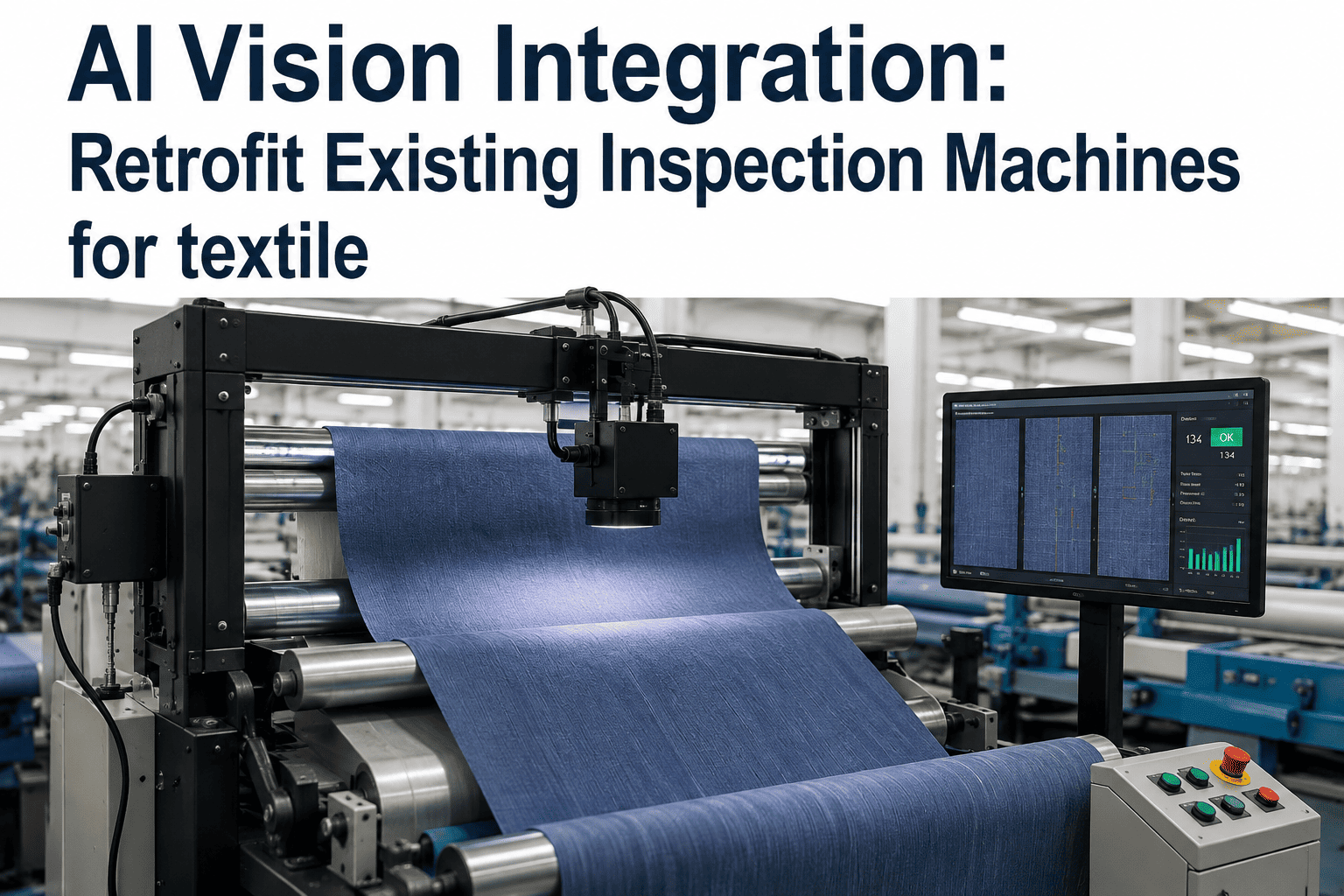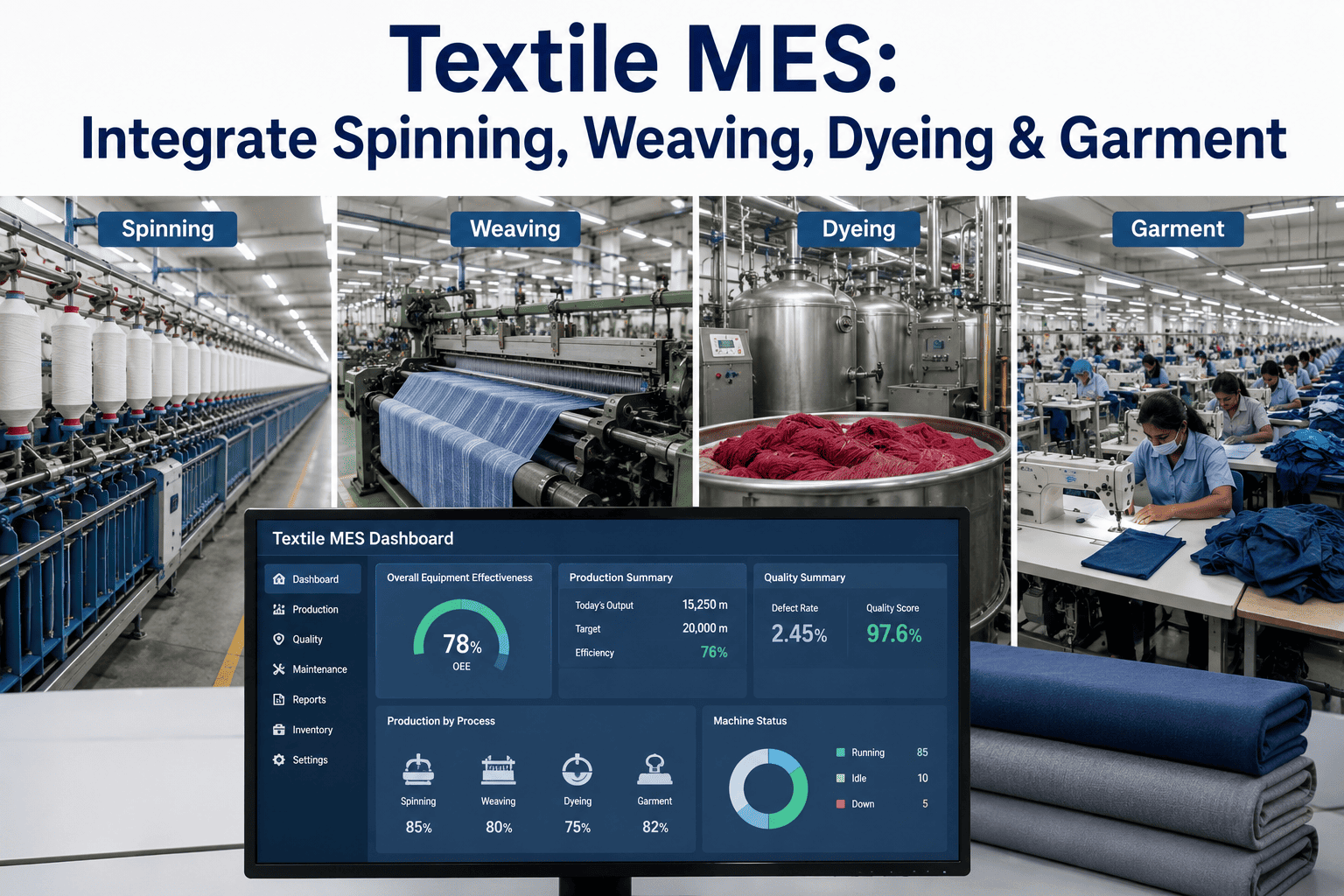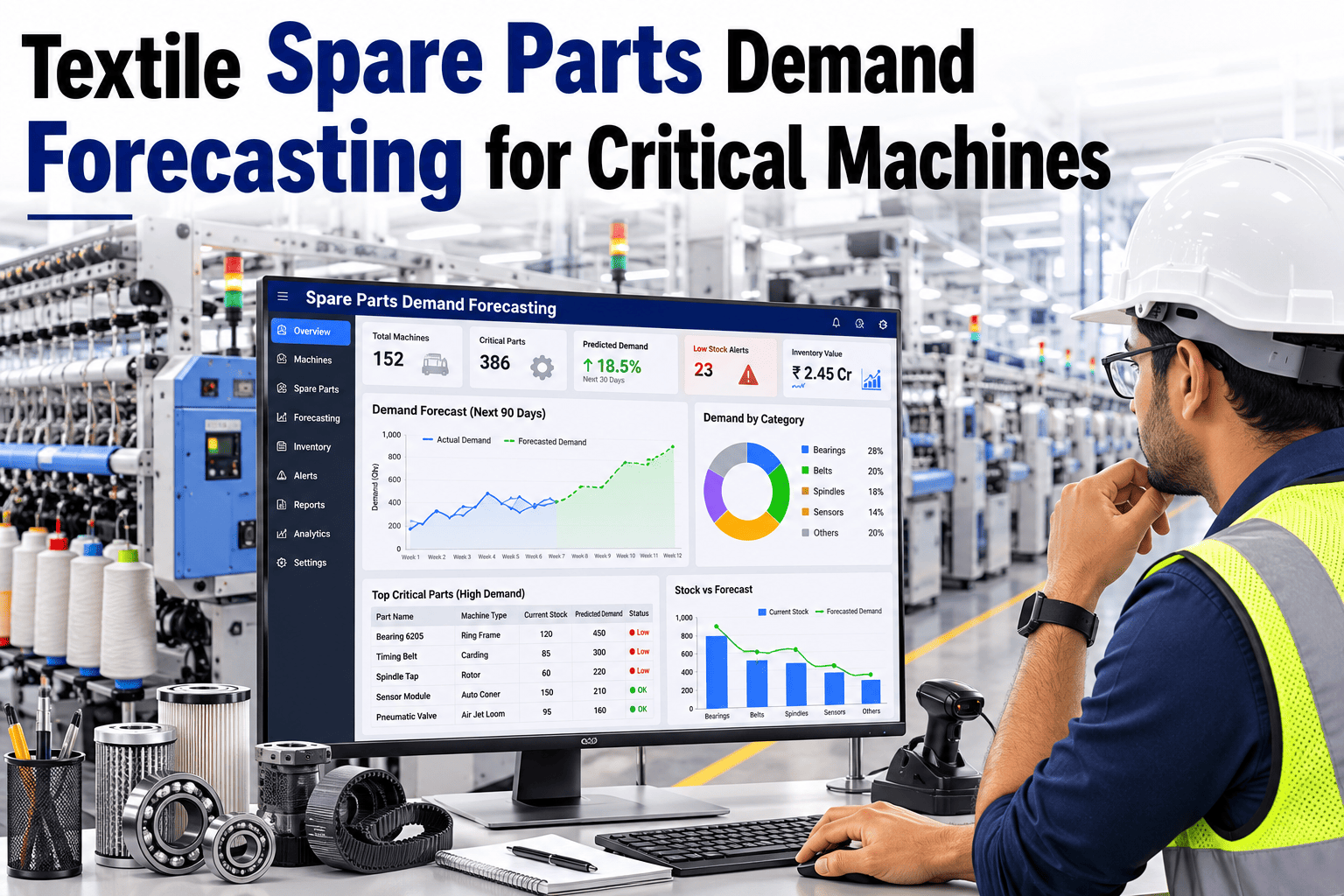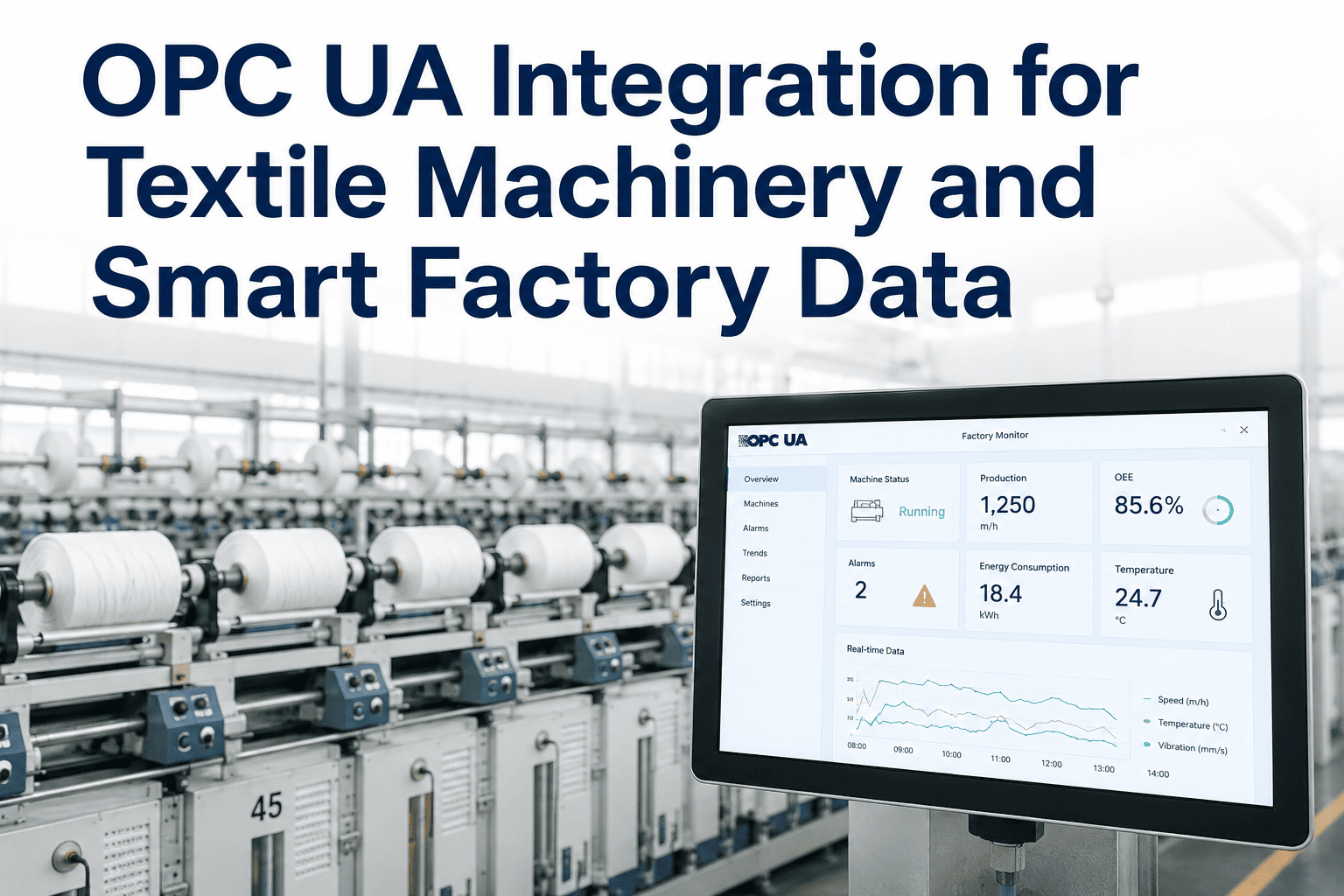
Walk into most textile mills and you'll find a mix of machinery spanning two or three decades — modern electronic looms sitting next to ring frames with relay-based controls that predate any concept of a network port. That equipment still spins yarn and weaves fabric perfectly well, but it is invisible to any MES, analytics platform or predictive maintenance system unless someone bridges the gap between its native signals and the digital world. Legacy machine connectivity through OPC UA, Modbus and industrial edge gateways is exactly that bridge — a way to pull real production and condition data out of older equipment without ripping out machines that still have a decade of useful life left. If half your fleet is still a black box to your software stack, Book a Demo to see how iFactory connects brownfield textile equipment without a forklift upgrade.
Connect What You Already Have Before You Replace It
iFactory integrates legacy textile machines using PLC signal taps, OPC UA, Modbus and edge gateways — turning decades-old equipment into a live data source without costly capital replacement.
The Brownfield Reality of Textile Manufacturing
Unlike industries that refresh capital equipment on short cycles, textile machinery is built to run for twenty-five to thirty-five years, and mills routinely operate ring frames, looms and winding machines well past the point where the original electronics vendor still exists. This creates a genuine dilemma for any digitization initiative: modern MES and analytics platforms expect structured digital signals, but a large share of the actual production fleet was built before that expectation existed.
The instinct to solve this by replacing old machines with connected ones is usually the wrong call financially — a mechanically sound ring frame with twenty years of remaining service life does not need to be scrapped just because it lacks a network port. The right answer is almost always a connectivity layer that reads existing signals, whether analog, relay-based or an early proprietary protocol, and translates them into the standard data your software stack actually needs.
The Connectivity Stack, Layer by Layer
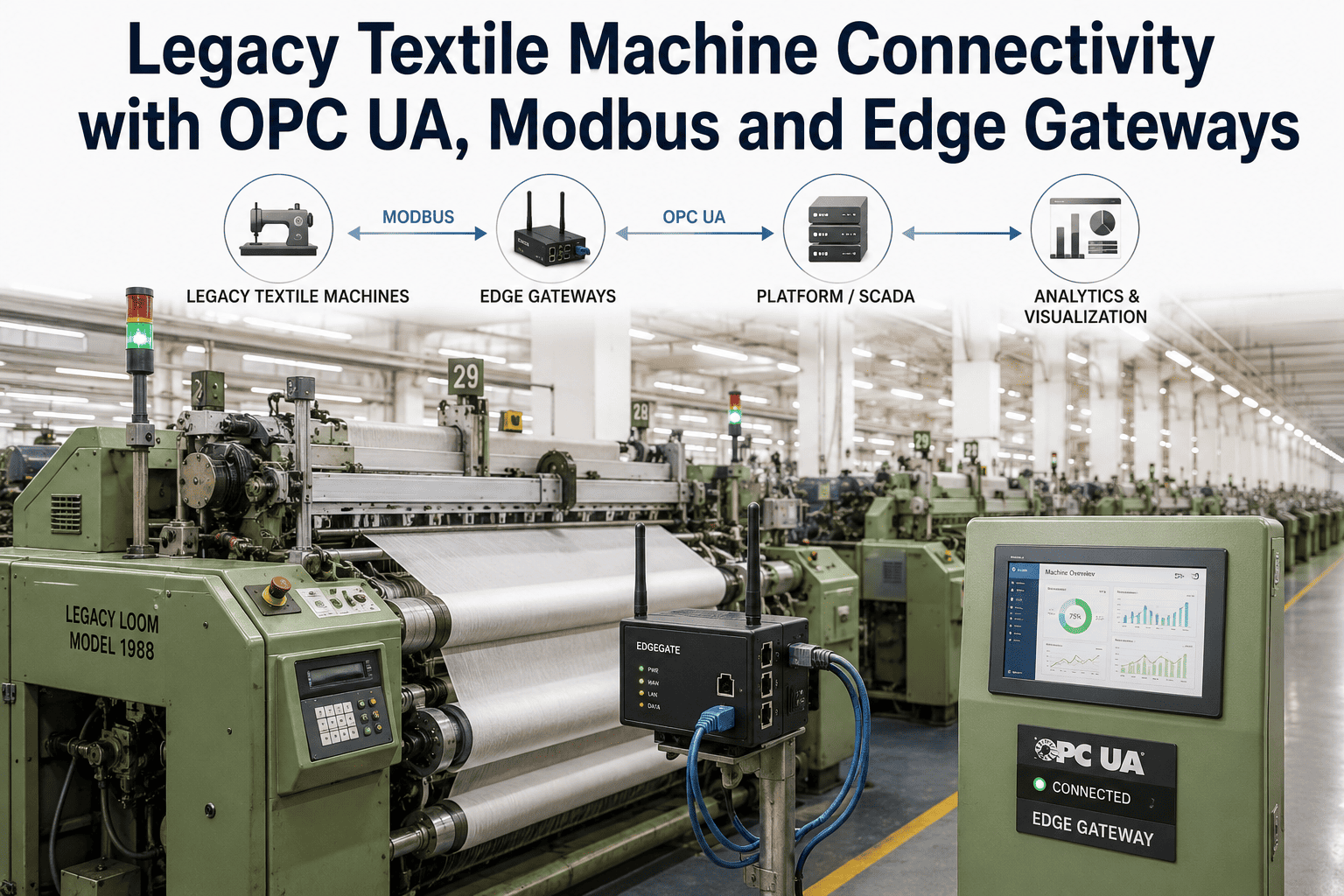
Analytics & MES
iFactory's dashboards, OEE calculations and predictive maintenance models consume the normalized data stream from every connected machine, old and new alike.
OPC UA Server
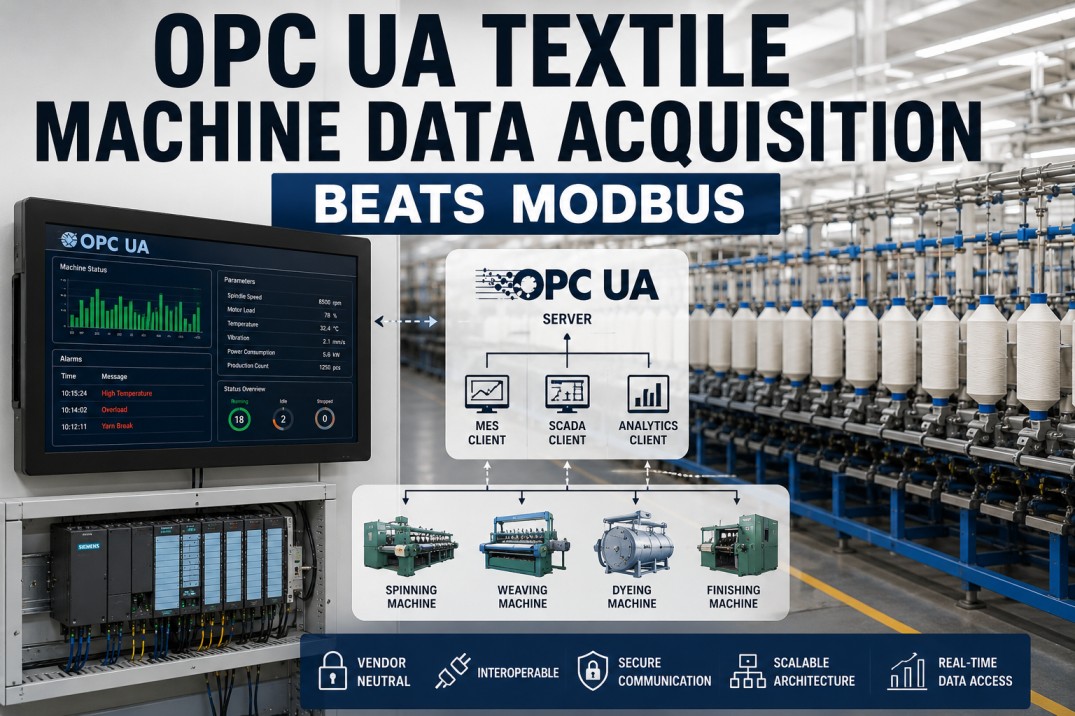
A standardized, secure interface exposes machine data in a vendor-neutral format, letting any downstream system subscribe without custom point-to-point integration work.
Edge Gateway
An industrial edge device sits near the machine, polling Modbus registers or PLC memory addresses and converting raw signals into structured, timestamped data.
Machine Signal Source
Relay contacts, analog sensors, existing PLC I/O or a legacy serial port on the machine itself — the raw signal, tapped without altering the machine's original control logic.
Choosing the Right Protocol for the Right Machine
| Protocol | Best Suited For | Typical Effort |
|---|---|---|
| Modbus RTU/TCP | Machines with an existing serial or Ethernet PLC interface, common on newer semi-automated equipment | Low — direct gateway polling |
| OPC UA | Standardizing data across mixed-vendor equipment into one secure, structured interface | Medium — gateway plus server config |
| Discrete I/O Tap | Fully relay-based or electromechanical machines with no digital interface at all | Medium — physical sensor and wiring work |
| Vibration & Current Sensors | Condition monitoring on machines where no production signal exists but health data is valuable | Low to medium — retrofit sensor kit |
The right protocol choice depends entirely on what the machine already exposes — forcing OPC UA onto a machine with no existing digital interface wastes effort that a simple discrete I/O tap would solve more cheaply. iFactory's integration team assesses each machine individually rather than applying a single connectivity template across a mixed fleet, which is why brownfield textile integrations stay on budget. Engineering teams evaluating their own fleet can Book a Demo to walk through a sample machine assessment.
Get a Connectivity Assessment for Your Actual Machine List
Send us your equipment inventory — we'll map which machines need Modbus, OPC UA, a discrete tap, or a sensor retrofit before you spend a rupee.
What You Gain Once Legacy Machines Are Connected
True Plant-Wide OEE
Availability, performance and quality metrics finally cover the entire fleet, not just the newest connected machines.
Predictive Maintenance on Old Iron
Vibration and current signatures from decades-old equipment feed the same failure prediction models as new machines.
Accurate Production Counts
Manual production logging errors disappear once machine cycle counts are captured directly at the source.
Extended Equipment Life
Condition visibility lets you extend the useful service life of mechanically sound machines with confidence, not guesswork.
Security Without Slowing Down the Floor
Connecting legacy equipment to a modern network raises legitimate security questions, and iFactory's edge architecture is built to address them directly — gateways operate on an isolated industrial network segment, communicate outward through a single secured OPC UA endpoint, and never expose machine control logic to the broader IT network. Data flows one direction, from machine to platform, with no write-back path into legacy control systems that were never designed to accept external commands. This keeps the original machine logic completely untouched while still delivering the visibility your digitization initiative needs.
Frequently Asked Questions
Will connecting our legacy machines interfere with their existing control logic?
No — the connectivity layer reads signals passively through gateway polling or sensor taps and never writes commands back into the machine's original control system. The machine continues operating exactly as it always has; the only addition is a data stream flowing outward to your analytics platform. This is a core design principle, not an optional safety setting.
How long does a typical legacy connectivity project take per machine?
A machine with an existing digital interface, such as Modbus-capable PLC, can typically be connected within a day or two. A fully relay-based machine requiring a discrete I/O tap or sensor retrofit usually takes three to five days including wiring and validation. Full-fleet timelines depend on machine count and mix, and can be scoped precisely through Support.
Do we need IT network changes across the whole plant?
Typically no — edge gateways operate on an isolated industrial network segment and communicate outward through a single secured endpoint, which minimizes the footprint on your existing IT infrastructure. Most integrations require only a defined network path for the gateway rather than broader network reconfiguration.
Can this work alongside machines we've already connected with a different system?
Yes — OPC UA is specifically designed as a vendor-neutral standard, so machines already reporting through another system can coexist with newly connected legacy equipment inside the same normalized data layer, without requiring a rip-and-replace of prior integration work.
What's the realistic ROI of connecting older, fully depreciated machines?
Fully depreciated machines often deliver the fastest visibility ROI, because they are frequently the least monitored and most prone to unplanned downtime — the exact gap predictive maintenance and accurate production tracking are built to close. Book a Demo to get an ROI estimate specific to your legacy fleet.
Digitize the Fleet You Already Have
Full plant digitization does not require replacing every machine that predates modern connectivity standards — it requires a connectivity layer smart enough to meet each machine where it is. iFactory's OPC UA, Modbus and edge gateway integration approach brings legacy textile equipment into your analytics and maintenance platform without touching the control logic that keeps it running, protecting both your capital investment and your production continuity.
Bring Your Equipment List — We'll Map the Path to Full Visibility
Every mill's fleet is different. Get a machine-by-machine connectivity plan before committing to any integration timeline.