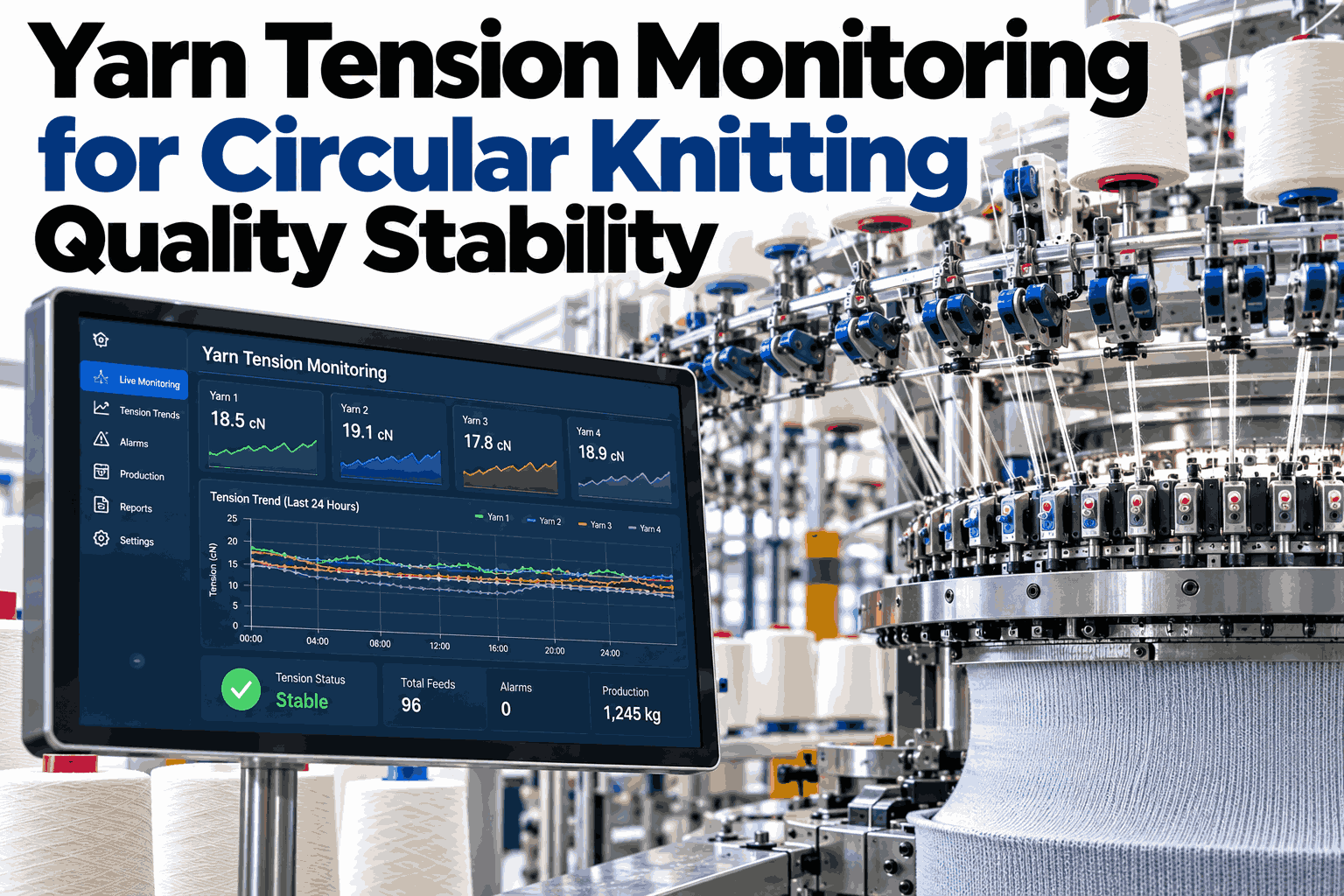
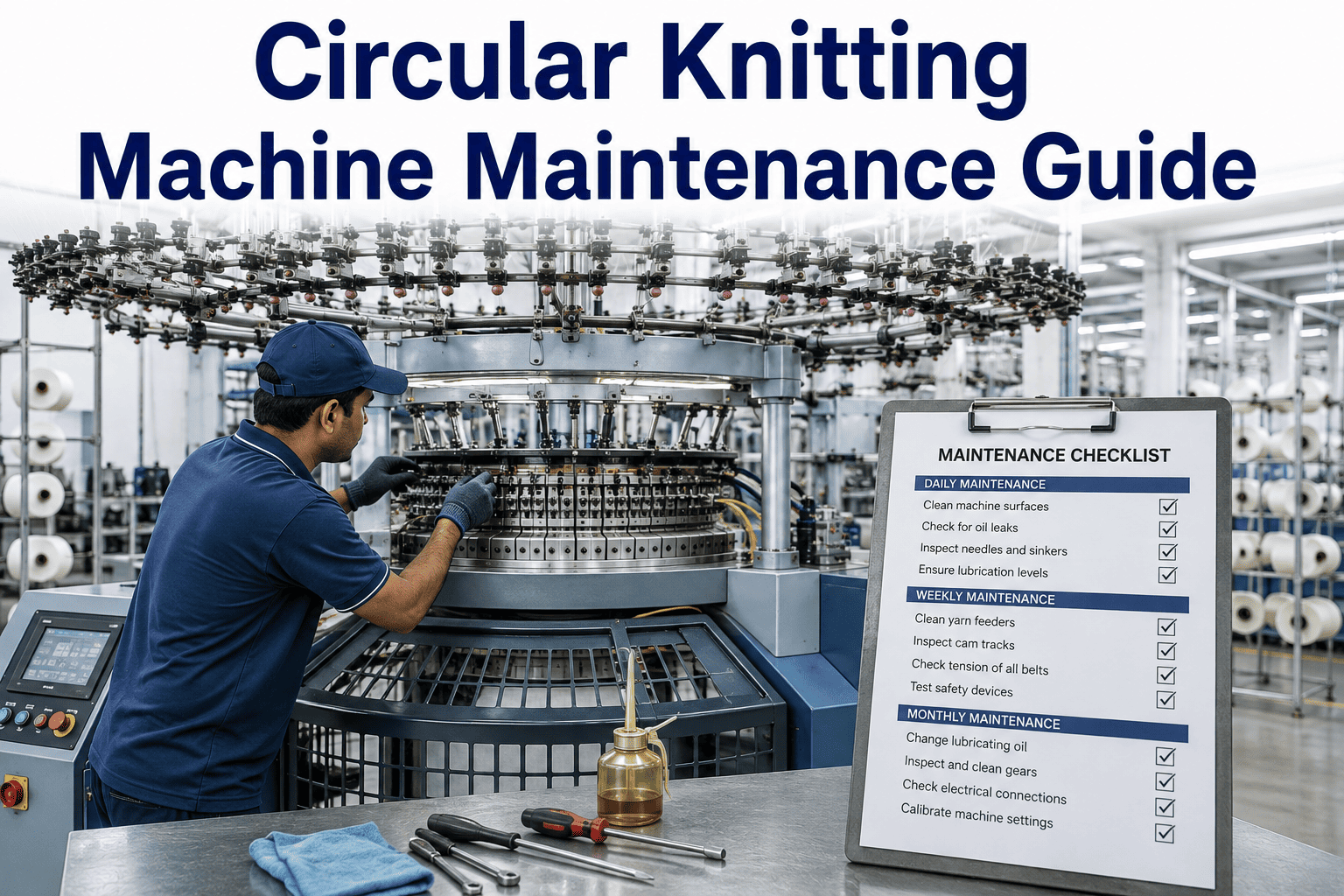
Knitting machines operate at speeds that demand precise maintenance intervals. A circular knitting machine running 30 to 35 revolutions per minute produces over 50,000 stitches per second across 100-plus feeds, each stitch depending on flawless needle and sinker interaction. A warp knitting machine at 1,800 to 2,200 rpm creates fabric at rates that make any misaligned guide bar or worn needle visible within meters of fabric. Despite this mechanical precision, many knitting mills still schedule maintenance based on production volume alone without tracking actual needle condition, oil consumption, or tension drift. The mills that maintain 90 percent or higher knitting efficiency treat maintenance as a data-driven discipline rather than a reaction to machine stops. The following guide covers the essential preventive maintenance protocols for both circular and warp knitting machines, organized by machine type, component, and frequency.
Get the Complete Knitting Machine PM Guide
iFactory provides a ready-to-deploy maintenance framework for circular and warp knitting machines with configurable checklists, needle replacement tracking, oil consumption monitoring, and real-time efficiency dashboards. Deployed in 7 to 14 days.
Circular versus Warp Knitting: Maintenance Profiles
Circular and warp knitting machines share some maintenance fundamentals but differ significantly in critical care areas. Understanding the distinct failure modes and service requirements of each type determines whether your PM program targets the right components at the right time.
Circular Knitting Machine
Warp Knitting Machine
Needle and Sinker Replacement Cycle
Needles and sinkers are the highest-wear components on any knitting machine and the most common cause of fabric defects. A structured replacement schedule prevents quality issues before they affect production output.
Inspect
Visual inspection of needle hooks, latches, and sinker throats every shift. Replace individual damaged needles immediately.
Every shiftMeasure
Measure needle hook opening and sinker throat depth weekly using calibrated gauges. Record measurements per feed position.
WeeklyReplace
Replace needle sets at 2,500-hour intervals for circular machines and 1,800-hour intervals for warp machines. Batch replace all needles at service intervals.
2,500 hrLog
Record needle and sinker replacement data by feed position. Track failure patterns to identify problematic feeds requiring cam adjustment.
ContinuousLubrication and Tension Specifications
Proper lubrication and yarn tension are the two most controllable variables in knitting machine performance. Deviations from specification cause measurable increases in fabric defects and component wear.
| Parameter | Machine Type | Specification | Frequency | Method |
|---|---|---|---|---|
| Main oil reservoir | Circular | ISO 68 needle oil | Daily | Level check and top up |
| Oil filter cleaning | Circular | 25 micron mesh | Weekly | Remove and air blow |
| Cam track lubrication | Circular | NLGI 1 grease | Monthly | Grease gun application |
| Oil bath level | Warp | ISO 100 gear oil | Daily | Sight glass check |
| Oil filter replacement | Warp | 10 micron cartridge | Monthly | Replace cartridge |
| Yarn tension range | Circular | 2 to 5 cN per feed | Daily | Tensiometer reading |
| Yarn tension range | Warp | 15 to 25 cN per end | Daily | Tensiometer reading |
| Take-down roller bearings | Both | NLGI 2 grease | Monthly | Grease gun |
| Main drive belt tension | Both | 50 to 60 Hz frequency | Quarterly | Belt tension gauge |
Standardize Knitting Machine Maintenance Across Your Entire Floor
iFactory’s maintenance platform configures machine-specific PM schedules, tracks needle and sinker replacement cycles, monitors oil consumption trends, and provides real-time compliance dashboards for every knitting machine in your operation.
Machine Health Condition Indicators
iFactory’s condition monitoring module tracks key machine health parameters in real time and assigns a status indicator based on measured values versus defined thresholds. This enables maintenance teams to prioritize interventions by urgency.
Normal Operation
All parameters within specification. No action required. Continue scheduled PM intervals as configured.
Monitor Closely
Parameter trending toward threshold. Schedule inspection within the next shift. Review recent production data for quality deviations.
Immediate Attention
Parameter exceeds threshold. Stop machine and inspect affected feed or component. Do not resume production until condition is resolved.
Monthly Maintenance Calendar
The calendar below organizes recurring PM tasks across a standard four-week month. Each week targets specific components to distribute the maintenance workload evenly and ensure no critical task is overlooked.
Frequently Asked Questions
Stop Running Knitting Machines by Feel. Start Maintaining Them by Data.
iFactory gives knitting mills a complete preventive maintenance platform with machine-type-specific task libraries, needle tracking, condition monitoring, and real-time health dashboards. Deployed in 7 to 14 days.