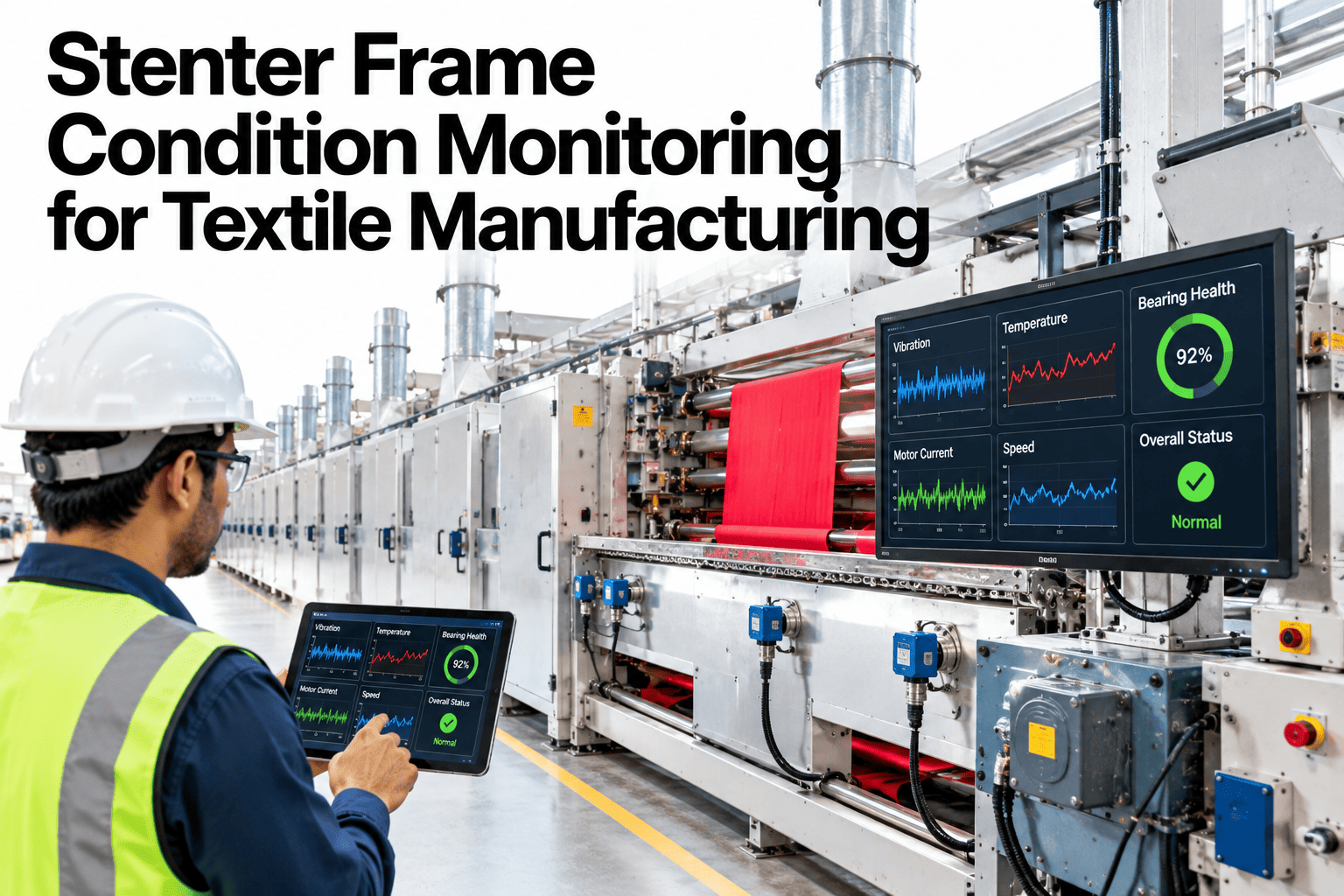
A stenter frame sits at the end of the textile finishing line as the final quality gate before fabric is inspected and shipped. Every degree of temperature deviation across the heating chambers, every millimeter of chain rail misalignment, every worn clip that releases a fabric edge during processing creates defects that cannot be corrected downstream. Fabric width variation, bowing and skewing, uneven heat setting, and edge curl all trace back to stenter conditions that a structured preventive maintenance program would have caught. Mills running stenters at 50 to 80 meters per minute process over 4,000 linear meters of fabric per shift, which means a single misadjusted heating zone or poorly lubricated chain link can affect kilometers of fabric before the next quality check. The following guide covers the essential maintenance protocols for stenter frames organized by mechanical system, heat zone, and control component.
Get the Complete Stenter Frame PM Guide
iFactory provides a ready-to-deploy maintenance framework for stenter frames with chain and clip tracking, heat zone performance monitoring, lubrication schedules, and real-time fabric quality dashboards. Deployed in 7 to 14 days.
Stenter Frame Zone Profile
A stenter frame is divided into functional zones that each require specific maintenance attention. The zone profile below maps the temperature range, critical components, and key PM tasks for each section of the machine.
Chain and Clip Condition Lifecycle
Chain and clip condition is the single most critical mechanical system on a stenter frame. Worn chains cause fabric width variation, bowed weft, and selvedge defects. The lifecycle indicators below help maintenance teams determine when replacement is needed based on measurable condition data.
Chain pin wear within 0.1 mm of original diameter. Clip spring tension at 100 percent. Normal operation with standard lubrication intervals.
- Standard lubrication per schedule
- Visual inspection weekly
Chain pin wear 0.1 to 0.25 mm. Clip spring tension at 80 to 95 percent. Increase lubrication frequency and inspect monthly for elongation.
- Increase lube frequency 2x
- Measure chain pitch monthly
Pin wear 0.25 to 0.4 mm. Clip tension below 80 percent. Schedule chain replacement within next scheduled shutdown. Order spare parts.
- Order replacement chain sets
- Schedule change at next outage
Pin wear exceeds 0.4 mm. Clip springs failed or missing. Immediate replacement required. Fabric width variation and selvedge defects are active.
- Stop machine and replace chain
- Inspect sprockets for wear
Heat Zone Temperature Specifications
Temperature accuracy across each heating chamber directly determines fabric heat-set quality, shrinkage control, and energy consumption. The table below lists the target specifications and tolerance for each zone.
| Zone | Target Range | Tolerance | Sensors | Calibrate |
|---|---|---|---|---|
| Pre-dry chamber | 80 to 120°C | ±5°C | 2x PT100 RTD | Monthly |
| Zone 1 | 140 to 180°C | ±3°C | 3x thermocouple K-type | Weekly |
| Zone 2 | 160 to 200°C | ±3°C | 3x thermocouple K-type | Weekly |
| Zone 3 | 180 to 220°C | ±2°C | 3x thermocouple K-type | Weekly |
| Zone 4 | 180 to 220°C | ±2°C | 3x thermocouple K-type | Weekly |
| Zone 5 | 160 to 200°C | ±3°C | 3x thermocouple K-type | Weekly |
| Zone 6 | 140 to 180°C | ±3°C | 3x thermocouple K-type | Weekly |
| Cooling section | Below 60°C | ±5°C | 1x PT100 RTD | Monthly |
| Exhaust air | Below 160°C | ±10°C | 1x thermocouple | Monthly |
Optimize Stenter Performance Across Every Heating Zone
iFactory’s maintenance platform configures stenter-specific PM schedules, tracks chain and clip condition, monitors heat zone temperature trends, and provides real-time fabric quality dashboards for your finishing line.
Stenter PM Priority Matrix
The matrix below organizes preventive maintenance tasks by machine area and frequency. Each cell lists the specific inspection or service activity required to maintain that area at the recommended interval.
| Area | Daily | Weekly | Monthly | Quarterly |
|---|---|---|---|---|
| Chain & clips | Visual inspection | Lubrication | Pin wear measure | Sprocket inspection |
| Heating zones | Temp log review | Sensor calibration | Burner service | Flue cleaning |
| Exhaust system | Flow rate check | Filter cleaning | Duct inspection | |
| Fabric transport | Width sensor | Overfeed check | Roller bearing | Rail alignment |
| Padder section | Liquor level | Nip pressure | Roll covering | |
| Controls & safety | Alarm test | E-stop verify | Panel cleaning |
Energy Efficiency Impact of Stenter Maintenance
Stenter frames are the largest energy consumers on any finishing line. The difference between a well-maintained machine and one with neglected components shows up directly in energy cost per meter of fabric processed.
Frequently Asked Questions
Keep Your Stenter at Peak Efficiency Every Shift.
iFactory gives finishing mills a complete stenter maintenance platform with chain and clip lifecycle tracking, heat zone monitoring, lubrication management, and real-time energy and quality dashboards. Deployed in 7 to 14 days.